Modern Pen Drawings, 1901

drawings08.jpg

Rustum and the Simoorg (1897) by Patten Wilson.

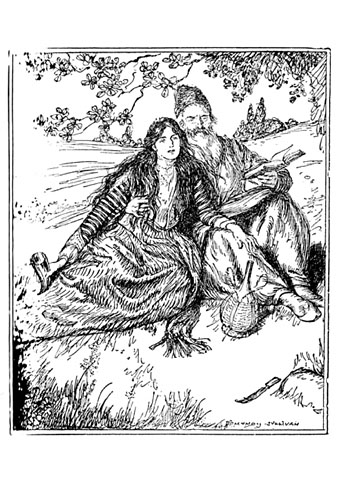
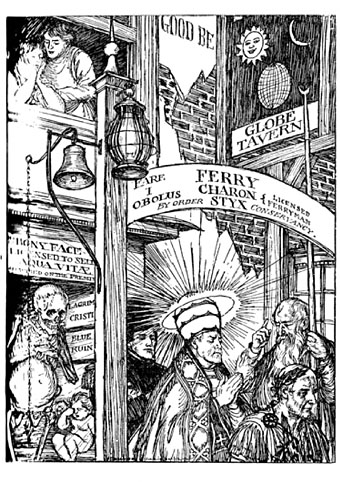
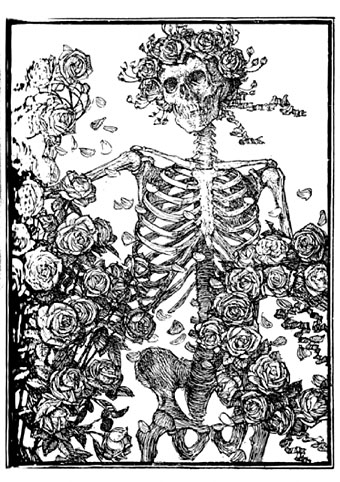
A new arrival at the Internet Archive. Modern Pen Drawings: European and American is a special number of The Studio magazine, one of several such numbers which they published in book form. The magazine’s editor, Charles Holme, edited the volume which maintains the high quality typical of all these publications, with excellent reproductions and informative notes about the artists and their works. Holme’s choices in collections such as this are always varied, mixing imaginative illustrations with comic drawings and nature studies. For a reader, the books are still useful today for showing you drawings that you might not see anywhere else, even when the artist is a familiar name. When the works themselves are familiar the reproductions are invariably better than you’ll find elsewhere. Such is the case with Patten Wilson’s “Rustum and the Simoorg”, an illustration of a Persian folk tale whose fine lines and details are often spoiled by poor printing. Elsewhere there are two pages of Théophile Steinlen’s inevitable cats, a drawing by Fernand Khnopff that I don’t think I’ve seen before, and Edmund J. Sullivan’s rose-bedecked skeleton which Alton Kelley later “repurposed” (or swiped) for the cover of the Grateful Dead’s second live album.

drawings01.jpg

drawings02.jpg

drawings03.jpg

drawings04.jpg

Continue reading “Modern Pen Drawings, 1901”

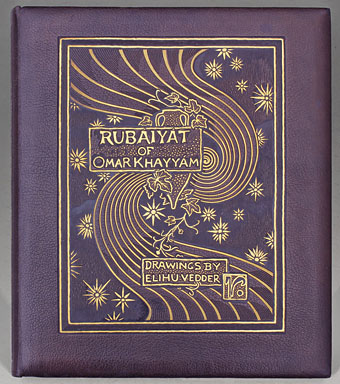
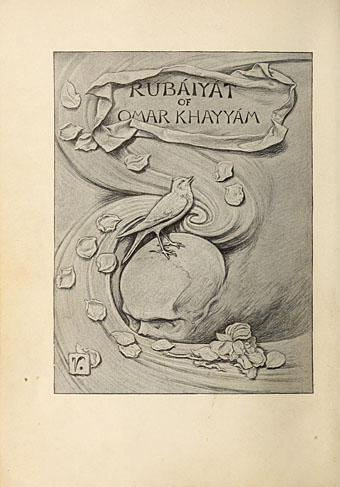
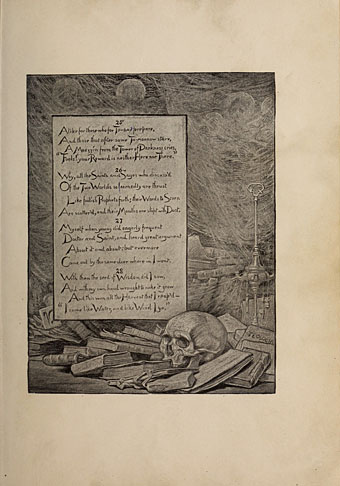
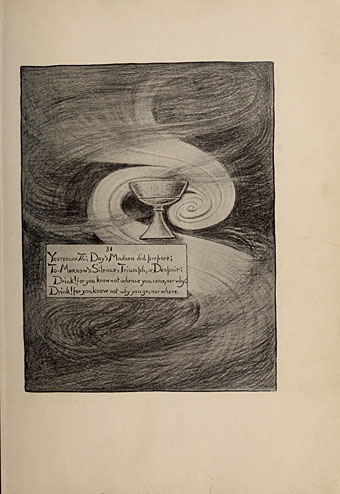
Elihu Vedder’s Rubáiyát

vedder01.jpg

A slight return to Omar Khayyam. The Edmund J. Sullivan post prompted comments about other editions so I thought I’d see what else was at the Internet Archive. The problem there is that the Rubáiyát was a very popular book in the latter part of the 19th century which means there are not only multiple editions of the Edward Fitzgerald translation but many translations by other hands, as well as numerous parodies. Anne S mentioned the Edmund Dulac edition which I suppose I ought to at least acknowledge since Dulac’s passion for Persian and Arabian art made him an ideal illustrator. But I do enjoy finding illustrated books that are less familiar, hence Elihu Vedder’s edition of 1894.

vedder02.jpg

Elihu Vedder (1836–1923) was an American Symbolist painter, and also something of a poet himself, producing a few volumes of his own illustrated verse. Many illustrators favour an Orientalist interpretation of the Rubáiyát despite the popularity of the quatrains being more a result of their universality than their exotic qualities. Vedder produced over 50 drawings that concentrate on the mystical aspects of the poem, setting hand-lettered texts against illustrations that are either very similar to his paintings or direct copies of some of his canvases. It’s unfortunate that the reproductions in this edition—a reprinting of Vedder’s 1884 original—aren’t better. The book is still one of the more remarkable editions, however. Browse the rest of it here or download it here.

vedder03.jpg

vedder04.jpg

Continue reading “Elihu Vedder’s Rubáiyát”

Edmund J. Sullivan’s Sintram and His Companions

sintram01.jpg

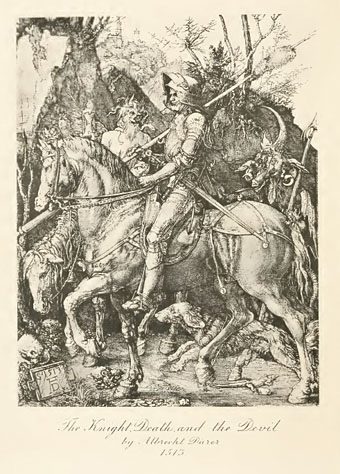
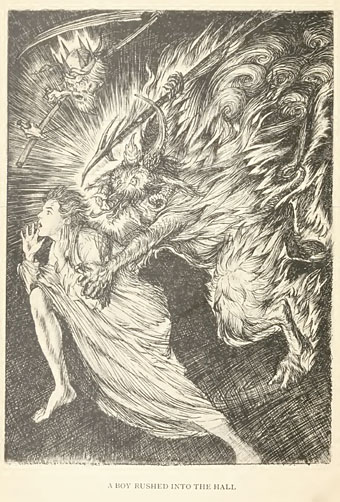
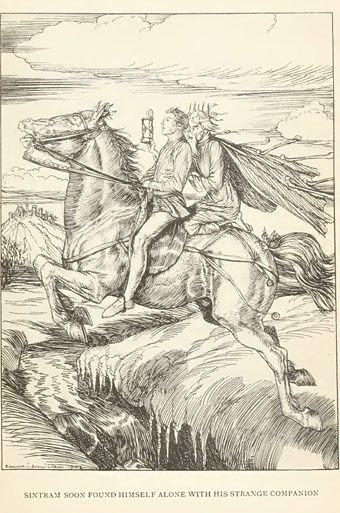
More Sullivan, the illustrations this time being for a 1908 edition of Sintram and His Companions by Friedrich de la Motte Fouqué. This is one of Fouqué’s lesser known works, a tale of a Norwegian knight which the author based on the famous etching by Albrecht Dürer, The Knight, Death and the Devil (1513). The etching is shown as a frontispiece which Sullivan then has to follow, not an enviable task for any artist. If the subsequent drawings can’t match Dürer’s meticulous rendering they nonetheless base their characters on Dürer’s figures, the dog included. This kind of repurposing is commonplace today but it was very uncommon in 1908, and offhand I can’t think of an earlier example. It’s also worth noting the discussion in the comments for yesterday’s post about the influence of Edmund J. Sullivan on the young Austin Osman Spare. Sullivan and Spare knew each other, and Phil Baker’s Spare biography mentions Sullivan’s work being an influence, but I’d not given the matter much attention until this week. The influence is easy to see when you view their drawings together.

To return to Dürer, the sight of his etching always makes me think of a later piece of fiction, A Dog in Dürer’s Etching “The Knight, Death and the Devil” (1966) by Marco Denevi. A short tour-de-force that may be read in full here.

sintram02.jpg

sintram03.jpg

Continue reading “Edmund J. Sullivan’s Sintram and His Companions”

Edmund J. Sullivan’s Rubáiyát

rubaiyat01.jpg

Mention yesterday of Edmund J. Sullivan’s illustrations for The Rubáiyát of Omar Khayyam made me realise that I’d never seen a complete set of Sullivan’s illustrations for this volume (75 in all) despite one particular drawing (the rose-crowned skeleton) being very familiar. Sullivan’s Rubáiyát was published in 1913, and the translation is the Edward Fitzgerald version. These copies aren’t the best quality but they’re good enough at a small size to give an idea of Sullivan’s renderings which feature more occult references than usual for this title. Browse the rest of the pages here or download the book here.

rubaiyat02.jpg

rubaiyat03.jpg

rubaiyat04.jpg

Continue reading “Edmund J. Sullivan’s Rubáiyát”

John Austen’s Little Ape

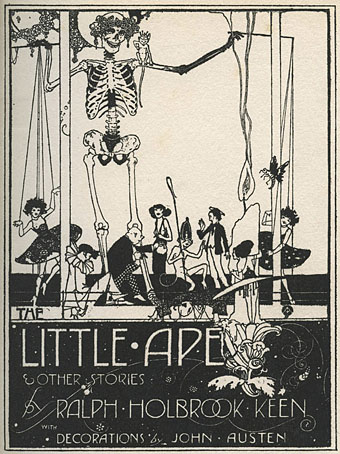
austen1.jpg

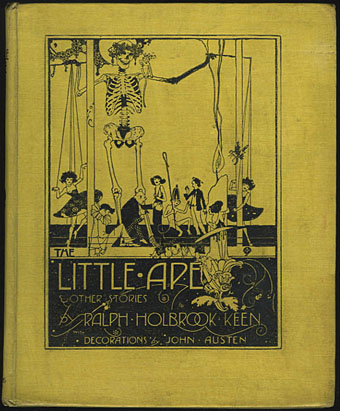
British illustrator John Austen (1886–1948) illustrated many classic works of fiction throughout the 1920s, one of which, Hamlet, was recently reprinted by Dover Publications. His other work isn’t so easy to find, however, and I’d not seen Little Ape and Other Stories (1921) until Nick H drew my attention to a copy for sale at silver-gryph’s eBay pages. (Thanks, Nick!)

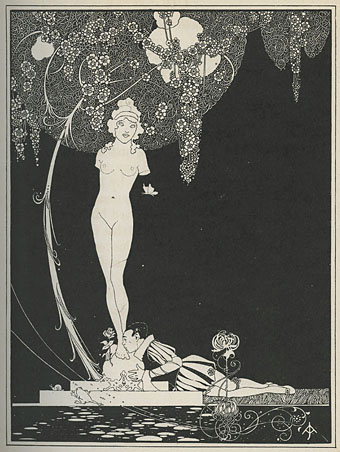
Ralph Holbrook Keen’s story collection was Austen’s first illustrated edition although you wouldn’t necessarily take it for a debut work. There are the familiar nods to Beardsley—the black-and-yellow cover especially—and possibly Harry Clarke whose influence is more evident in the Hamlet drawings. Clarke and Austen exhibited together in 1925. The skeleton with a floral crown makes me think of the rose-crowned skeleton in Edmund J. Sullivan’s Rubáiyát (1913), although this may be a result of Sullivan’s drawing having been made very familiar by its use on Mouse & Kelley’s posters for the Grateful Dead. One of the many connections between the Golden Age of Illustration and the Golden Age of Psychedelia.

austen2.jpg

austen3.jpg

Continue reading “John Austen’s Little Ape”