Wildeana 10

wilde.jpg

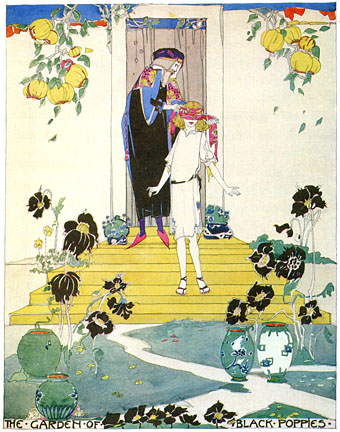
Illustration from The House of Pomegranates (1914) by Jessie M. King.

Continuing an occasional series. Recent Wildean links.

• It’s a measure of a writer’s success if the characters or stories they create resonate sufficiently with future generations to be subject to new interpretations. Among Oscar Wilde’s contemporaries this has happened to Arthur Conan Doyle and Bram Stoker, both of whom Wilde knew. Increasingly it’s been happening to Wilde’s own fiction, especially in the case of Dorian Gray whose tragedy assumes the status of a modern myth. At Cannes this year, Clio Barnard premiered a contemporary retelling of Wilde’s The Selfish Giant. Bleeding Cool has some clips. The social realism is a long way from Wilde’s tale but that shows how flexible these fables can be.

• Jessie M. King’s illustrations for Wilde’s The House of Pomegranates have appeared here before but the copies posted at The Golden Age are the usual quality scans.

Rick Gekoski: “Visiting the US, I am reminded of Oscar Wilde’s tour there in 1881, which allowed him to become an orator and a celebrity.”

Paper Dolls by David Claudon based on the characters from The Importance of Being Earnest. (Thanks to Gabe for the tip.)

Elsewhere on { feuilleton }
The Oscar Wilde archive

The art of Ted Coconis

dorian.jpg

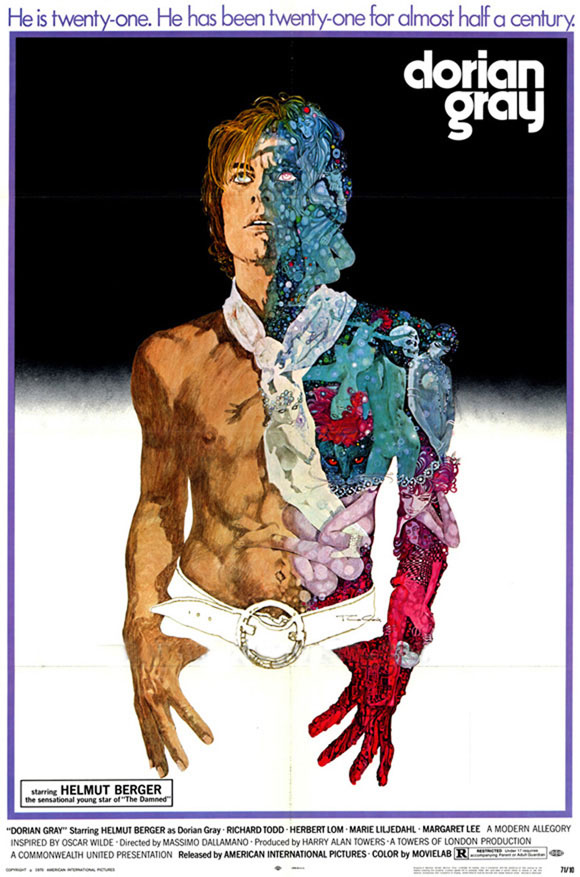
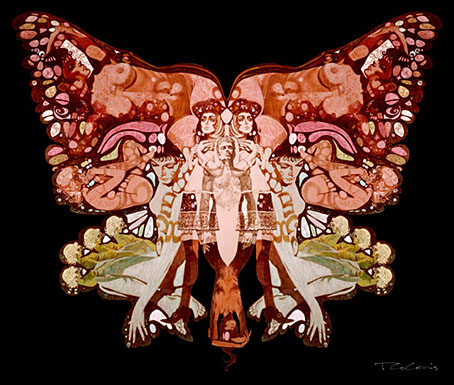
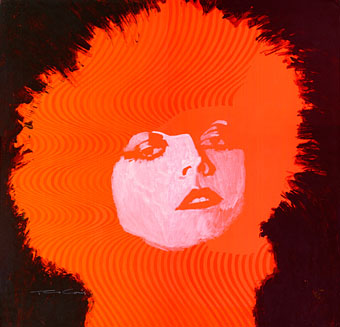
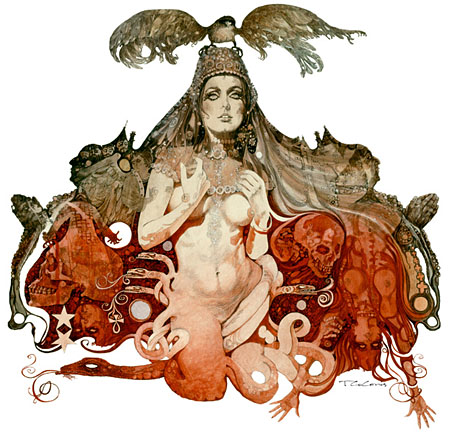
This poster for Massimo Dallamano’s 1970 updating of The Picture of Dorian Gray was featured here several years ago, and it’s taken me all this time to finally discover the name of the artist responsible, Ted Coconis. Better late than never. It could be argued that the illustrations below for Nabokov and Goldman tend more towards the artist’s own interests than representing the content of the books; I’ve not read Goldman’s novel (or seen the film) but online comments suggest that this was an unsuitable cover; Nabokov’s Ada is an erotic novel which presents its eros in a manner that’s a lot less direct than the painting implies. All I can say to this is that strict accuracy is for pedants; Aubrey Beardsley’s illustrations for Wilde’s Salomé aren’t in the least accurate yet they’re regarded as definitive. Sometimes illustrators are trying to convey in pictorial form an otherwise intangible impression of a book (or a film or play) which is what I see Ted Coconis doing here. There’s a lot more of his work at his website. It’s gorgeous stuff.

coconis1.jpg

Cover illustration for Ada by Vladimir Nabokov.

coconis2.jpg

Pola Negri.

coconis3.jpg

Cover illustration for The Princess Bride by William Goldman.

Elsewhere on { feuilleton }
The illustrators archive

Wildeana 9

dine.jpg

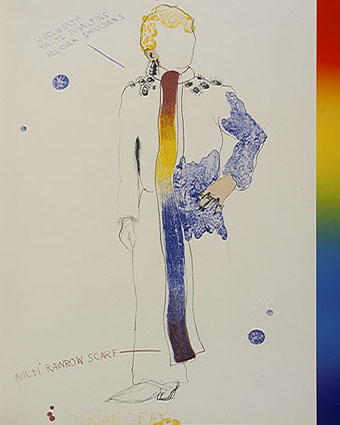
Dorian Gray (1968) by Jim Dine; one of a series of prints for an illustrated edition. Rainbows didn’t become a gay symbol until Gilbert Baker’s flag design ten years later.

Continuing an occasional series.

• “…the Public is a very curious thing; it is sometimes perverse, and even obstinate, and it has evidently made up its mind to like the plays of Mr. Oscar Wilde.” Callum at Front Free Endpaper found a sceptical review of The Importance of Being Earnest in The Sketch for 20th February, 1895.

• “Wilde’s vision of Socialism, which at that date was probably shared by many people less articulate than himself, is Utopian and anarchistic.” George Orwell, writing in 1948, looks back at Wilde’s The Soul of Man Under Socialism.

Oscar Wilde between Paris and Brighton: Research at the excellent Charles Ricketts & Charles Shannon blog following Wilde’s travels in the early months of 1891.

Wilde Ride by Anthony Paletta: “Oscar Wilde spent a year in the US and met the likes of Walt Whitman and Henry James.”

• There’s plenty of Wildeana at Pinterest.

Elsewhere on { feuilleton }
The Oscar Wilde archive

The art of Henri Caruchet

caruchet1.jpg

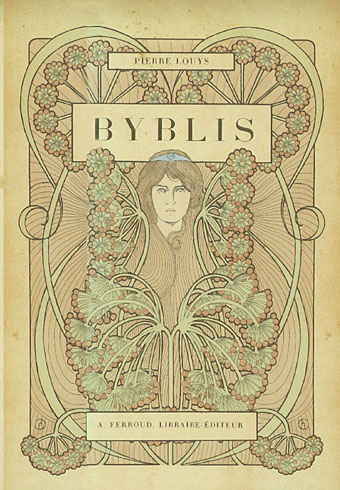
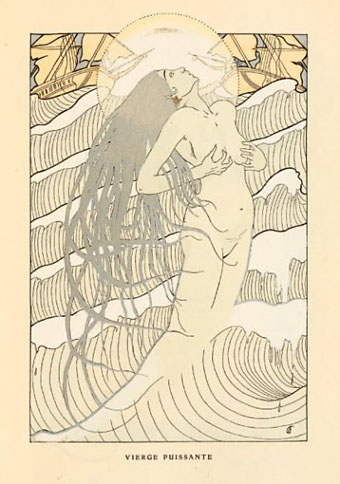
Byblis (1901) by Pierre Louÿs.

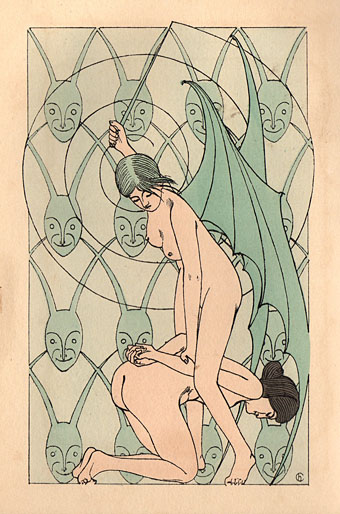
Henri Caruchet isn’t in George Barbier’s league, never mind that of Alphonse Mucha whose graphic style Caruchet appropriated. I’ve not been able to find details about his life either, all that turns up is examples of his book illustration on various websites. Author Pierre Louÿs is notable for his erotic works but it’s Caruchet’s illustrations for Jean de Villiot (via this site) which travel the furthest in that direction (see below), including another example of that deviant sub-genre, the woman being mauled by an octopus. If Caruchet had been a better draughtsman his illustrations might not have languished for so long.

There’s more decorative illustration by Caruchet at Gutenberg.org with an edition of Théophile Gautier’s Émaux et Camées. Two of Gautier’s poems from that volume are quoted by Oscar Wilde in The Picture of Dorian Gray.

caruchet2.jpg

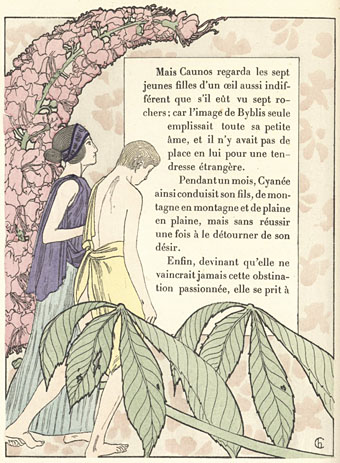
Byblis (1901) by Pierre Louÿs.

caruchet3.jpg

Les Litanies de la Mer (1903) by Jean Richepin.

caruchet4.jpg

Parisienne et Peaux-Rouges (1904) by Jean de Villiot.

Continue reading “The art of Henri Caruchet”

Polanski details

polanski01.jpg

Roman Polanski as Alfred in Dance of the Vampires (1967).

I’ve always admired the attention to detail in Roman Polanski’s films, a quality evident not only in his careful adaptations but also in areas that lesser filmmakers might ignore. Dance of the Vampires (1967) is a good example (sorry, I refuse to call it by the title MGM used for its edited US release): the sets and decor are remarkable, and the editing and camera work so skilfully blends studio constructions with location shots that for years I was convinced the film was made in a genuine European castle. The atmosphere is so carefully sustained that I found the whole thing as terrifying on first viewing as any Hammer film, despite the broad humour. In the set-piece moments Polanski (and soundtrack composer Krzysztof Komeda) put many of the later Hammer vampire films to shame.


The Vampire Portraits
polanski02.jpg

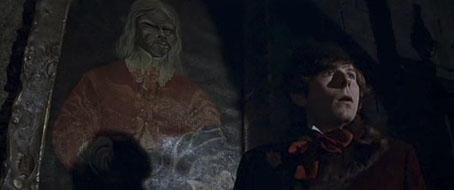
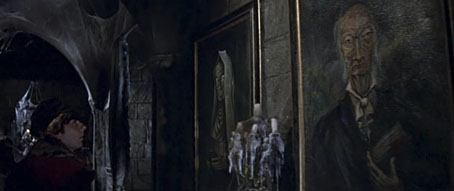
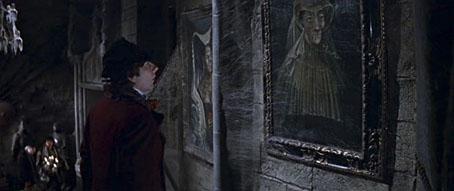
The production design and art direction for Dance of the Vampires was created by Wilfred Shingleton and Fred Carter, both of whom later worked on Polanski’s Macbeth, and who fill the rooms with mouldering furnishings and rotting decoration. One striking sequence concerns a walk through a gallery of vampire portraits that are the creepiest paintings seen on film since Ivan Albright’s portrait of a decrepit Dorian Gray. Film credits in the 1960s were sparse so there’s no indication of the artist responsible. However, one portrait glimpsed at the end of the gallery (below) is a copy of the “Ugly Duchess” painting by Quinten Matsys.
polanski03.jpg


Rosemary’s Book

polanski04.jpg

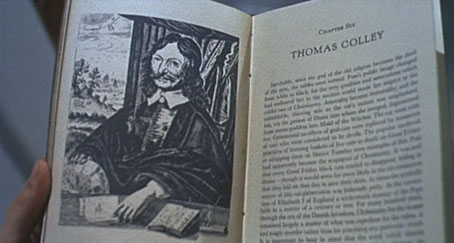
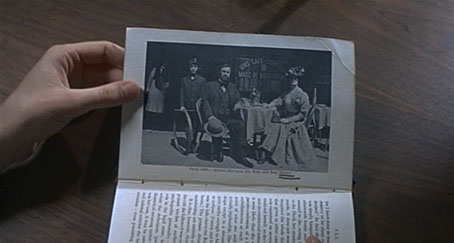
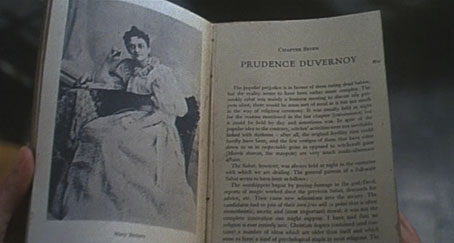
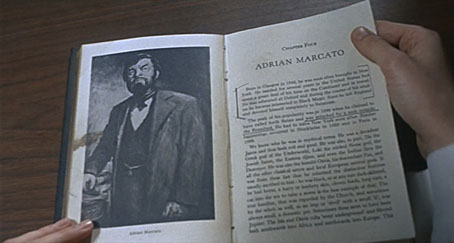
A sign that filmmakers care about detail is when they make their fictional books look like the genuine article. The history of witchcraft in Rosemary’s Baby (1968) could easily have been glimpsed very briefly but Polanski shows Rosemary leafing through its pages in a sequence of Hitchcock-like view-reaction-view shots that make it appear as convincing as possible. The shots also make the viewer examine the book through Rosemary’s eyes, something Polanski does throughout the film.
polanski05.jpg

polanski06.jpg

polanski07.jpg


Trelkovsky’s Paintings

polanski09.jpg

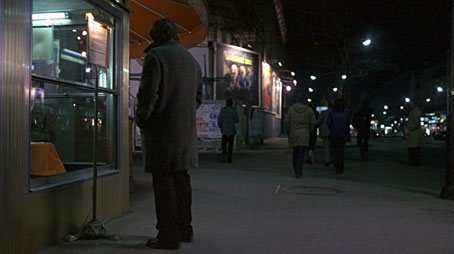
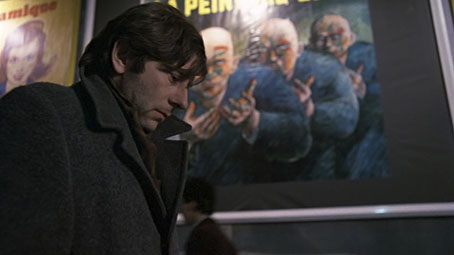
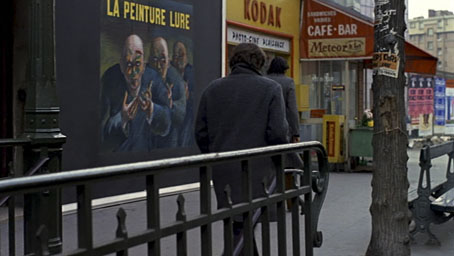
The Tenant (1976) is Polanski’s third study of apartment-dwelling paranoia, a superb adaptation of Roland Topor’s novel, Le Locataire chimérique (1964). The screenplay removes some of Topor’s ambiguity—and the film is spoiled by unsympathetic dubbing of the French actors—but in every other respect it’s as good as Repulsion for its portrait of an isolated individual (here portrayed by Polanski himself) surrendering to madness.
polanski10.jpg

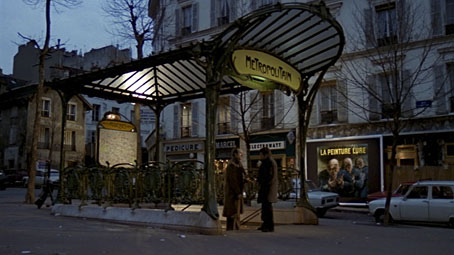
Among the many visual details which add to the unease is the appearance halfway through the film of billboards advertising…what? A painting exhibition? Or something more sinister? We never find out. The presence of these figures and their slogan—”La Peinture Lure”—remains as cryptic as many of the other unresolved questions which prey upon the beleaguered Trelkovsky.
polanski11.jpg

polanski12.jpg


Corso’s Postcard

polanski13.jpg

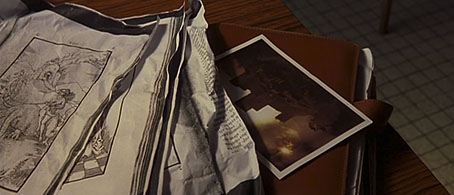
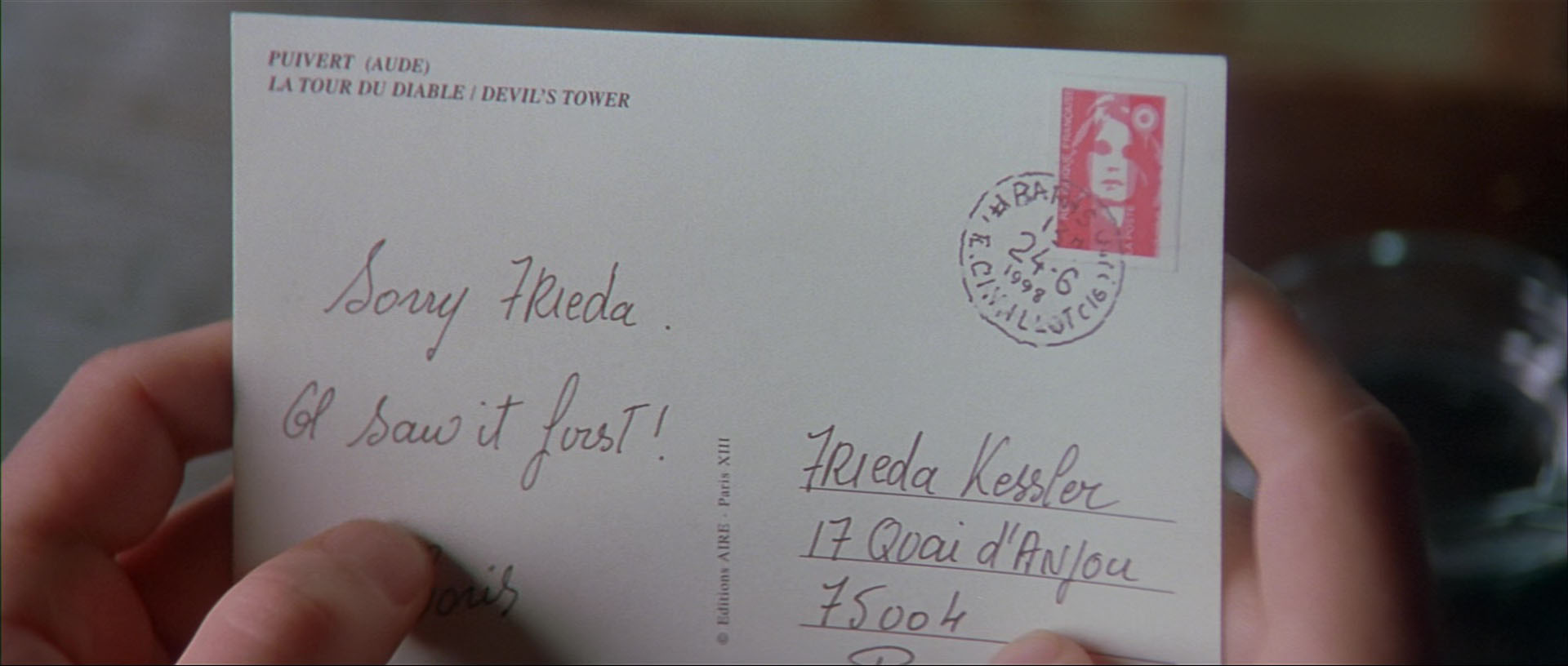
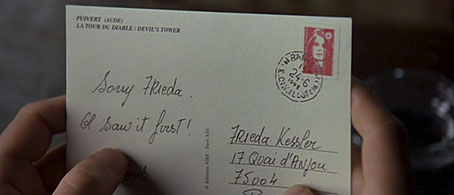
I’m in the minority of people who like The Ninth Gate (1999) a great deal even though it takes some liberties with Arturo Pérez-Reverte’s wonderful novel The Dumas Club. Once again, the bibliographic details are perfectly done, a crucial matter in a film about the antiquarian book trade. Near the end of the film Dean Corso (played by Johnny Depp) finds a postcard that leads him to the final location. On the back of the card there’s a blink-and-you-miss-it detail. Polanski’s wife, Emmanuelle Seigner, plays the mysterious and nameless woman who follows Corso throughout the film. By this point we already know she possesses occult powers so it’s not really surprising to see her face in the postage stamp, something that Corso doesn’t seem to notice.
polanski14.jpg

Previously on { feuilleton }
Repulsion posters
Atalanta Fugiens
Le Grand Macabre
Les Temps Morts by René Laloux
The writhing on the wall