
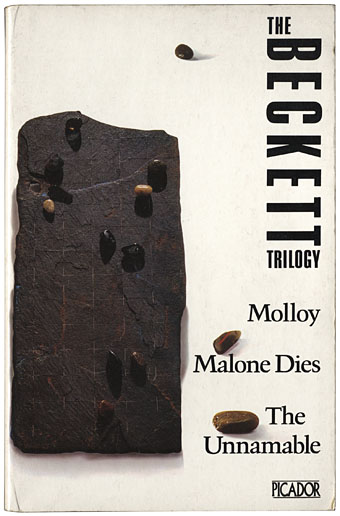
This 1979 Picador edition of The Beckett Trilogy is one of my favourite paperback cover designs. The “illustration” (as it’s described on the back) is a photograph of an artwork by artist/designer Russell Mills and the minimal credit gives no indication as to whether it was Mills who was responsible for the striking type layout. I’ve noted previously the equally striking Picador designs by the Quay Brothers who were responsible for both art and layout on their covers. Mills extended his work into graphic design later with album cover designs (and some book design) for Brian Eno, David Sylvian, David Toop and others so I’ll give him the benefit of the doubt in this case.
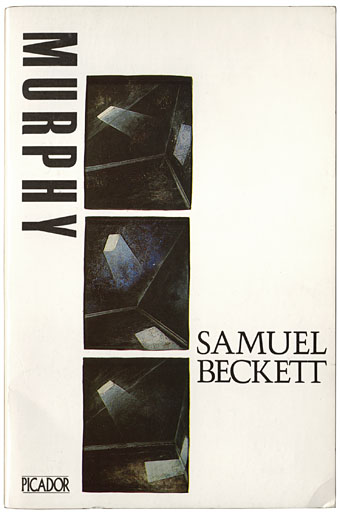
The Picador edition of Murphy was published in 1983 and comprises part of this week’s book haul. The three small Mills paintings suit the novel but I prefer his sculptural and collage works. I’ve taken to collecting more of these older Picador editions in recent years since they don’t turn up secondhand as often as they used to. As with the Quay Brothers and Italo Calvino, I wonder now how many Beckett covers Mills produced for Picador. The books list More Pricks than Kicks and Company in addition to these titles. He was still working for them up to 1986 when he and Brian Eno collaborated on the graphics for Don DeLillo’s White Noise. Unlike the world of Penguin collecting, this area lacks adequate documentation; further investigation is required.
Elsewhere on { feuilleton }
• The book covers archive
Previously on { feuilleton }
• Thursday Afternoon by Brian Eno
• Crossed destinies revisted
• Beckett directs Beckett
• Crossed destinies: when the Quays met Calvino
• The art of Shinro Ohtake
• Not I by Samuel Beckett
• Film by Samuel Beckett
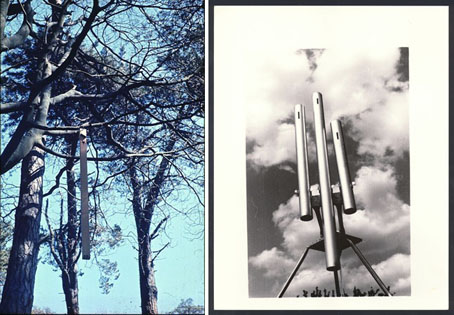
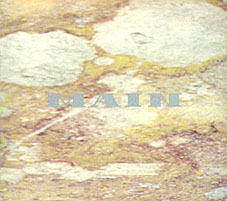 It’s the same every year, the weather gets hot (30C today) and out come the Main CDs, although the march of progress has meant importing them into iTunes this time round. For some reason Main’s Hz collection (6 EPs, later a double-disc set) is especially suited to warm temperatures, partly due to remembrance of them being released one a month during the hot summer of 1995.