Weekend links 812

satantango.jpg

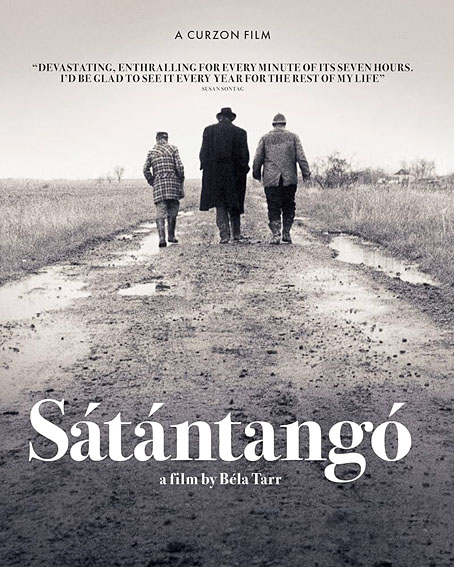
• RIP Béla Tarr. I came late to Tarr’s films, he’d retired from directing by the time I worked my way through most of his oeuvre in 2019. As I’m always saying: better late than never. What I never expected from reading reviews was the irreducible strangeness at the heart of the later films, as well as their meticulous construction. With regard to the latter, mention should be made of the director’s regular collaborators: Ágnes Hranitzky (wife, editor and co-director), László Krasznahorkai (writer), and Mihály Víg (composer).

More Tarr: “The whole fucking storytelling thing is everywhere the same. That’s why I decided I have to do my movies.” Tarr talking to R. Emmet Sweeney in 2012; and at Criterion, Béla Tarr: Lamentation and Laughter by David Hudson.

• “When [Fela Kuti] first saw Lemi Ghariokwu’s work, he said, ‘Wow!’ Then he plied him with marijuana and asked him to design his album sleeves. The artist recalls their extraordinary partnership – and the day Kuti’s Lagos HQ burned.”

• At Smithsonan Mag: “Hundreds of mysterious Victorian-era shoes are washing up on a beach in Wales. Nobody knows where they came from.”

• At Ultrawolvesunderthefullmoon: The collage art of Wilfried Sätty.

• At the BFI: Leigh Singer selects 10 great Lynchian films.

• At Unquiet Things: The vast luminous art of Andy Kehoe.

• At Dennis Cooper’s it’s another Jan Švankmajer Day.

• New music: Light Self All Others by Tarotplane.

• At I Love Typography: Heart-shaped books.

• At Colossal: Luftwerk.

• Sailin’ Shoes (1972) by Van Dyke Parks | Dead Man’s Shoes (1985) by Cabaret Voltaire | New Shoes (2007) by Angelo Badalamenti.

Weekend links 805

strausfeld.jpg

A poster by Peter Strausfeld for a 1966 screening of Alphaville and La Jetée.

• At Bandcamp Daily: “Caroline True obsesses over compilations so you don’t have to,” says Erick Bradshaw. I recommend CTR’s compilations.

• At The Wire: Read an extract from Music Stones: The Rediscovery Of Ringing Rock by Mike Adcock.

• At Colossal: Pastoral landscapes brim with patterns in luminous paintings by David Brian Smith.

One of the markers that sets Mamoru Oshii apart from his peers is his willingness to allow place to speak for itself. From the seasonality captured in his works, like the first two Patlabor films, to the otherworldly environments of Ghost In The Shell 2: Innocence (all projects in which Ogura was also involved heavily) and even the fantasy scapes of his Angel’s Egg, Oshii’s attention to place, and allowing it to be a player in the story, gives as much voice to world building, as he does to characterisation. This attentiveness and patience for place, allows us to settle deeply inside a worldview that is often simultaneously familiar but unerringly alien.

Lawrence English talks to art director Hiromasa Ogura and composer Kenji Kawai about their work on Oshii’s Ghost in the Shell

• At the BFI: Leigh Singer suggests where to begin with the films of Lucile Hadžihalilović.

• Necromodernist Architectures in Contemporary Writing: an essay by David Vichnar.

• New music: Hydrology by Loula York; Love Letters Via Echelon by Nerthus.

• There’s more Intermittent Eyeball Fodder at Unquiet Things.

• The Strange World of…Early Cabaret Voltaire.

• Winners of the Drone Photo Awards 2025.

Lautréamont’s Apocrypha

Drone Um Futurisma (1992) by Cusp | ABoneCroneDrone 1 (1996) by Sheila Chandra | Suspicious Drone (2009) by Demdike Stare

Weekend links 788

goya.jpg

The Witches’ Flight (1798) by Francisco Goya.

• At Wormwoodiana: Mark Valentine reviews the latest book from Tartarus, a biography of T. Lobsang Rampa by R.B. Russell. You don’t hear much about Rampa today but, as Mark says, old copies of his books have for many years been common sights on the Spiritualism/Occult shelves of British bookshops. Rampa wasn’t a Tibetan monk as he claimed in his first book, The Third Eye, but a very non-Tibetan Englishman, Cyril Henry Hoskin, whose stories about his early years evolved following press investigations into a claim of being possessed by the spirit of a Tibetan doctor named Tuesday Lobsang Rampa. Hoskin maintained the Rampa persona for the rest of his life, writing many more books about the mystic East, as well as accounts of his contact with the planet Venus and his psychic connection with his Siamese cat. The Rampa books were very popular in the 1960s—my mother had three or four of them—despite continual accusations that their author was a fraud.

• New music: The Hadronic Seeress And Other Wyrd Tales by The Wyrding Module; Master Builder by Xeeland; Resurrection Of The Foghorns by Everyday Dust.

• The twelfth installment of Smoky Man’s exploration of The Bumper Book of Magic has been posted (in Italian) at (quasi), and in English at Alan Moore World.

• Rivers of galaxies: Mark Neyrinck on the cosmic web and other metaphors that describe the largest structures in the Universe.

• “Curation becomes subservient to metrics.” Derek Walmsley on how Spotify distorts genre histories.

• At Spoon & Tamago: Erica Ward presents Tokyo as a living, breathing organism.

• At the BFI: Chloe Walker chooses 10 great films by one-time directors.

• At Unquiet Things: How Yuko Shimizu rewires ancient stories.

• Steven Heller’s font of the month is Jana Thork.

• RIP Ozzy Osbourne.

Web Weaver (1974) by Hawkwind | The Web (1985) by Cabaret Voltaire | Web (1992) by Brian Eno

Weekend links 781

delville.jpg

Orphée aux Enfers (1896) by Jean Delville

• “Yes, there was a riot, but it was great”: Cabaret Voltaire on violent gigs, nuclear noise – and returning to mark 50 years.

• At Public Domain Review: Matthew Mullane on George Wightwick’s The Palace of Architecture (1840).

• New music: Dissever by Emptyset; Quiet Pieces by Abul Mogard; Analogues by Lawson & Merrill.

• At Spoon & Tamago: Artist Yukiko Suto finds beauty in Japanese residential neighbourhoods.

• At The Quietus: A Condition of the Space: Mary Anne Hobbs interviewed.

• At Baja el Signo de Libra: The homoerotic photography of Yves Paradis.

• Mix of the week: Bleep Mix #303 by Abul Mogard.

• At Dennis Cooper’s: Stan Brakhage Day.

• RIP Edmund White.

Brakhage (1997) by Stereolab | Brakhage (2002) by Robert Poss | Barbican Brakhage (2009) by John Foxx

Do You Have The Force? Volume 2

savage.jpg

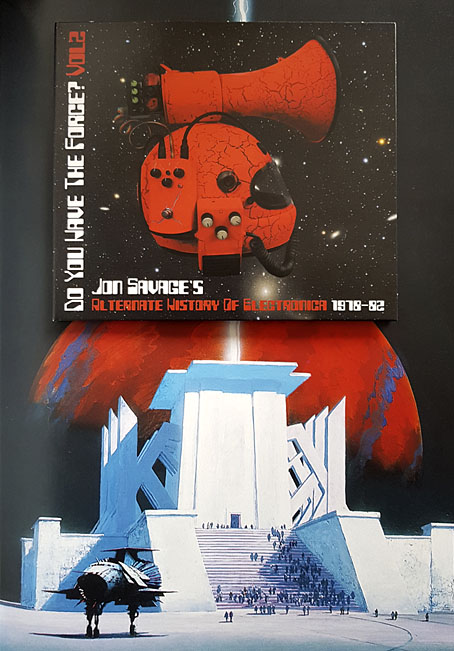
Cosmic background by John Harris.

Three years have passed since the release of Do You Have The Force?, Jon Savage’s compilation of space disco and post-punk recordings. The collection proved popular enough to prompt a follow-up which arrived here last week. I enjoy Mr Savage’s curatorial instincts so a second dose was irresistible even though I already own more of the tracks on the new album than I do with the earlier collection.
jackson.jpg

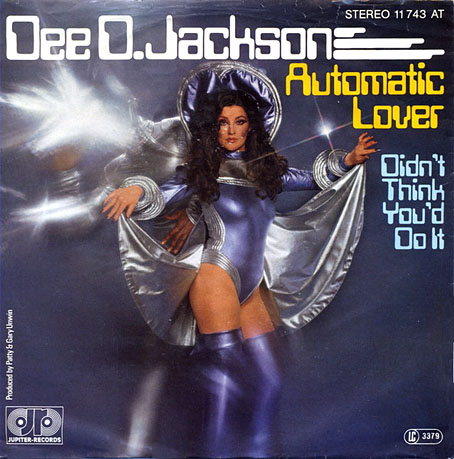
Data 70 for the win. Dee D. Jackson opens the new collection with a pulsing paean to robot sex.

I was thinking recently that the value of the historical compilation album—those collections that contain previously released material—has been diminished considerably by the rise of the internet mix. Before Mixcloud et al the home-made cassette compilation was a youth-culture staple (I made lots of them) but cassette collections seldom travelled beyond their maker’s immediate circle of friends. Official compilations had the advantage of wide distribution, access to quality sources and scarce recordings. The better ones also featured authoritative sleevenotes, an essential thing where those scarce recordings where concerned. One of the drawbacks of the home-made tape was brought to my attention in the late 1980s when a Dutch friend sent me a mix he’d made for a group of acquaintances who staged live art/occult performances. The contents were a soup of dialogue and music recorded from TV layered over borrowings from record-library albums which included a particularly haunting snatch of something that he only remembered as being “music from Ancient Egypt”. I spent the next ten years searching for this whenever I was in a record shop with a decent international section. I did find it eventually (it’s the funeral music from this) but without persistence and a chance discovery I might never have known what it was. One thing we don’t lack today is information, so the chances of being nonplussed in this manner are much more remote. The erosion of the former strengths of the compilation album have only placed more emphasis on the person of the compiler; all those Back To Mine collections have turned out to be models for the future.
lizards.jpg

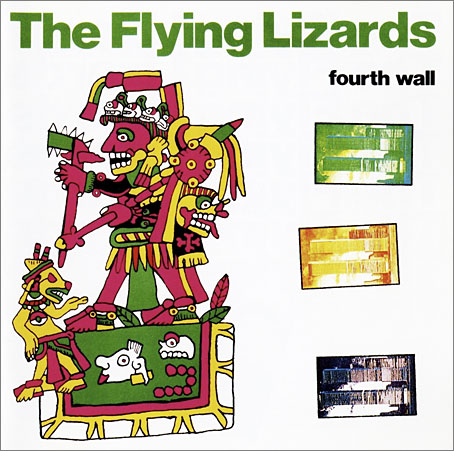
Do You Have The Force? Volume 2 follows the form of Savage’s earlier collection by starting out in the disco/dance zone before sliding in the second half into the post-punk world, an area conterminous with disco yet seen at the time as being in opposition to any rock and pop that was regarded as too commercial, too trivial, etc. I’ve never been someone who needed to reappraise disco, there was more than enough in its cosmic and futuristic excursions to engage my interest at its peak of popularity. Not being a club-goer, however, the good stuff wasn’t always easy to find so I’m still learning from collections such as these. The post-punk material is home territory by comparison. The contents of the new album include yet more Cabaret Voltaire (I’d probably have chosen the uptempo Sluggin’ Fer Jesus instead of Red Mask), the beatless Beachy Head by Throbbing Gristle (the closest TG get to Eno’s On Land), and Monochrome Days by Thomas Lear & Robert Rental. The latter is from Lear & Rental’s The Bridge, a one-off collaboration released on Throbbing Gristle’s Industrial Records, and a cult album round these parts. If you’re familiar with Savage’s tastes, all the above are the kinds of inclusions you’d expect. Less predictable was another number from Fourth Wall, the second album by The Flying Lizards, which follows the Fourth Wall track that Savage included on Volume 1. I bought Fourth Wall when it was released in 1981, in part because Robert Fripp was credited among the players and I was curious to know what Fripp was doing with such an eccentric bunch. (This, if you’re equally curious.) David Cunningham’s Lizards are best known for their off-beat cover versions, the most popular of which, Money, was a surprise chart success in 1979. But Cunningham was (and still is) an experimental musician, and Fourth Wall showed much more of this side of his group, juxtaposing short looped pieces and other weirdness with a handful of original songs. Patti Palladin does most of the singing, also co-writing a huge favourite of mine, Hands 2 Take, that (once again) I would have chosen over Savage’s selections even though it’s not electronic enough for the album as a whole. But that’s one of the benefits of the compilation: it compels you to follow somebody else’s inclinations instead of your own. Biggest surprise of all has been Soft Space on the disco side, an electronic instrumental credited to Soft Machine. If you’re familiar with Soft Machine’s early albums, which evolved from psychedelic pop in the late 1960s to jazz-rock improvisation in the 1970s, then nothing prepares you for this piece, a one-off synthesizer composition recorded in 1978 by keyboard player Karl Jenkins. And that’s another benefit of the compilation album: an introduction to discographic anomalies that you’ve been missing all these years.

Will there now be a third volume? There’s more than enough musical material for another collection along the same lines so we’ll have to wait and see. Volume 2 is out now on Caroline True Records.

Previously on { feuilleton }
Talking time: Cabaret Voltaire interviews
Do You Have The Force?