Dante Alighieri’s The Divine Comedy poses challenges for any illustrator, especially those working in the shadow of the three volumes illustrated by Gustave Doré which were published separately from 1857 to 1867. Doré’s plates have been endlessly reproduced, refashioned and imitated but even if you ignore his example you’re still left with the top-heavy nature of story, in which the travails of the sinners imprisoned in the Inferno stimulate the imagination much more than do the souls who labour up the slopes of Mount Purgatory or flit through the clouds in Paradise. Many artists have for this reason chosen to illustrate the Inferno section alone; I don’t recall hearing of any artist who only illustrated one of the other two books.
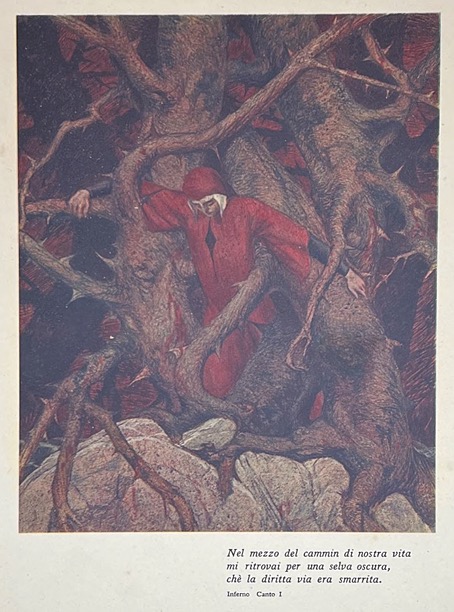
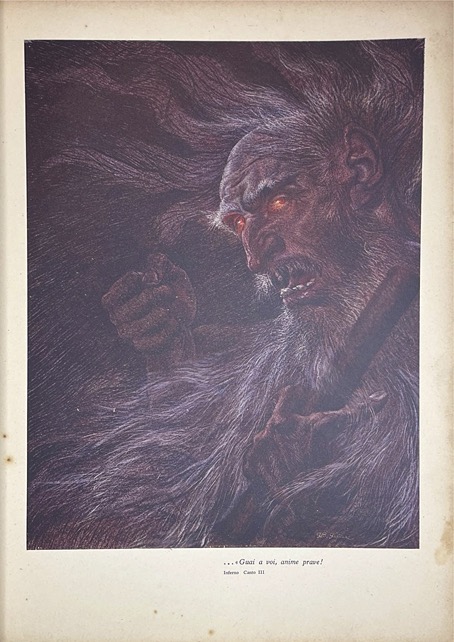
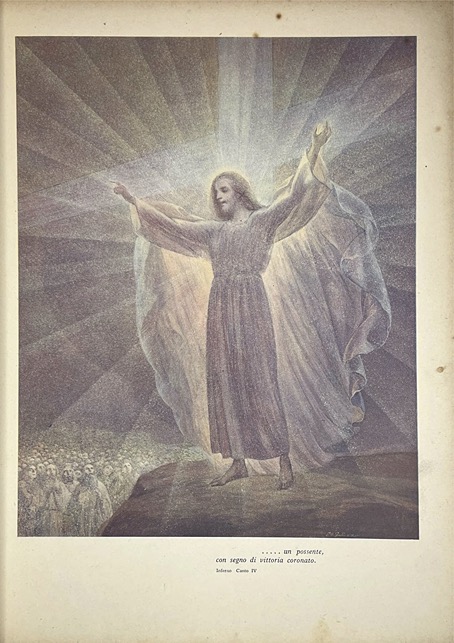
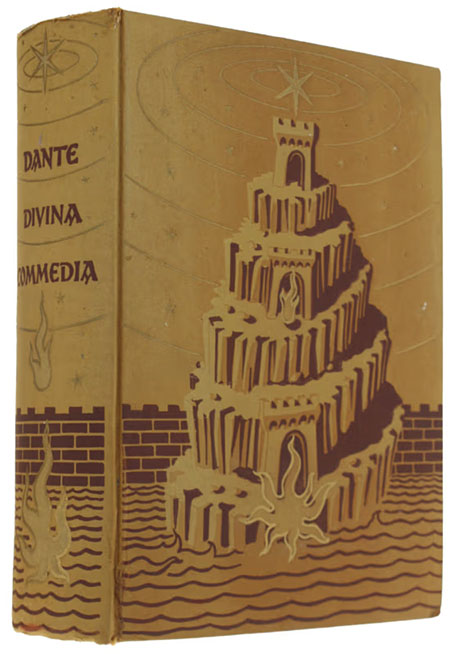
Giovanni Battista Galizzi (1882–1963) was an Italian artist who illustrated all three books of The Divine Comedy in 1943, an edition which contains 105 colour paintings. This was a lavish production published in Italy by De Agostini which included 100 additional woodcut illustrations by Bruno da Osimo. The latter also created the cover design but I’ve yet to see a scanned copy of the entire book. The colour plates you see here are from this collection which excludes all the other pages.
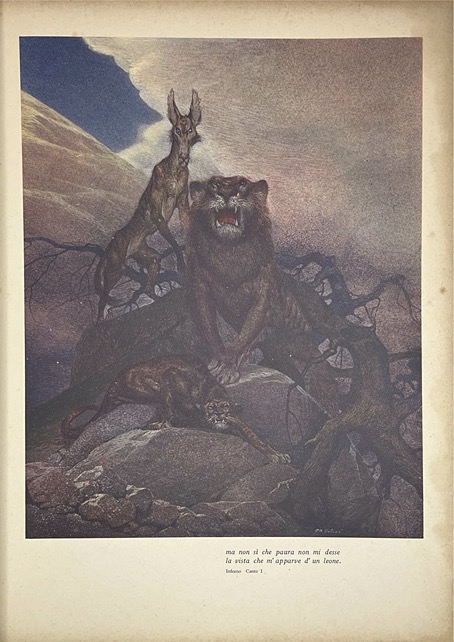
I’m doing Galizzi something of a disservice by concentrating on his Inferno illustrations for the reason given above. Dante’s Hell was evidently more of an imaginative stimulus for this artist, as it was for Doré. Galizzi must have been aware of the Doré books—some of his paintings are like Doré’s scenes shown from a different angle—but he manages to improve on some of the earlier illustrations. The scale of everything is multiplied; Galizzi’s monsters are a lot more fierce and terrifying than Doré’s, especially the towering Cerberus, and he shows much more of the Inferno’s colossal funnel of terraced bolgia. In most of Doré’s plates the central focus is a human figure or a human group, usually Dante and Virgil, an emphasis that reduces the surroundings to background details. The City of Dis, with its glowing walls of red-hot iron, is an important location in the Inferno, separating the relatively placid upper regions from the nightmare circles below, but Doré shows us next to nothing of the city’s ramparts.
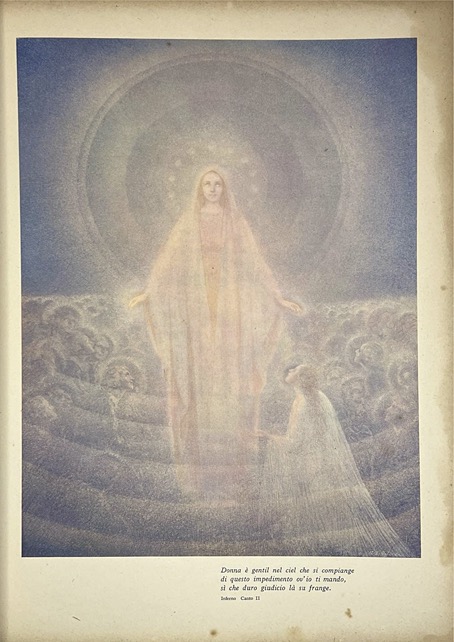
Galizzi had a powerful imagination allied to a formidable watercolour technique, to a degree that I’m surprised his Divine Comedy isn’t better known. Biographical notes about the artist describe this as one of his last major works, along with an edition of The Adventures of Pinocchio published in 1942. I’ll be waiting now for a more complete copy of the De Agostini book to turn up.