Third by Portishead

portishead.jpg

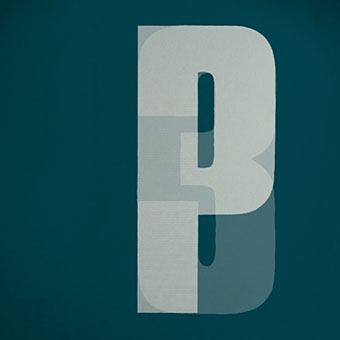
It’s not exactly news that Portishead‘s long-awaited third studio album is released today, its arrival having been telegraphed for months. I’ve been a fan since I heard the first theremin-inflected strains of Mysterons back in 1994 so I’d been looking forward to this. After a hiatus of ten years the burden of expectation grows very heavy so it’s never a good idea to expect too much. Well this album isn’t a disappointment by any means; some parts are surprisingly placid after the abrasiveness of their second opus, other parts such as the new single, Machine Gun, pull that abrasiveness in new directions.

Rather than add to the deluge of reviews I’ll note a personal delight which is the track We Carry On, a fantastic Silver Apples pastiche augmented by Adrian Utley’s growling guitar. Being an aficionado of the handful of late Sixties groups that could be classed as electronic, it’s fun seeing Portishead chalk up another reference to that era’s rudimentary synth music. Something in the air in 1968 saw the release of several significant albums that mixed electronic sounds into psychedelia: Cauldron by Fifty Foot Hose, the self-titled album by The United States of America and the first album by Silver Apples. Portishead already sounded very much like Fifty Foot Hose to begin with, if Fifty Foot Hose had been listening to John Barry instead of Edgard Varèse. On the second Portishead album they dedicated Half Day Closing to The United States of America so it’s not at all surprising for them to borrow some rhythms from Silver Apples; forty years on it’s as though they’ve collected the set.

Now get over to YouTube and watch them play We Carry On live; it fucking rocks!

Previously on { feuilleton }
Light in the west

Franklin Booth’s Flying Islands

booth.jpg

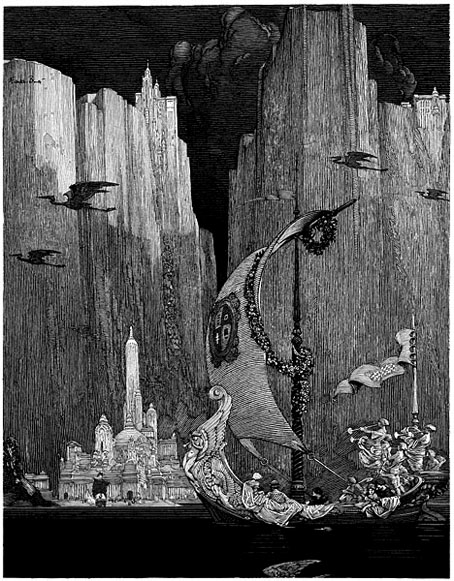
I was rather aggrieved a few weeks ago when I found a copy of James Whitcomb Riley’s The Flying Islands of the Night (1913) at the Internet Archive. Nice to find a free copy of a rare book but the grievance came as a result of an intention to write something about its illustrator, Franklin Booth (1874–1948), and post a picture or two. It turns out that the scanned copy available is complete but all the colour plates have been removed, probably stolen during its career as a library volume. Riley’s story is a piece of light fantasy which might well have been forgotten by now if it wasn’t for Booth’s incredible illustrations; as a result it’s the illustrations that make the book worth seeking out.

booth2.jpg

Booth’s penmanship from Franklin Booth: American Illustrator.

Happily, and by coincidence, Mr Door Tree at the essential Golden Age Comic Book Stories has uploaded scans of his own in the past few days. Beautiful stuff and easily the equal of Booth’s contemporaries in Britain such as Charles and William Heath Robinson, Edmund Dulac et al. Booth’s colour work resembles similar watercolour book illustration of the period but his black & white work was quite unique, being done in a pen style derived from his boyhood interest in engraved magazine illustrations. His careful use of hatched lines went on to influence later American illustrators including Roy Krenkel, Mike Kaluta, Berni Wrightson and others. Golden Age Comic Book Stories has an earlier posting featuring one of Booth’s pen drawings here and a page of Mucha-esque women here.

Bud Plant’s Franklin Booth page
Franklin Booth: American Illustrator

Elsewhere on { feuilleton }
The illustrators archive