Lost tapes of the Dr Who composer
Lost tapes of the Dr Who composer
| More Delia Derbyshire.
Passages from James Joyce’s Finnegans Wake
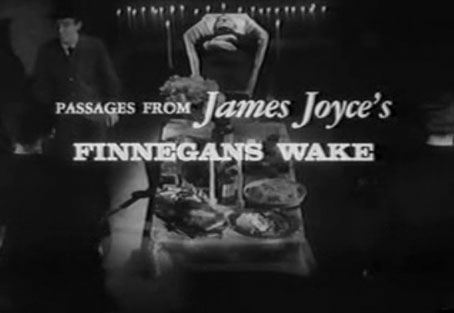
Ubuweb continues to come up with the very obscure goods. Mary Ellen Bute’s Passages from James Joyce’s Finnegans Wake is the kind of thing you would have been lucky to see on television even in the days when non-Hollywood fare was screened regularly. Joyce is almost the definitive example of the unfilmable author although that didn’t prevent Joseph Strick from having a go at Ulysses in 1967 and A Portrait of the Artist as a Young Man ten years later. Ulysses if it was filmed at all should probably be done as eighteen hour-long films rather than Strick’s truncated skate through the novel. Some passages work better than others but I’ve never been able to accept Milo O’Shea as Leopold Bloom. Bosco Hogan on the other hand is permanently fixed in my head as Stephen Dedalus having seen Portrait before reading the book.
As to the success of Mary Ellen Bute’s opus, I still haven’t watched it properly so you’ll have to go and look for yourself. It’s little more than an illustrated reading but that’s not necessarily as misguided as it seems. Finnegans Wake for many people is one of English literature’s impregnable fortresses; anything that helps break down the doors is surely worthwhile.
Passages from James Joyce’s Finnegans Wake
Directed by Mary Ellen Bute
Screenplay by Mary Manning
Cinematography by Ted Nemeth
Music by Elliot Kaplan
Cast (in alphabetical order)
Ray Flanagan . . .Young Shem
Peter Haskell . . . Shem
Page Johnson . . . Shaun
Martin J. Kelley . . . Finnegan
Jane Reilly . . . Anna Livia
There are currently no copies of this film availabe on VHS or DVD; but a 16 mm print is available for museums, universities, and Joycean institutions. Contact Mrs. Cecile Starr at (802) 863-6904; rental is $180.
A half-forgotten, half-legendary pioneer in American abstract and animated filmmaking, Mary Ellen Bute, late in her career as an artist, created this adaptation of James Joyce, her only feature. In the transformation from Joyce’s polyglot prose to the necessarily concrete imagery of actors and sets, Passages discovers a truly oneiric film style, a weirdly post-New Wave rediscovery of Surrealism, and in her panoply of allusion – 1950s dance crazes, atomic weaponry, ICBMs, and television all make appearances – she finds a cinematic approximation of the novel’s nearly impenetrable vertically compressed structure.
With Passages from Finnegans Wake Bute was the first to adapt a work of James Joyce to film and was honored for this project at the Cannes Film Festival in 1965 as best debut.
Previously on { feuilleton }
• Wyndham Lewis: Portraits
• Picasso-esque
• Books for Bloomsday
• Finnegan begin again
Decorative car mascots
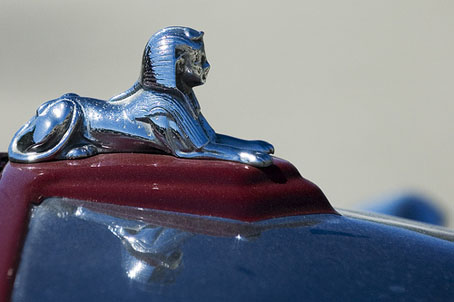
The Hood Ornament Flickr pool features an impressive range of antique car mascots from the age when motor vehicles were emblazoned with mythological motifs and pedestrian safety was an afterthought. Most of them tend to be Art Deco-styled but a few display the florid elegance of Art Nouveau, a design trend that was being eclipsed as car ownership became more popular. I have one of these sphinx mascots, the trademark of Armstrong Siddeley motors for several decades. I always thought the similarity to London’s Embankment sphinxes was a coincidence but it appears not.
Previously on { feuilleton }
• The Feminine Sphinx
• Lalique’s dragonflies
• The Decorative Age
• Frémiet’s Lizard
The Lagoon Nebula
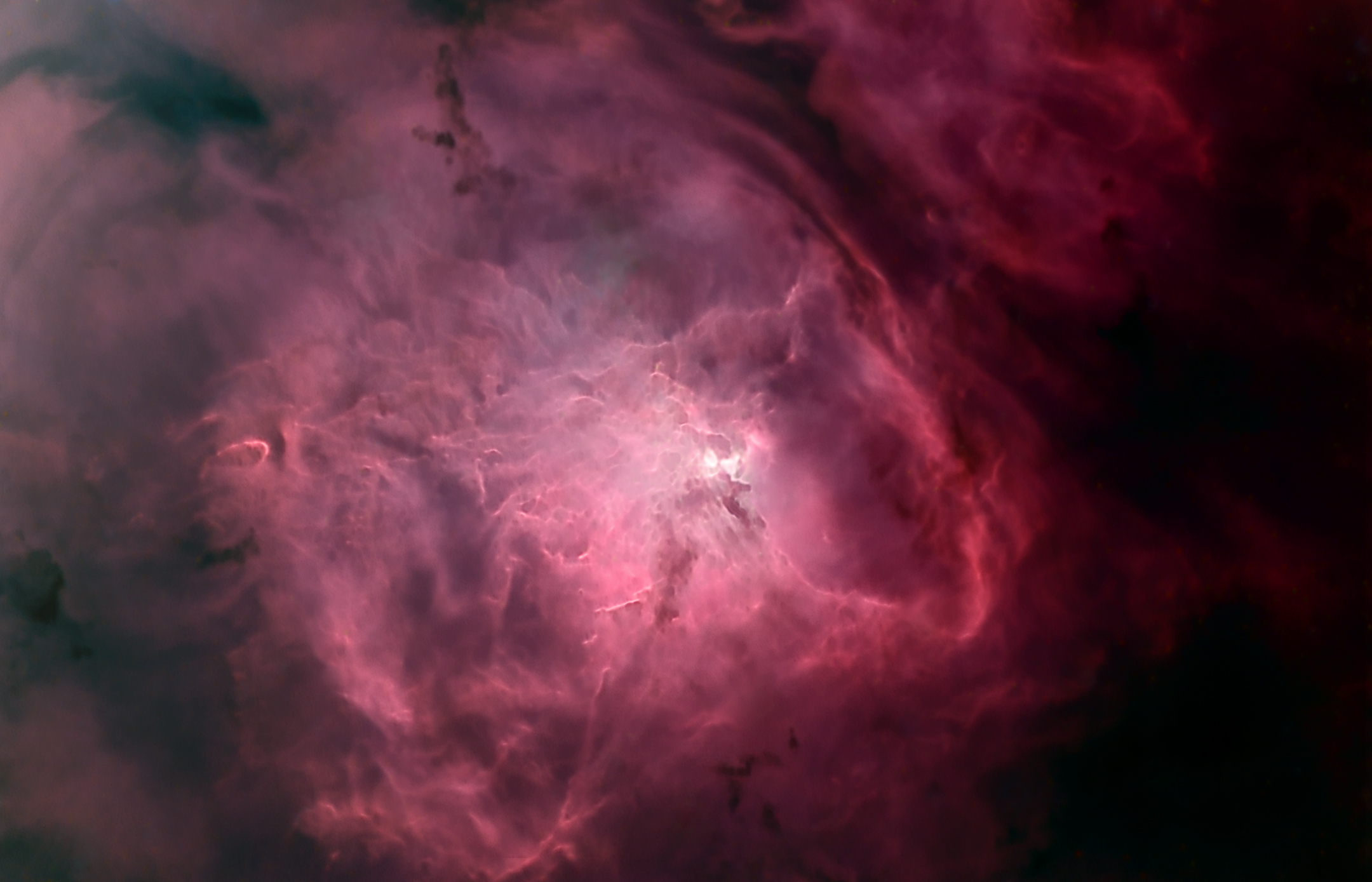
Gas and Dust of the Lagoon Nebula by Fred Vanderhaven.
The Pink Lagoon, NASA’s Astronomy Picture of the Day.
This beautiful cosmic cloud is a popular stop on telescopic tours of the constellation Sagittarius. Eighteenth century cosmic tourist Charles Messier cataloged the bright nebula as M8, while modern day astronomers recognize the Lagoon Nebula as an active stellar nursery about 5,000 light-years distant, in the direction of the center of our Milky Way Galaxy. Striking details can be traced through this remarkable picture, processed to remove stars and hence better reveal the Lagoon’s range of filaments of glowing hydrogen gas, dark dust clouds, and the bright, turbulent hourglass region near the image center. This color composite view was recorded under dark skies near Sydney, Australia. At the Lagoon’s estimated distance, the picture spans about 50 light-years.