
The Willows by Algernon Blackwood

willows.jpg

Light play on the river Thame by net_efekt.

…the major products of Mr. Blackwood attain a genuinely classic level, and evoke as does nothing else in literature an awed convinced sense of the imminence of strange spiritual spheres of entities.

The well-nigh endless array of Mr. Blackwood’s fiction includes both novels and shorter tales, the latter sometimes independent and sometimes arrayed in series. Foremost of all must be reckoned The Willows, in which the nameless presences on a desolate Danube island are horribly felt and recognised by a pair of idle voyagers. Here art and restraint in narrative reach their very highest development, and an impression of lasting poignancy is produced without a single strained passage or a single false note.

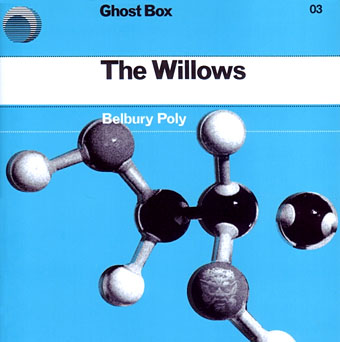
Thus HP Lovecraft in 1927 from his lengthy overview of horror fiction, Supernatural Horror in Literature. Lovecraft was enthusiastic about many of Blackwood’s weird tales, rating him as one of the contemporary masters along with Arthur Machen. A year before his essay he prefaced The Call of Cthulhu with a Blackwood quote and regularly referred to The Willows as one of his favourite stories. Blackwood’s tale continues to find enthusiasts today, among them the Ghost Box music collective whose Belbury Poly CD titled after the story manages to reference in the space of 44 minutes Blackwood, Machen, CS Lewis and The Morning of the Magicians.
belbury.jpg

If your curiosity is sufficiently piqued by this point, you can read the story online at Wikisource or Project Gutenberg. Or you can listen to a reading in a new posting at LibriVox. The perfect thing for autumn and the month of Halloween.

Previously on { feuilleton }
Horror in the shadows
Wanna see something really scary?
Ghost Box
The Absolute Elsewhere

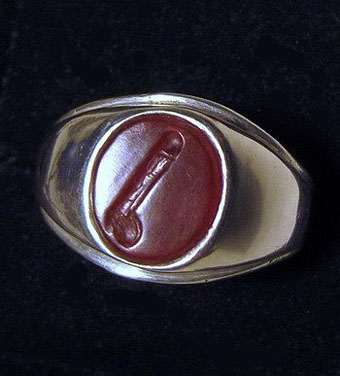
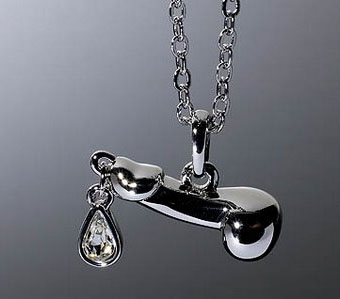
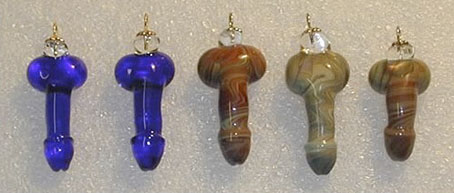
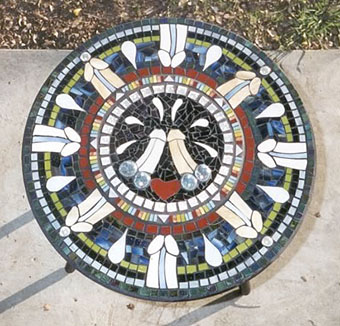
Phallic bibelots

phallus1.jpg

Does Priapus rule the month of October? Having this lot appear in the same week makes it seems likely. The carved carnelian sealing ring above comes via Silent-Porn-Star.

phallus2.jpg

Then this Vivienne Westwood pendant turned up at Fabulon.

phallus3.jpg

Finally, there’s the discovery of two artists producing phallic glasswork. Paul Thomas created the pendants above while Jamie Burress is responsible for the penis table.

phallus4.jpg

Elsewhere on { feuilleton }
The gay artists archive

Previously on { feuilleton }
Phallic worship
The art of ejaculation

The recurrent pose 20

taddei.jpg

Meditation by Richard Taddei (2003).

Many of Richard Taddei‘s paintings of male figures draw upon Classical and other references so encountering the Flandrin pose in his work isn’t too surprising. I really like the semi-abstract works of which Meditation is an example.

Elsewhere on { feuilleton }
The gay artists archive
The recurrent pose archive

Obsolete formats continued

cassette.jpg

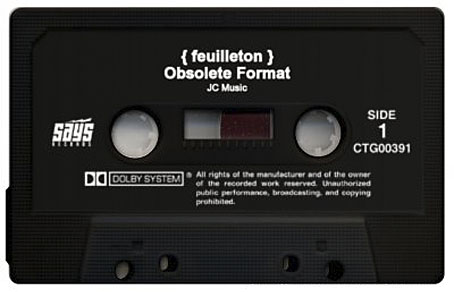
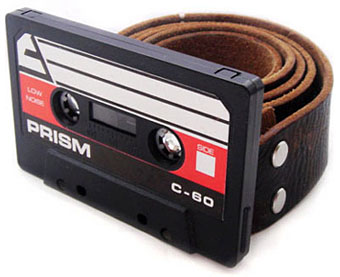
Following yesterday’s post, more cassette culture. Cassette Generator allows you to make your own labelled cassette graphic like the one above. I’m not quite sure this has any compelling purpose but that’s the web for you. For the question of what to do with the world’s stock of unwanted cassettes, Designboom has a few suggestions, including the belt buckle below. If you need more bling, there’s also a gold version. And for real obsessives, there’s Tapedeck.org.

cassette2.jpg

Previously on { feuilleton }
Old music and old technology

Old music and old technology

autobahn1.jpg

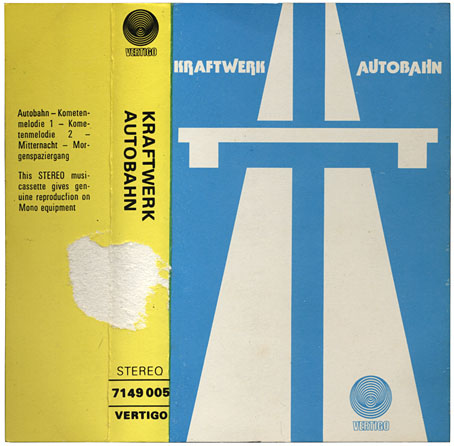
Clearing junk today turned up some obsolete artefacts one of which (the Kraftwerk) has been kept for purely sentimental reasons. It’s been amusing the past few years watching the vinyl disc refuse to crawl onto the scrapheap of history despite its death having been announced many times over by journalists who should know better. Several of the CD releases I’ve designed recently have also been brought out in vinyl editions. Meanwhile the audio cassette really is on the way out: “Sales of music cassettes in the U.S. dropped from 442 million in 1990 to about 700,000 in 2006” says Wikipedia. I certainly won’t mourn its passing; portability aside, I always hated these things. Music sounded shitty unless the tape was chrome or some other high-quality format, and whatever the quality they were all subject to mangling by cheap cassette players.

Continue reading “Old music and old technology”