The art of Dugald Stewart Walker, 1883–1937

walker1.jpg

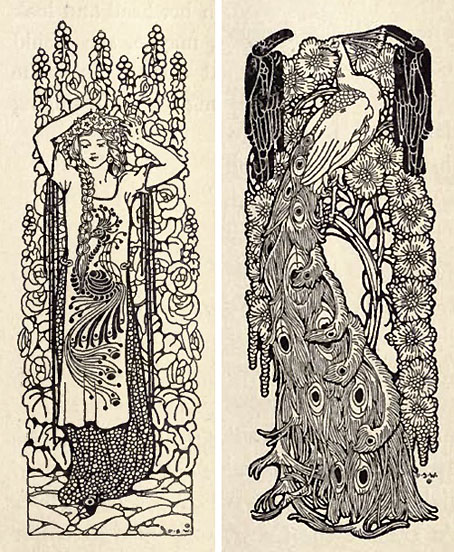
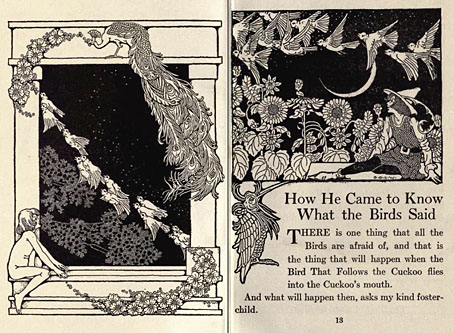
A posting of Dugald Stewart Walker’s work this week at the always excellent Golden Age Comic Book Stories sent me back again to the Internet Archive to see if there might be further examples among their collection of scanned library books. Sure enough there’s not only a copy of the book which GACBS sampled from, Padraic Colum’s The Girl Who Sat By The Ashes, but also other fairy tale collections by Colum, including the one featured here, The Boy Who Knew What the Birds Said (1918). Colum is well-represented in the Internet Archive’s American Library section and many of his titles seem to be at least partly illustrated. A cursory glance at some of the others turned up his retelling of Greek myths illustrated by Willy Pogány.

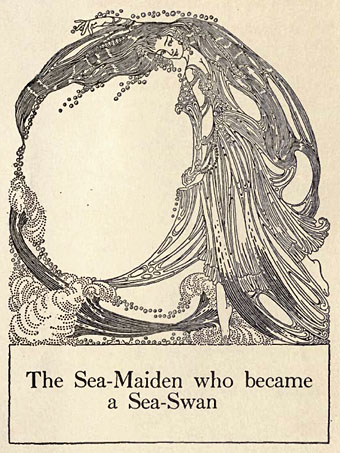
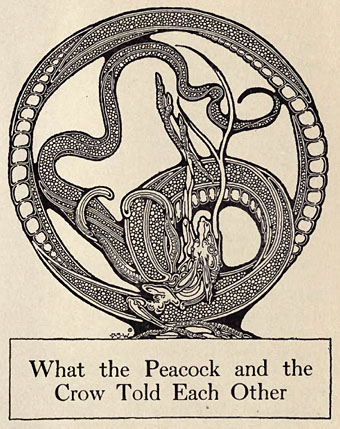
I’m not as keen on Walker’s work as I am other artists of this period—he has a tendency to give his adult characters gnome-like features—but the line work and compositions are first class. The Boy Who Knew What the Birds Said is especially nice for its many peacock details, some of which are featured below.
walker2.jpg

walker3.jpg

walker4.jpg

left: Bloom-of-Youth and the Witch of the Elders; right: What the Peacock and the Crow Told Each Other.

Elsewhere on { feuilleton }
The illustrators archive

Previously on { feuilleton }
Peacocks
Willy Pogány’s Parsifal

Oliver Postgate, 1925–2008

clangers.jpg

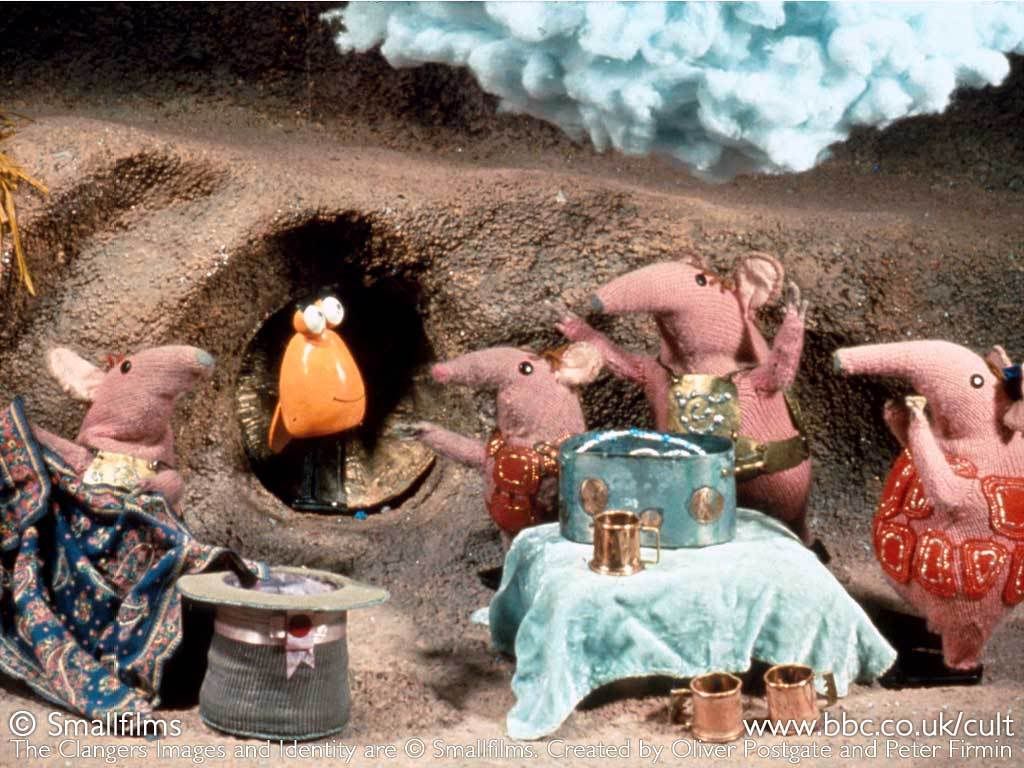
The Clangers (and a Froglet).

Lots of eulogies for Oliver Postgate doing the rounds just now, somewhat inevitable when his Smallfilms productions for the BBC furnished the imaginations of generations of British children in the Sixties and Seventies. Smallfilms’ films matched their name, being short animations created on minimal budgets by a trio of Postgate (writing, narration), Peter Firmin (artwork and animation) and Vernon Elliot (music). Postgate’s voice was the single constant across the disparate stories. For anyone of a certain age his distinctive tones carry that punch of primal recognition common to all things which make a strong impression during childhood.

noggin.jpg

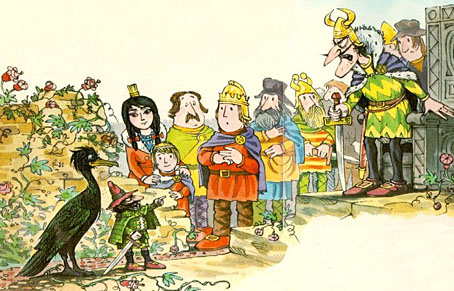
Noggin the Nog.

I watched everything Smallfilms produced but being a space-obsessed Space Age kid my favourites were always The Clangers, a family of hooting, pink creatures who shared a moon-like planetoid with a Soup Dragon and (in an orbiting nest) an Iron Chicken. Being equally obsessed with Norse mythology, however, I also enjoyed Noggin the Nog, which never seemed to get repeated very often, probably because the early films were made in black and white. Oliver Postgate seemed to like dragons; as well as the Soup Dragon, Noggin had a very traditional Ice Dragon with a pile of treasure while the otherwise non-fantasy Ivor the Engine—tales of a small Welsh steam train—included a tiny dragon among the cast of characters, perhaps derived from the national emblem of Wales. Postgate and Peter Firmin reworked some of these stories into book form and my favourite books in our school library were the Noggin the Nog ones and Tove Jansson’s tales of the Moomins. The Clangers aren’t as alien as they first appear when you know that their true identity can be found in the 1967 tale of Noggin and the Moon Mouse.

Needless to say, YouTube has numerous opportunities for us to sate curiosity or indulge nostalgia, including BBC 4’s 2005 documentary about Smallfilms. The Guardian gathered a few choice examples as an addendum to their obituary page.

Lengthy Times obituary
The homespun genius of Oliver Postgate
See Emily play | The BBC meets the girl from Bagpuss

Previously on { feuilleton }
Occultism for kids

Darkness visible

pandemonium.jpg

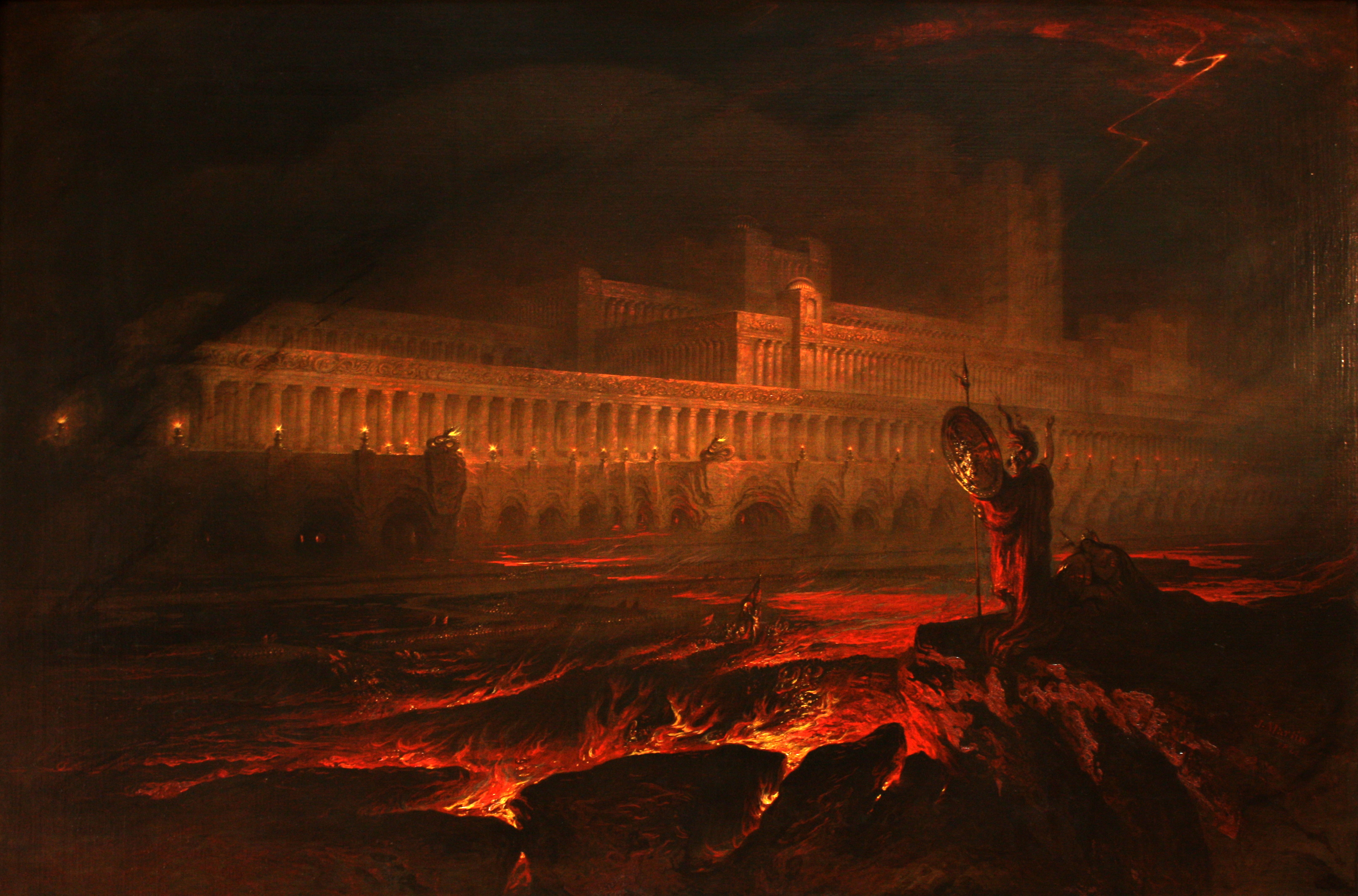
Pandemonium by John Martin (1841).

Happy birthday to John Milton, 400-years-old today.

dore.jpg

“High on a throne of a royal state, which far / Outshone the wealth of Ormus and of Ind” by Gustave Doré (1866).

Elsewhere on { feuilleton }
The etching and engraving archive

Previously on { feuilleton }
Chiaroscuro II: Joseph Wright of Derby, 1734–1797
Angels 4: Fallen angels
Death from above
The apocalyptic art of Francis Danby