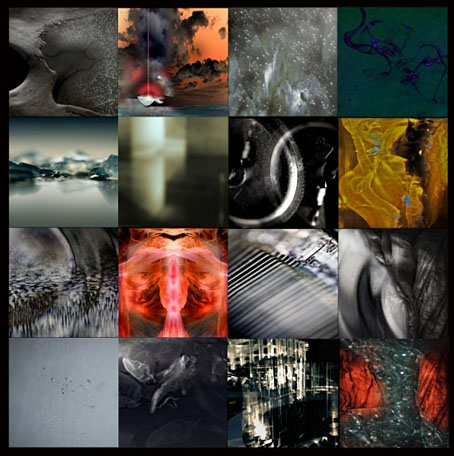
Cover ups: Storm Thorgerson’s iconic album artwork | From the Hipgnosis days and after.
Jerry by Paul Cadmus
Jerry (1931).
A few weeks too early for Bloomsday, this painting by Paul Cadmus was in the news this week after being acquired by the Toledo Museum of Art. The subject is Jerry French, one of the artist’s regular models and also his lover during this period. I hadn’t seen this picture before and wonder whether this is the first painted representation of Joyce’s Ulysses, a book which at the time was still banned in the USA. The ban was overturned in 1933 following some enlightened deliberation by Judge John M Woolsey.
Jerry takes its place as part of the Toledo Museum’s permanent collection next month. Via Towleroad.
• Paul Cadmus gallery at Ten Dreams
Elsewhere on { feuilleton }
• The gay artists archive
Previously on { feuilleton }
• The art of Paul Cadmus, 1904–1999
Dimitris Yeros
“For A Definition Of The Nude”.
After yesterday’s post I can’t resist repeating something seen at Fabulon, Thombeau and I both being cock fanatics (so to speak). Dimitris Yeros is a Greek artist and photographer whose site features a series of studies of male and female nudes juxtaposed with a variety of animals. This isn’t the only peacock photo, there’s also a female portrait and, in one of the other sections, that recurrent object of obsession, a naked man with a sword. As well as photography, Yeros presents examples of his very distinctive paintings.
While we’re on the subject of masculine eye candy, I’ve been enjoying some of the discoveries at Homotography (“Photography with homosexual tendencies”) not least their recent interview with Exterface, French masters of luscious homoerotica.
Previously on { feuilleton }
• Exterface
Louis Rhead’s peacocks
La femme au paon (Woman with peacocks): from L’Estampe Moderne (1897).
Two works by British Art Nouveau poster artist and illustrator, Louis Rhead (1858–1926). The first of these is very typical and resembles many of his magazine covers of the period. The cover illustration for The Century, meanwhile, must count as the only time I’ve seen a peacock presented as a possible Christmas dish.
The Century Christmas Number (December 1894).
Previously on { feuilleton }
• Peacocks
• Rene Beauclair
• Whistler’s Peacock Room
• Beardsley’s Salomé
L’Ange by Patrick Bokanowski
The good people at Ubuweb have excelled themselves by turning up this 70-minute avant garde work by a director who’d managed to stay resolutely off my radar despite years spent delving for cinematic weirdness. L’Ange (1982) is a film which stands comparison with the more abstracted moments of David Lynch and the Brothers Quay. In fact some scenes (and the music) are so reminiscent of parts of the Quay canon I’d suspect an influence if I didn’t consider that an unfair diminishing of the Brothers’ own considerable talents. So what is L’Ange? Trying to describe this film isn’t exactly easy so it’s simpler to hijack Ubuweb’s own précis:
During the seventy minutes of The Angel, viewers see a series of distinct sequences arranged upward along a staircase that seems more mythic than literal. Each of the sequences has its own mood and type of action. Early in the film, a fencer thrusts, over and over, at a doll hanging from the ceiling of a bare room. At first, he is seen in the room at the end of a narrow hallway off the staircase, and later from within the room. He fences, sits in a chair, fences – his movements filmed with a technique that lies somewhere between live action and still photographs. At times, Bokanowski’s imagery is reminiscent of Etienne-Jules Marey’s chronophotographs. Further up the stairs, we find ourselves in a room where a maid brings a jug of milk to a man without hands, over and over. Still later, we are in a room where there seems to be a movie projector pointing at us. Then, in a sequence reminiscent of Méliès and early Chaplin, a man frolics in a bathtub, and in a subsequent sequence gets up, dresses in reverse motion, and leaves for work. The film’s most elaborate sequence takes place in a library in which nine identical librarians work busily in choreographed, slightly fast motion. When the librarians leave work, they are seen in extreme long shot, running in what appears to be a two-dimensional space, ultimately toward a naked woman trapped in a box, which they enter with a battering ram. Then, back in the room with the projector, we are presented with an artist and model in a composition that, at first, declares itself two-dimensional until the artist and model move, revealing that this “obviously” flat space is fact three-dimensional. Finally, a visually stunning passage of projected light reflecting off a series of mirrors introduces The Angel‘s final sequence, of beings on a huge staircase filmed from below; the beings seem to be ascending toward some higher realm. Bokanowski’s consistently distinctive visuals are accompanied by a soundtrack composed by Michèle Bokanowski, Patrick Bokanowski’s wife and collaborator. Like Robert Wiene’s The Cabinet of Dr. Caligari (1919), Bokanowski’s The Angel creates a world that is visually quite distinct from what we consider “reality,” while providing a wide range of implicit references to it and to the history of representing those levels of reality that lie beneath and beyond the conventional surfaces of things.

Asking what it all means is pointless, we’re in the world of dreams here and once again we see how film is able to capture the ambience of dream states in a way no other artform can manage. For an obviously low-budget production there’s real craft and control at work throughout L’Ange, not least in the excellent score—a blend of strings and electronics—which could easily stand alone. Many experimental films of this type quickly outstay their welcome via prolonged repetition or a failure to exploit the imaginative potential of their techniques. Like Lynch and the Quays, Bokanowski successfully balances on the dividing line between narrative and abstraction, finding images unlike any we’ve seen elsewhere. Yes, I enjoyed this a lot, and now I want to watch it again on DVD (if such a thing exists). Anyone who enjoys The Grandmother or Rehearsals for Extinct Anatomies is advised to set aside seventy minutes of their time.
Previously on { feuilleton }
• The Hourglass Sanatorium by Wojciech Has
• Babobilicons by Daina Krumins
• Impressions de la Haute Mongolie revisited
• Short films by Walerian Borowczyk
• The Brothers Quay on DVD