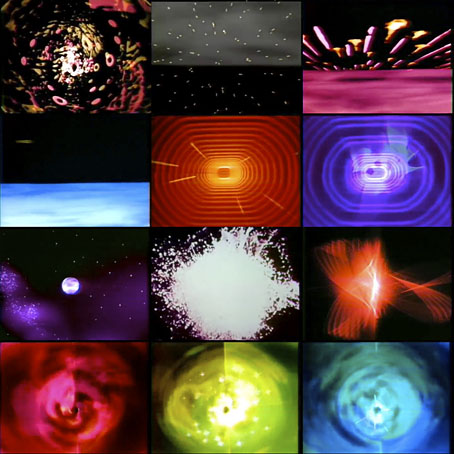
White Hole, a film by Toshio Matsumoto

whitehole.jpg

Another short film by Matsumoto. This one was made in 1979, and seems to employ video effects, but the results are cosmic and psychedelic enough to have appeared ten years earlier. The electronic score is by Joji Yuasa. An entrancing 6-minute trip. Watch it here.

Previously on { feuilleton }
Atman, a film by Toshio Matsumoto
Metastasis, a film by Toshio Matsumoto

Aubrey Beardsley’s Keynotes

keynotes1.jpg

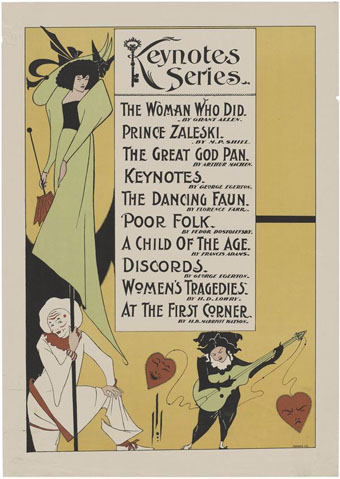
Promotional poster.

Keynotes was a series of 34 novels and short story collections published by John Lane from 1893. Aubrey Beardsley produced cover designs and embellishments for 22 of the titles in 1895 while he was working on The Yellow Book which John Lane was also publishing. Beardsley’s designs comprised a title frame with illustration or decoration which was blocked in gold on the cover and also used as a title page. For 15 of the titles he also created a series of key-shaped monograms for the authors, designs which were used on the spines and the backs of the books. Collections of Beardsley’s art often show one or two of these pieces but you seldom see them all, and even when the title frames are reproduced the type is often omitted.

keynotes4.jpg

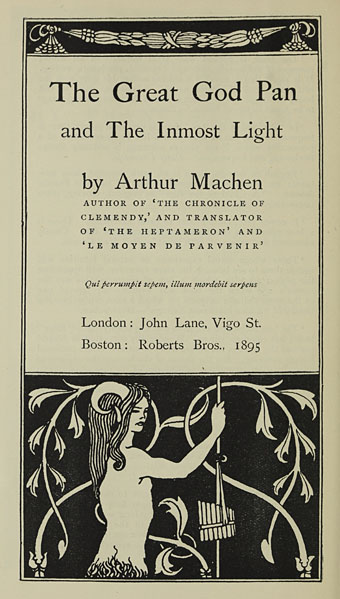
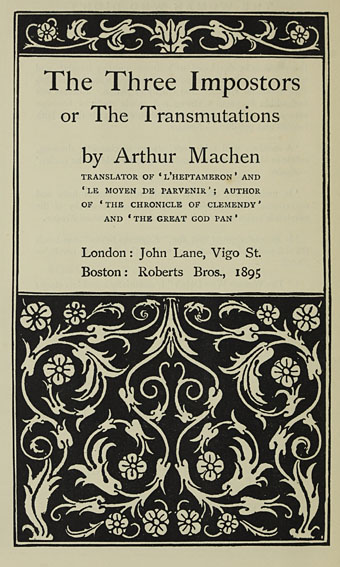
Keynotes Series of Novels and Short Stories was a small book published in 1896 intended to gather all the Beardsley designs in one place and also promote the series in general. Two of the most celebrated works to receive the Beardsley treatment are those by Arthur Machen: The Great God Pan and The Inmost Light, and The Three Imposters. The decoration for the latter gives no indication of the horrors lurking inside that volume, while the faun on The Great God Pan is a world away from the amorphous nightmare in a story that caused considerable outrage at the time. According to Stanley Weintraub’s biography, the Keynotes series was very popular despite (or because of) the stir it caused, and helped keep Beardsley’s work visible when many of his other illustrations were out of circulation.

keynotes5.jpg

Continue reading “Aubrey Beardsley’s Keynotes”

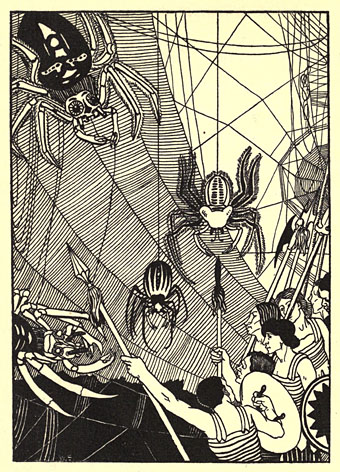
Lucian’s True History

lucian01.jpg

Lucian is Lucian of Samosata whose True History (also known as A True Story) is often regarded as one of the earliest works of science fiction. The book is a satirical work, but unlike many earthbound satires this one concerns a journey into outer space, encounters with the inhabitants of various planets, and descriptions of interplanetary war.

lucian02.jpg

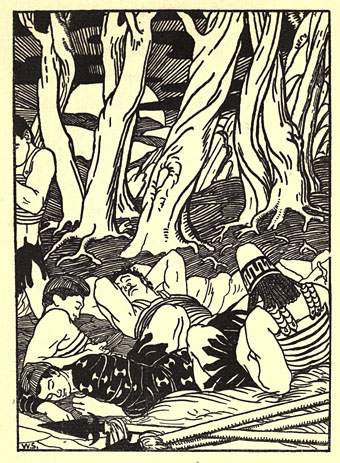
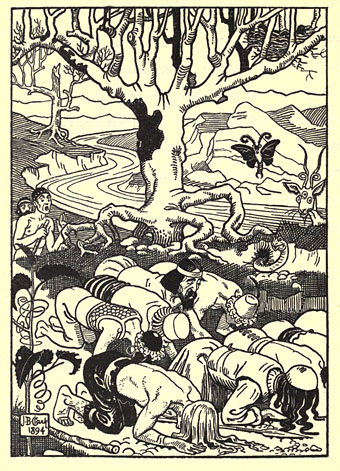
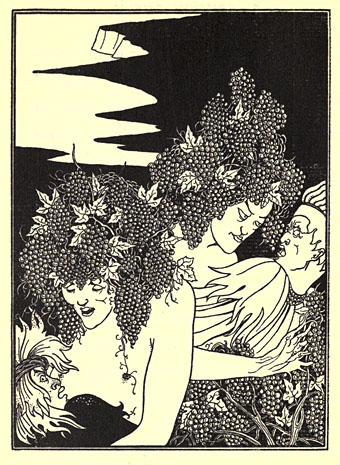
These illustrations are from the 1894 edition which included contributions by Aubrey Beardsley that were the artist’s earliest drawings after the enormous labour of the Morte d’Arthur. Beardsley was eager to illustrate the book which he found more stimulating than the Mallory but when commissions arrived for Wilde’s Salomé and The Yellow Book he found himself overworked. (The publishers also rejected two of the more grotesque drawings.) William Strang and JB Clark filled out the rest of the book. The Beardsley illustrations are familiar from the larger collections but I’d not seen the Strang and Clark drawings until now. Content-wise this was the strangest book that Aubrey worked on, and I can’t help but wonder how he might have illustrated the rest of it if he’d had the time.

lucian03.jpg

lucian04.jpg

Continue reading “Lucian’s True History”

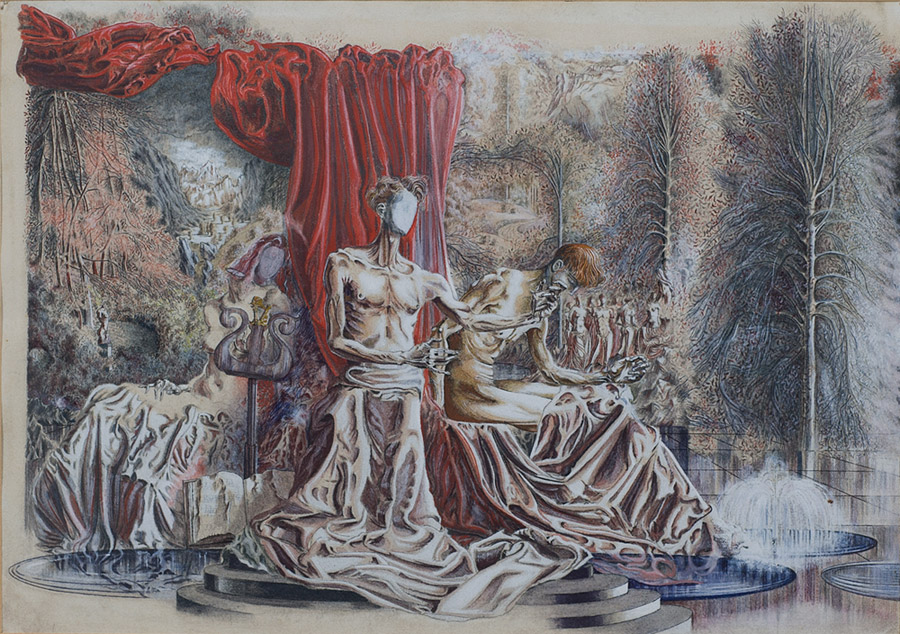
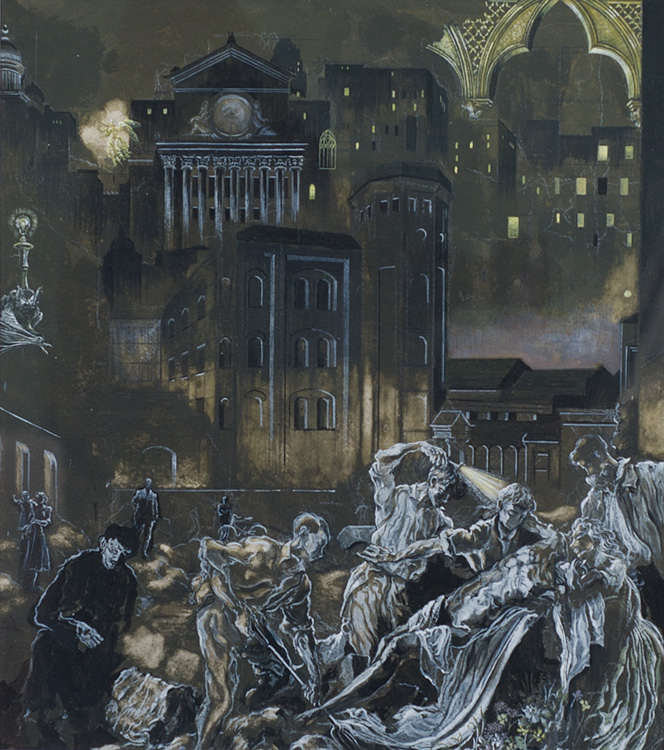
The art of Robin Ironside, 1912–1965

ironside1.jpg

Rossetti’s Willow Wood (1944).

In one of those odd coincidences that occur from time to time, a picture by Robin Ironside is featured in a book I’ve been reading this week just as news arrives of a forthcoming talk about Ironside’s strange paintings. The book is Baroque Baroque by Stephen Calloway, while the talk is being given by the artist’s niece, Virginia Ironside, at the Viktor Wynd Museum of Curiosities, Fine Art & Natural History in London on April 21st. (Details here.)

ironside2.jpg

Secret burial (1954).

I have to admit that I’d not encountered Ironside’s work until now despite a long-term fetish for unusual or unfashionable art. This isn’t too surprising since he and his fellow Neo-Romantics (a term he coined) had the misfortune to be working during a period that was deeply antagonistic towards this kind of painting. Rex Whistler is the most popular exponent of the style but Ironside’s art has the added attraction of a vaguely Surrealist flavour without any of the absurdities that usually ruin English attempts to follow Dalí and company. The Ironside website has further examples of his paintings plus designs for the theatre and some illustration work. For those who can’t attend The Last Tuesday Society there’s a lengthy reminiscence by Virginia Ironside about her fascinating uncle.

Philip K. Dick: A Day in the Afterlife

pkd1.jpg

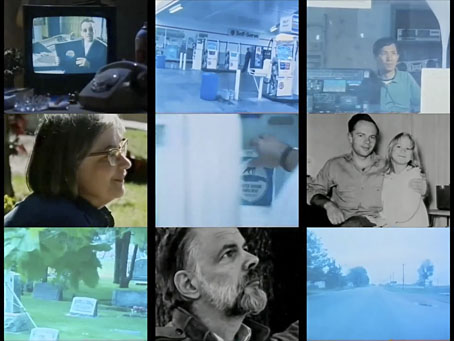
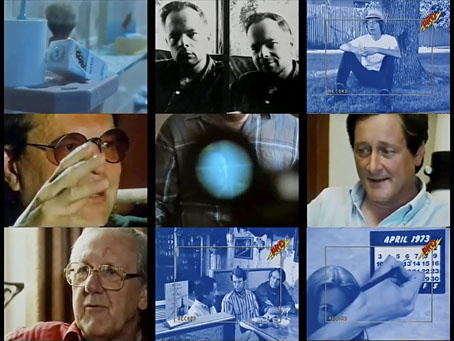
Blade Runner turns up in Nicola Roberts’ television documentary but not for long. Back in 1994 it was still possible to discuss a popular writer by concentrating on the books alone rather than padding the running time with film and TV derivations. The BBC’s Arena strand excelled at these 50-minute biographies of significant cultural figures.
pkd2.jpg

The last time I watched this documentary was on a big TV screen in a house in Los Angeles. Stepping out into the California sun a couple of hours later was like stepping into a Philip K. Dick novel, a slippage between the real and the fictional that Dick himself might have appreciated. Among the luminaries discussing the author’s slippery narratives are Brian Aldiss, Jim Blaylock, Elvis Costello, Anne Dick (PKD’s third wife), Tessa B. Dick (PKD’s fourth wife), Thomas M. Disch, Terry Gilliam, Kleo Mini (PKD’s second wife), Tim Powers, Kim Stanley Robinson and Fay Weldon. There’s also video footage of Dick being interviewed in the late 70s/early 80s. Watch it here.

Previously on { feuilleton }
Blade Runner vs. Metropolis