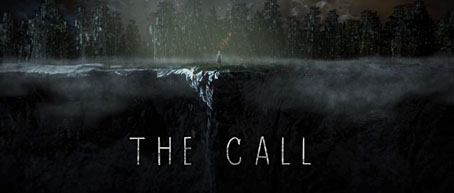
Now what could this be about? Like last week’s writhings, PixelBump’s film is short but sweet. To say more would be to spoil its 90 seconds. Watch it here.
Elsewhere on { feuilleton }
• The Lovecraft archive
A journal by artist and designer John Coulthart.
Now what could this be about? Like last week’s writhings, PixelBump’s film is short but sweet. To say more would be to spoil its 90 seconds. Watch it here.
Elsewhere on { feuilleton }
• The Lovecraft archive
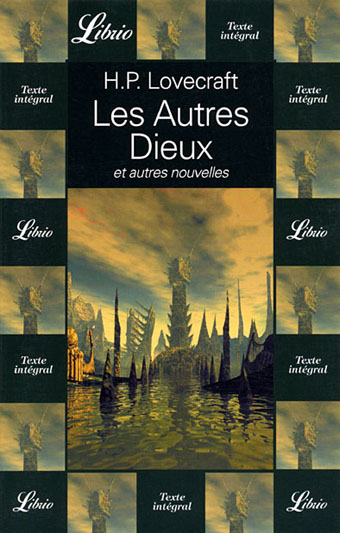
Les Autres Dieux et autres nouvelles (2002).
In 2002, French publisher J’ai Lu used my perennially popular view of R’lyeh on the cover of a small collection of HP Lovecraft’s fiction. This replaced a Michael Whelan painting on an earlier edition which looks fine but which happens to be a detail from one of his old Elric covers.
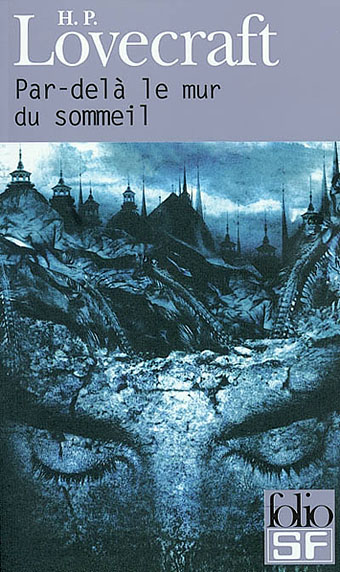
Par-delà le mur du sommeil (2002). Cover art by Eikasia.
Looking through the Lovecraft pages at Noosfere this week turned up some recent French covers I’d not seen before. One of the striking things about cover art for French genre titles is the amount of artists who also work in comics. This isn’t so surprising given the scale of the French comics world but in the UK the tendency is for people to work in one area alone. Artists such as myself who move freely from comics to cover art to graphic design are a very small minority.
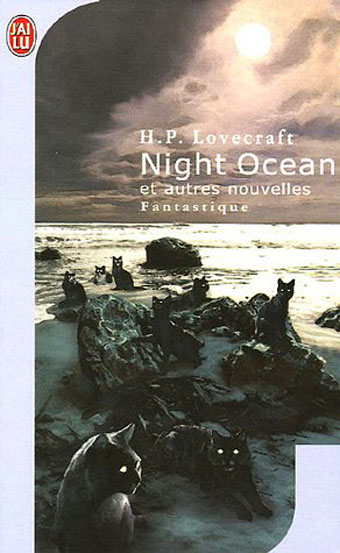
Night ocean et autres nouvelles (2005). Cover art by Richard Guérineau.
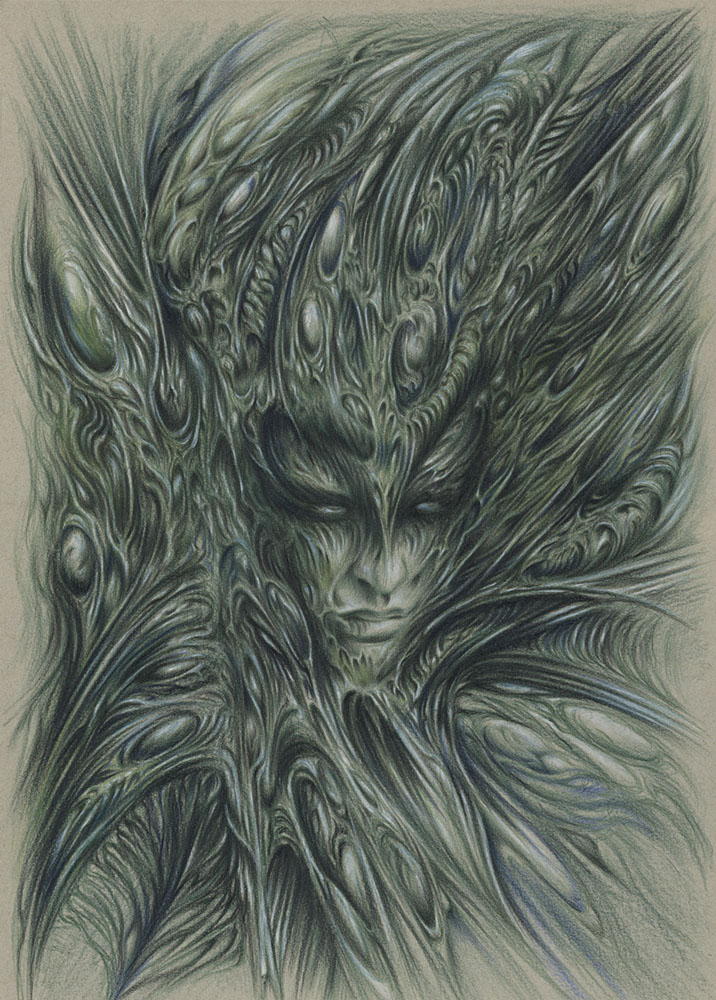
Hastur (1999) by John Coulthart.
Going through some of my old Lovecraft art this week it occurred to me that this drawing hadn’t been made public in its original colour form. Hastur appears as a murkier black-and-white illustration in the Great Old Ones series I produced in collaboration with Alan Moore for The Haunter of the Dark. The drawing was one of several improvised pieces made using coloured pencils on tinted paper. Some people may regard this and similar works as “Gigeresque” but I only apply that label to close imitations of HR Giger’s biomechanical style. This type of improvised drawing or painting predates Giger—Max Ernst’s decalcomania paintings being familiar examples—and you see similar fields of organic or mineral forms in the work of other Surrealist or Fantastic artists. If you have some ability with a pencil or paintbrush it’s relatively easy to produce a lot of this kind of work; the challenge is to do something more than create a mass of writhing abstraction.
Elsewhere on { feuilleton }
• The Lovecraft archive
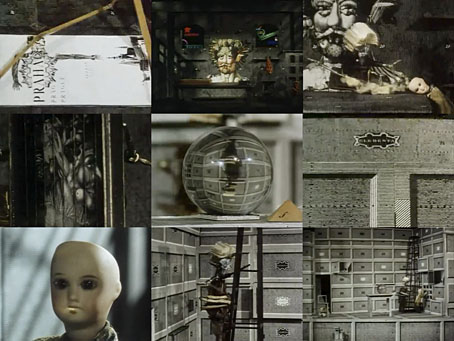
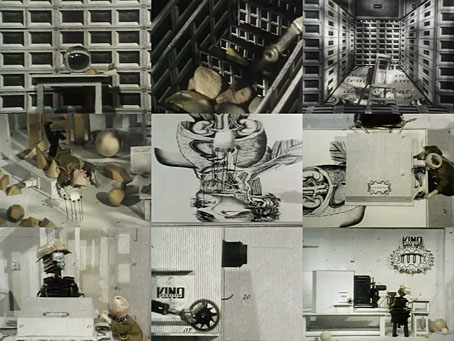
A busy week here (for a change) so this is a bit of a lazy choice but there is a Wunderkammer present. The Quays made this in 1984 for a Švankmajer documentary, and it’s still one of my favourites: Švankmajer as subject, lots of Prague references, and wonderful music (borrowed from Švankmajer’s own films) by Zdeněk Liška. This is also one of the few films you’ll see with animated characters demonstrating some film animation of their own. Watch it here.
Elsewhere on { feuilleton }
• The Quay Brothers archive
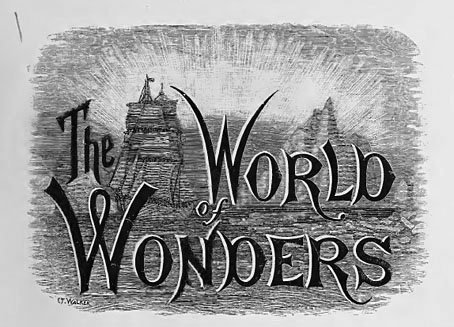
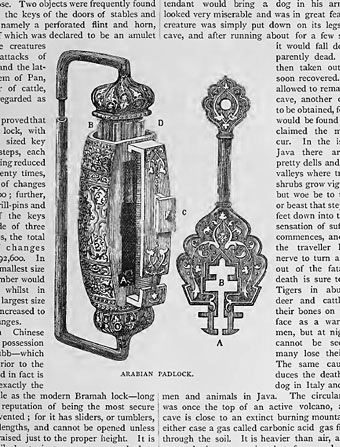
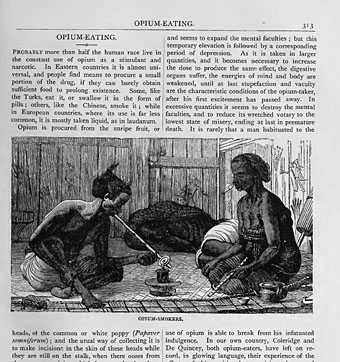
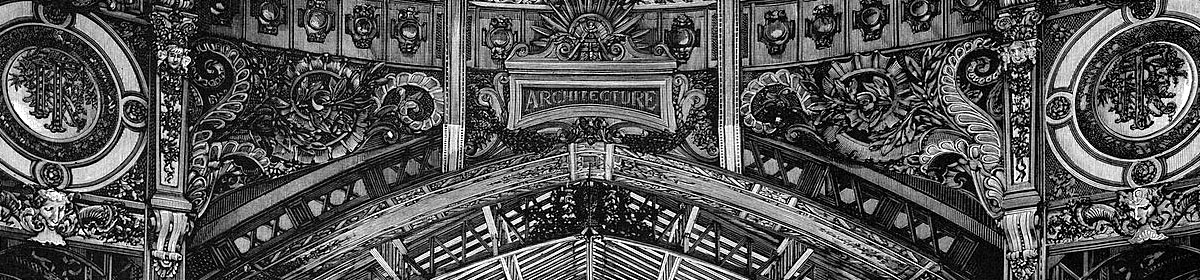
This is the kind of Victorian book I enjoy a great deal, something that might be regarded as a Wunderkammer in paper form: not an encyclopedia, and not a science text-book but containing the kinds of articles you’d find in both. The chief attraction is the engraved illustrations, of course, although the articles themselves are often of interest. The World of Wonders dates from 1883, and is subtitled “A record of things wonderful in nature, science, and art”. This is very like a book I own entitled The Pictorial Cabinet of Marvels although The World of Wonders is the superior work, with a larger page count and a wider range of subjects. This is also only Volume 1, although I’ve not searched through the Internet Archive to see whether they have any further volumes. The illustrations are from a PDF, the page scans are much better quality. And I was pleased to find that two of the plates shown below—Barnacles and A Coal Forest—were combined by Wilfried Sätty for one of his Poe collages. (I’d scan the Sätty picture but I don’t want to spoil the book.) I’ve recently been commissioned to create some more engraving collages so volumes such as this may be useful source material.