Hold On

holdon1.jpg

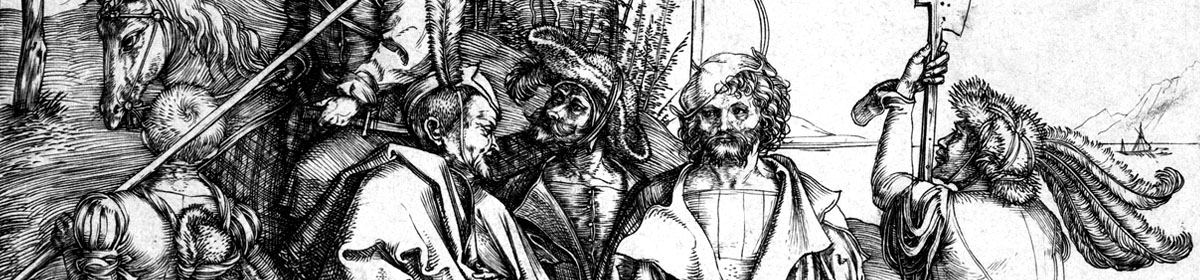
More rubble from Rubble. This isn’t as revelatory as In The Past but I like the evolution. Two of these versions of Hold On are featured on the Rubble series while the original by Rupert’s People may be heard on other psych compilations.

Rupert’s People was the name that freakbeat group The Fleur De Lys adopted for a handful of psychedelic releases in 1967; the name Rupert probably refers to the Daily Express‘s Rupert Bear, a comic-strip character who famously lost his innocence three later in the Schoolkids’ Issue of Oz magazine. Fleur De Lys appear on Rubble 13 playing Gong With The Luminous Nose, their musical setting (with inevitable retitling) of Edward Lear’s poem The Dong with a Luminous Nose. Hold On was the B-side of Reflections Of Charles Brown, and is very much a hangover from the beat period: a good song but it doesn’t stand out the way the next version does.

holdon2.jpg

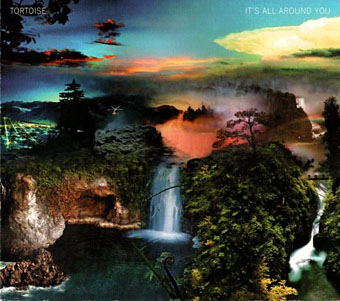
Sharon Tandy left South Africa for London where she recorded a number of songs with The Fleur De Lys as her backing group. Her ace version of Hold On was also the B-side of Stay With Me in the UK but the French and US releases flipped the songs. This version and another Tandy/Fleur De Lys collaboration, the tremendous Daughter Of The Sun, leap out of Rubble 8. There’s a great clip of Tandy performing Hold On for Beat Club. The searing guitar solo is by Bryn Haworth.

holdon3.jpg

The third version appears on Rubble 3, and may also be heard on another excellent psych collection, Insane Times: 25 British Psychedelic Artefacts From The EMI Vaults. Rock music was getting heavier by 1969 so this version subjects the song to high-pitched vocals, wah-wah pedal, incipient riffing and what might be a synth drone. Despite a band name indicative of magickal accomplishment Ipsissimus didn’t record anything else.

Previously on { feuilleton }
Digging the Rubble
Out Of Limits
In The Past

Digging the Rubble

rubble01.jpg

1: The Psychedelic Snarl.

A few words in praise of Rubble, the 20-disc collection of (mostly) British psychedelic singles released by the Bam Caruso label from 1984 to 1991. A reader of Rob Chapman’s Psychedelia and Other Colours would find the Rubble series an indispensable companion to the second half of the book which explores the unique styles of British psych. Ideally you’d read the book while having these and other compilations close at hand, something I didn’t manage so I’ve been going through the discs myself this week, listening out for some of the many singles that Chapman discusses. The Rubble title is a nod to Lenny Kaye’s 1972 collection Nuggets: Original Artyfacts from the First Psychedelic Era, 1965–1968, the first reappraisal of the garage/psych era whose success spawned Nuggets II: Original Artyfacts from the British Empire and Beyond, 1964-1969, a not-so-good attempt to do the same for the UK, and Children of Nuggets: Original Artyfacts from the Second Psychedelic Era, 1976-1995. The original Nuggets was followed by the long-running Pebbles series which sprawls over 28 discs collecting obscure garage singles.

rubble02.jpg

2: Pop-Sike Pipe Dreams.

What I like about the Rubble series, apart from its covering a favourite zone of musical history, is the way that each volume is titled in a suitable manner beyond a mere number: the title of volume 8, All The Colours Of Darkness could have been used by Coil during their LSD period. Then there’s the sleeve designs by the great Phil Smee, one of the founders of Bam Caruso, the collector of many of the featured singles, and a first-rate artisan of psychedelic graphics: there’s a Louis Wain cat on volume 2, and more of those letterforms by Roman Cieślewicz on volume 10. Smee deserves a post of his own but covering such a lengthy career would be a daunting task: Discogs lists 784 separate releases, and that’s only his design work. The design on the first run of Rubble albums was credited to “Harvey S. Williams”, a Smee pseudonym playing on the name of Elektra Records art director William S. Harvey. Harvey S. Williams was also the designer of the short-lived and rather wonderful Bam Caruso magazine, Strange Things Are Happening, issues of which are advertised in the inner sleeves of the early Rubble albums. (The magazine borrowed its title from a 1968 single by Rings and Things which is featured on Rubble 4.)

rubble03.jpg

3: Nightmares In Wonderland.

The Rubble series has been reissued on CD many times, and is currently available as The Rubble Collection, a glossy cube containing all 20 discs in card sleeves together with two booklets that reprint Phil Smee’s original sleeve notes and band photos. The Rubble albums sound a little rough today when many of the songs which were taken directly from old singles have been resurrected and can be heard elsewhere in better quality. Subsequent compilations have also cherry-picked many of the better selections but this is still the ideal place to start if you want to immerse yourself in the toyshop/kitchen sink surrealism that is British psychedelia.

• See also: Richard Norris reminiscing about working at Bam Caruso, and choosing 20 favourite British psych records.

rubble04.jpg

4: The 49 Minute Technicolour Dream.

Continue reading “Digging the Rubble”

Memoire by Mika Vainio & Franck Vigroux

memoire.jpg

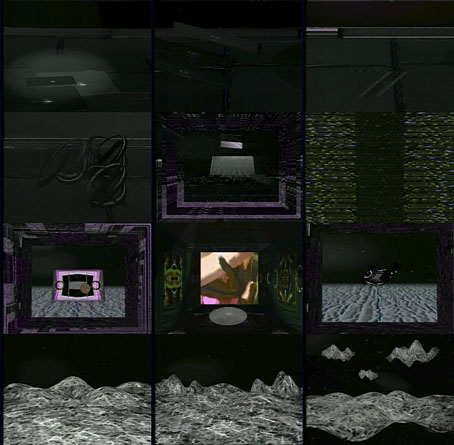
Horror and electronica so frequently intersect on film that you’d expect there to be more musical collisions between the two beyond obvious candidates such as Aphex Twin and the Ghost Box people. Kurt d’Haeseleer’s video for Mika Vainio & Franck Vigroux heads in this direction without being too generic, coming across like a collision between Under the Skin and the micro-budget videos made by Cabaret Voltaire in the early 80s. Watch it here. (Via FACT)

Oj! Nie moge sie zatrzymac!, a film by Zbigniew Rybczynski

rybczynski.jpg

The title translates as Oh, I Can’t Stop!, and the camera shows 10 minutes of unstoppable momentum beginning with a stealthy creep through woods on the outskirts of a Polish city, and quickly evolving into a hurtling flight through streets, yards and buildings. The viewer is left to guess at the identity of the point-of-view but given the sounds of destruction the thing produces it’s evidently large and heavy. When you start to think you’ve got the measure of this film it speeds up even more. Oj! Nie moge sie zatrzymac! was made in 1975, a few years before Rybczynski’s Oscar-winning Tango. Watch it here.

Previously on { feuilleton }
The Fourth Dimension
Tango

Paul Laffoley, 1940–2015

laffoley1.jpg

Alchemy: The Telnomic Process of the Universe (1973).

Another week, another incomparable artist gone. This small selection of Laffoley’s unique art and sculpture manages to combine references to (among other things) alchemy, William Blake, Charles Baudelaire, Oscar Wilde, HP Lovecraft, Mark of the Vampire, and Night of the Demon. And this is only a fraction of his work. Richard Metzger has a memorial post at Dangerous Minds together with more paintings and some video links. There’s more at the official website and Kent Fine Art. It’s good to read that the University of Chicago Press will be publishing The Essential Paul Laffoley in March, 2016.

laffoley2.jpg

The Death and Life of Monsieur Sebastian Melmoth: Au Théâtre du Grand Guignol (2001–2003).

laffoley3.jpg

The Solitron (1997).

Continue reading “Paul Laffoley, 1940–2015”