Quicksilver

quicksilver1.jpg

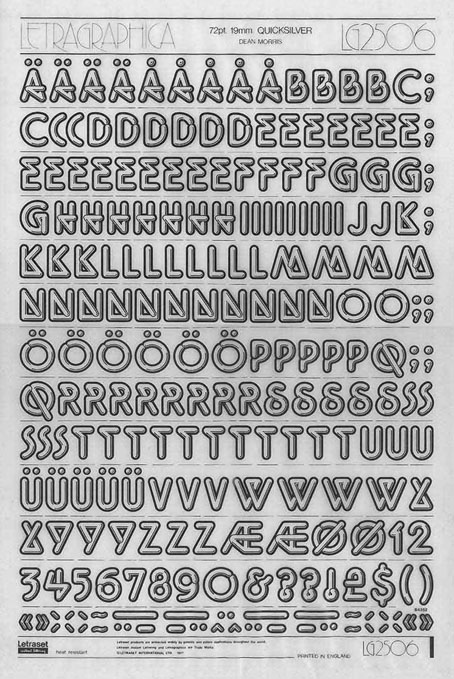
Letraset rub-down sheet, 1977.

Work-related research this past week had me looking for old Letraset fonts like Quicksilver here, one of the foundry’s many quirky type designs from the 1970s whose novelty inspired brief flushes of popularity before they were replaced by trendier designs. Quicksilver, which first appeared in 1976, has been lodged in my memory since I first saw it in a Letraset catalogue that was one of only two books lurking in a cupboard in the art room at school. (The other was a much-thumbed copy of The World of MC Escher.) The catalogue fascinated me because it revealed that these unusual typefaces could be identified by name: Data 70, Block Up, Pluto, Shatter, etc. I already knew that typefaces had names, of course, thanks to the occasional notes you’d find in paperbacks telling you that the book was set in 11pt Plantin or similar; but in the days before computers made everyone a lot more familiar with typography the typesetting business was a remote and mysterious world. Information about new type designs wasn’t easy to find unless you had access to the latest design magazines or a well-stocked library. The further realisation, that typefaces were designed by individuals who also had names, came later.
quicksilver3.jpg

Quicksilver was designed by Dean Morris who was only 16 at the time he sent off his design to Letraset:

The name Quicksilver was my second choice, however. Letraset Englishly felt that my first choice, ‘Polished Sausage’, would be ‘rather unpopular in foreign markets’. I designed it as a 16-year-old kid at John Glenn High School in Bay City, Michigan (born in Mercy Hospital 3 months after Madonna), and sent Letraset a xerox of a tight marker sketch of 3″ letters letterspaced with the heavy outlines slightly overlapping as I originally intended. I drew only a skinny S without an alternate, and submitted no punctuation. I knew nothing about submitting typeface artwork and I assumed there’d be, you know, discussion.

But Letraset wanted it, and they must have wanted it REAL FAST (fifties nostalgia and disco were WHITE HOT then, remember), because they sent a letter and contract soon after, and they did the finished art themselves at 5″ high (they can’t have known my age, maybe they had no confidence in my technical skills), starting with the E as did I in the design stage. And what a gorgeous rendering job they did in the pre-Mac days of ruling pens, straight-edges, and compasses (they shunned rapidographs!) — and they hand retouched the curves where they met the straight lines! Letraset sent a 5″ sample E for approval, but I’m sure they had already drawn all the characters. They followed my sketch very closely, designed the punctuation, and suggested an alternate but weird wide S, which I approved, figuring there was probably no other decent way to design it. I don’t know if the thematically wrong heavy-overlap-line on the P came from me or them. (more)

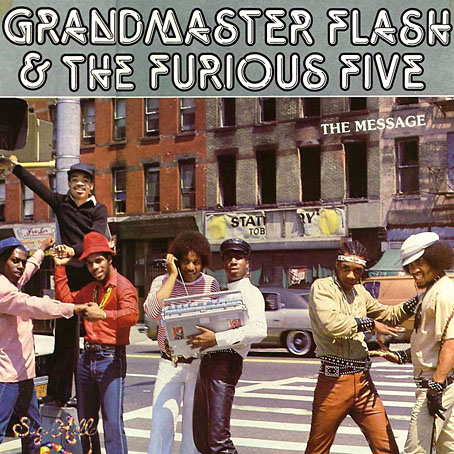
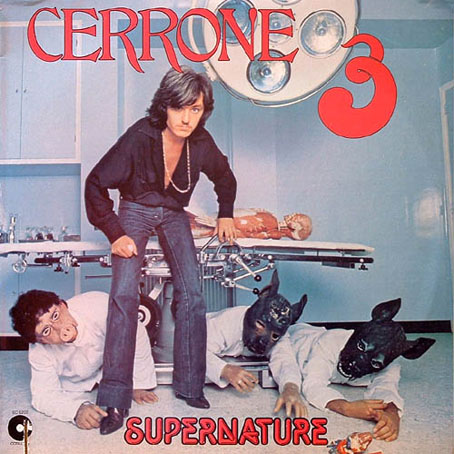
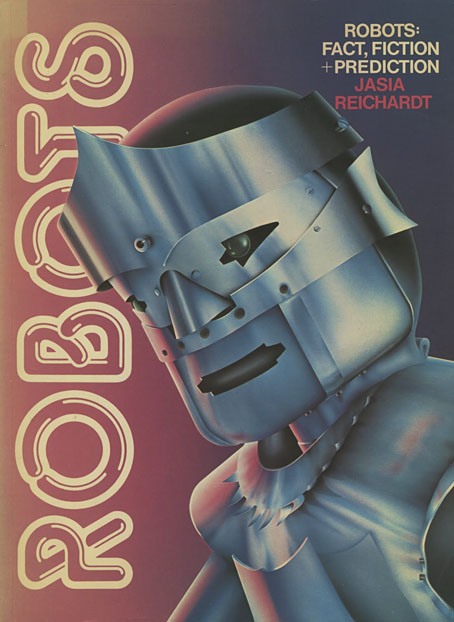
Morris has a collection of Flickr albums which show how popular the design was in the late 70s and early 80s, especially on record sleeves. It’s probably going a little too far to describe this as “the disco font” but it was certainly popular with the disco crowd. The robot book below is one of the few book covers. I expected there to be many others but Morris’s design might have been regarded as too eccentric for use in the publishing world where readabilty is more of an issue.
quicksilver5.jpg

Cerrone 3 (Supernature) (1977) by Cerrone. Silly cover art but Supernature is a great song.
quicksilver2.jpg

Robots (1978).

quicksilver4.jpg

The Message (1982) by Grandmaster Flash And The Furious Five.

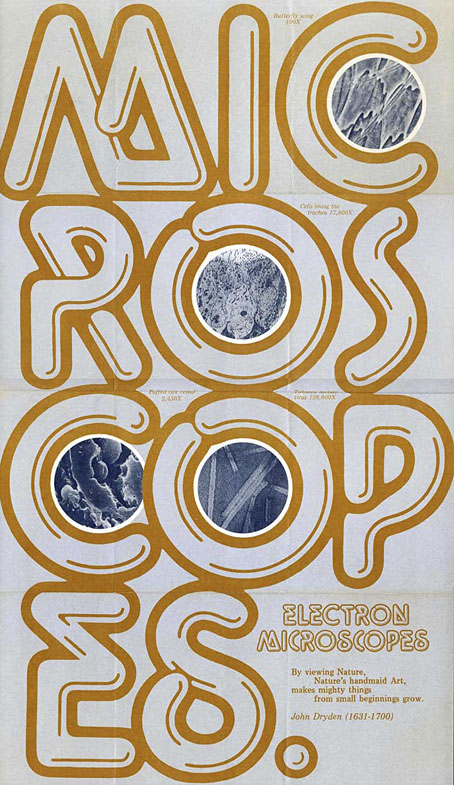
Quicksilver also proved distinctive enough but not too weird (like Block Up, for example) to stay around and find further uses years later, often ironically as tends to happen to type designs that become associated with a particular period or idiom. The font’s bold outline is an unusual feature, one that gives it an advantage over similar designs like Letraset’s later Chromium One which doesn’t read so well at a distance. And I like the shape of the letters, the result of Morris’s determination to shape everything with a single shiny bar.

quicksilver6.jpg

One thing that Quicksilver does share with a handful of its contemporaries from that old Letraset catalogue is a lack of an official digital version. The sample above has been created with Neon Lights, a copy afflicted with poor spacing and inconsistent character sizes. It works if you need something in a hurry but Morris’s design deserves better treatment. As to my use of the font that prompted the Letraset search, this is subject to the usual embargoes so you’ll have to wait a while before seeing the results.

Previously on { feuilleton }
Typefaces of the occult revival

Ash

ash.jpg

Cover art by Clayton Welham.

I’ve been doing the design duties on albums and singles by Emptyset since their first self-titled release in 2009. The latest album from the electronic duo, Ash, is also the 50th release on the Subtext label for which I’ve once again provided a minimal layout. I’ve no idea how the images by Clayton Welham were created, and I’m quite happy not knowing. Ash is available for pre-order ahead of its release next month.

Work announcements here have been rather scarce of late, in part because I’ve been working on a major project which is nearing completion and will no doubt be announced soon. Watch this space.

HP Lovecraft: Tales of Horror

hpl.jpg

Cover design by Jo Obaroswki.

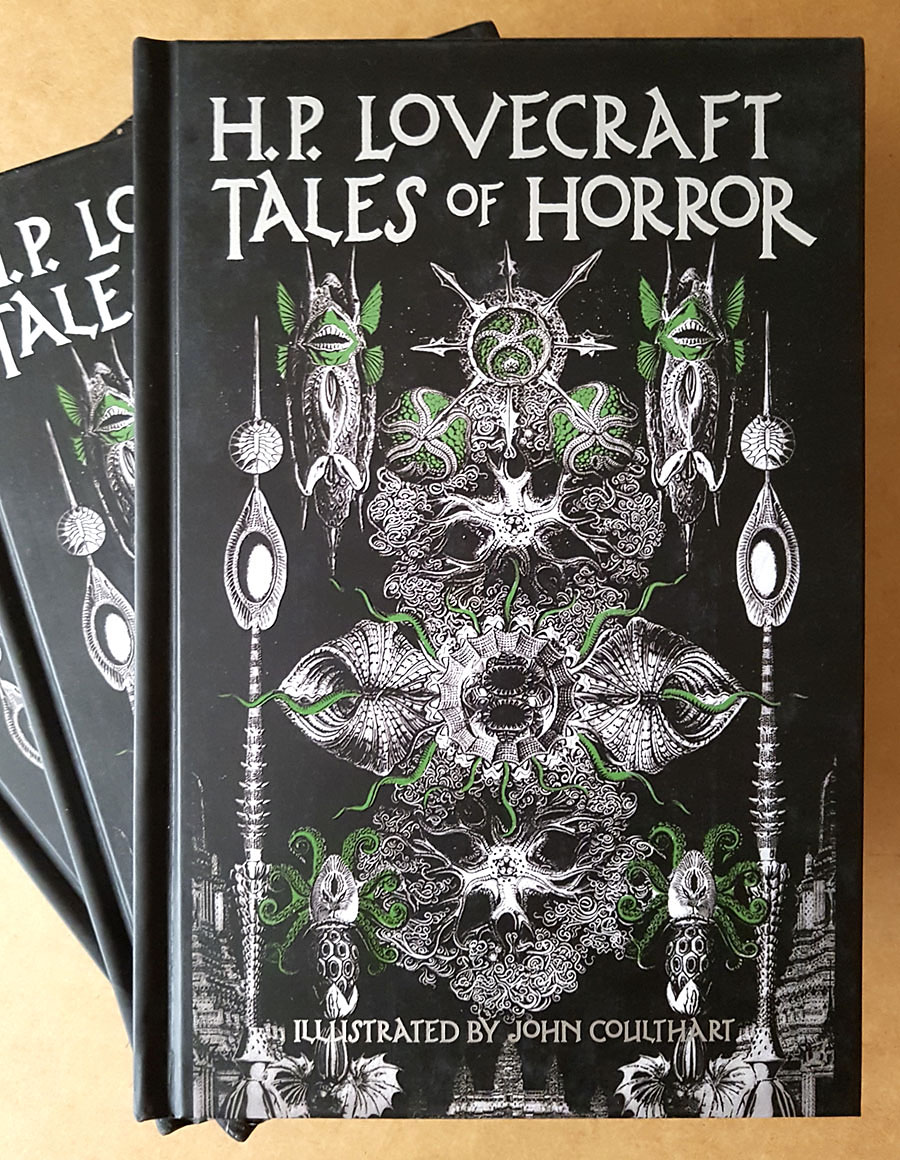
More Lovecraftiana (for a change). Today’s mail included the surprise delivery of these books, a very late arrival since the book was published over a year ago. Well better late than never, I was very pleased to be involved with this one which has been published by Fall River Press, an imprint of Barnes & Noble. The plan was to reprint a small number of Lovecraft stories on colour pages accompanied by my artwork. So the book is also a reprint of many of my earlier Lovecraftian drawings, from the comic strips to more recent illustrations, with the pictures carefully cropped and, in some places, reworked a little to match the stories.

The contents:
• Introduction by Stefan Dziemianowicz
The Call of Cthulhu
The Colour Out of Space
The Haunter of the Dark
The Whisperer in Darkness
The Dunwich Horror
The Thing on the Doorstep

hpl2.jpg

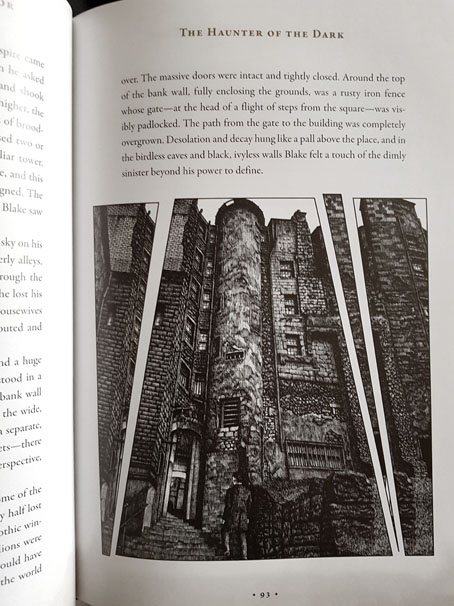
The end result is very impressive. The book is solidly bound in hard covers with the cover art featuring metallic silver ink and gloss highlights. The interior design is by Gavin Motnyk who chopped up and tinted my drawings (with my approval) in a very effective manner. Many of the panels at the end of my adaptation of The Call of Cthulhu were presented with this kind of fragmentation so I was happy to see this extended to other drawings. In addition to presenting the artwork in a new way it also helped compensate for some of the shortcomings in drawings that date back to 1986. Not everything is this old, however. I sent Gavin a copy of my redrawn R’lyeh panorama which has been printed across the endpapers.

For now this is the most substantial collection of my Lovecraft artwork in print. And since it’s being distributed by Barnes & Noble it’s also relatively easy to find (although that title, Tales of Horror, is very similar to other collections). Fall River Press will be publishing another classic horror volume featuring my illustrations towards the end of the year. More about this later.

Elsewhere on { feuilleton }
The Lovecraft archive


Biblio-hauntology

hauntology.jpg

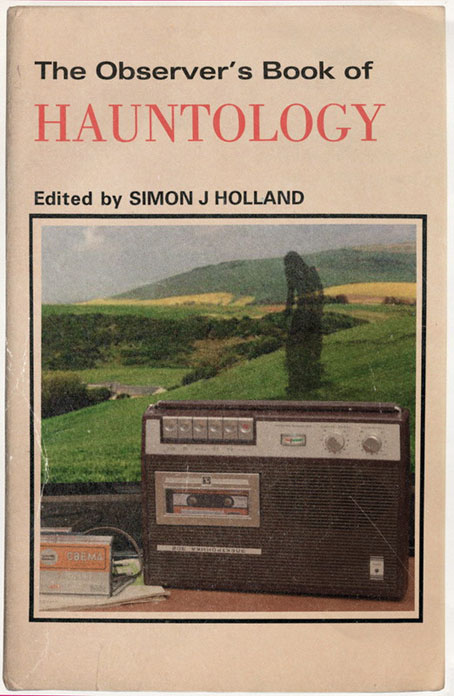
An invented book cover from the latest post at blissblog. Since I like fakes of this nature, especially when they’re carefully done, I had to go in search of the creator. Rachel Laine is the person responsible, and there’s more along these lines at her Flickr pages, together with many similar items from the universe next door. (I know someone who’ll appreciate all those faded magazine covers combining soft-porn photos with headlines for stories about analogue synths.) Another of the book covers is a guide to “Witches and Witch Craft”, a title whose real-life counterparts included books such as the Hamlyn guide to witchcraft and black magic from 1971. As I’m often saying, the 1970s was the witchiest decade of the 20th century.

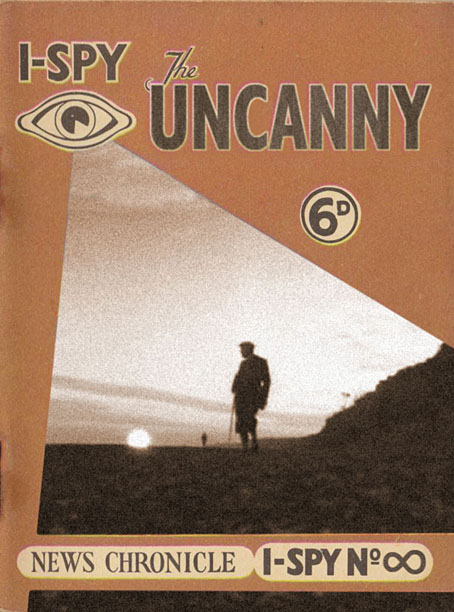
uncanny.jpg

All of which reminded me of a couple of recent inventions of my own. One of the advantages of writing here is that I can retrieve from obscurity some of the things I’d previously cast into the Malebolge formerly known as Twitter. This impromptu creation is something I threw together after Callum J posted the cover of an old I-Spy book dedicated to “The Unusual”. (If you don’t know what the I-Spy books were—and still are—Wikipedia has the history.) The screen-grab from Whistle and I’ll Come to You is a lazy choice but I wanted to surprise Callum by reworking his cover as quickly as possible.

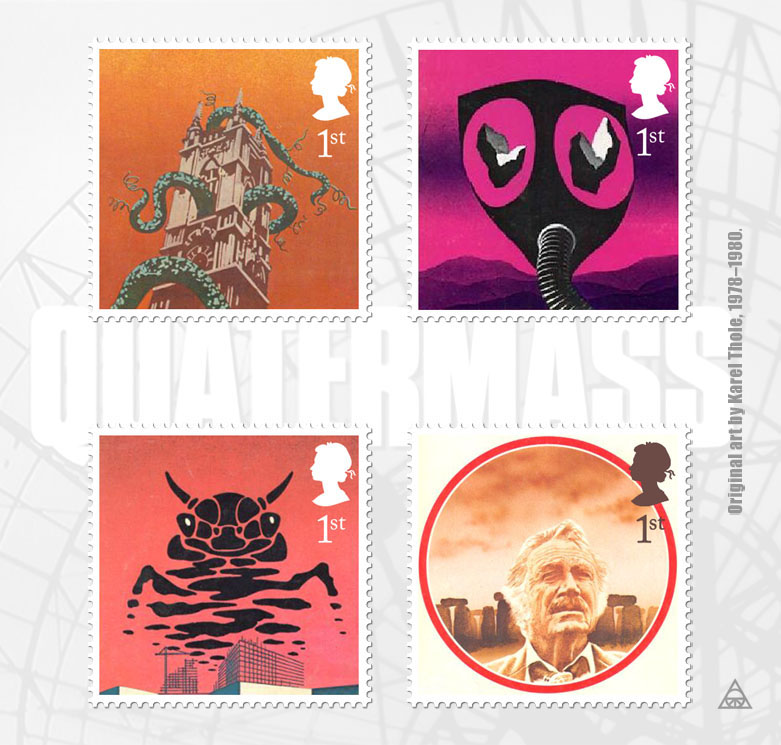
quatermass-stamps.jpg

A little more considered is this proposal for a set of British postage stamps dedicated to Nigel Kneale and his works. This one came about after a comment from Kim Newman that such a thing was overdue from the Royal Mail. Since I agreed I thought I could at least fake them into existence. They’re still a little incomplete—actual stamps would have a mention of Kneale on each one—but they look plausible. The artwork was swiped from a series of Quatermass book covers created by the prolific Karel Thole for Mondadori in the late 1970s. The images for the first Quatermass and Quatermass and the Pit work very well, I think, the fourth one less so. If I was doing these myself I’d try some combination of a radio telescope and a stone circle. Windows into another world; in the universe next door Quatermass is bigger than Star Wars. But we live here, not there.

Previously on { feuilleton }
Disciples of the Scorpion
Ghost Box and The Infinity Box
Llewellyn occult magazine and book catalogue, 1971
Typefaces of the occult revival
The Book of the Lost
Books Borges never wrote
Forbidden volumes

Back and forth


Another advantage of the recent WordPress upgrade means I can now do things like this. The photo is a Prague street scene that I found in a newspaper years ago which I decided to depopulate in Photoshop. In the past you could only do this with a special plugin but WordPress changed the user interface a while back from a basic write-text-and-add-media arrangement to a more complex editing system known as Gutenberg. The new editor uses CSS-style blocks which you fill with different types of “content” then shuffle around until you have a layout that you’re happy with. You can do a lot with these blocks but most of the tools that control them are hidden from view behind multiple menus and sub-menus; using the system means you first have to learn and memorise the location and function of all these hidden tools. Users of standalone installations of WordPress are a loyal bunch but there was a very negative reaction to the new editor, so much so that a plugin appeared almost immediately which reverts the interface to the former system. WordPress continues to evolve Gutenberg, however, and now provides a variety of media blocks like this picture-comparison thing. The utility is limited but it looks nice.

I’m in the anti-Gutenberg camp for the most part, especially when looking at the code that makes something like this possible. Most of the posts here are written outside WP as plain text with handwritten HTML tags; Gutenberg adds loads of new tags and instructions that clutter up the back end. I may work as a book designer but a print-style layout isn’t what I want to emulate for these pages. (And the Adobe applications I use don’t hide all their controls unless you really want them to.) Gutenberg is no doubt useful for people with big media websites using WordPress as a CMS to create layouts filled with articles, video and the like. But I’ll be sticking with the old system for now.