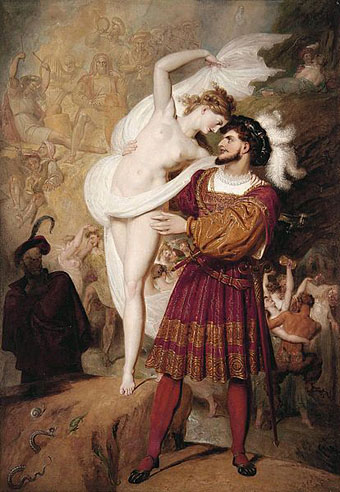
Faust and Lilith (1831) by Richard Westall.
Lilith: less the Babylonian demon and more the temptress, succubus and “first wife of Adam”.

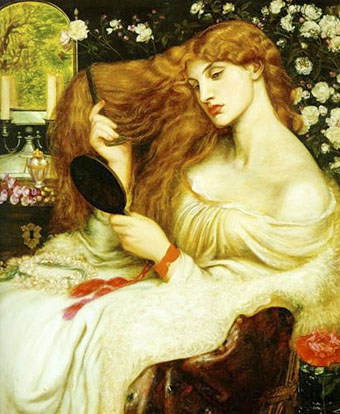
Lady Lilith (1868) by Dante Gabriel Rossetti.

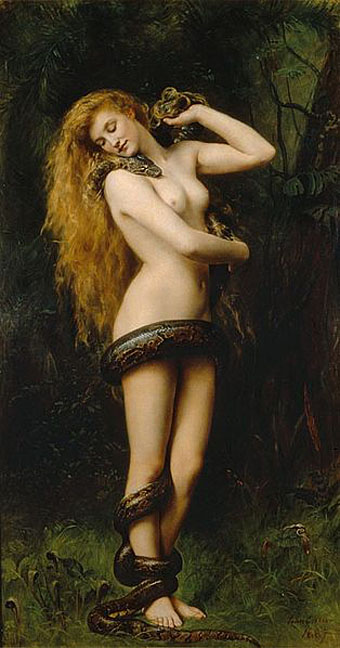
Lilith (1889) by John Collier.
A journal by artist and designer John Coulthart.
Sculpture

Faust and Lilith (1831) by Richard Westall.
Lilith: less the Babylonian demon and more the temptress, succubus and “first wife of Adam”.

Lady Lilith (1868) by Dante Gabriel Rossetti.

Lilith (1889) by John Collier.
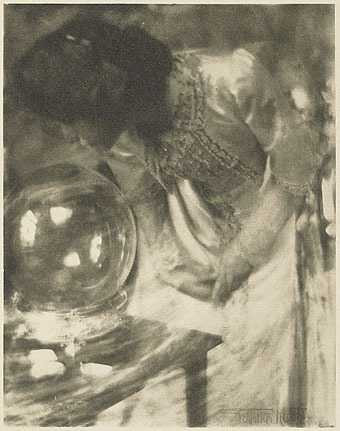
The Crystal Gazer (or The Magic Crystal, 1904) by Gertrude Käsebier.
Once again the annual review of artists/designers/photographers featured in the weekend posts arrives at the beginning of the new year rather than the end of the old. Scroll down to see what caught my attention over the past twelve months.
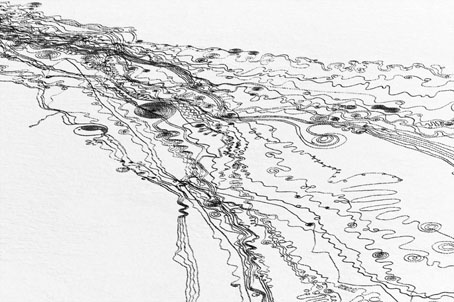
We Are The Water – Snow Drawings Project, Colorado (2014) by Sonja Hinrichsen with 50 volunteers.
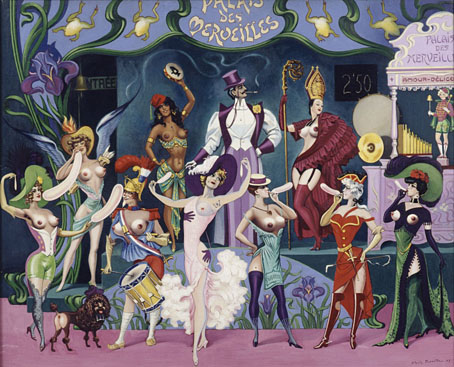
Le Palais des Merveilles, 1907 – 1927 – 1960 by Clovis Trouille.
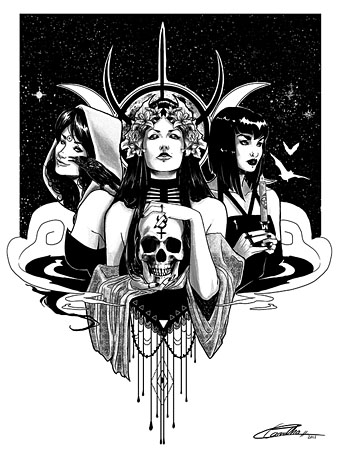
The Three Witches (2014) by Lorena Carvalho.

Plague doctor mask by Tom Banwell.
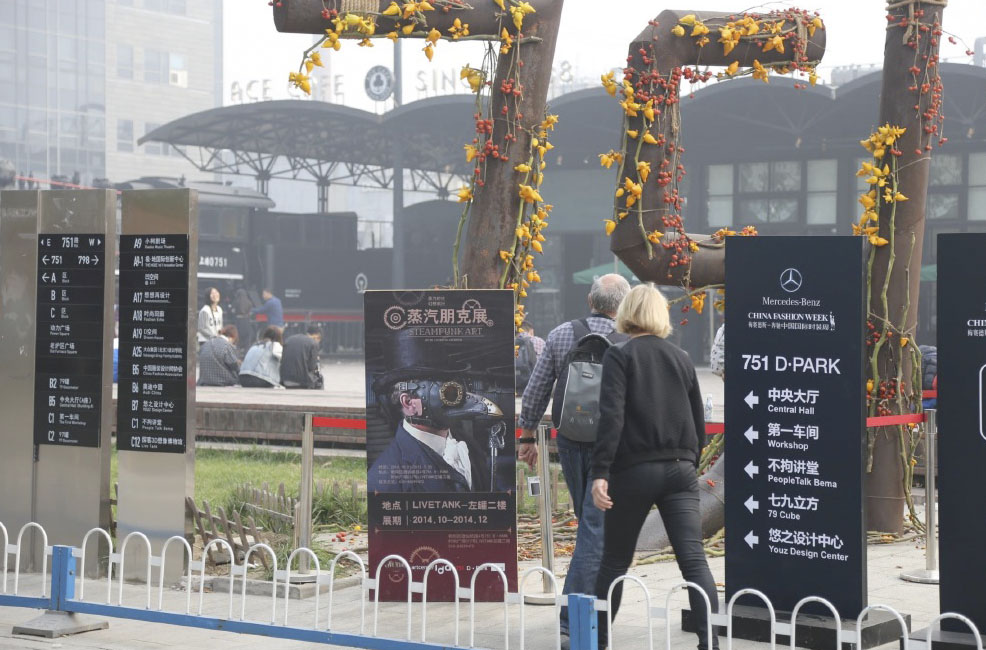
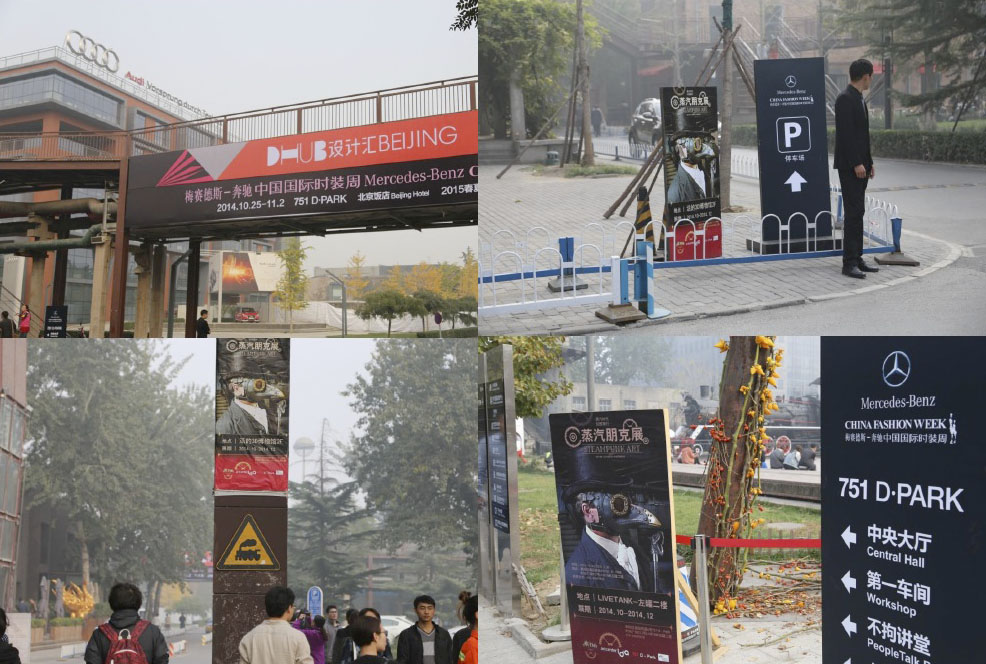
Last month I wrote a little about the Steampunk: Art of Victorian Futurism exhibition that’s been running since the beginning of October in Beijing, this being the same event that was staged in Seoul earlier in the year. Five of my book cover designs have been featured in these shows, together with some very impressive artworks, designs and constructions by international artists. This week the organisers of the show, Artcenter IDA, sent their own photos of the event.
Locomotive Square.
As mentioned before, the venue is an exhibition space in 751 D-Park outside central Beijing, an area I’ve been told was formerly an industrial complex manufacturing armaments during the Cold War. If we occasionally find that life these days imitates the fictions of JG Ballard or Philip K Dick, 751 D-Park strikes me as a very William Gibson kind of place: Cold War industrial complex transmuted into an international art space—Beijing Design Week is hosted here each year—that on this occasion is showcasing antique science fiction. The 751 website has a map of the area with links to photos and other information. I’m rather taken with “Crached Furnace Square” and “Locomotive Square“.
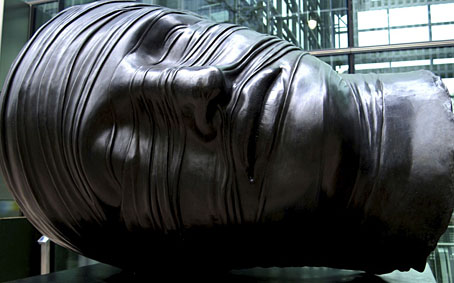
Testa Addormentata (photo by Dave Miles).
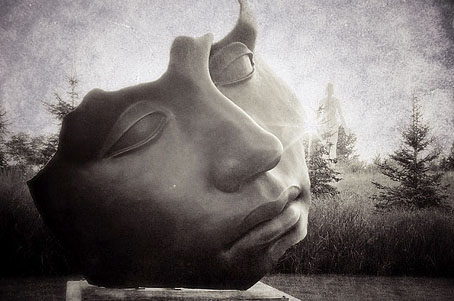
The first I saw of the work of Polish artist Igor Mitoraj was the serene bronze face, Light of the Moon, sitting outside the British Museum in the late 1990s. I’ve enjoyed seeing pictures of his other sculptures ever since so it was dismaying to read of his death earlier this month.
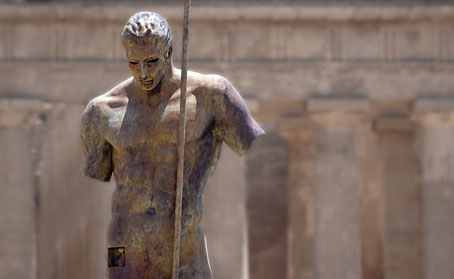
Untitled (photo by Carlo Columba).
Mitoraj’s statuary often resembled the colossal fragments of a lost antiquity but there were contemporary touches: the bound faces are a recurrent feature you won’t find in the Classical world, and some of his statues are inset with miniature versions of themselves or similar figures. The Medusa head below shows the attention to detail: a small escutcheon on one of his winged figures that wears a tiny face on its brow.
Light of the Moon (photo by Katie Mollon).
One benefit of his work being shown outdoors is the quantity of photographs. The selection here is from a Creative Commons search at Flickr. The site has many more examples.

Work-related research this week had me wondering who it was that first thought of turning Battersea Power Station into a table. For the past few days I’ve been looking at a lot of the illustration work that George Hardie produced for the Hipgnosis album covers in the 70s and 80s; I’ll explain why in due course but the quest led me to seek out the songbook for Pink Floyd’s Animals album, two pages of which can be seen in the first Hipgnosis book.
Hipgnosis would often extend their album design into promotional areas, producing related posters, stickers, and so on. Pink Floyd’s popularity meant there was demand for songbooks, and the one for Animals is a treat for the use it makes of additional photos from the flying-pig sessions at Battersea Power Station. The idea of using the power station for the cover came from Roger Waters, incidentally; a shame he didn’t apply the same invention to his lyrics. But I digress…

From the Animals songbook (1977). By George Hardie?
Between the photos (and, er, the songs) there are several pages of graphics by (I’m guessing) Bush Hollyhead and George Hardie; the former depicts a pig, dog and sheep in various stylised arrangements while Hardie provided a vignette of bacon rashers on a Battersea table. This was 1977 so I’m assuming it’s the earliest example of the power-station-as-table, unless, of course, somebody out there knows better.

When the Monster Dies (1990) by Kate Pullinger. Illustration by Willie Ryan.
And sure enough… Thanks to herr doktor bimler for suggesting this one.

Robber Baron Table (2006) by Studio Job.
Artist David Mach took up the table idea in the 1990s to produce a series of collages showing an enormous chimney-legged chair sitting beside the power station. There’s no explanation as to why the table should be upside down but then artists often don’t think things through as well as designers. A better idea is the Battersea-like Robber Baron Table (2006) by Studio Job, part of a series of furniture concepts suitable for oligarchs and those who work in the City of London.
And so to the inevitable, one of a number of stylish tables currently being manufactured by the Battersea Table company.
Not a table but another clever repurposing of Giles Gilbert Scott’s architecture. Atypyk makes concrete ashtrays for those who still smoke, with the chimneys formed from unsmoked cigarettes. Battersea Power Station when it was in use did much to contribute to London’s polluted air so this seems a fitting by-product. Are there any more examples out there?
Previously on { feuilleton }
• Design as virus 16: Prisms
• Labels
• Storm Thorgerson, 1944–2013
• Hipgnosis turkeys
• Peter Christopherson, 1955–2010
• Storm Thorgerson: Right But Wrong
• Battersea Power Station