Japanese moons

lunar17.jpg

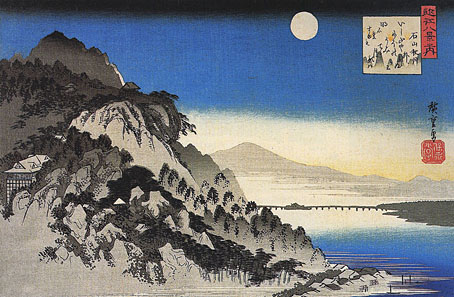
Autumn Moon At Ishiyama Temple (c. 1834) by Hiroshige.

The moon is a continual feature in Japanese landscape prints, and the following selection is only a small sample of the many beautiful examples that may be found on this print site. See also this site, and Yoshitoshi’s stunning series, One Hundred Aspects of the Moon.

lunar25.jpg

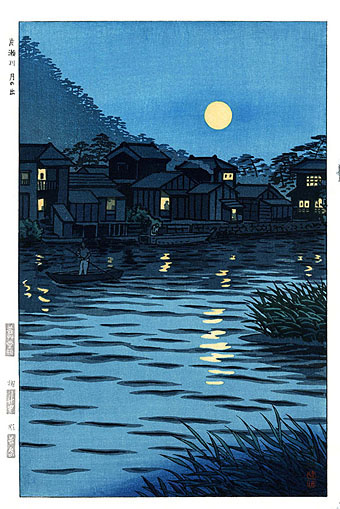
Rising Moon at Nagase (no date) Artist unknown.

lunar24.jpg

Rising Moon at Katase River (1907) by Shiron Kasamatsu.

Continue reading “Japanese moons”

Lunar light

lunar11.jpg

Evening Scene with Full Moon and Persons (1801) by Abraham Pether.

More moons. The thing you immediately notice when looking at paintings of the moon is how many of them show moonlight reflected on water, while the moon itself tends to change its size. There are many more examples here.

lunar09.jpg

Moonrise Over the Sea (c. 1821) by Caspar David Friedrich.

lunar16.jpg

View of Dresden by Moonlight (1839) by Johan Christian Dahl.

Continue reading “Lunar light”

Lunar observations

lunar02.jpg

Seashore by Moonlight (between 1660 and 1664) by Egbert van der Poel.

The moon in art. A wide-ranging theme so there’ll be more tomorrow.

lunar03.jpg

Two Men Contemplating the Moon (1820) by Caspar David Friedrich.

lunar06.jpg

Cornfield in Moonlight (c. 1830) by Samuel Palmer.

Continue reading “Lunar observations”

Weekend links 277

elledge.jpg

Sunday by Amanda Elledge.

• Coming from Strange Attractor this November: The Moons at Your Door, an anthology of strange tales selected by David Tibet. “The Moons At Your Door collects over 30 tales, both familiar and unknown from: Robert Aickman, Algernon Blackwood,  DK Broster, AM Burrage, RW Chambers,  Aleister Crowley, Sheridan Le Fanu, Elizabeth Gaskell, WW Jacobs, MR James, Vernon Lee, LA Lewis, Thomas Ligotti, Arthur Machen, Guy de Maupassant, Perrault, Thomas De Quincey, Saki, Count Stenbock, Montague Summers, HR Wakefield and Edith Wharton. The volume also includes extracts and translations by the author from Babylonian, Coptic and Biblical texts alongside poems and fairy tales.”

Gay-rights activists give their verdict on Stonewall: “This film is no credit to the history it purports to portray”. The only surprise about this episode is that anyone expected Roland Emmerich to make a historically accurate film in the first place. Related: Edmund White’s first-hand report written a few days after the riots.

• “If you hate [Boom!], I hate you, and I could never be your friend or your boyfriend. Divine and I had seen Boom! right before we made Pink Flamingos, and it’s about Elizabeth Taylor, retired, writing her memoirs, which is what Pink Flamingos was too, in a way.” John Waters (again) gives Hayley Campbell some dating tips.

• “We moderns may too-often suffer from a mixing up of historical sequences, but better that, surely, than risk raising a population that is entirely not-arsed about its past.” Julian Cope explores the Celts: Art and Identity exhibition at the British Museum, London.

• “But I am talking about psychedelic music, and obviously some of that comes from early psychedelic rituals, which are all about losing yourself…and I did come back into the world in a different way.” Natasha Khan on her new musical project, SEXWITCH.

• At Dangerous Minds: Vincent Price teaches the dark arts on his 1969 album An Adventure in Demonology.

• A trailer for Salthouse Marshes, “a short, landscape obsessed ghost story” by Adam Scovell.

• Rare video of Young Marble Giants playing for 45 minutes in Vancouver, 1980.

• A collection of Ghost Box posters and flyers designed by Julian House.

• Mix of the week: Secret Thirteen Mix 163 by Ssleeping desiresS.

Ministry, a new photo series by Ellen Rogers.

Julia Holter‘s favourite albums.

Boom Stix (1962) by Curley & the Jades | Things That Go Boom In The Night (1981) by Bush Tetras | Boom! (1991) by The Grid

Weird metal

shadow1.jpg

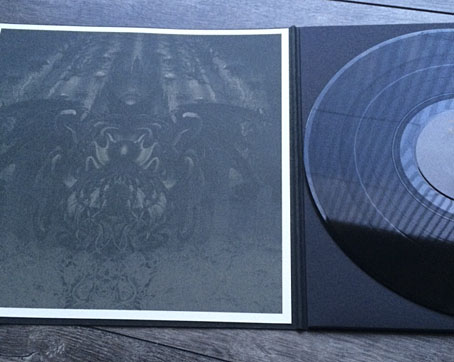
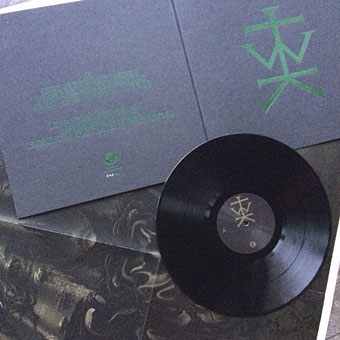
Weird metal isn’t A Thing, is it? I reckon it ought to be A Thing, especially when so much black/death/doom/drone metal intersects with The Weird. I mentioned last month that British doomsters The Wounded Kings had used my De Profundis piece for the gatefold and poster insert in their reissue of The Shadow Over Atlantis. My copy of the album arrived this week; it’s a handsome production that sounds tremendous so I’m very pleased to be associated with it. The relationship to Cthulhu isn’t as overt as more well-known compositions such as The Call of Ktulu by Metallica or Cthulhu Dawn by Cradle of Filth. But those are one-off pieces whereas The Shadow Over Atlantis sustains its atmosphere of cosmic dread throughout. It’s available from Ván Records, and I recommend it highly.

shadow2.jpg

All of which reminded me that my Lovecraftian art has featured sporadically in the metal world over the past few years. In the margins of my discographic work you’ll find the following releases.

otao.jpg

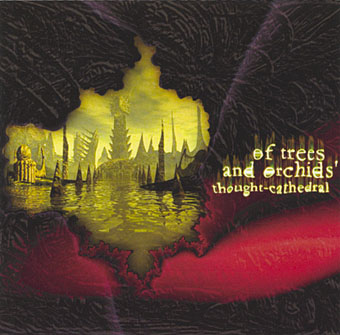
Thought-Cathedral (2000) by Of Trees and Orchids.

The perennially popular view of R’lyeh is featured on the cover of the second album by a German death metal band who later changed their name to Ingurgitating Oblivion. Inside the CD there’s also a detail from a Cthulhu drawing of mine.

azathoth.jpg

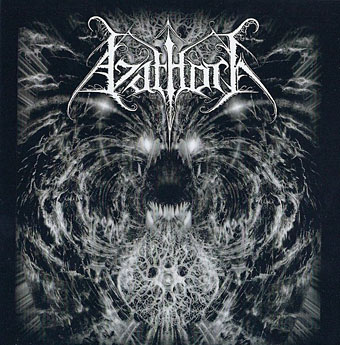
Azathoth (2007) by Azathoth.

There are many bands named after Lovecraft’s chaotic deity. This group is from the US, and this EP is their only substantial release to date.

portal.jpg

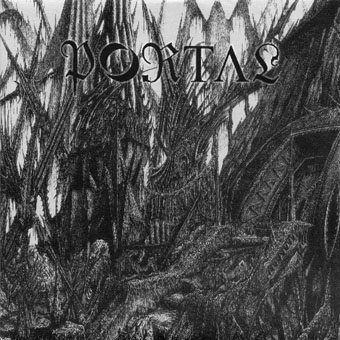
Demonstration 1998 (2009) by Portal.

And there are many groups named Portal. This lot are Australian, and have been going longer than most. Demonstration 1998 is a reissue on 7-inch vinyl of a cassette demo from 1998; the sleeve art shows a fuzzy detail from my R’lyeh spread from The Call of Cthulhu. Nobody asked permission to use the artwork, I only discovered this release since I get a credit for it on Discogs. So there may well be other releases out there that I haven’t seen yet. If you know of one then leave a comment or send an email.

Previously on { feuilleton }
The Shadow Over Atlantis by The Wounded Kings
Rock shirts
De Profundis