Weekend links 815

hawksmoor.jpg

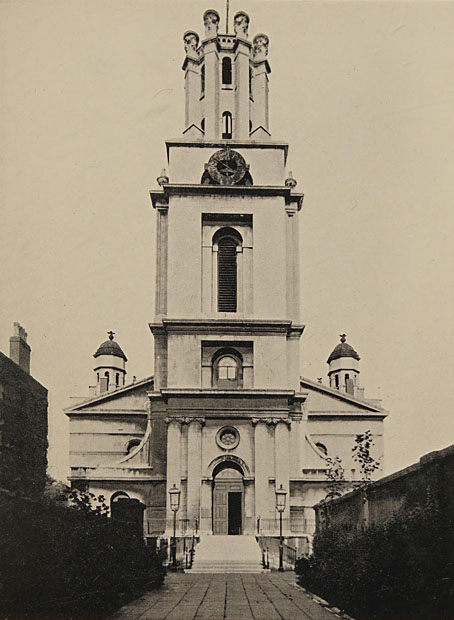
A photograph by FR Yerbury of St George’s-in-the-East, London. From Nicholas Hawksmoor (1924) by HS Goodhart-Rendel.

• “Sixty years later, the Spectacle saturates us in ways the Situationists never imagined. Online platforms structure our personal relationships; algorithms nudge us toward the platform owners’ preferred choices. ‘Intelligence’ is embedded into everything from our phones to our kitchen appliances. But back in the Sixties, the Situationists saw the physical environment of the city as an expression of the mass society created by consumerism and governed by the Spectacle, and they felt power closing in around them: ‘All space is occupied by the enemy. We are living under a permanent curfew. Not just the cops—the geometry.'” Hari Kunzru takes a psychogeographical dérive through the streets of London, encompassing the Hawksmoor churches, Iain Sinclair’s own peregrinations, Alan Moore’s Sinclair-influenced script for From Hell, Arthur Machen and more. (No mention of Alan’s ongoing Long London series, however, the first book of which is a deep dive into Machen territory.) Kunzru could be accused of being 30 years too late with his piece but for younger readers and many Americans these paths are worth retracing.

Enemies from Venus!: “The only surviving fragment of a Dutch science fiction series for children from the mid-sixties (that never was).” CGI animation by Ernst-Jan van Melle in the style of black-and-white puppet shows like Fireball XL5, Space Patrol, etc.

• “If this is a horror story, it’s a horror story about being desperate for love, and about the vulnerability, loneliness, and difficulty in understanding other people that might drive this state.” Olivia Laing on Jonathan Glazer’s second feature film, Birth.

• At the BFI: Rory Doherty selects 10 great British heist films.

• At The Daily Heller: Posting Posters about Fellini.

• RIP Sly Dunbar; James Sallis; Catherine O’Hara.

• At Dennis Cooper’s it’s Peter Whitehead’s Day.

• The Strange World of…Toumani Diabaté.

• New music: Errata by WF 98.

Birth (1971) by Keith Jarrett | Birth (1995) by Howie B | Birth (2013) by Roly Porter
Tadami Yamada’s illustrated Carnacki

carnacki10.jpg

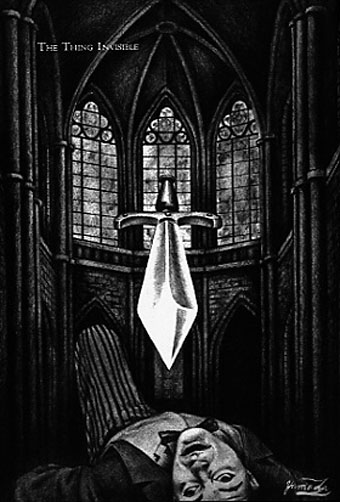
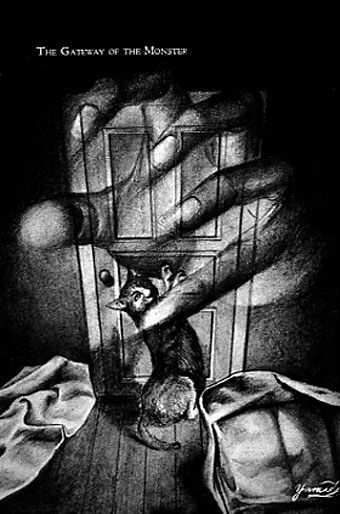
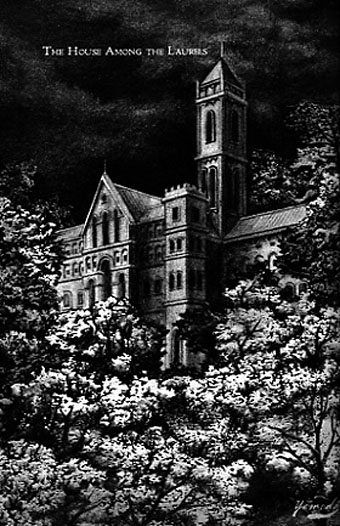
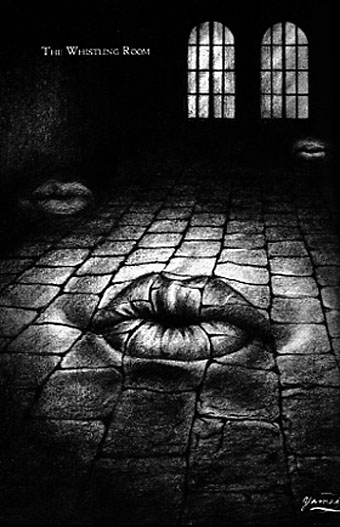
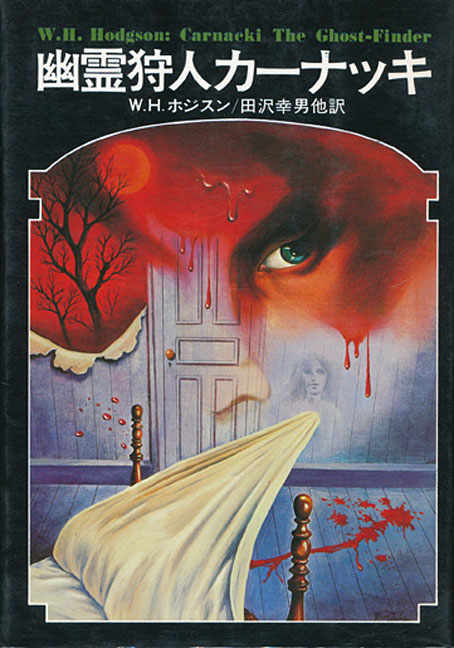
It’s William Hope Hodgson’s occult detective again. Late last year I was looking for Hodgson illustrations after reading Timothy S. Murphy’s William Hope Hodgson and the Rise of the Weird: Possibilities of the Dark but couldn’t find much of interest apart from book covers I’d seen many times before. Tadami Yamada’s illustrations for a Japanese edition of Carnacki, The Ghost-Finder have yet to be catalogued at ISFDB, and don’t seem to have been disseminated much at all. Once again, I’m indebted to 70sscifiart for turning up art that I might not otherwise have seen.

carnacki01.jpg

The Thing Invisible.

Information about the Japanese collection was difficult to find in general, a common problem with older Japanese books when most of the online documentation hasn’t been translated. The book was published by Kokusho Kankōkai in 1977 as part of a series of weird fiction reprints along with collections by HP Lovecraft, Algernon Blackwood and others. The Hodgson volume contains the expanded collection of Carnacki stories, with the three posthumously published tales–The Haunted “Jarvee”, The Find and The Hog–appended to the original 1913 edition.

carnacki06.jpg

The Gateway of the Monster.

As to the illustrations, these were early works by Tamada, an artist with a lengthy career as an illustrator and painter. The copies of the illustrations don’t reveal much about their medium but they all appear to be paintings; the ones for The Find and The Hog (whose Japanese title translates as The Witch Pig) both show signs of the patterning you get with the decalcomania process, something you can’t easily create in other media. If this book was part of a series then I don’t imagine it was the sole illustrated edition, which raises the possibility that the Lovecraft, Blackwood and other titles were fully illustrated as well. Once again, further research is required.

carnacki08.jpg

The House Among the Laurels.

carnacki02.jpg

The Whistling Room.

Continue reading “Tadami Yamada’s illustrated Carnacki”

Beautiful and macabre: two books from Century Guild

posters.jpg

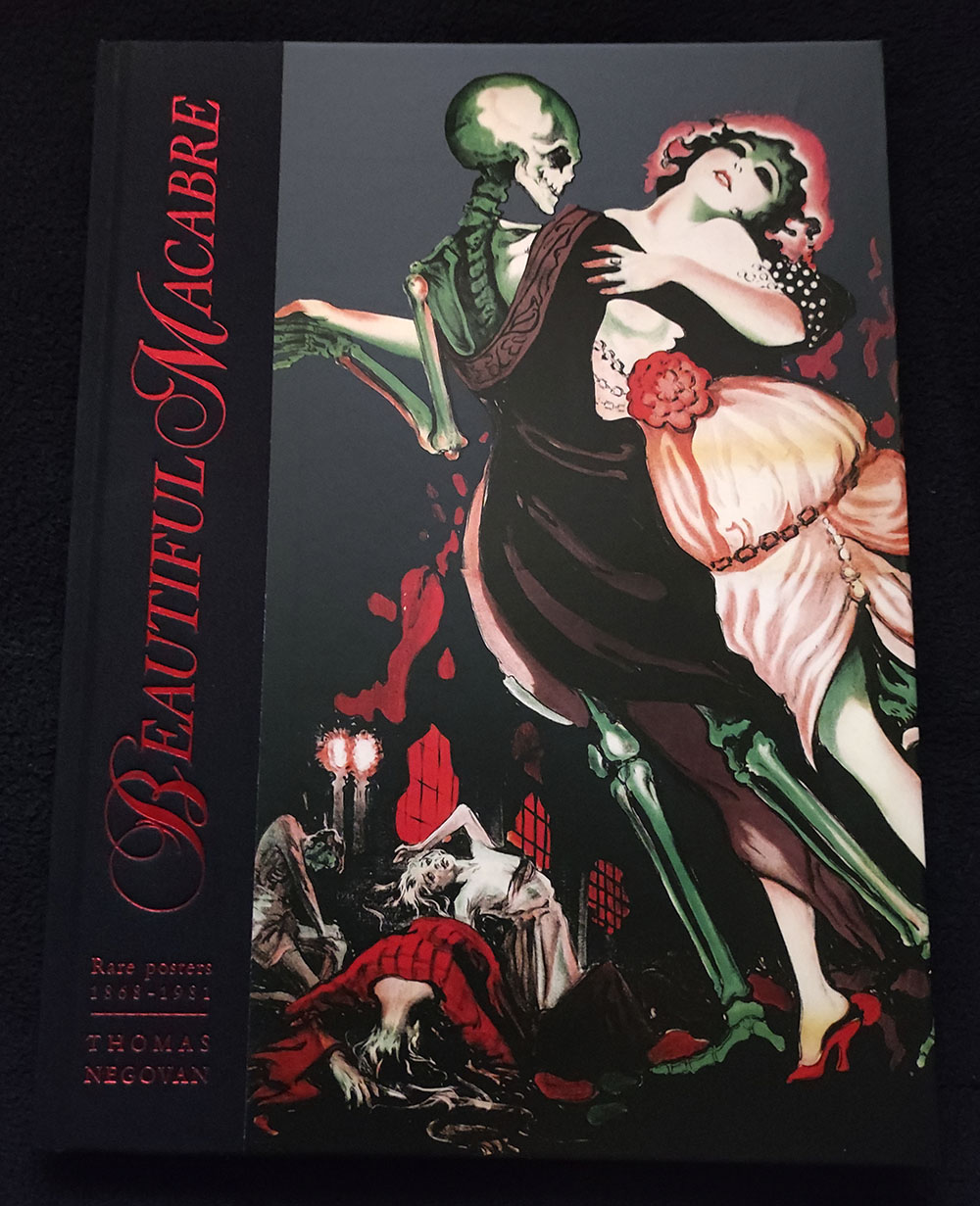
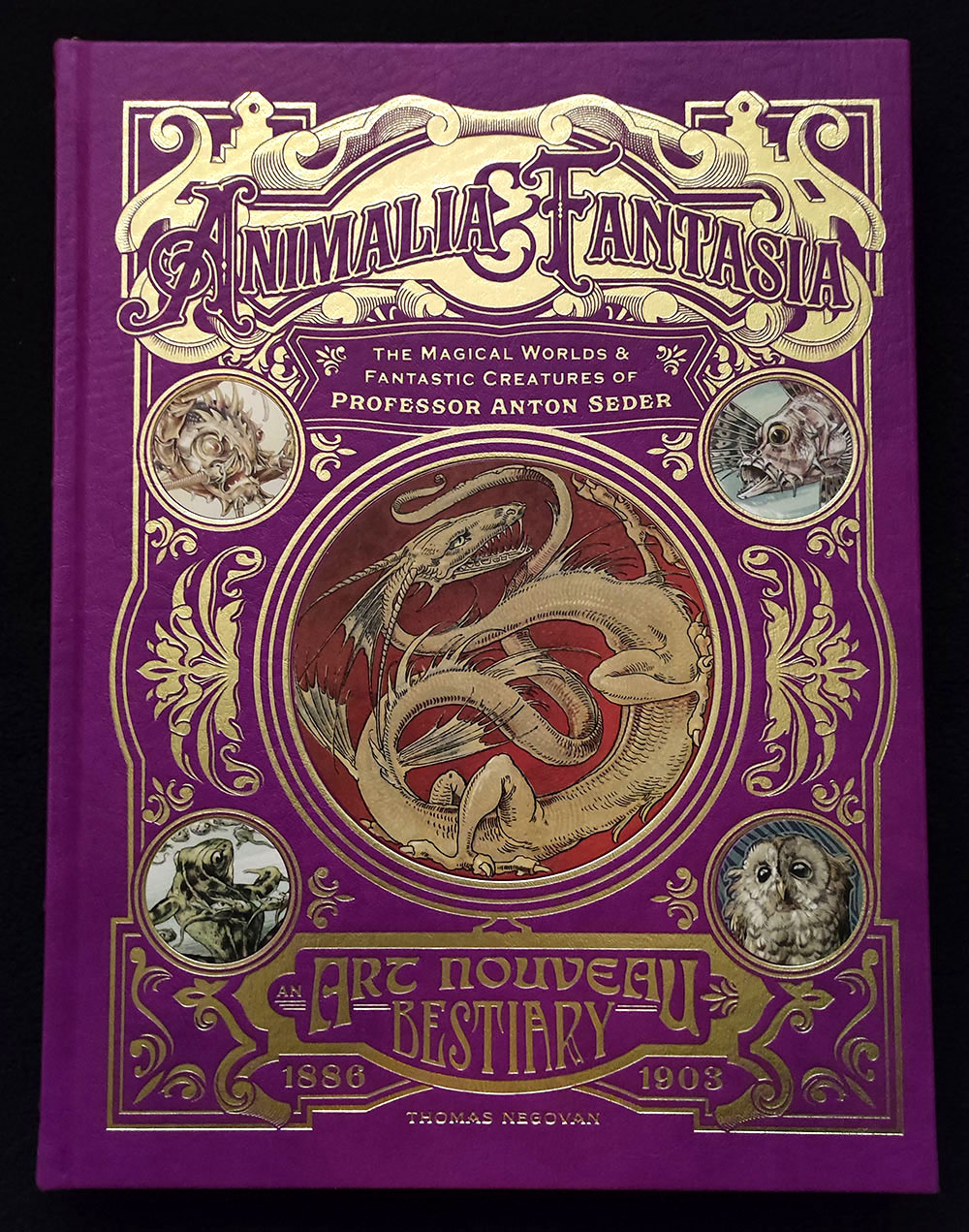
Arriving in the mail last week, a pair of beautifully-produced volumes which Thomas Negovan very generously sent to me. Negovan’s Century Guild publishes the kind of art I’ve been writing about here for the past twenty years: Symbolist painting, Art Nouveau graphics, Decadent illustration and more. There’s some intersection between the publisher’s backlist and earlier titles from Dover Publications, but where Dover have mostly concentrated on mass-produced paperbacks Century Guild deploy the full range of finishings available to a publisher of high-quality art books: foil embossing, faux leather finishes, spot-varnished boards, edges sprayed in metallic ink, and ribbon place-markers. Beautiful Macabre is Negovan’s own selection of rare poster art from 1868 to 1981, rare enough for most of the material to be new to me: theatre posters, Expressionist film posters, exhibition posters, etc, with an emphasis on Decadence through the ages. This is another of those books that show how the morbid preoccupations of the 1890s became codified in the 20th century into generic horror.

seder.jpg

Cover design by Jack Hargreaves.

The Anton Seder book is a more singular study, reprinting the intricate plates from Das Thier in der Decorativen Kunst (The Animal in Decorative Art) and Moderne Malereien, a collection of Seder’s interior designs in the Art Nouveau style. Seder’s book of animal designs has its own Dover reprint (which may explain how Murray Tinkelman was able to incorporate some of the creatures into his Lovecraftian cover art) but the Century Guild collection includes much more than this, with biographical notes, and pages that place Seder’s books in the context of previous guides and templates for use by artists and craftspeople. This type of book was a common thing around 1900 (Alphonse Mucha produced three of them), while similar examples abound in previous centuries. The fragmentation of art and craft in the 20th century, and the turn against exuberant decoration, put an end to a form whose spirit survives today in reprints such as this. And it happens to have arrived at a time when its contents will be very useful reference for my current commission. Thanks, Thomas!

Previously on { feuilleton }
Eldritch Art Nouveau: Lovecraft at Ballantine
Moderne Malereien, 1903
Das Thier in der Decorativen Kunst

Weekend links 814

dameron.jpg

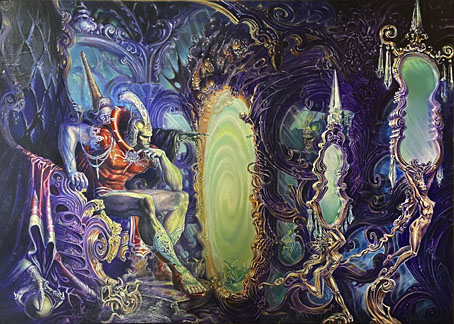
Kull of Atlantis—The Mirrors of Tuzun Thune by Ned Dameron for Kull (1985) by Robert E. Howard. Via.

Jeremy Allen reviews the latest reissue of The New Worlds Fair by Michael Moorcock and The Deep Fix, describing the album as “a fascinating and quixotic document from the time it was made, deserving to be taken seriously in its own right”.

• Among the new titles at Standard Ebooks, the home of free, high-quality, public-domain texts: Short Fiction, a small collection of early stories by Clark Ashton Smith.

• New music: Geometry of Murder: Extra Capsular Extraction Inversions by Earth x Black Noi$e; Live At Nonseq by WNDFRM.

The book is not just loaded with words or tongues. Its also loaded with genres, or more accurately, different modes of literature. And one of the modes I particularly enjoyed this time around is, appropriately, the Weird. In ways long noted on forlorn and unspeakable subreddits, there is a decidedly Lovecraftian dimension to Melville’s Whale, which the Master of Providence did read and enjoy months before writing his game-changing “Call of Cthulhu.” We begin the novel with a sick soul, who may or may not be named after an Old Testament outcast, wandering through a macabre and fetid New England whale-town, following grim portents that lead him on towards a cursed ship doomed to confront a monster who sleeps or at least feeds, and presumably dreams, at the bottom of the sea. And that’s just the first couple of chapters.

Erik Davis on the pleasures of re-reading Moby-Dick, in a piece which makes me want to read the novel again

• At the BFI: Phil Hoad on David Lynch’s efforts to keep making films in an industry resistant to his kind of art.

• Exploration Log 12: Adam Rowe on the best retro science fiction art collections.

• At Public Domain Review: The Nine Birds of Jacques de Fornazeris (1594).

Winners and finalists for the 2025 Ocean Art Contest.

• Mix of the week: A mix for The Wire by Hilary Woods.

The Whale (1977) by Electric Light Orchestra | Don’t Kill The Whale (1978) by Yes | School For Whales (1980) by Marc Barreca

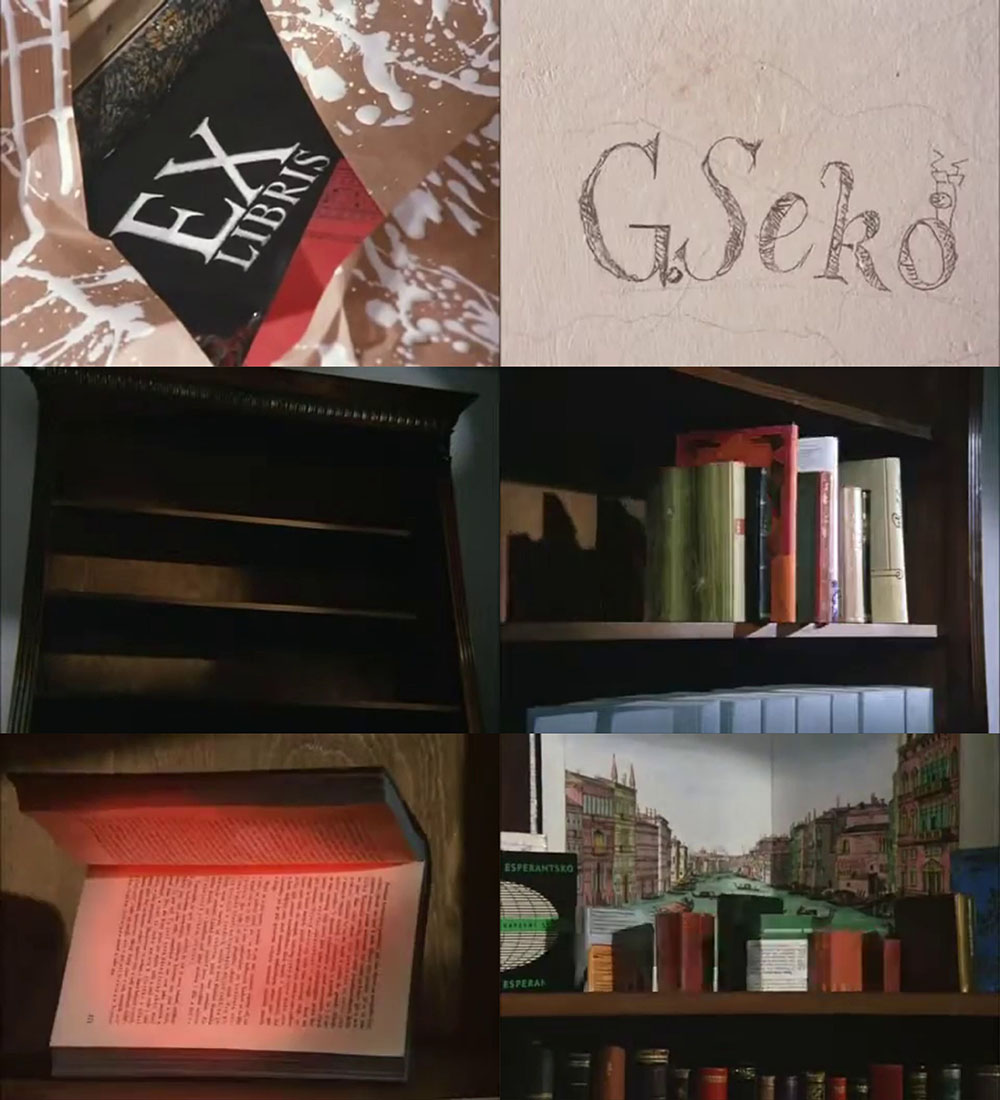
Ex Libris, a film by Garik Seko

exlibris1.jpg

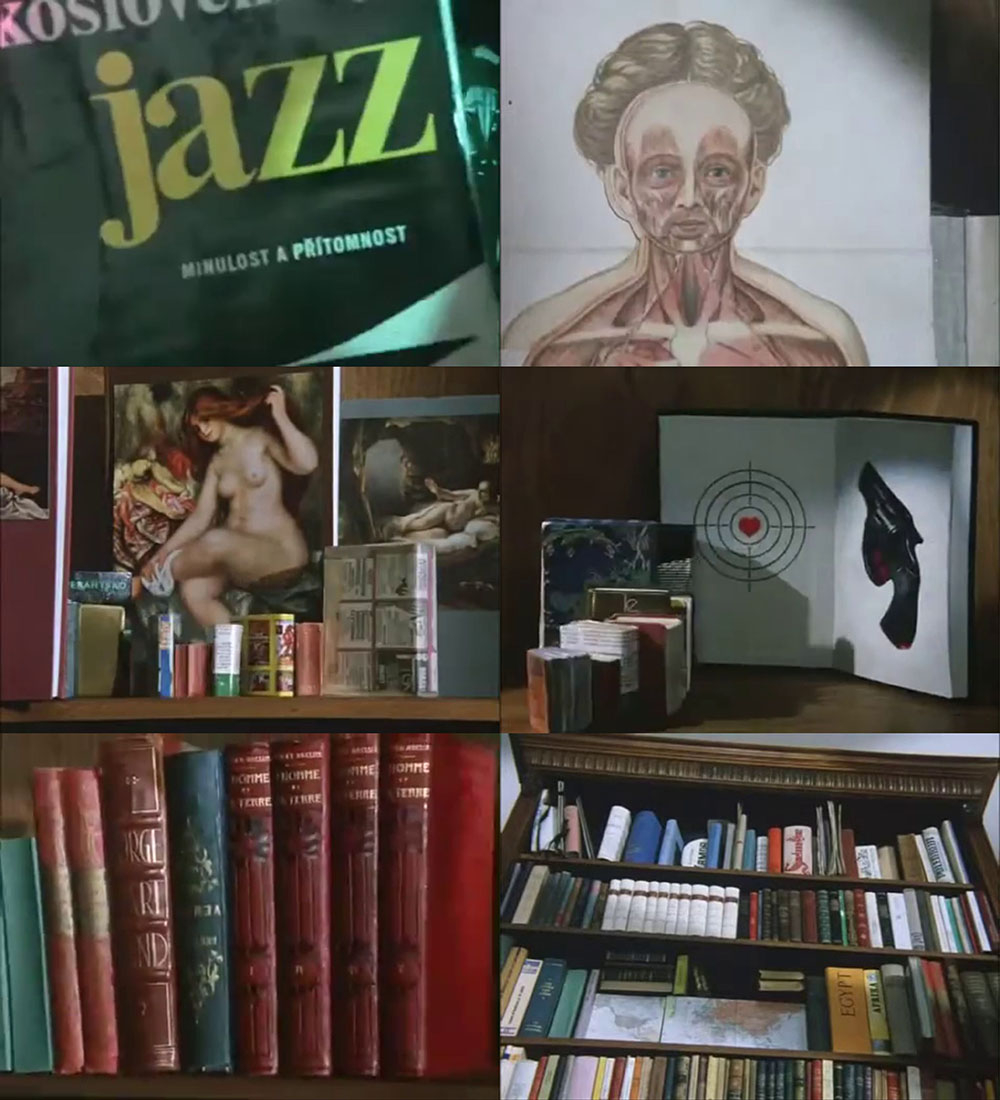
Garik Seko (1935–1994) is an animator whose work I hadn’t encountered before. He was born in Tiflis, Georgia, but worked in Prague where a number of his shorts (this one among them) were made at the Jiří Trnka Studio. Seko’s speciality was the animation of physical objects, in the case of this film a quantity of anthropomorphised books populating the shelves of a bookcase. Jan Švankmajer comes immediately to mind when watching Ex Libris, especially when two philosophy books chew each other to pieces following a vociferous argument. Švankmajer also made films at the Trnka Studio but I’d wary of suggesting an influence in one direction or another when the similarities are superficial ones. Ex Libris was made in 1983, by which time Švankmajer had been animating physical objects (and people) for many years. His own films are more aggressive than Seko’s, usually with a philosophical or Surrealist subtext. Ex Libris may be seen here.

exlibris2.jpg