Weekend links 815

hawksmoor.jpg

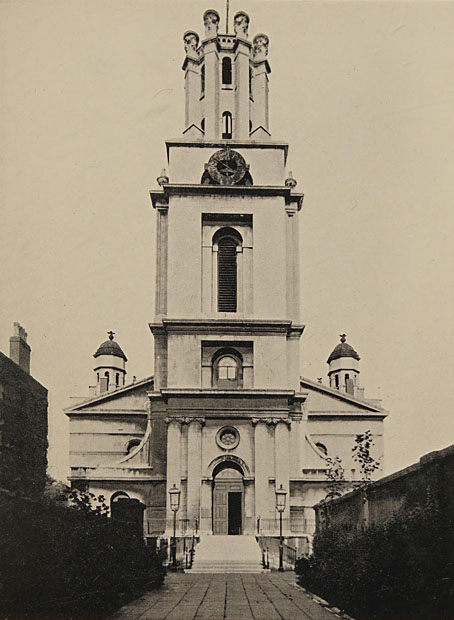
A photograph by FR Yerbury of St George’s-in-the-East, London. From Nicholas Hawksmoor (1924) by HS Goodhart-Rendel.

• “Sixty years later, the Spectacle saturates us in ways the Situationists never imagined. Online platforms structure our personal relationships; algorithms nudge us toward the platform owners’ preferred choices. ‘Intelligence’ is embedded into everything from our phones to our kitchen appliances. But back in the Sixties, the Situationists saw the physical environment of the city as an expression of the mass society created by consumerism and governed by the Spectacle, and they felt power closing in around them: ‘All space is occupied by the enemy. We are living under a permanent curfew. Not just the cops—the geometry.'” Hari Kunzru takes a psychogeographical dérive through the streets of London, encompassing the Hawksmoor churches, Iain Sinclair’s own peregrinations, Alan Moore’s Sinclair-influenced script for From Hell, Arthur Machen and more. (No mention of Alan’s ongoing Long London series, however, the first book of which is a deep dive into Machen territory.) Kunzru could be accused of being 30 years too late with his piece but for younger readers and many Americans these paths are worth retracing.

Enemies from Venus!: “The only surviving fragment of a Dutch science fiction series for children from the mid-sixties (that never was).” CGI animation by Ernst-Jan van Melle in the style of black-and-white puppet shows like Fireball XL5, Space Patrol, etc.

• “If this is a horror story, it’s a horror story about being desperate for love, and about the vulnerability, loneliness, and difficulty in understanding other people that might drive this state.” Olivia Laing on Jonathan Glazer’s second feature film, Birth.

• At the BFI: Rory Doherty selects 10 great British heist films.

• At The Daily Heller: Posting Posters about Fellini.

• RIP Sly Dunbar; James Sallis; Catherine O’Hara.

• At Dennis Cooper’s it’s Peter Whitehead’s Day.

• The Strange World of…Toumani Diabaté.

• New music: Errata by WF 98.

Birth (1971) by Keith Jarrett | Birth (1995) by Howie B | Birth (2013) by Roly Porter
Sounds off the Beaten Track

womad1.jpg

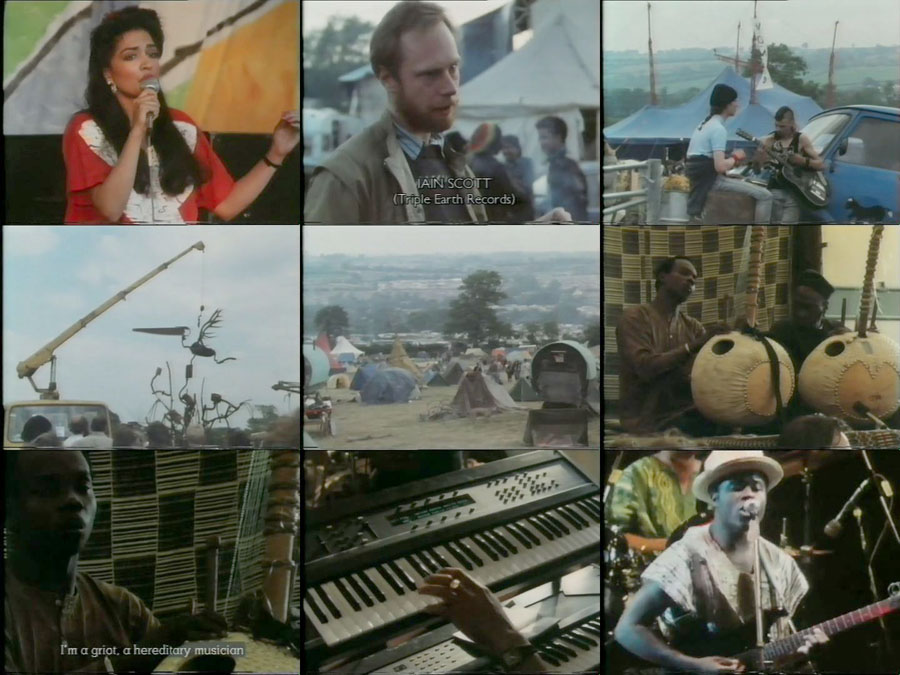
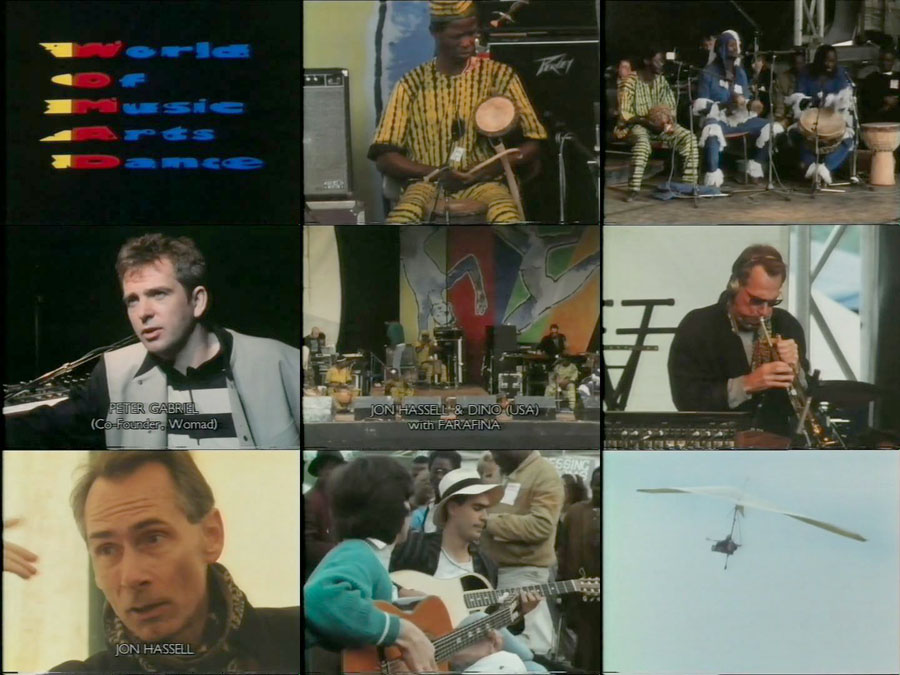
In 1987 the Glastonbury Festival opened its WOMAD stage for the first time to provide a showcase for the kind of acts you might expect to see at the separate World Of Music And Dance festival. Sounds off the Beaten Track is a 52-minute TV documentary about the acts who appeared on the WOMAD stage at Worthy Farm that year, and also about the WOMAD ethos itself, a project inaugurated in 1980 by Peter Gabriel and others to give greater prominence to musicians from all over the world. One of the WOMAD initiators, Mark Kidel, also directed the film, while co-founders Peter Gabriel and Thomas Brooman talk on camera. The film captures the Glastonbury Festival at a time when it was still a relatively small and rather ramshackle affair, closer to its hippy roots, and very different from the sprawling tent city of later years.

womad2.jpg

The main interest, however, is the music, especially the amount of time given to the Burkina Faso group, Farafina, and to Jon Hassell, whose Flash Of The Spirit collaboration with Farafina was released the following year. This was the first I saw of Hassell on TV, and also the last until he turned up much later as a guest on MTV’s Seal Unplugged session. I remembered the Farafina performance but I’d forgotten that Hassell also talks a little about his Fourth World idea. Among the other featured artists are The Bhundu Boys, Toumani Diabaté, Amadu Bansang Jobarteh, The Inspirational Choir, and Najma Akhtar who subsequently appeared on another unplugged (or partly plugged) session with Jimmy Page and Robert Plant. Jon Hassell had been under the WOMAD umbrella since 1982 via the excellent Music And Rhythm compilation album which included an exclusive live recording of Ba-Benzélé. He was often critical of the “world music” marketing label, seeing it as a convenient way for record companies and music sellers to appear to be supporting musical diversity while placing all the non-Anglophone recordings in a ghetto area away from everything else. He preferred to talk of “worldly music”, an idiom that was of the world, uncloistered, freed from the ghetto; music where the beaten and unbeaten tracks might combine to form a new highway.

Previously on { feuilleton }
Jon Hassell, 1937–2021
Jon Hassell, live 1989
Power Spot by Michael Scroggins