Nezha Conquers the Dragon King

nezha1.jpg

From an Arabian story with a Chinese theme to a Chinese adaptation of a Chinese story. Nezha Conquers the Dragon King is an hour-long animated presentation of an episode from Chinese mythology, in which Nezha, a magical boy born from a lotus flower, uses his powers to defend his home town and its inhabitants against four destructive dragons. The film was made in 1979 by the Shanghai Animation Film Studio, and directed by Wang Shuchen, Yan Dingxian and Xu Jingda. It was dubbed into English by the BBC for a TV broadcast a few years later, something I never saw at the time but the dubbed version sounds like one to avoid. They also replaced the original score and no doubt cropped the widescreen image as well. The BBC dubbed René Laloux’s marvellous Time Masters for its TV broadcasts in the 1980s but they did at least leave the music alone.

nezha2.jpg

One of my most enjoyable cinematic discoveries of the past year has been the wuxia films of Zhang Yimou: Hero (2002), House of Flying Daggers (2004), and Shadow (2018). Also Curse of the Golden Flower (2006) which is more of a straightforward historical drama for the most part, without any of the displays of balletic martial arts that are a common feature of wuxia films. Nezha Conquers the Dragon King is pretty much a wuxia story for children, with Nezha being a skilled fighter almost from the day he’s born. His feud with the dragons culminates in a battle in which he takes on an army of anthropomorphic animal opponents. (Another common feature of wuxia stories is pitting one or two skilled combatants against a mass of armed men.) The stylised animation, replete with motifs borrowed from traditional paintings, is beautifully rendered througout, while the basic storyline is so similar to Marcell Jankovics’ Son of the White Mare (1981) it’s tempting to wonder whether the Chinese film gave Jankovics the idea for his second feature. Son of the White Mare is based on Hungarian folk tales but it too concerns a magical child (born from a horse rather than a flower) whose super-strength enables him to fight three dragon beings who have been threatening the land. Like their Chinese counterparts, the Hungarian dragons can assume human form, and each has a special power related to a different element. Jankovics’ film was released on blu-ray recently; I ought to watch it again.

Nezha Conquers the Dragon King may be seen here in a print with embedded English subtitles.
Eclipse and Sunscreen

eclipse.jpg

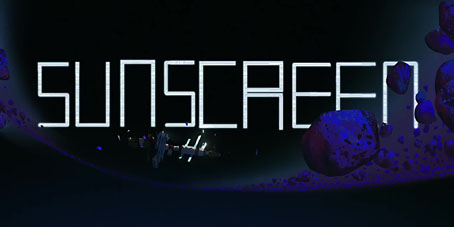
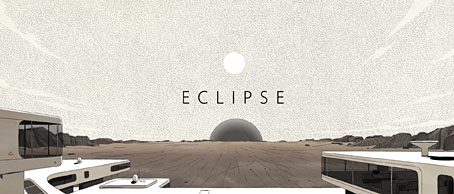
Gobelins, the French school of film animation, has its own YouTube channel where students post a variety of clips showing technical exercises or, as in the case of this pair of films, complete works. Eclipse (directed by Theo Guignard, Noé Lecombre and Hugo Moreno) and Sunscreen (directed by Xinzhi Ma, Yuan Liu, Yufan Chen and Zixiao Yue) are both science-fiction pieces that are also very short, being more like anecdotes than stories. Of the two I prefer Eclipse but both are very accomplished, and a welcome riposte to the ubiquity of the Pixar house style. Stylistic exercises like these are seldom extended to feature-length (or if they are, they get cancelled like Scavengers Reign) but it’s good to see younger animators following in the footsteps of René Laloux.

sunscreen.jpg

And speaking of Laloux, the restored Les Maîtres du temps (Time Masters) was released on blu-ray in France last year. As with many French releases there are no English subtitles but it’s good to know it’s available again. I’m waiting now for a high-definition reissue of Gandahar.

Previously on { feuilleton }
Terra Incognita, a film by Adrian Dexter and Pernille Kjaer
Arzak Rhapsody
Fracture by Paul and Gaëtan Brizzi
The Captive, a film by René Laloux

Antediluvian, a film by Mario Lanzas

antediluvian1.jpg

This short animated film differs from many other dinosaur films in using outmoded representations of the creatures for its source rather than the more accurate depictions we have today. The first modellings of dinosaurs were crude and often very inaccurate, to a degree that the earliest renderings now have a naive charm of their own, like the hearsay depictions of African animals or Egyptian monuments.

antediluvian2.jpg

Antediluvian has an additional attraction in its unintended resemblance to Roland Topor’s designs for René Laloux’s Fantastic Planet. Topor’s snapping, shrieking fauna are just as vicious as the outmoded saurians while being rendered in an equally naive style. All that Antediluvian requires is some suitably alien flora to push it into Topor-land, or at least the planet next door.

Previously on { feuilleton }
Les Temps Morts by René Laloux

Terra Incognita, a film by Adrian Dexter and Pernille Kjaer

terra1.jpg

I was going to mention this one a few weeks ago but it vanished from Vimeo for a while following some kind of copyright complaint. It’s good to find it returned. Terra Incognita is 20 minutes of animated fantasy that’s very reminiscent of René Laloux’s cult SF films Fantastic Planet (1973) and Gandahar (1988), also the Brizzi Brothers’ Fracture (1977). Much as I’d like to see another feature in the Laloux manner, something spun from the art styles of Métal Hurlant, short films are the most you can realistically hope for outside Japan. (There is another Caza-designed feature, The Rain Children, but like the Druillet-designed TV series, Bleu, l’enfant de la Terre, it’s a simpler story aimed at a juvenile audience.)

terra2.jpg

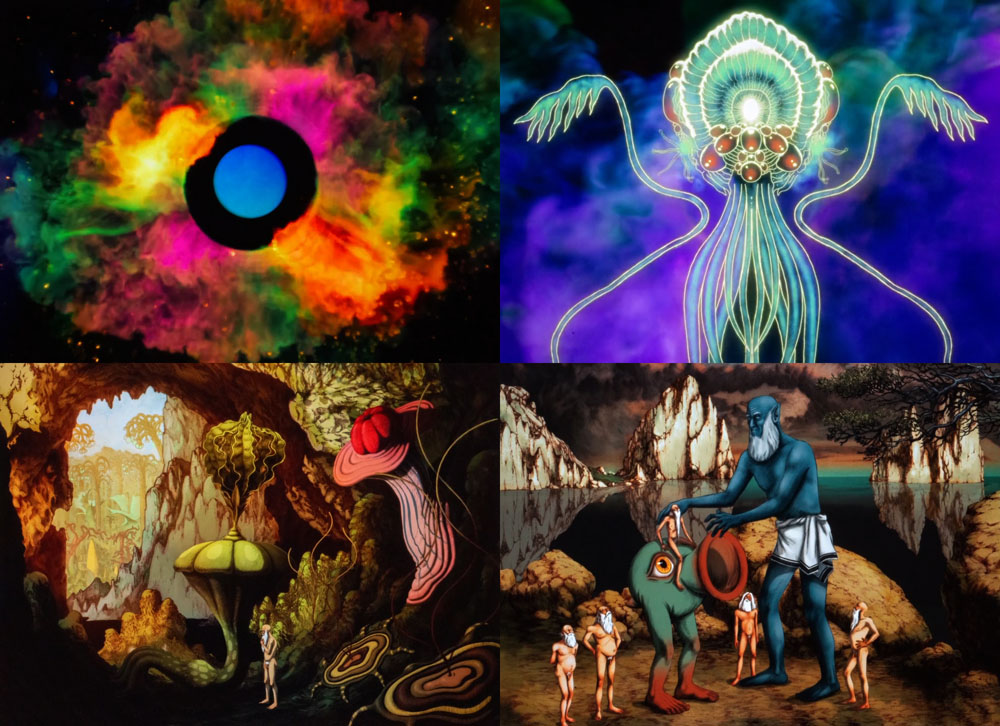
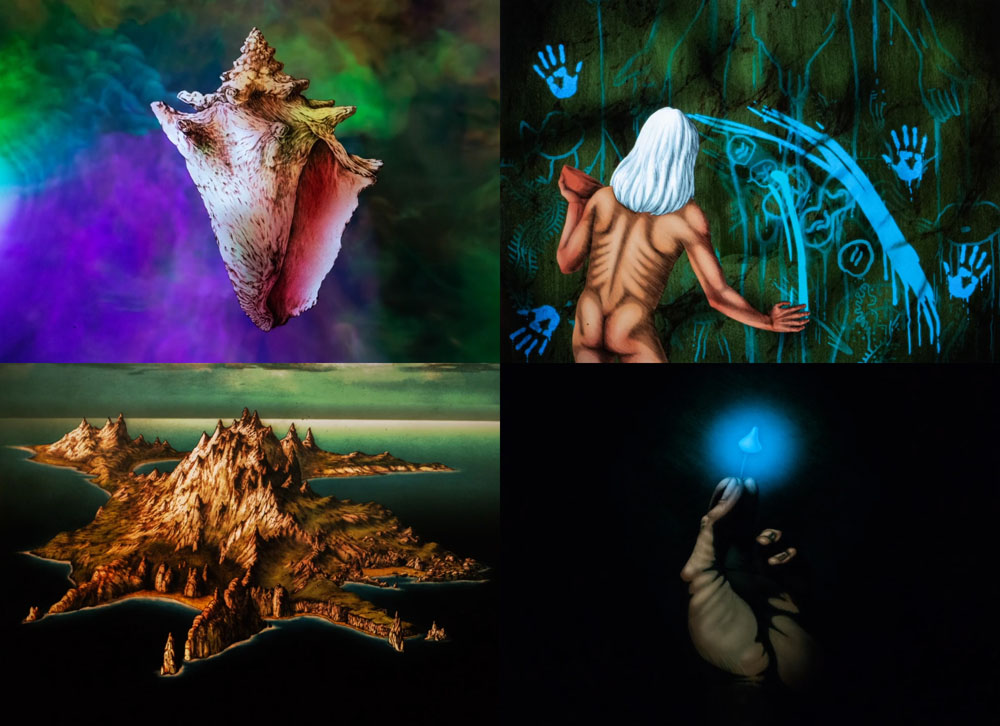
Terra Incognita was directed by Adrian Dexter and Pernille Kjaer, with the pair also working on the backgrounds and storyboards. The first part of the film is a creation myth which establishes the genesis of a mysterious island somewhere on the Earth whose inhabitants are four prematurely aged, immortal men. The quartet share the island with the blue giant who created them, together with a variety of unusual flora and fauna which includes luminescent psychotropic mushrooms. The accidental death of their creator leaves the islanders marooned in a world they were only beginning to learn about. The film is meticulously crafted, with an open-ended narrative that avoids melodrama when the men are faced with incursions from the outside world. And there’s a further connection to 70s’ fantasy in the soundtrack which incorporates a piece from Bo Hansson’s prog-synthesizer album, Music Inspired By Lord Of The Rings. Films like this require so much creative effort that you can’t expect more of the same any time soon, but I’m curious to see what Dexter & Kjaer may do in the future.

Previously on { feuilleton }
Arzak Rhapsody
Fracture by Paul and Gaëtan Brizzi
The Captive, a film by René Laloux

Weekend links 735

wyeth.jpg

The Adventure of the Giant Squid (c.1939) by NC Wyeth.

• Mix of the week is a superb XLR8R Podcast 860 by Kenneth James Gibson. Elsewhere there’s DreamScenes – July 2024 at Ambientblog, and Deep Breakfast Mix 267 at A Strangely Isolated Place.

• A trailer for a restored print of Time Masters (1982), the second animated feature by René Laloux, with character designs/decor by Moebius. Now do Gandahar.

• Coming soon from Strange Attractor: Music From Elsewhere: Haunting Tunes From Mythical Beings, Hidden Worlds, and Other Curious Sources by Doug Skinner.

Not only a prolific lyricist, Lovecraft considered his main vocation to be poetry. And at its best, his verse can be judged an apt expression of his philosophical vision, in which cosmic horror embodies the predicament of all sentient beings in a meaningless universe. That Lovecraft’s poetry never reaches the heights attained by such Modernists as T.S. Eliot or Ezra Pound should not diminish the fact that his is verse that, in the most archaic of ways, advances a startlingly modern metaphysic, a poetic encapsulation of what Thomas Ligotti in The Conspiracy Against the Human Race describes as an affirmation that the universe is a “place without sense, meaning, or value.” Lovecraft, with his antiquated prosody and his anti-human ethics, presented readers with a type of counter-modernist poetry. Ironically, he is the radical culmination of William Carlos Williams’s injunction of “No ideas but in things;” he is an author for whom there are only things. Graham Harman in Lovecraft and Philosophy describes Lovecraft as a “violently anti-idealist” who “laments the inability of mere language to depict the deep horrors his narrators confront.” Unpleasant stuff, for sure. It is verse that at best exemplifies something that controversial poet Frederik Seidel called for in the Paris Review: “Write beautifully what people don’t want to hear.”

Ed Simon on The Unlikely Verse of HP Lovecraft

• Among the new titles at Standard Ebooks, the home of free, high-quality, public-domain texts: The Case of Charles Dexter Ward, by HP Lovecraft.

• At Spoon & Tamago: An ethereal bubble emerges from a Japanese townhouse.

• New music: The Head As Form’d In The Crier’s Choir by Sarah Davachi.

Mabe Fratti’s favourite albums.

Bubble Rap (1972) by Can | Bubbles (1975) by Herbie Hancock | Reverse Bubble (2014) by Air