Two sides of Liška

svankmajer1.jpg

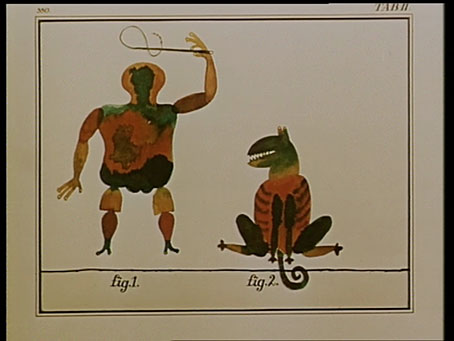
Et Cetera (1966).

A little more on the music of Czech soundtrack composer Zdeněk Liška (1922–1983). Liška seems to stand in relation to Czech cinema as Ennio Morricone does to that of the cinema of Italy, being similarly prolific, highly regarded, and idiosyncratic to a degree that makes his work immediately recognisable. Both men could also draw on their experience outside the film world to fuel their scores: Morricone for many years was a performer with Gruppo di Improvvisazione di Nuova Consonanza, a group of Italian free improvisers, while Liška’s work with electro-acoustic composition and early electronic music explains the frequent eruptions in his lush orchestrations of tape effects, exaggerated echoes and other forms of artificial processing. This kind of cross-pollination doesn’t seem so surprising today but it’s striking and surprising in soundtracks from the 1960s.

Good examples of the opposite poles of Liška can be found in two of Jan Švankmajer’s early shorts. Et Cetera (1966) is one of the director’s most formal exercises, a series of crude drawings (or cut-outs) coming to life to perform a repetitive routine before being interrupted by the words “ET CETERA”. The film plays with the audience by beginning with a title card that states “The End”, and the piece as a whole could easily be screened as an endless loop. Liška’s score is a combination of fairly minimal orchestration with a variety of electro-acoustic effects which are closer to Pierre Henry or İlhan Mimaroğlu than other Eastern European composers.
svankmajer2.jpg

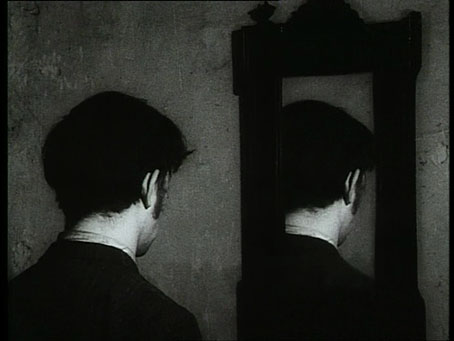
Shade of Magritte: The Flat (1968).

At the opposite end of the scale there’s the score for The Flat (1968), a typical piece of Švankmajer Surrealism with an unfortunate individual locked in a room where everything, from walls to furniture, contradicts his expectations. René Magritte casts a long shadow over this one, with director Juraj Herz making a brief appearance as a bowler-hatted man carrying a chicken. Liška’s score has a driving and reverberent choral rhythm that always makes me think of Krzysztof Komeda’s similar music for Roman Polanski’s Dance of the Vampires (1967). For such a short film it’s a remarkable piece of orchestration. The Brothers Quay are great Liška enthusiasts, and used some of the score from The Flat (and two other Liška pieces) for their 1984 film The Cabinet of Jan Švankmajer, an animated portrait of the director.

Previously on { feuilleton }
Liška’s Golem
The Cremator by Juraj Herz
Polanski details

polanski01.jpg

Roman Polanski as Alfred in Dance of the Vampires (1967).

I’ve always admired the attention to detail in Roman Polanski’s films, a quality evident not only in his careful adaptations but also in areas that lesser filmmakers might ignore. Dance of the Vampires (1967) is a good example (sorry, I refuse to call it by the title MGM used for its edited US release): the sets and decor are remarkable, and the editing and camera work so skilfully blends studio constructions with location shots that for years I was convinced the film was made in a genuine European castle. The atmosphere is so carefully sustained that I found the whole thing as terrifying on first viewing as any Hammer film, despite the broad humour. In the set-piece moments Polanski (and soundtrack composer Krzysztof Komeda) put many of the later Hammer vampire films to shame.


The Vampire Portraits

polanski02.jpg

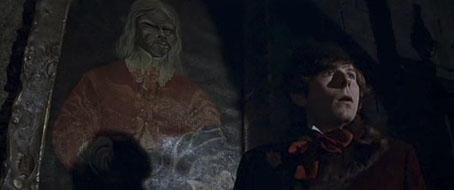
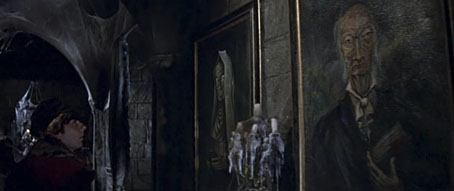
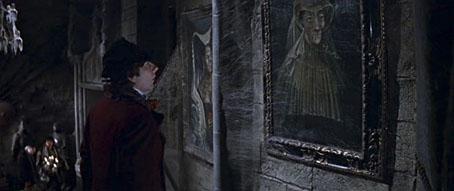
The production design and art direction for Dance of the Vampires was created by Wilfred Shingleton and Fred Carter, both of whom later worked on Polanski’s Macbeth, and who fill the rooms with mouldering furnishings and rotting decoration. One striking sequence concerns a walk through a gallery of vampire portraits that are the creepiest paintings seen on film since Ivan Albright’s portrait of a decrepit Dorian Gray. Film credits in the 1960s were sparse so there’s no indication of the artist responsible. However, one portrait glimpsed at the end of the gallery (below) is a copy of the “Ugly Duchess” painting by Quinten Matsys.

polanski03.jpg


Rosemary’s Book

polanski04.jpg

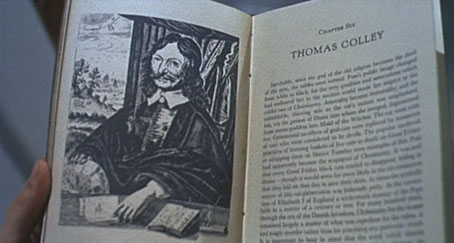
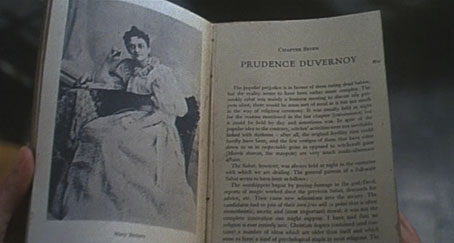
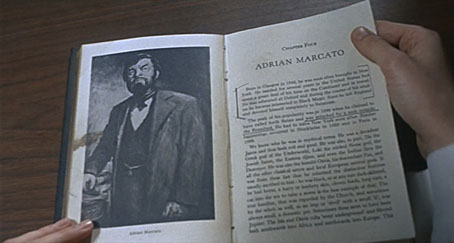
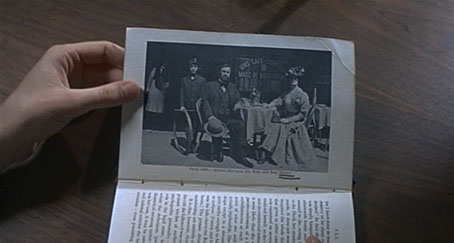
A sign that filmmakers care about detail is when they make their fictional books look like the genuine article. The history of witchcraft in Rosemary’s Baby (1968) could easily have been glimpsed very briefly but Polanski shows Rosemary leafing through its pages in a sequence of Hitchcock-like view-reaction-view shots that make it appear as convincing as possible. The shots also make the viewer examine the book through Rosemary’s eyes, something Polanski does throughout the film.

polanski05.jpg

polanski06.jpg

polanski07.jpg


Trelkovsky’s Paintings

polanski09.jpg

The Tenant (1976) is Polanski’s third study of apartment-dwelling paranoia, a superb adaptation of Roland Topor’s novel, Le Locataire chimérique (1964). The screenplay removes some of Topor’s ambiguity—and the film is spoiled by unsympathetic dubbing of the French actors—but in every other respect it’s as good as Repulsion for its portrait of an isolated individual (here portrayed by Polanski himself) surrendering to madness.

polanski10.jpg

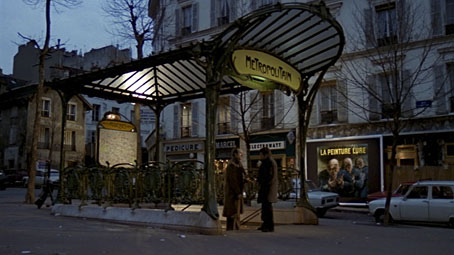
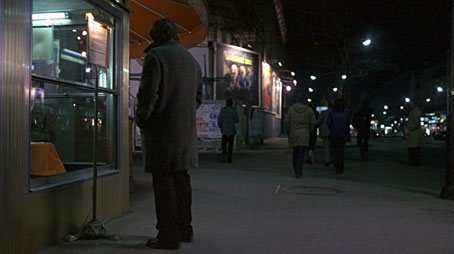
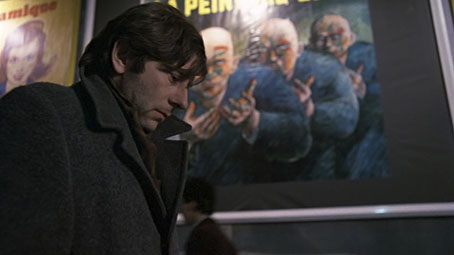
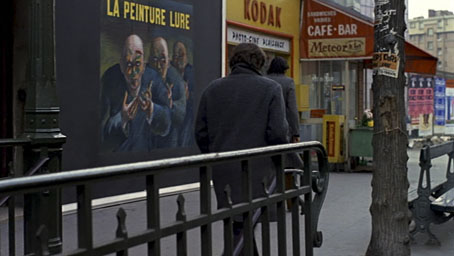
Among the many visual details which add to the unease is the appearance halfway through the film of billboards advertising…what? A painting exhibition? Or something more sinister? We never find out. The presence of these figures and their slogan—”La Peinture Lure”—remains as cryptic as many of the other unresolved questions which prey upon the beleaguered Trelkovsky.

polanski11.jpg

polanski12.jpg


Corso’s Postcard

polanski13.jpg

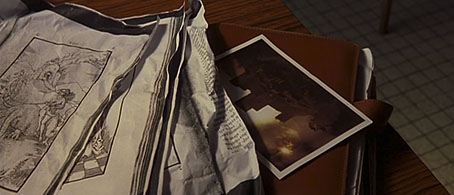
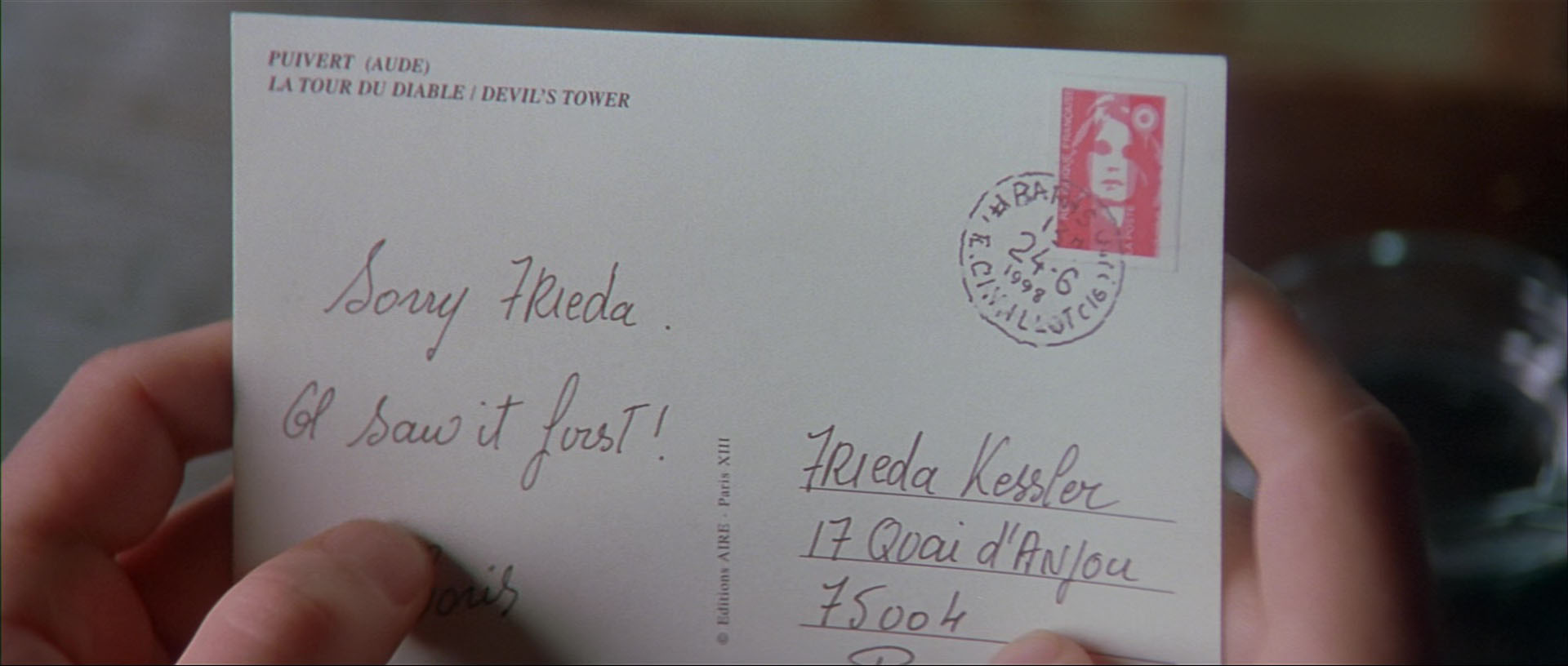
I’m in the minority of people who like The Ninth Gate (1999) a great deal even though it takes some liberties with Arturo Pérez-Reverte’s wonderful novel The Dumas Club. Once again, the bibliographic details are perfectly done, a crucial matter in a film about the antiquarian book trade. Near the end of the film Dean Corso (played by Johnny Depp) finds a postcard that leads him to the final location. On the back of the card there’s a blink-and-you-miss-it detail. Polanski’s wife, Emmanuelle Seigner, plays the mysterious and nameless woman who follows Corso throughout the film. By this point we already know she possesses occult powers so it’s not really surprising to see her face in the postage stamp, something that Corso doesn’t seem to notice.

polanski14.jpg

Previously on { feuilleton }
Repulsion posters
Atalanta Fugiens
Le Grand Macabre
Les Temps Morts by René Laloux
The writhing on the wall