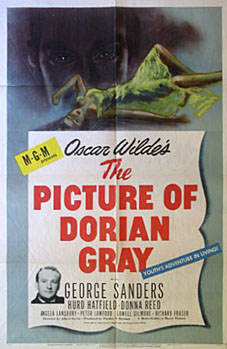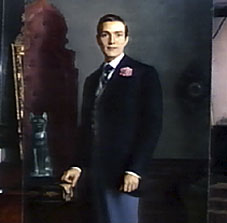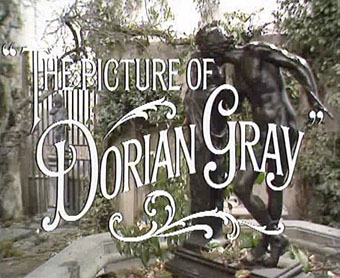
I wrote recently about John Selwyn Gilbert’s television play, Aubrey, an hour-long drama concerning the artist Aubrey Beardsley. The play was only screened once in 1982 and, like most one-off studio works of the period, is unavailable on DVD. John Osborne’s 1976 adaptation of The Picture of Dorian Gray is a welcome exception to this neglect and can be acquired in a box set along with three BBC productions of Wilde’s plays and a more recent Wilde documentary.
The stage plays are decent enough although the cast in the 1952 film version of The Importance of Being Earnest takes some beating. Dorian Gray is for me the essential work in the collection, even if its 100-minute running time cuts the story to the bone. The principal attraction in an entirely studio-bound work with few actors is the leads, and for this we have two great performances from John Gielgud as Lord Henry and Jeremy Brett as artist Basil Hallward. The tragic Dorian is played by Peter Firth who has difficulty keeping up with these heavyweights, especially in the later scenes when the story concentrates more fully on his predicament. Matters aren’t helped by his Yorkshire accent which frequently rises to the surface in a manner that would surely raise eyebrows in Mayfair drawing rooms.
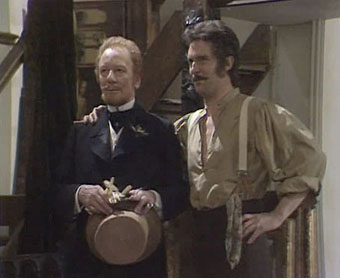
Lord Henry & Basil Hallward admire the portrait.