René Magritte by David Wheatley

magritte1.jpg

René Magritte as portrayed by Patrick McDonnell.

René Magritte died in 1967, the year Eric Duvivier’s La femme 100 têtes appeared in French cinemas. Magritte is even less visible cinematically than Max Ernst, IMDB lists a couple of documentaries and nothing else. There are trace elements elsewhere, notably the Magritte and de Chirico influence in Bertolucci’s Borges’ adaptation The Spider’s Stratagem (1970), but the artist’s arresting visual imagination has always found more of a welcome on book covers than cinema screens.
magritte2.jpg

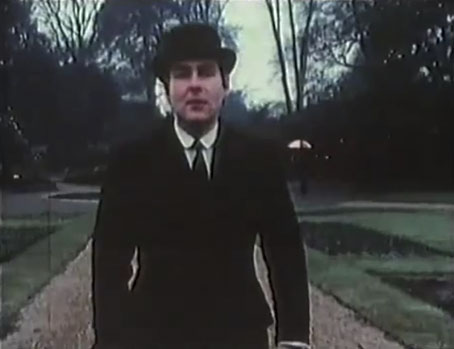
One exception is David Wheatley’s drama documentary René Magritte (1976), yet another work you won’t find listed at IMDB. This was Wheatley’s graduation film which the BBC screened in a 30-minute version (shorn of some apparently clunky dialogue scenes) in 1979, and which secured for Wheatley a place as a regular director for the BBC’s Omnibus and Arena arts programmes. I saw the 1979 broadcast, and caught it again a decade later when one of the channels was having a season of Magritte-related programming, something that’s impossible to imagine in today’s debased television landscape.

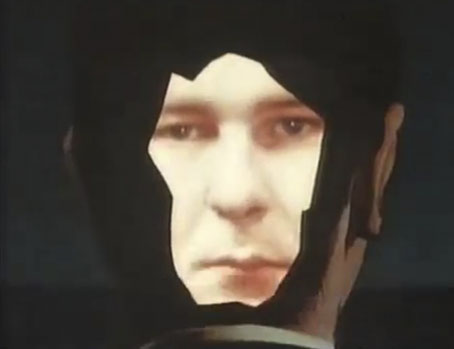
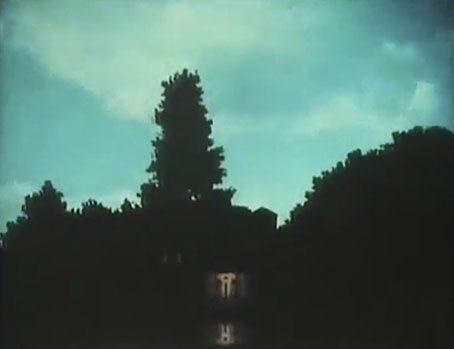
For a student film it’s a stunning piece of work, taking a similar approach to Eric Duvivier in bringing to life many of the artist’s more famous pictures: a window shatters to reveal the scene behind it painted on its panes, a mountain hovers ponderously over the sea, a dove made of clouds flies across a stormy sky. Between the artworks there are short biographical scenes. There’s a sole version of the film on YouTube that remains watchable despite being a low-quality recording from video tape that’s also hacked into three parts and subtitled in Danish.
magritte3.jpg

Looking for more information about David Wheatley it was dismaying to find he’d died in 2009, aged 59. Leslie Megahey—a cult TV director of mine—wrote an obituary for the Guardian where he describes some of Wheatley’s other productions including the Arena film Borges and I (1983)—as far as I’m aware the only British TV documentary about Jorge Luis Borges—and Wheatley’s first feature film, an adaptation of Angela Carter’s The Magic Toyshop (1987). I recall enjoying the latter, produced at a time when the success of The Company of Wolves (1984) made it seem there might also be a place in the cinema for Angela Carter’s imagination; we know how that worked out. The Magic Toyshop doesn’t seem to have had a DVD release so good luck to anyone searching for it. As for René Magritte, if anyone runs across a better online copy be sure to leave a comment.

Previously on { feuilleton }
The Public Voice by Lejf Marcussen

Weird Fiction Review

weird.jpg

weird, a.

1. Having the power to control the fate or destiny of human beings, etc.; later, claiming the supernatural power of dealing with fate or destiny. Originally in the Weird Sisters = †(a) the Fates; (b) the witches in Macbeth.

2. a. Partaking of or suggestive of the supernatural; of a mysterious or unearthly character; unaccountably or uncomfortably strange; uncanny.

b. of sounds or voices.

3. Of strange or unusual appearance, odd-looking.

4. a. Out of the ordinary course, strange, unusual; hence, odd, fantastic. (Freq. in recent use.)

b. Colloq. phr. weird and wonderful, marvellous in a strange or eccentric way; both remarkable and peculiar or unfathomable; exotic, outlandish. Freq. ironical or derog.

5. Comb., as weird-looking adj.

Oxford English Dictionary

Weird: I’ve relished the word since I was at school for the way it managed to embody or describe so many of the things I was deeply attracted to, especially in the world of fiction. Weird Tales magazine when it was at its height in the 1930s was able to publish stories of fantasy, horror and science fiction, or hybrid stories of fantasy/horror or horror/sf, none of which needed to be alloted specific definitions when “weird” was there to cover everything. China Miéville noted the usefulness of the “weird” designation ten years or so ago, and I’ve been hoping ever since that other people might pick up the broader, more inclusive term instead of dividing the major genres into ever smaller sub-genres. “Weird” could accommodate generic work but also encompass those stories that were simply strange without possessing the usual genre trappings.

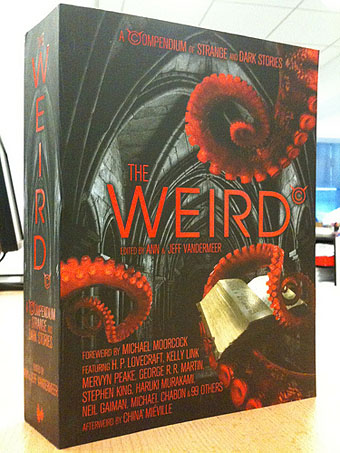
So far the term hasn’t found the widespread favour I’d been hoping for but that may change thanks to the Weird Fiction Review, a site launched this week by my friends and occasional collaborators Ann and Jeff VanderMeer whose enormous brick of an anthology, The Weird: A Compendium of Strange and Dark Stories, is published by Corvus this month. Weird Fiction Review states that:

its primary mission over time will be to serve as an ongo­ing explo­ration into all facets of the weird, in all of its many forms—a kind of “non-denominational” approach that appre­ci­ates Love­craft but also writers like Franz Kafka, Angela Carter, and Shirley Jack­son—along with the next gen­er­a­tion of weird writ­ers and inter­na­tional weird.

Already on the site is an interview with Neil Gaiman who says:

I think of Hor­ror as a sec­tion of a book­shop, gothic as a type of book that ended, truly, with North­hanger Abbey, and The Weird as an attempt to unify what­ever it was that Robert Aick­man did, that Edward Gorey did—using the tools of hor­ror to delight and trans­form.

I’m re-reading some of Aickman’s stories at the moment. He called them “strange” but I’d call them 100% weird. There’s one in Ann & Jeff’s anthology whose contents are an ideal introduction to this zone of literature.

Previously on { feuilleton }
The Vengeance of Nitocris
Die Andere Seite by Alfred Kubin
The King in Yellow
Hugo Steiner-Prag’s Golem