The recurrent pose 52

flandrin1.jpg

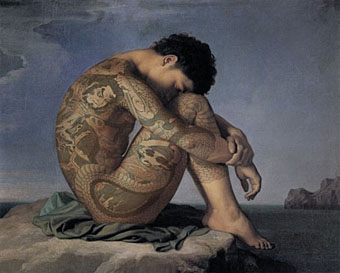
After Young Man Beside the Sea (2008) by Abe Koya.

Further examples of this most recurrent of poses continue to emerge. Abe Koya subjects Flandrin’s jeunne homme to some Japanese tattooing, one of a number of prints that give other famous artworks similar treatment.

flandrin2.jpg

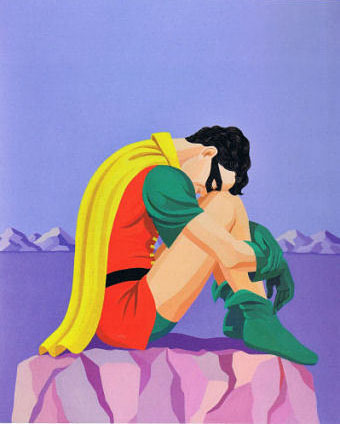
La solitudine dei numeri due (2011) by Giuseppe Veneziano.

Giuseppe Veneziano goes the opposite route by placing a superhero in Flandrin’s seascape. Another of Veneziano’s paintings has Superman in a pieta pose; Krypton’s most famous exile had already appeared in Flandrin’s setting some years ago. (Thanks to Hans for the tip!)

Elsewhere on { feuilleton }
The recurrent pose archive

March

march08.jpg

A Study, in March (1855) by John William Inchbold.

The windy, vernal, and ill-omened month in paintings. February by contrast was very under-represented; the approach of spring evidently gives artists a creative lift.

march10.jpg

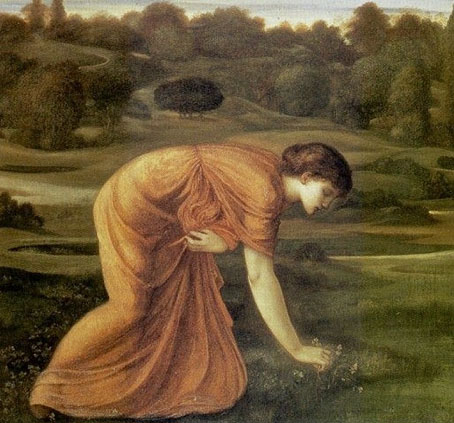
The March Marigold (1870) by Edward Burne-Jones.

march03.jpg

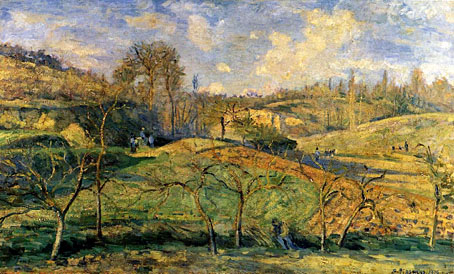
March Sun, Pontoise (1875) by Camille Pissaro.

march06.jpg

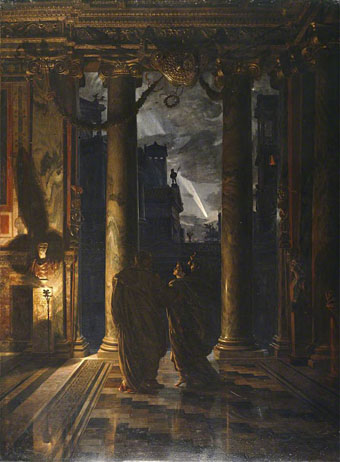
The Ides of March (1883) by Edward John Poynter.

Continue reading “March”

London ruins

gandy.jpg

Soane’s Bank of England as a Ruin (1830) by Joseph Gandy.

Joseph Gandy’s painting of the Bank of England does indeed show the building as a ruin but the painting was also intended to show the architectural layout of the place, hence the intact quarters in the lower left. The architect, John Soane, was a friend of Gandy’s, and owned the painting which usually hangs in the Soane Museum, one of my favourite places in London. Gandy’s painting is currently on display at Tate Britain as part of a new exhibition, Ruin Lust, which also features some other favourites of mine including John Martin’s The Destruction of Pompeii and Herculaneum (1822), and Cornelia Parker’s Cold Dark Matter: An Exploded View (1991), a work which really needs to be seen in situ. Soane’s Bank of England, incidentally, had a less Romantic ending when it was demolished in the 20th century to make way for a newer building.

dore.jpg

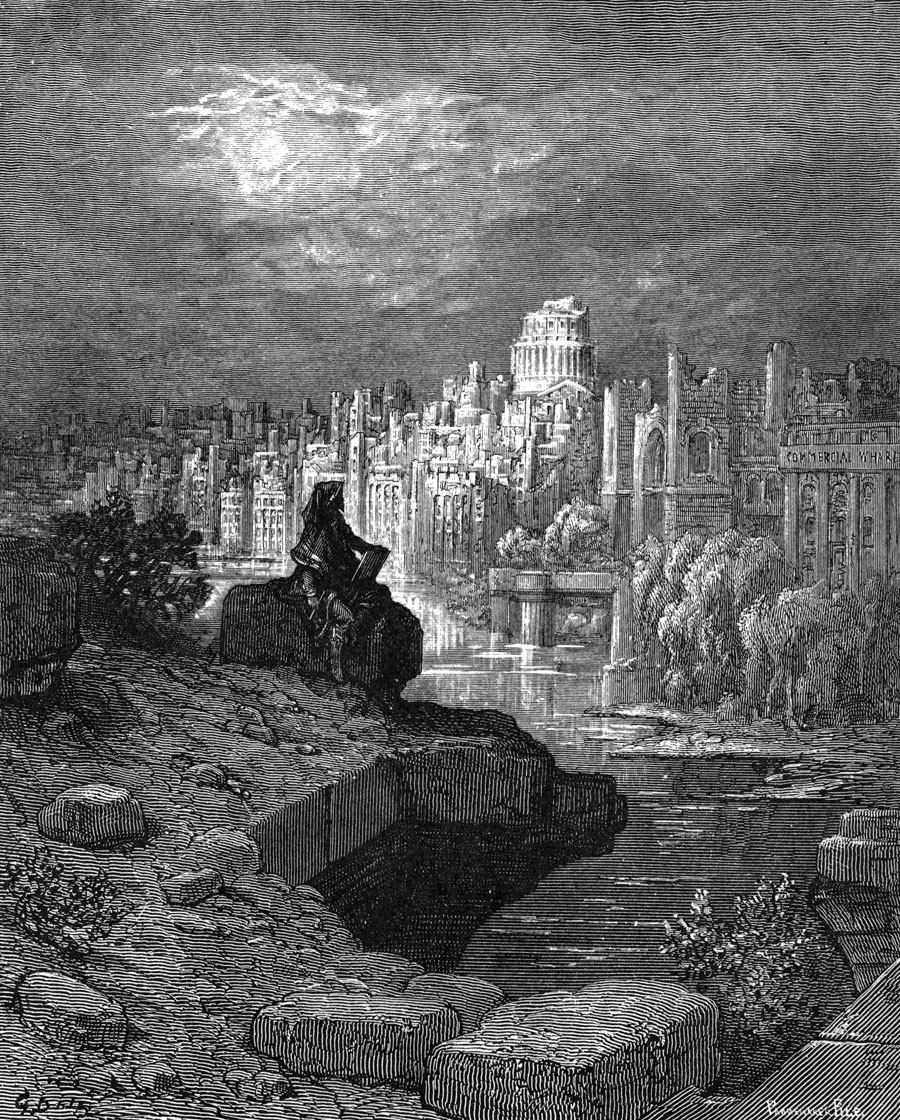
The New Zealander (1872) by Gustave Doré.

Also included in the exhibition is Gustave Doré’s surprising view of London in the distant future, the last plate in London: A Pilgrimage (1872). Visitors to Italy and Greece in the 18th and 19th century were fascinated by the idea that a city with the former splendour of Rome could have been reduced to a handful of marble ruins. This prompted the obvious thought that equally splendid cities such as London—in Doré’s time the most populous city in the world—would themselves be reduced to ruin one day. Doré’s picture illustrates a fleeting reference in Blanchard Jerrold’s text to a passage by Thomas Babington Macaulay concerning the longevity of the Roman Catholic Church. At the end of a lengthy paragraph Macaulay writes:

And she [the Church] may still exist in undiminished vigour when some traveller from New Zealand shall, in the midst of a vast solitude, take his stand on a broken arch of London Bridge to sketch the ruins of St. Paul’s.

I hadn’t traced this quote before but can see now that Doré was evidently familiar with it since he’s given his future New Zealander a sketch book. It’s typical of Doré to expand on a tiny detail in this way. There are plenty of recent views of London in ruins but this is a rare example from an earlier century. If anyone knows of any others then please leave a comment.

Previously on { feuilleton }
Mérigot’s Ruins of Rome
Pleasure of Ruins
Vedute di Roma

Weekend links 202

carrington.jpg

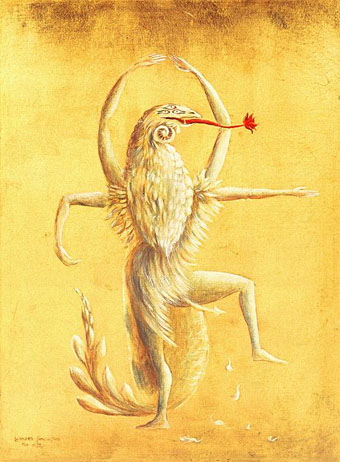
Figuras Miticas: Bailarin II (1954) by Leonora Carrington.

• The 26th Annual Lambda Literary Award Finalists have been announced. Ghosts in Gaslight, Monsters in Steam; Gay City: Volume 5 made the LGBT Anthology list, so congratulations to editors Evan J. Peterson & Vincent Kovar, and everyone else involved. I illustrated and designed the cover of that volume which also contains a piece of my fiction, Study in Blue, Green, and Gold.

Music in School (1969), episode 4: “A New Sound”. Amazing BBC TV programme for schools showing children playing avant-garde compositions using bowed metal sheets, tape loops, and primitive electronic equipment. I was at school then, and can’t help but feel a little jealous. Related: Delia Derbyshire Day approaches.

Voices Of Haiti (1953), recorded during ceremonials near Croix Des Missions and Petionville in Haiti by Maya Deren.

These days it’s hard to remember that Whistler’s Symphony in White, No. 1: The White Girl caused a bigger uproar at the Salon des Refusés of 1863 than Manet’s Déjeuner sur l’herbe, or that Monet was more influenced by Whistler than vice-versa. The delicacy of Whistler’s perceptions and his willingness to sacrifice everything for the sake of harmony make for an art less bracing than that of Degas or Pissarro. And yet how much life there is in his little Thames riverscapes. Perhaps we need another major exhibition—there hasn’t been one for twenty years—to re-evaluate him.

Whistler’s Battles by Barry Schwabsky

• Mix of the week (and a very good one it is): Abandoned Edwardian Schoolhouse by The Geography Trip.

Morton Subotnick tells Alfred Hickling how recording Silver Apples of the Moon blew his mind.

• The fantasy artwork of Ian Miller. A new book, The Art of Ian Miller, is published next month.

Queen for a Day by Alison Fensterstock. A look at the Mardi Gras Queens of New Orleans.

Tex Avery (1988): A 50-minute BBC documentary about the great animation director.

• The Gentle Revolutionary: Peter Tatchell talks to Joseph Burnett about Derek Jarman.

The Soaring and Nearly Forgotten Arches of New York City.

Dennis Hopper‘s photos of American artists in the 1960s.

Vodun at Pinterest.

Litanie Des Saints (1992) by Dr. John | Dim Carcosa (2001) by Ancient Rites | Far From Any Road (2003) by The Handsome Family
Heliotropic

heliotropic9.jpg

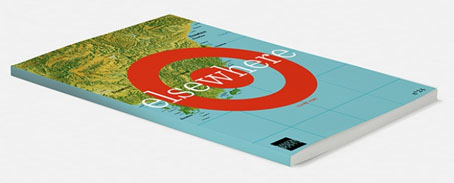
Arriving in the post this week was a catalogue for a Maison & Objet exposition of design and decoration which includes one of my paintings among the listed “Inspirations“. The event was held in Paris at the end of January but I’ve been so busy for the past few of months I forgot to see when it was on. Not that I could have said much about it since this is a showcase event you have to attend rather than experience remotely.

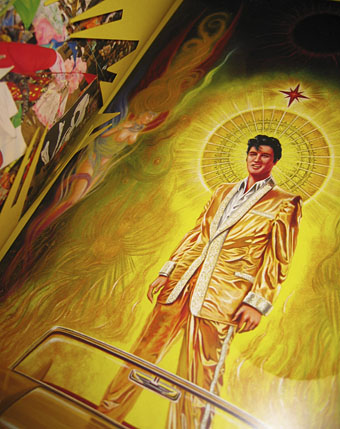
Catalogues for big art and design events often tend to the lavish and expensive but the Elsewhere book is the most lavish I’ve ever encountered. The production runs the gamut of the many expensive options which modern printing can provide: metallic inks, varnish effects, iridescent and translucent sheets, embossing, die-cutting, tipped-in inserts, and variable page sizes. The inflexible icing on the cake comes in the shape of a small square of polished marble glued to one of the pages. Excess aside, the print quality is excellent, and I’m very pleased with the way my Elvis painting appears.

sunking.jpg

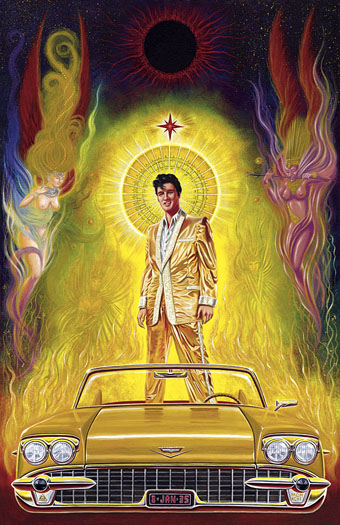
Sun King (1996).

Sun King was commissioned by Creation Books in 1996 as cover art for a Jeremy Reed novel which ended up being dropped by the company. The concept was the author’s, and while I’m pleased with the way it turned out I always felt it should have had more of a Gustave Moreau quality. This is the first time the picture been used anywhere although I did reuse the Elvis-in-a-Cadillac idea recently for one of the Alas Vegas Tarot cards.

heliotropic1.jpg

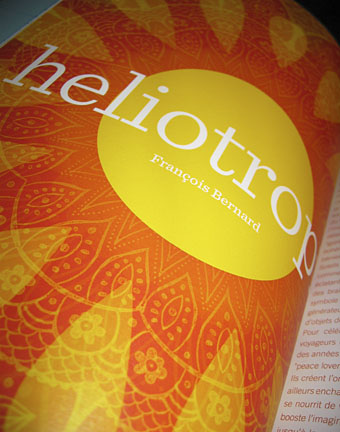
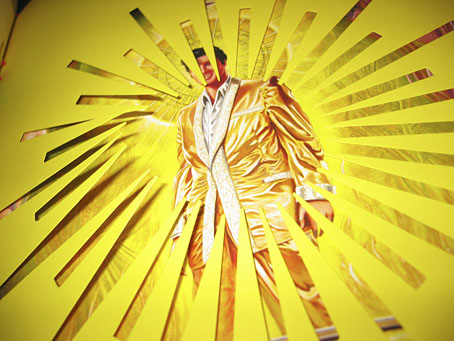
My painting is included in the Heliotropic section of the book which shows some of François Bernard’s inspirations. I’m pleased they placed one of the die-cut overlays before my piece. The photos below show some of the pages from the other sections which concern the inspirations of Elizabeth Leriche—her section includes the chunk of marble—and Vincent Grégoire whose section features futurism, space scenes, metallic effects, and Daft Punk.

heliotropic2.jpg

heliotropic3.jpg

Continue reading “Heliotropic”