
When Chaplin Became the Enemy
| Monsieur Verdoux.
Raymond Voinquel
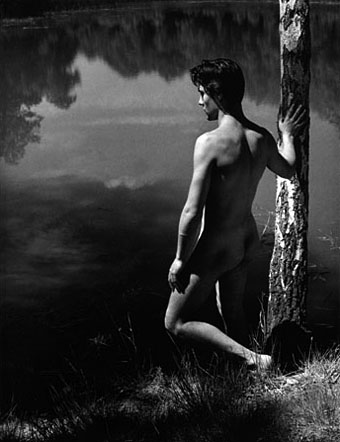
Projet pour le ‘Narcisse’ de Paul Valéry (1940).
Photographs by Raymond Voinquel (1912–1994).
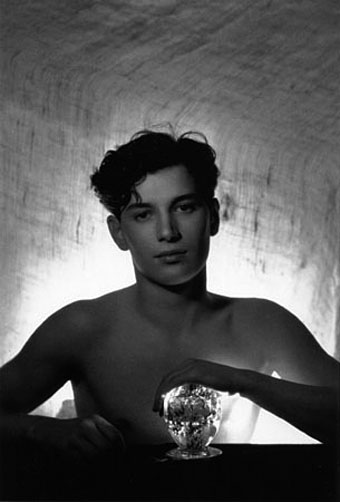
Hommage au Bronzino (1940).
• A gallery site | A Flickr set
Via Fabulon.
Previously on { feuilleton }
• Norman McLaren
• Reflections of Narcissus
• Narcissus
The New Love Poetry
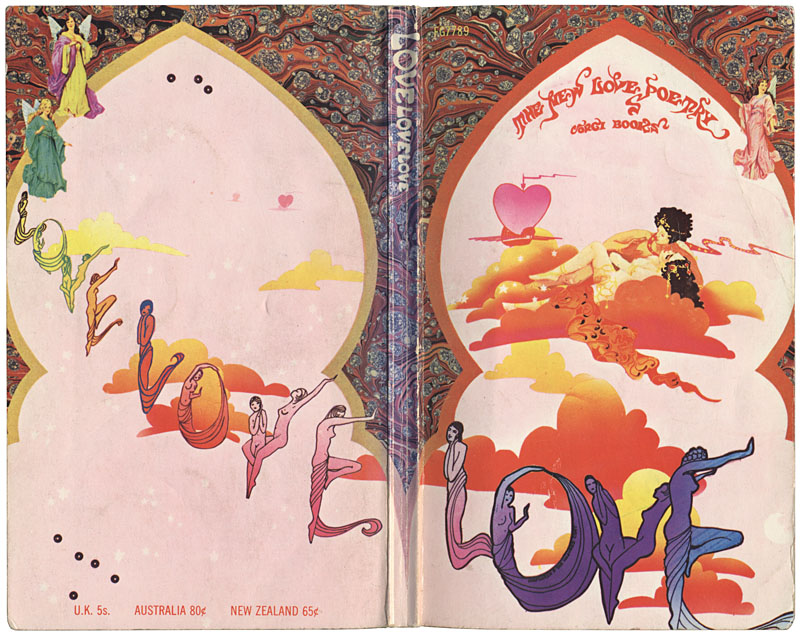
Yesterday’s book purchase was a small poetry collection from the magical year of 1967, edited by Peter Roche. Despite its Beatles cash-in title, Love, Love, Love: The New Love Poetry, not everything here is lightweight fare, Adrian Mitchell’s Peace is Milk is aimed more at the war in Vietnam than some object of affection. Among the other contributors there are the poets one would expect such as Roger McGough and Michael Horovitz, also Pete Brown who wrote lyrics for Cream and later had his own band, Piblokto. And there are contributions from Libby Houston, the wife of Mal Dean, an artist notable for his illustrations for Mike Moorcock’s books of the period and (later) some album sleeves for Pete Brown and others. Some of Libby’s poems appeared in the 50th anniversary edition of New Worlds magazine, along with an illustration by yours truly.
Contents aside, I picked this up mainly for the cover which I guessed was the work of Hapshash and the Coloured Coat, aka Michael English and Nigel Waymouth, along with Martin Sharp the leading psychedelic artists in the UK during the late Sixties. This proved to be a good guess as the book can be seen on this Hapshash page and if I’d have looked closer while in the shop I’d have seen their name written in tiny letters on the purple “O”. Not a difficult guess, their swirly lettering designs are very distinctive. See the full groovy cover here.
• A Hapshash and the Coloured Coat gallery
Elsewhere on { feuilleton }
• The book covers archive
Previously on { feuilleton }
• Dutch psychedelia
• Family Dog postcards
• The 14-Hour Technicolor Dream revisited
“Fusion? It’s what I am”
“Fusion? It’s what I am”
| The divine Natacha Atlas.
The art of Rune Olsen
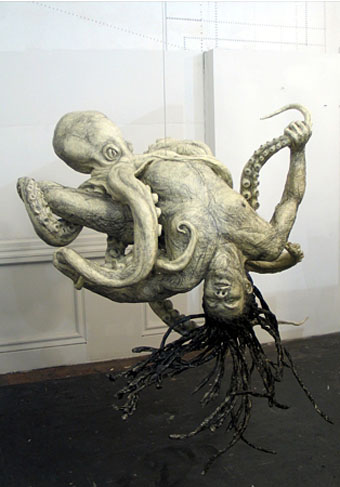
For Everything I Long to Do (2005/08).
A sculpture which resurrects the old tentacle sex motif, part of a series of sculpted works by Rune Olsen exploring unusual erotic permutations; this one of a naked man sniffing round the hind quarters of a wolf (?) also caught my attention.
The octopoid sculpture reminds me that I’d been intending on looking at some of the lesser-known treatments of the tentacle sex theme since I keep running across new examples. Soon maybe, when work here has calmed down a bit.
Previously on { feuilleton }
• Octopulps