The World of Wonders

wonders01.jpg

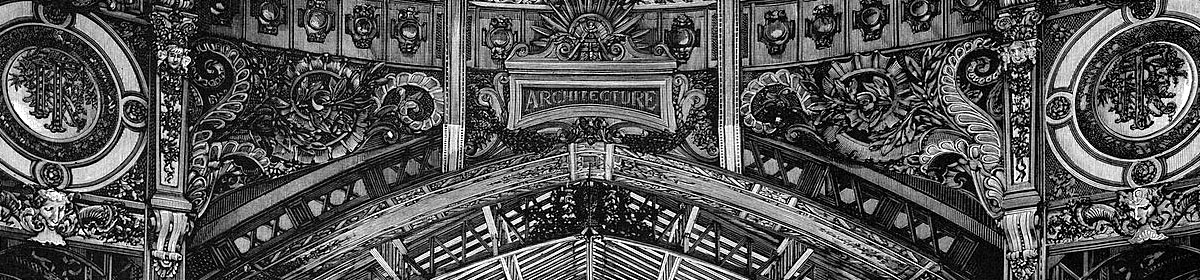
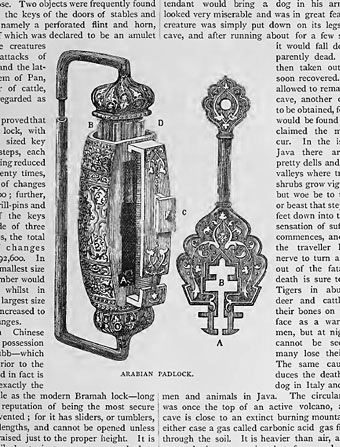
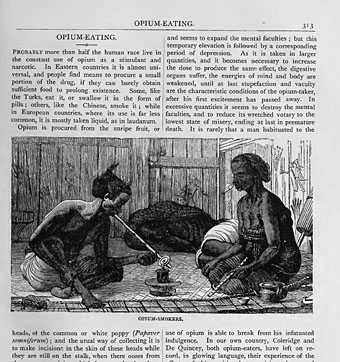
This is the kind of Victorian book I enjoy a great deal, something that might be regarded as a Wunderkammer in paper form: not an encyclopedia, and not a science text-book but containing the kinds of articles you’d find in both. The chief attraction is the engraved illustrations, of course, although the articles themselves are often of interest. The World of Wonders dates from 1883, and is subtitled “A record of things wonderful in nature, science, and art”. This is very like a book I own entitled The Pictorial Cabinet of Marvels although The World of Wonders is the superior work, with a larger page count and a wider range of subjects. This is also only Volume 1, although I’ve not searched through the Internet Archive to see whether they have any further volumes. The illustrations are from a PDF, the page scans are much better quality. And I was pleased to find that two of the plates shown below—Barnacles and A Coal Forest—were combined by Wilfried Sätty for one of his Poe collages. (I’d scan the Sätty picture but I don’t want to spoil the book.) I’ve recently been commissioned to create some more engraving collages so volumes such as this may be useful source material.
wonders02.jpg

wonders03.jpg

Continue reading “The World of Wonders”

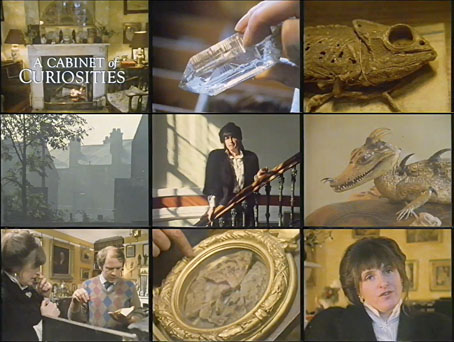
A Cabinet of Curiosities

cabinet1.jpg

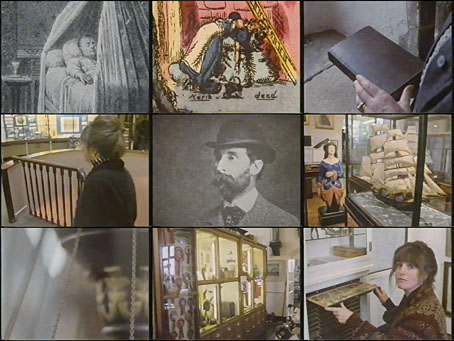
When I still had a television I used to enjoy Lucinda Lambton’s films for the BBC, and this one—a short history of the British Wunderkammer—was a particular favourite. Lambton’s films cover similar ground to those of Jonathan Meades but with a lighter touch, and free of Meades’ often relentless pontification. This episode of 40 Minutes, first broadcast in 1987, includes some unusual architecture—a Lambton speciality—but concentrates for the most part on seeking out a few surviving examples of the ad hoc museums hidden away in country houses. Among the more notable features there’s Walter Potter’s taxidermy diorama, The Death and Burial of Cock Robin, and the full 40-minute programme showed the incredible Bowes Swan automaton in action. The copy of the film at YouTube is missing the last 10 minutes so the swan is absent although it’s easily seen elsewhere.

cabinet2.jpg

Previously on { feuilleton }
The Thackery T. Lambshead Cabinet of Curiosities
The specimens of Alex CF
Walmor Corrêa’s Memento Mori
The art of Ron Pippin
Custom creatures
Jan Švankmajer: The Complete Short Films
Cryptozoology
The Bowes Swan
The Museum of Fantastic Specimens

Weekend links 271

flyhead.jpg

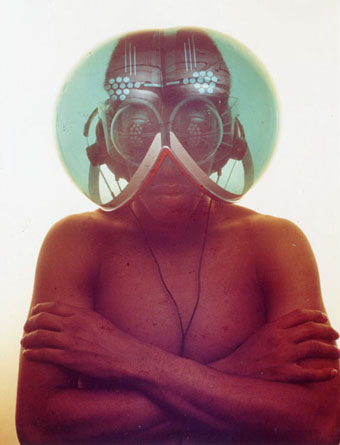
Environment Transformer/Flyhead Helmet by Haus-Rucker-Co (1968). From Hippie Modernism at the Walker Art Center, Minneapolis.

• From 2006: Weird Tales: The Strange Life of HP Lovecraft. Geoff Ward examines Lovecraft’s life and work for BBC Radio 3 with contributions from Neil Gaiman, ST Joshi, Kelly Link, China Miéville and Peter Straub. Meanwhile, Ned Beauman wonders whether Ford Madox Ford is “as scary as Lovecraft”.

• Alexei German’s years-in-the-making feature film, Hard to be a God (previously), receives a UK release this week. Paul Duane reports on an overwhelming viewing experience, while Nigel Andrews says it “may be the greatest film since the millennium began”.

• Mixes of the week: Adventures In Sound And Music, 30 July 2015, hosted by Joseph Stannard, and RCMIX9 by worriedaboutsatan.

As Nabokov insisted, “Literature is invention. Fiction is fiction. To call a story a true story is an insult to both art and truth.” The genre thrives because its deceptions are liberating. For Wood, the thrill of reading fiction is intimately connected with the awareness that fiction constitutes “an utterly free space, where anything might be thought, anything uttered.” The excitement comes when, as readers, we’re allowed to participate in this freedom and experience the fiction imaginatively, without being required to believe that it is true.

Joanna Scott on The Virtues of Difficult Fiction

• “Writing used to be a solitary profession. How did it become so interminably social?” asks Meghan Tifft.

• The original, real-life dystopian cityscape of Kowloon Walled City, and the artwork it inspired.

• The Long, Lonely Walk: Nick Ripatrazone on hallways in horror films.

New cover designs for the Essentials range from Penguin Books.

Lemi Ghariokwu: “How I designed Fela Kuti’s album covers”.

• “Do CDs sound better than vinyl?” asks Chris Kornelis.

• Magic Fly (1977) by Space | Human Fly (1978) by The Cramps | I Am The Fly (1978) by Wire

Howard’s creatures

yith.jpg

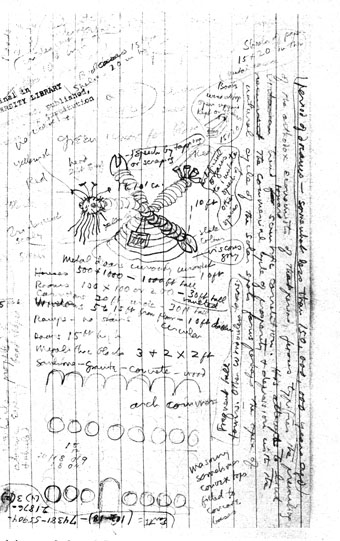
One of the tasks this week has been sketching out a member of the Great Race of Yith, the consciousness-hopping alien scholars whose exploits are detailed in HP Lovecraft’s The Shadow Out of Time. Their appearance isn’t at all mysterious: Lovecraft describes them in some detail (and sketched them in his notes above) and they were illustrated by Howard V. Brown for their first publication in Astounding Stories in June 1936. But I’ve only ever drawn any of Lovecraft’s creatures when there’s been a good reason (or a commission) so this was the first time I’d had to think seriously about how I wanted to depict a Yithian.

cthulhu.jpg

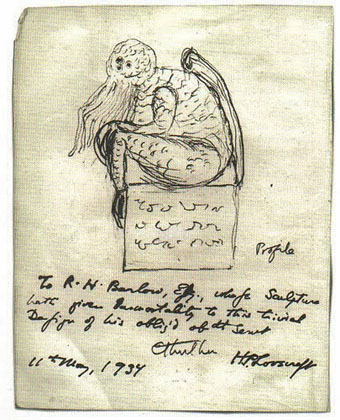
The results will be posted here in due course but in the meantime here’s a couple more of Lovecraft’s own sketches of his creations. The Cthulhu sketch is one of two showing the statue from the story. The most interesting detail for me is the multiple eyes which aren’t described in the text.

atmom.jpg

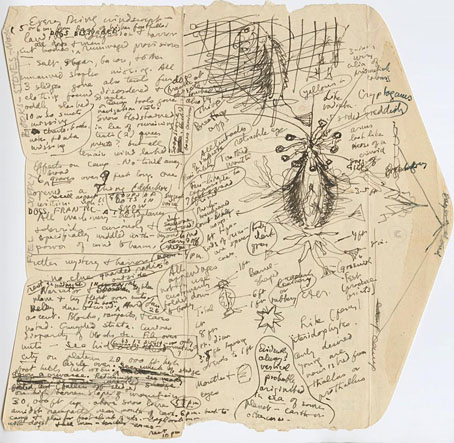
The Great Race of Yith have always struck me as somewhat improbable even if you take into account alien evolutionary paths. Similar creatures populate the early science fiction magazines (Frank R. Paul painted many of them), and this is one place where I feel slightly let down by Lovecraft’s imagination. In the recent batch of drawings I’ve also been depicting one of the Mi-go and some of the Elder Things from At the Mountains of Madness. The latter are at the opposite end of the scale to the Great Race, sufficiently alien without seeming absurd.

Elsewhere on { feuilleton }
The Lovecraft archive