DIY aesthetics

penguin_blank.jpg

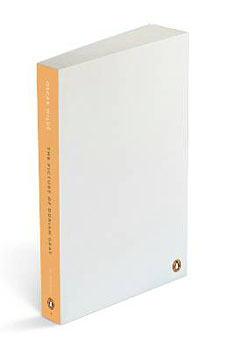
“According to consumer research conducted on what factors matter to people when they decide whether or not to pick up a book in a bookshop, the cover design comes out as most important. So this might be the stupidest thing we’ve ever done.

“…The covers are art-quality paper, and from internal Penguin efforts we know that they hold ink, paint, pencil and glue…. Each one comes shrink-wrapped so the paper doesn’t get dirty, and I hope people might give them as gifts.”

Helen Conford, Senior Commissioning Editor at The Penguin Press.

The latest ploy by Penguin to shift that tricky back catalogue of classics that everyone has heard of but few people read, resorts to what might be called audience interactivity, in other words print a book with a blank cover and the suggestion that the reader draw their own. They’re calling the scheme “My Penguin” which is unfortunate, this has the same treat-me-like-a-child quality as Microsoft’s dreadful “My Computer” and “My Documents”. The new line will be unveiled next week with the following titles: Crime and Punishment by Fyodor Dostoyevsky, Emma by Jane Austen, Magic Tales by the Brothers Grimm, Meditations by Marcus Aurelius, The Picture of Dorian Gray by Oscar Wilde and The Waves by Virginia Woolf.

This is a rather more interesting idea than Headline’s repackaging of Jane Austen as Georgian chick-lit earlier this year, a move guaranteed to disappoint anyone expecting Helen Fielding in period costume. Penguin is asking readers to send in their designs which they’ll then feature in an online gallery. In a way this goes against the traditional function of the paperback which serves as a cheap(ish), easily portable object that’s often treated with considerable disrespect while being used. Anyone who spends a couple of hours crafting their own cover design will quickly find they have a bespoke art object in their home that they want to preserve, not bend out of shape during the morning commute then discard when finished. It’ll be interesting seeing how this project develops. Will many of these unique designs turn up later on the Oxfam shelves along with all the other secondhand volumes, or will people want to keep them? Will we start seeing dedicated collectors of these titles and their artworks? (Some will no doubt be worth a great deal of money in the future if the cover is drawn by a famous owner.) And some are easier to illustrate than others; everyone knows the story of Dorian Gray but what would be suitable for Marcus Aurelius, for instance?

Elsewhere on { feuilleton }
The book covers archive

Previously on { feuilleton }
The Picture of Dorian Gray – I

The glass menagerie

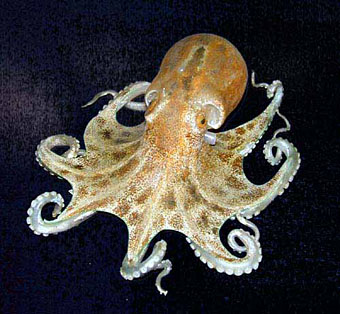
blaschka1.jpg

Not the play by Tennessee Williams, rather the glass sculptures of sea creatures by Leopold and Rudolf Blaschka.

Leopold (1822–1895) and Rudolf (1857–1939) Blaschka were a father and son partnership, originally from Bohemia. Their work making spectacular glass models of natural history objects began in 1857, in Germany. Rudolf joined his father in business in 1876 and after 1880 there were so many orders for their glass models that this became their sole business.

The Blaschkas are best known for their glass flowers, made from 1886 to 1936. Many of these are now displayed in the Botanical Museum of Harvard University. After his father’s death in 1895, Rudolf continued to make glass flowers. However, during their lifetimes they also made many accurate models of mainly marine animals. Dying with no children, their glass-working secrets were not passed on.

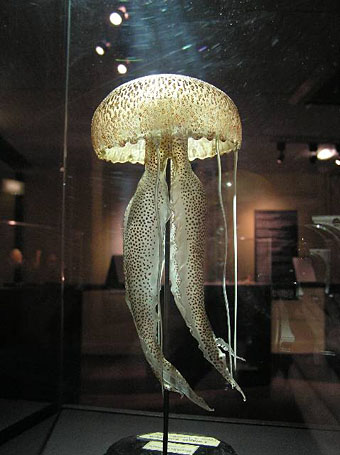
blaschka2.jpg

(More photos like this here.)

Looking at these sculptures I was curious to know whether they worked from real specimens or not. They may have used some for reference but I suspected many of their works were based on the famous colour plates of sea creatures, radiolaria, and so on, in Ernst Haeckel’s Kunstformen der Natur (1899–1904). A quick search confirms this, Haeckel was consulted, as were earlier scientific studies such as Philip Gosse’s Naturalist’s Rambles on the Devonshire Coast (1853) and GB Sowerby’s Popular History of the Aquarium of Marine and Fresh-Water Animals and Plants (1857).

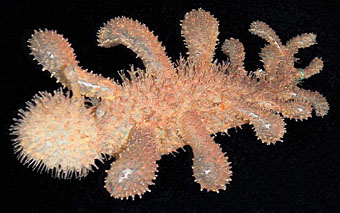
blaschka3.jpg

(More photos like this here.)

Nancy Marie Brown writes about the Blaschka’s glass flowers (and what’s known of their working methods) here.

Previously on { feuilleton }
The Bowes Swan

William Burroughs gives thanks

Lest we forget…

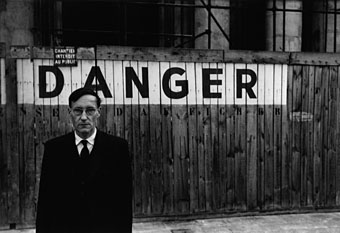
burroughs.jpg

William Burroughs.

Thanksgiving Day, Nov. 28, 1986.

For John Dillinger
In hope he is still alive

Thanks for the wild turkey and the Passenger Pigeons, destined to be shit out through wholesome American guts —

thanks for a Continent to despoil and poison —

thanks for Indians to provide a modicum of challenge and danger —

thanks for vast herds of bison to kill and skin, leaving the carcass to rot —

thanks for bounties on wolves and coyotes —

thanks for the AMERICAN DREAM to vulgarize and falsify until the bare lies shine through —

thanks for the KKK, for nigger-killing lawmen feeling their notches, for decent church-going women with their mean, pinched, bitter, evil faces —

thanks for “Kill a Queer for Christ” stickers —

thanks for laboratory AIDS —

thanks for Prohibition and the War Against Drugs —

thanks for a country where nobody is allowed to mind his own business —

thanks for a nation of finks — yes,

thanks for all the memories… all right, let’s see your arms… you always were a headache and you always were a bore —

thanks for the last and greatest betrayal of the last and greatest of human dreams.• From Tornado Alley (1989).

Previously on { feuilleton }
William Burroughs book covers
Towers Open Fire

The Times makeover

times2.jpg

The new masthead designed by Luke Prowse, with a coat of arms
by wood engraver Edwina Ellis.

So, in today’s Neville Brody news (no, I’m not intending on posting about him every day…) it seems the designer has been busy with colleague Luke Prowse making The (London) Times look better. Not before time (so to speak), it was starting to look very out-of-date beside the recent makeovers at The Guardian and Independent. Brody is evidently first choice for these kind of projects at the moment, confirming that he’s still one of our most important print designers.

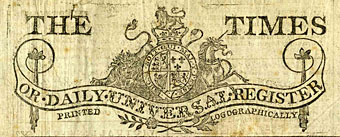
Among the changes are a new typeface, Times Modern, which has been applied to a new design for the masthead. Considering that this is one of the most famous newspaper mastheads in the world, I hadn’t realised it had changed so much over the years. The Times website has a nice online gallery showing the development from its earliest days as “The Daily Universal Register” through to the present.

times1.jpg

An early edition from 1788.

Brody has said of the new typeface, “Times Modern is a contemporary answer to the needs of compact newspapers. With pinched proportions, it allows more copy in the headline without compromising legibility. It is both authoritative and elegant, while robust at smaller sizes.” Since he’s on record expressing his dislike for Times New Roman, he must have enjoyed being given the opportunity to supplant an ugly and over-familiar font with something more suitable.

Previously on { feuilleton }
100 Years of Magazine Covers