Adam 2, a film by Jan Lenica

lenica1.jpg

Adam 2 is the first feature-length animated film by Polish animator and graphic designer Jan Lenica (1928–2001). The film was a German production, made in 1968 after Lenica had spent the past decade making shorter films in Poland, several of which look like rehearsals for this one.

Lenica called it “a sort of an intellectual comic strip”. A trip across ages and spaces, remindful of the biblical Paradise; a struggle for one’s individuality; a parody of Stalinism and totalitarianism. Critics emphasized the pessimism of its message. (More)

A pair of title cards at the beginning proclaim: “The strange, nightmarish, monstrous, utterly incredible yet true story of his life.” Lenica styled his intellectual comic strip with engraved backgrounds and decors similar to those he used in Labirynt, while the travails of “Adam 2” resemble the predicaments of the anonymous characters in both Labirynt and A. The minimal dialogue, presented in the form of intertitles, was written by Eugène Ionesco whose Rhinoceros Lenica had previously adapted. I’ve no idea what the number 44 represents in this scenario but it’s a prevalent fixture throughout.

lenic2.jpg

In a year in which the posts here have been preoccupied with Surrealism I ought to note that Lenica’s animated films are often a lot more “Surrealist” than much of the live-action cinema that gets tagged with the S-word. But Lenica was an animator, and animation is the poor relation of the film world, persistently overlooked and under-represented. Lenica reinforced the Surrealist tenor of his work a few years later with two animated adaptations of Jarry plays, Ubu Roi and Ubu et la Grande Gidouille, the latter being another full-length feature. I’d love to see a restored collection of his films but I’m not expecting this any time soon.

Elsewhere on { feuilleton }
The Surrealism archive

Previously on { feuilleton }
Rhinoceros by Jan Lenica
Repulsion posters
Dom by Walerian Borowczyk and Jan Lenica
Labirynt by Jan Lenica

Weekend links 726

ferriss.jpg

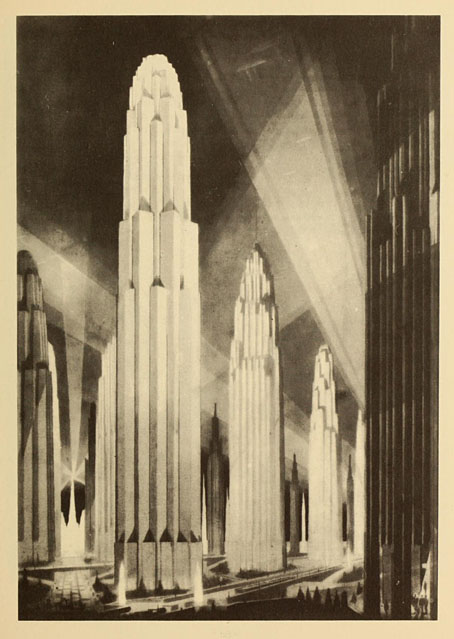
Verticals on Wide Avenues from The Metropolis of Tomorrow (1929) by Hugh Ferriss.

Megalopolis, the futuristic epic written and directed by Francis Ford Coppola, now has a trailer and a handful of mixed reviews. I recall Coppola saying years ago that he was the kind of director who would happily make films in any genre, science fiction included. I’ve wondered ever since what a full-on Coppola SF film might look like. (Captain EO and Peggy Sue Got Married don’t count). Now it seems we’re about to find out. Given his previous missteps I remain sceptical yet curious about this one. I’ve avoided his output since Bram Stoker’s Dracula but I’m still happy to see him being so ambitious while retaining his independence.

• And RIP Roger Corman who Coppola remembered as “my first boss, task-master, teacher, mentor, and role model. There is nothing about the practical matter of making movies I didn’t learn by being his assistant.” Related: It rained on the Sunday: a career interview with Roger Corman by Matthew Thrift.

• At Retro-Forteana: Fortean-themed music, from opera to metal. A difficult subject for a such short post, as the author admits. I’m amused to see one of my Hawkwind album covers in the list although the album itself doesn’t seem very Fortean to me.

• “Did you know that, if things had gone differently, the Pompidou Centre could have been an egg?” Oliver Wainwright on architecture that might have been.

• At Cartoon Brew: A closer look at great animated title sequences. I deplore the omission of Richard Williams’ titles for The Charge of the Light Brigade (1968).

• At Public Domain Review: Love Spells and Deadly Shrieks: Illustrations of Mandrakes (ca. 650–1927).

• At Wormwoodiana: “That Strange Little Book”: Ding Dong Bell by Walter de la Mare.

• At Unquiet Things: The latest collection of Intermittent Eyeball Fodder.

• Mix of the week: DreamScenes – May 2024 by Ambientblog.

Mandrake Root (1968) by Deep Purple | Mandrake (1975) by Gong | The Mandrake’s Hymn (2019) by Earth

Four short films by Vince Collins

collins0.jpg

The expressions “psychedelic” and “surreal” are often so casually applied that they lose any useful definition, but in the case of these early films by American animator Vince Collins “psychedelic surrealism” is an accurate description. All have somehow managed to evade my weirdness radar until now, despite being superior examples of the endlessly mutating dream-landscape which animation can do so well. The last of them, Malice in Wonderland, is a breathless run through Lewis Carroll scenarios which Collins made in collaboration with his wife, Miwako Collins. That punning title has been overused in the music world but the pair ought to be given sole ownership of it, their bad-trip film is the most grotesquely nightmarish reworking of Alice themes that I’ve seen.

Vince Collins’ YouTube channel contains many more recent works done with computer animation. The hand-drawn films are more to my taste but it’s good to see him still being active and creative.

collins1.jpg

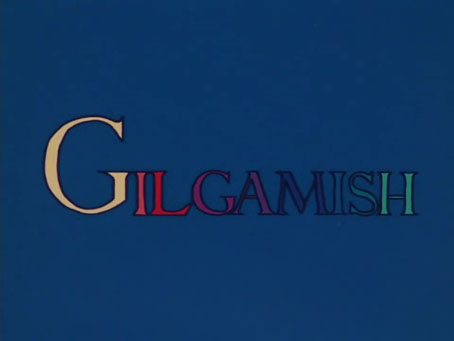
Gilgamish (1973).

collins2.jpg

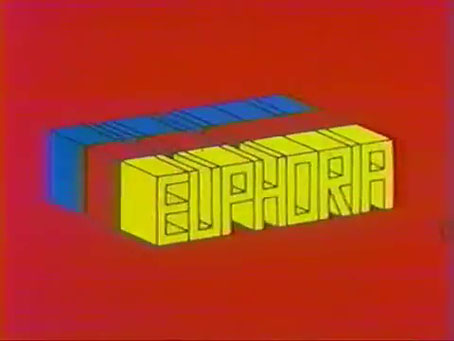
Euphoria (1974).

collins3.jpg

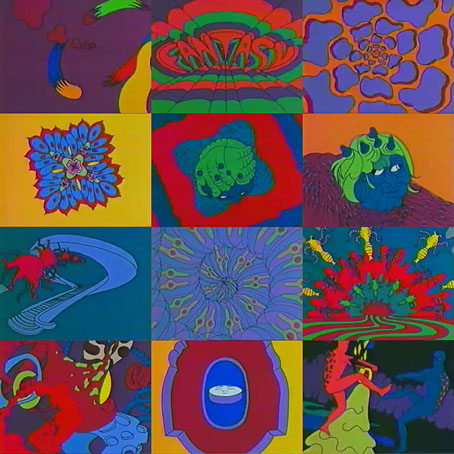
Fantasy (1976).

collins4.jpg

Malice in Wonderland (1982). (Or avoid YouTube’s adults-only policy by going here.)

Previously on { feuilleton }
The groovy video look

The Debutante, a film by Elizabeth Hobbs

debutante1.jpg

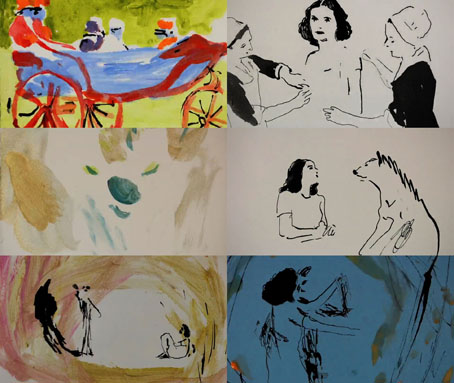
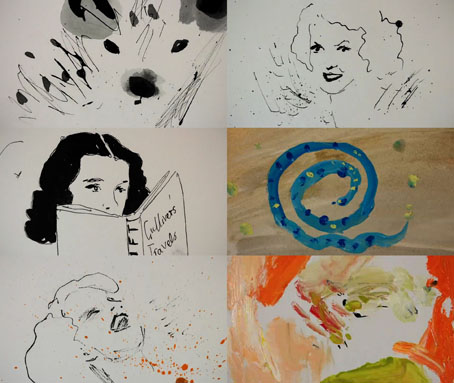
The Debutante is an 8-minute animated adaptation of a short story by Leonora Carrington, a tale of bestial havoc wreaked by a hyena on an aristocratic dinner-dance. This wish-fulfilling fantasy, which Carrington wrote in the 1930s, is one of the author’s more popular pieces of fiction. The story has been anthologised many times, notably by Angela Carter in 1986 who included it in Wayward Girls & Wicked Women: An Anthology of Stories. Elizabeth Hobbs illustrates the piece with hand-painted rotoscoping, a technique which many people will associate with the Lucy In The Sky With Diamonds sequence in Yellow Submarine although this is by no means the earliest or only example of the form. It’s a useful process for stories which require the blending of the fantastic with the mundane.

debutante2.jpg

Another hyena encountering the English aristocracy may be found in Esmé by Saki, the first story in his essential Chronicles of Clovis collection. Saki shared Leonora Carrington’s anarchic impulses when presented with ennervating upper-class rituals. Enough of his stories feature wild animals and eruptions of chaos in country houses that I wonder whether there was any Saki influence upon The Debutante. I’d guess not—Leonora Carrington possessed more than enough wayward imagination of her own—but whatever the answer, Saki remained fascinated (or appalled) by the aristocracy and their absurdities, while Leonora followed her debutante heroine to a welcome exile from their world.

Previously on { feuilleton }
Leonora Carrington’s Surrealist survival kit
Leonora Carrington and the House of Fear

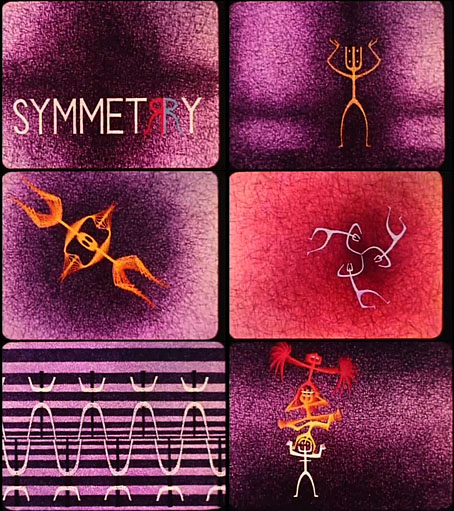
Symmetry, a film by Philip Stapp

stapp.jpg

Symmetry (1966) is a PIF (public information film) by Philip Stapp (1908–2003), an American animator who made a number of other films in this vein while also working on group projects like the Halas and Batchelor adaptation of Animal Farm. Orson Welles used to compare actors to cherry pickers: they all follow the harvest. The same might be said about animators, many of whom have to work on advertising films instead of any personal projects they may be nurturing. PIFs would seem to offer more creative freedom to judge by this example which wordlessly demonstrates different types of symmetry using animated figures. Stapp animated the film with Jean Williams. The music was by Gene Forrell.