The art of Xiyadie

xiyadie1.jpg

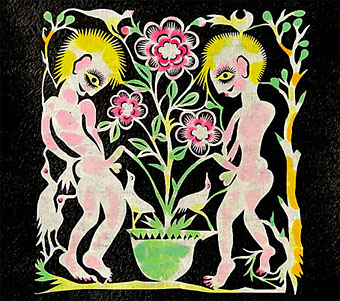
Some vivid homoerotic paper cuttings by Xiyadie, a Beijing artist whose pseudonym means “Siberian Butterfly”. Some of the figures in these pieces are suitably butterfly winged but their appealing qualities make no difference to the Chinese authorities where they’re disallowed public exhibition. They are, however, currently on display at the Flazh!Alley Art Studio, San Pedro, California until 14th July. The Advocate interviewed Xiyadie in April and has a selection of his work. Via Homobilia.

xiyadie2.jpg

Elsewhere on { feuilleton }
The gay artists archive

Stonehenge

stonehenge1.jpg

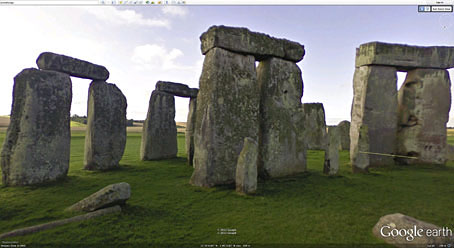
The trilithons of Stonehenge as they appear in Google Earth, a view that few people these days are allowed to experience since visitors are kept to a small path that runs around the monument. Thirty years ago this week, on the day of the Summer Solstice, I was fortunate to be present at the small Stonehenge Free Festival that was taking place in a field across the road. English Heritage always opened up the stones for the Solstice so I got to stand in the centre of the circle and watch a couple of improvised hippie weddings taking place. (Every now and then I wonder whether those couples are still together.) The festival had been staged annually since 1972 and, unlike the walled and ticketed Glastonbury Festival, was a thoroughly anarchist affair: people simply turned up, stayed for a week or so then left. That changed in 1985 when someone at English Heritage decided that the festival wasn’t going to happen; police cordoned off the area and the resulting conflict put an end to the festival for good.

stonehenge2.jpg

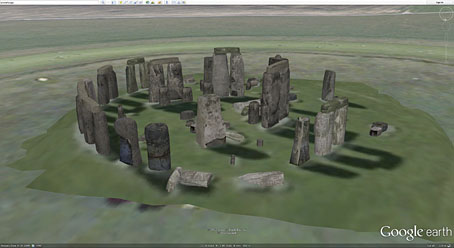
One of Google Earth’s army of diligent model-makers, Tom Harvey, is responsible for the 3D view of the stones. These work better than many of the 3D buildings in Google Earth which often look painfully isolated in otherwise flattened cityscapes. Stonehenge also suits this treatment better than most of Britain’s other ancient monuments which tend to be smaller stone circles or mounds of earth. There is a Silbury Hill but nothing for nearby Avebury as yet.

Previously on { feuilleton }
Stonehenge panorama
Born again pagans

Can’s Lost Tapes

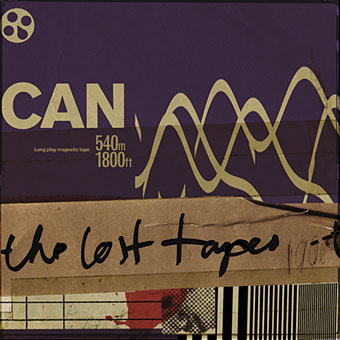
can1.jpg

Design by Julian House.

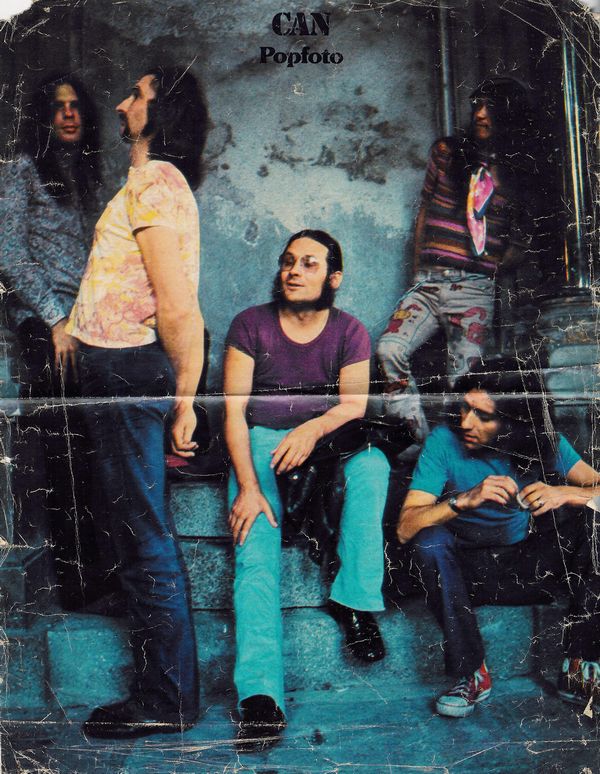
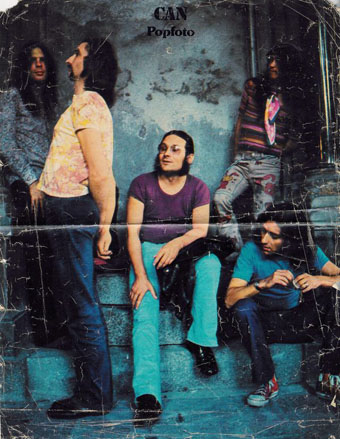
“Tapes”, that’s the crucial word. For the past twenty-four hours I’ve been immersed in The Lost Tapes, the triple-disc collection of previously unreleased recordings by the mighty Can, and contemplating the importance of tape to the German music scene (Krautrock, if you must) of the 1970s. Can performed live throughout their career but their reputation is based on their recorded output. One reason why not only Can but also Faust and Kraftwerk were able to spend so much time creating unprecedented music was because they all had their own studios. These were doubtless primitive—Can’s was famously housed in a disused cinema—but the ability to experiment with recording free from the escalating costs of a professional studio gave them an advantage that few of their British or American contemporaries possessed. Can’s process wasn’t so very different from that employed by The Beatles and Miles Davis: play or improvise for hours then rely on talented editors (George Martin and Teo Macero respectively) to structure the music. Can’s Teo Macero figure was Holger Czukay whose advanced skills as a tape collagist were evident pre-Can on his Canaxis album.
can2.jpg

Can-heads have known all this for years, of course, you get to see some of the rudiments of the process in the archive footage on the 2003 DVD documentary. And knowing this always begged the obvious question: where’s all the unreleased tape? The Lost Tapes finally answers that question, it was in a vault in disarray. The booklet notes detail the sifting process that eventually culled three CDs from 50 hours of material. What’s great about this is that it’s all so much better than I expected (this was already evident from the preview tracks that Mute have been releasing). Many hardcore Can collectors will have heard the Canobits bootlegs that contain a mix of rudimentary tracks, long jams and live recordings, all of which are worthwhile but which mostly fail to match the quality of the Lost Tapes material. In addition to hearing preliminary pieces from Vitamin C and Sing Swan Song there are more of the band’s recordings for obscure film and TV, and some stunning live moments from the period around 1972 when they were really at their peak. I never expected there to be as much from the Malcolm Mooney period as there is here. Nice packaging too by Julian House in his day job as a designer at Intro: three discs in a ten-inch box with a booklet filled with the customary House collage business. This is an essential purchase for any Can enthusiast, but it’s also essential listening for anyone fascinated by the extraordinary music that erupted in Germany in the early 1970s.

Previously on { feuilleton }
A cluster of Cluster

Chickamauga

chickamauga.jpg

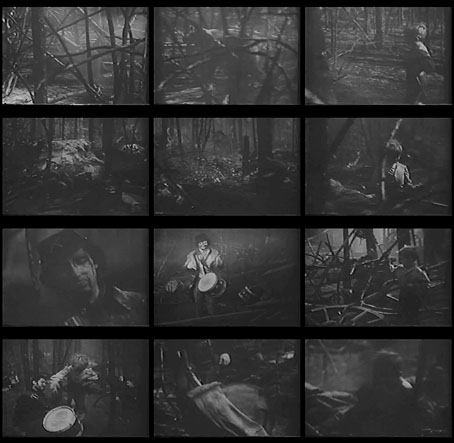
They were men. They crept upon their hands and knees. They used their hands only, dragging their legs. They used their knees only, their arms hanging idle at their sides. They strove to rise to their feet, but fell prone in the attempt. They did nothing naturally, and nothing alike, save only to advance foot by foot in the same direction. Singly, in pairs and in little groups, they came on through the gloom, some halting now and again while others crept slowly past them, then resuming their movement. They came by dozens and by hundreds; as far on either hand as one could see in the deepening gloom they extended and the black wood behind them appeared to be inexhaustible. The very ground seemed in motion toward the creek.

Chickamauga (1891) by Ambrose Bierce

Chickamauga (1962) is another of Robert Enrico’s three short films based on the Civil War stories of Ambrose Bierce. The withdrawal of hope at the end of An Occurrence at Owl Creek Bridge may seem bleak but that story is positively cheerful beside the horrors of Chickamauga in which a small deaf boy wanders from home to find a new playground in the aftermath of one of the bloodiest battles of the Civil War. The story is grim enough for it to find its way into horror anthologies which is where I first read it. Once again Enrico’s adaptation is very faithful, and the way he uses songs as a commentary makes more sense of the similar use in An Occurrence at Owl Creek Bridge. This copy of the film is another grainy one from VHS but it’s the only one you’ll see for now. The same YouTube channel has the third of the director’s Bierce adaptations, The Mockingbird, a lesser piece than the other two but still worth a watch, not least because these films have been out of circulation for so long. See also: Robert Enrico’s Civil War Trilogy by Justine Smith.

Previously on { feuilleton }
An Occurrence at Owl Creek Bridge

An Occurrence at Owl Creek Bridge

occurrence.jpg

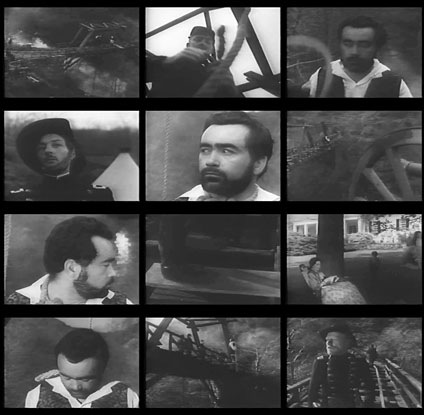
Still with the short films, this is one I’ve known about for years but only recently seen. La Rivière du Hibou was Robert Enrico’s 1962 adaptation of the oft-reprinted Civil War story by Ambrose Bierce, An Occurrence at Owl Creek Bridge. Enrico made three such films from Bierce’s stories, this being the most celebrated; in addition to gaining awards it was also screened as part of The Twilight Zone series which makes me wonder how I’ve managed to miss it for so long. As an adaptation it’s very faithful if you overlook the awkward interjection of a song halfway through.

This particular tale I now find overly familiar since I adapted it in comic strip form in 2003 for the Ambrose Bierce number of Graphic Classics. That strip was one of the last comics I produced, a somewhat misguided attempt at using 3D software. My adaptation involved a great deal of guess-work at the military and other details so I watched Enrico’s opening scene with a sense of relief that his version isn’t so different from my own. The shots here are from this grainy copy of the film. There’s a better copy here from the Twilight Zone screening with Spanish subtitles added.