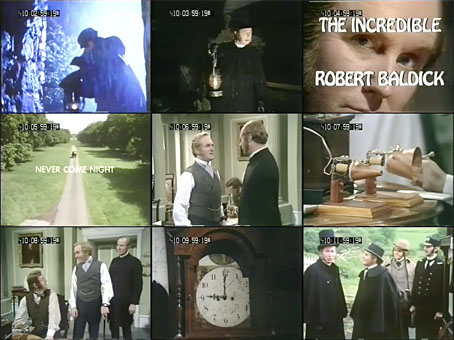
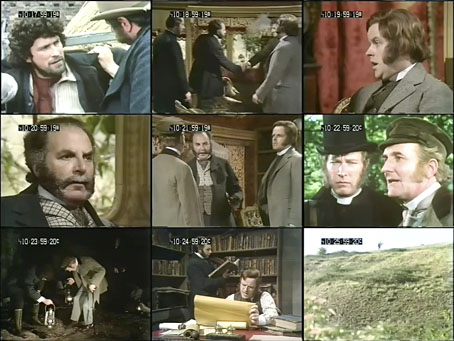
The Raffles that concerns us here is the television incarnation as seen in a series of adventures made by Yorkshire TV in 1977. I recently bought a cheap DVD set of the series, not for reasons of nostalgia (a wretched condition) but out of curiosity and whim. I had a vague recollection of enjoying the few episodes I’d seen, and was hoping for another decent Victorian adventure series along the lines of The Rivals of Sherlock Holmes (1971/1973). Raffles proved to be better than I expected; not quite up to the standards of Granada TV’s peerless adaptations of the Sherlock Holmes stories but thoroughly enjoyable. The production values are better than those in The Rivals of Sherlock Holmes, a well-written series with an impressive cast that was nevertheless compromised by a restricted budget. I’m not really reviewing the Raffles series here, this piece is intended to note a couple of points of interest which, for me, added to its pleasures.

Raffles and Bunny as they were originally. An illustration by FC Yohn from Raffles: Further Adventures of the Amateur Cracksman (1901).
Arthur J. Raffles was invented by EW Hornung, a writer who was, among other things, Arthur Conan Doyle’s brother-in-law. Raffles, like Sherlock Holmes, is a resolute bachelor with a devoted friend and accomplice, but the two men share few other characteristics beyond a talent for outwitting the dogged inhabitants of Scotland Yard. Raffles’ indulgent lifestyle in the bachelor enclave of (the) Albany, Piccadilly, is financed by his burglaries which invariably target aristocrats and the homes of the wealthy. To the general public he’s known as one of the nation’s leading cricket players, a position which gives him access to upper-class social circles from which he would otherwise by excluded. His former school-friend, “Bunny” Manders, is also his partner-in-crime, a position that Bunny is happy to fill after Raffles saves him from bankruptcy and suicide. Conan Doyle disapproved of the immoral nature of the Raffles stories but they were very popular in their day, and they’ve been revived in a number of adaptations for film, TV and radio. George Orwell admired the stories, and writes about them with his usual perceptiveness here, noting the importance of cricket to Raffles’ gentlemanly philosophy of criminal behaviour. I’ve not read any of the stories myself, and I’m not sure that I want now, not when the television adaptations succeed so well on their own terms.

Anthony Valentine and Christopher Strauli.
The TV series was preceded by a pilot episode made in 1975 which saw the first appearances of Anthony Valentine as the dashing Raffles and Christopher Strauli as the fresh-faced Bunny. Valentine and Strauli fit their roles so well it’s difficult to imagine anyone else improving on them, Valentine especially. In the series the pair are supported by many familiar faces from British drama: Graham Crowden, Charles Dance, Brian Glover, Robert Hardy, Alfred Marks, and, in a rare piece of TV acting, Bruce Robinson. Pilot and series were all written by Philip Mackie, and here we have the first noteworthy element since Mackie had earlier adapted six stories for The Rivals of Sherlock Holmes, including the one that features Donald Pleasence as William Hope Hodgson’s occult detective, Thomas Carnacki. Raffles is another rival of Sherlock Holmes, of course, albeit a criminal one, and much more of a mirror image of Holmes than the thoroughly villainous Professor Moriarty. Raffles only breaks the law to improve his bank balance, or as an occasional, daring challenge; he regards theft and evasion from the police as a form of sport, and generally deplores other types of crime. Some of his thefts are intended to punish the victim following an infraction, as with the belligerent South African diamond miner who causes a scene at Raffles’ club, and the Home Secretary who makes a speech in Parliament demanding stiffer penalties for burglary. In one conversation about the morality of their activities Bunny suggests to Raffles that his friend is a kind of Robin Hood figure; Raffles agrees before admitting that he never gives his spoils to the poor.