
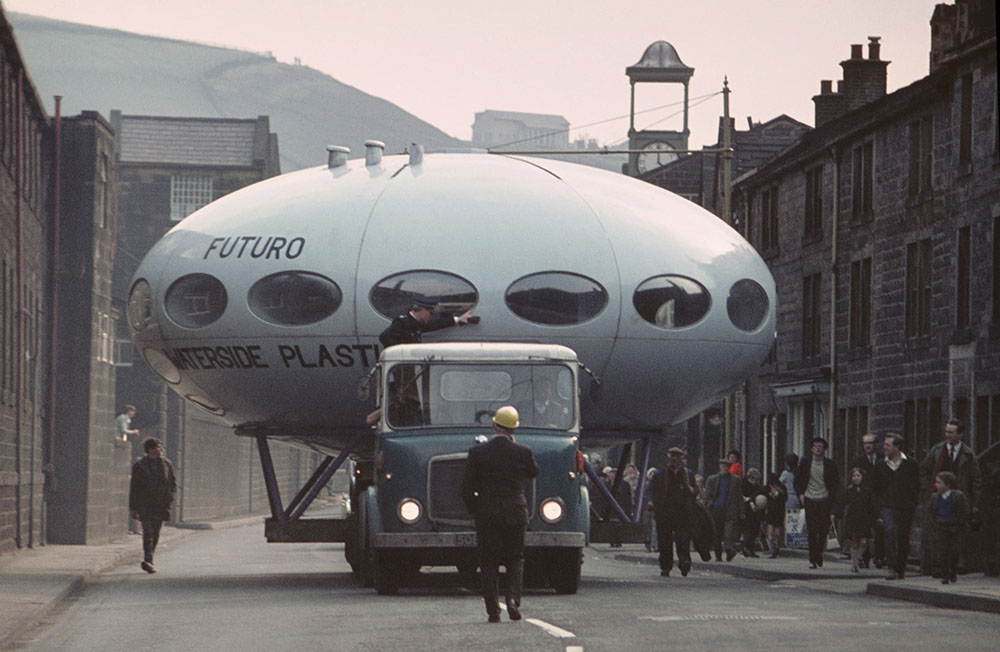
Writing about Evoluon a couple of years ago I mentioned my affection for all those one-off Space-Age constructions with suitably science-fictional names: Evoluon, Skylon, Atomium, Space Needle… You could add Futuro to this list, a micro-building in comparison to the latter pair, with a similar flying-saucer styling as Evoluon. Futuro wasn’t a one-off design, however, but a prefabricated dwelling intended for mass production. The original plan by Finnish architect Matti Suuronen was for a plastic ski lodge that would be light, easy to assemble and quick to heat. The prototype he built in 1968 caught the imagination of investors, and other uses were soon proposed. The ski-lodge idea was thwarted by planning regulations but the Futuro was modestly successful all the same, and might have been a much bigger success in the United States if the oil crisis of 1973 hadn’t raised the cost of the plastics used in its construction. Enough Futuros were sold before production ended that many of them are now scattered around the world, some in better condition than others (see The Futuro House for details). One of the early models was bought in 1971 by the mayor of Todmorden, a small town in Yorkshire, which yielded the photograph below.
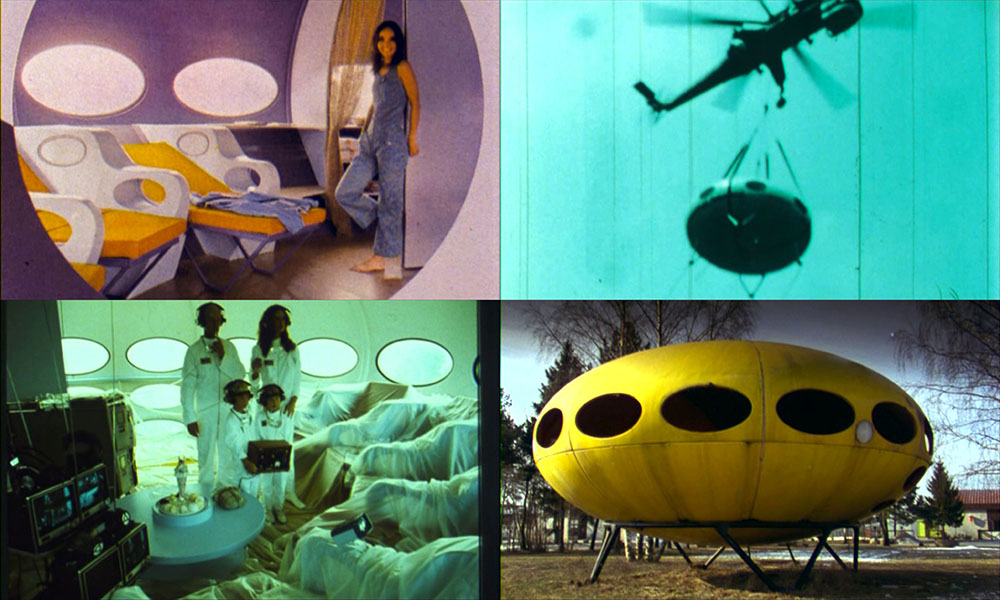
There’s no mention of the Todmorden Futuro in Mika Taanila’s short documentary film, Futuro – A New Stance for Tomorrow, but we do get to see many of the others in photographs, brochures, magazine features and period footage. Taanila made his film in 1998 when Matti Suuronen and some of the people who worked with him or helped promote the Futuro were still around to be interviewed.
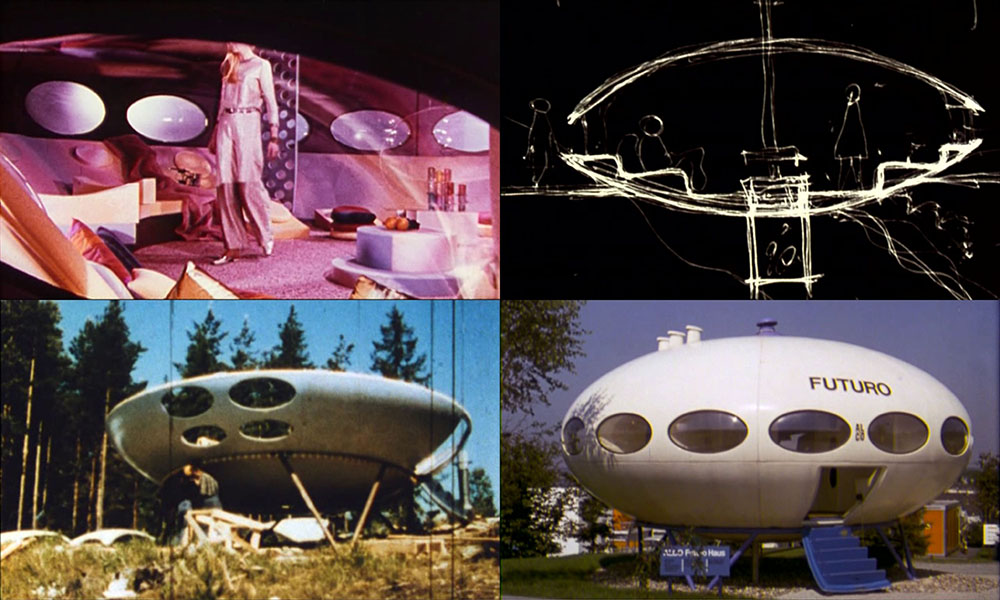
The film isn’t greatly informative—we learn very little about the design or construction processes, or about potential drawbacks or problems—it’s more a snapshot of an era when industrial design was proposing radical solutions with new materials, plastics in particular. I find the whole idea of the Futuro inherently attractive, and I’d like to know why we don’t see more general-purpose architecture of this kind. Buildings with curved walls have never been popular as housing—furniture is difficult to site, and you can’t easily hang pictures or mirrors on a curved surface—but they can serve other purposes. The Futuro, like other buildings of its kind, gestures to a future that still hasn’t arrived.
Previously on { feuilleton }
• A Day of Expo 70
• Impressions of Expo 67
• Expositiana
• Evoluon
• The world of the future
• Space Needle USA