Two sides of Liška

svankmajer1.jpg

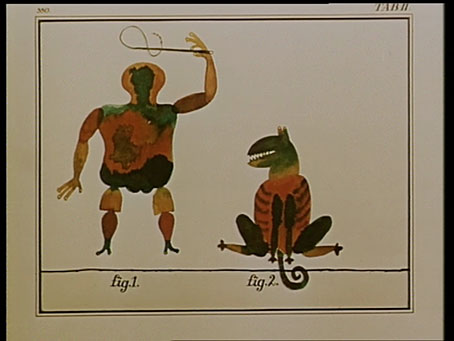
Et Cetera (1966).

A little more on the music of Czech soundtrack composer Zdeněk Liška (1922–1983). Liška seems to stand in relation to Czech cinema as Ennio Morricone does to that of the cinema of Italy, being similarly prolific, highly regarded, and idiosyncratic to a degree that makes his work immediately recognisable. Both men could also draw on their experience outside the film world to fuel their scores: Morricone for many years was a performer with Gruppo di Improvvisazione di Nuova Consonanza, a group of Italian free improvisers, while Liška’s work with electro-acoustic composition and early electronic music explains the frequent eruptions in his lush orchestrations of tape effects, exaggerated echoes and other forms of artificial processing. This kind of cross-pollination doesn’t seem so surprising today but it’s striking and surprising in soundtracks from the 1960s.

Good examples of the opposite poles of Liška can be found in two of Jan Švankmajer’s early shorts. Et Cetera (1966) is one of the director’s most formal exercises, a series of crude drawings (or cut-outs) coming to life to perform a repetitive routine before being interrupted by the words “ET CETERA”. The film plays with the audience by beginning with a title card that states “The End”, and the piece as a whole could easily be screened as an endless loop. Liška’s score is a combination of fairly minimal orchestration with a variety of electro-acoustic effects which are closer to Pierre Henry or İlhan Mimaroğlu than other Eastern European composers.
svankmajer2.jpg

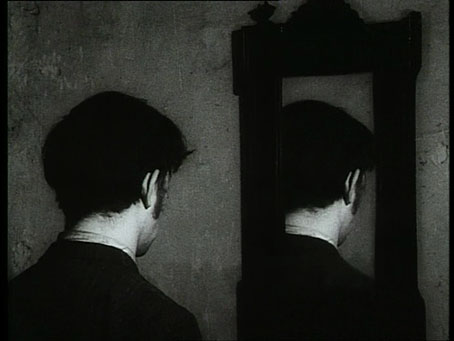
Shade of Magritte: The Flat (1968).

At the opposite end of the scale there’s the score for The Flat (1968), a typical piece of Švankmajer Surrealism with an unfortunate individual locked in a room where everything, from walls to furniture, contradicts his expectations. René Magritte casts a long shadow over this one, with director Juraj Herz making a brief appearance as a bowler-hatted man carrying a chicken. Liška’s score has a driving and reverberent choral rhythm that always makes me think of Krzysztof Komeda’s similar music for Roman Polanski’s Dance of the Vampires (1967). For such a short film it’s a remarkable piece of orchestration. The Brothers Quay are great Liška enthusiasts, and used some of the score from The Flat (and two other Liška pieces) for their 1984 film The Cabinet of Jan Švankmajer, an animated portrait of the director.

Previously on { feuilleton }
Liška’s Golem
The Cremator by Juraj Herz

The Cremator by Juraj Herz

cremator1.jpg

The Cremator, a film directed by Juraj Herz, missed out on the attention given to other Czech films in the late 1960s, something the Brothers Quay note in their enthusiastic introduction to the Second Run DVD. Unlike other films made during the Czech New Wave, Herz’s film premiered in 1969 then was promptly banned, and didn’t receive a wider distribution until 1989.

cremator2.jpg

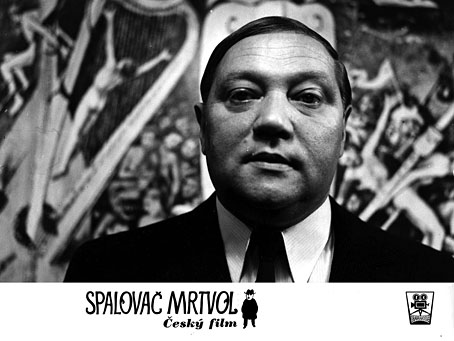
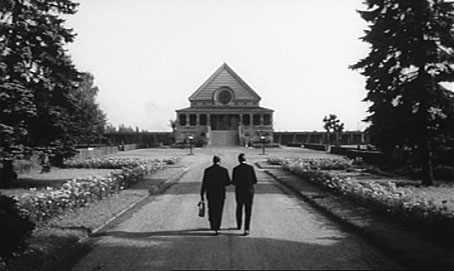
It’s easy to see why the Communist authorities would have a problem with a film about a Prague crematorium director in the 1930s, a man who not only delights in his ability to efficiently turn human beings into ash in 75 minutes, but also has no problem siding with the invading Nazi regime when it becomes apparent that this will further his obsession with incineration. Rudolf Hrušínský dominates the proceedings as cremator Kopfrkingl, a stout and ebullient presence who Herz directs without resorting to any clichés of macabre or morbid characterisation. We’re with Kopfrkingl in every scene, and for the most part he remains cheerful and reasonable, whether showing new workers around the crematorium, dealing with his family (or the prostitutes he visits), or happily shopping all the Jews he knows to his collaborationist associates. A Holocaust subtext becomes overt when Kopfrkingl is asked to lend his incineration skills to a “secret project” the new authorities have in mind, an offer which sends the cremator into a fantasising rant (filmed against Hieronymus Bosch’s painting of Hell) in which he realises he might be allowed to turn many thousands of bodies into ash.

cremator3.jpg

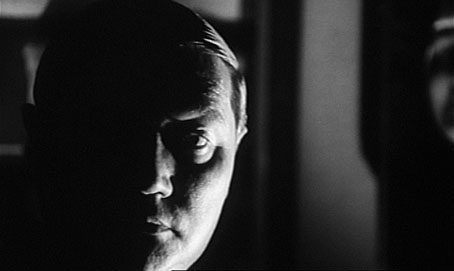
Described like this the film is a blackly comic satire at the expense of all those Czechs who collaborated with the Nazis during the war. What attracts the praise of viewers such as the Brothers Quay, and puts the film in the essential category, is the additional details of Herz’s direction. Anyone familiar with the early films of Jan Švankmajer will feel quite at home with the sequences of rapid editing, with the scenes introduced by unexpected close-ups, and with the grotesquery of a visit to a chamber of horrors which includes a special area showing bottled foetuses and the consequences of disease. The Švankmajer atmosphere is reinforced by a marvellous score from Zdeněk Liška whose music can be heard in many of Švankmajer’s early films. One of these, The Flat (1968), features Juraj Herz in an acting role, while The Ossuary (1970) would be ideal for a screening with The Cremator even if Kopfrkingl would disapprove of all those unburnt bones. Liška’s score is as idiosyncratic as in the Švankmajer films, and helps augment a sense of disquiet that shades to outright horror.

cremator4.jpg

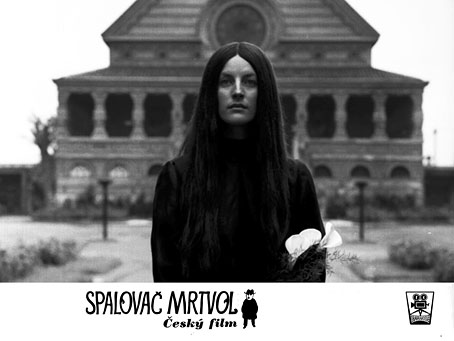
There’s more: the skilful way that Herz and screenwriter Ladislav Fuks (whose novel provides the basis of the story) link otherwise disconnected scenes; Kopfrkingl’s obsession with Tibet which gradually descends into mania; and the mysterious and silent dark-haired woman whose presence in so many scenes is never explained. Given all this, and the successful way that Herz blends his outré material, I’m surprised this film isn’t better known. Herz’s later Morgiana (1972) has more of an audience, and is also worth seeking out. It’s also very different to The Cremator, to such a degree that it might be the work of a different director altogether. Both films can be found on Region 2 DVD at Second Run.

Previously on { feuilleton }
Sedlec Ossuary panoramas
The Hourglass Sanatorium by Wojciech Has
Jan Svankmajer: The Complete Short Films