Sphinxes

sphinx09.jpg

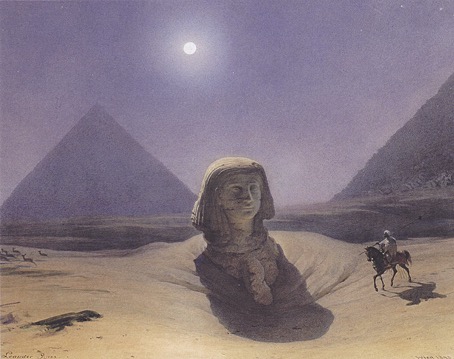
Bei den Pyramiden (1842) by Leander Russ.

A horde of sphinxes from NYPL Digital Collections and Wikimedia Commons, a pair of sites I was searching through last week. I was looking for a very particular kind of sphinx, not the Great Sphinx that sits near the Pyramids at Giza. What I wanted was something smaller and less ruined, like the sentinels that proliferated during the fads for Egyptian art and design in the early 1800s and the 1920s. My search was satisfied eventually, the results of which will be revealed in the next post.
sphinx06.jpg

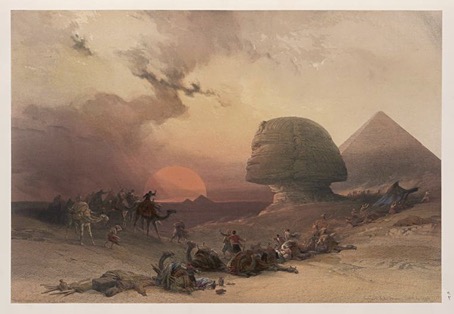
Approach of the Simoom. Desert of Gizeh (c. 1846–49) by David Roberts. 

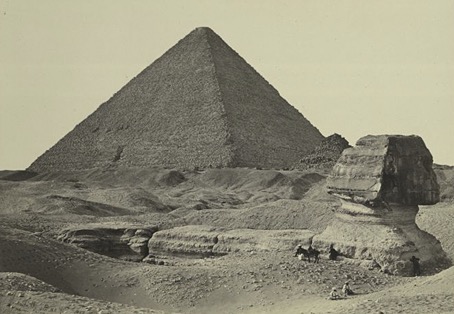
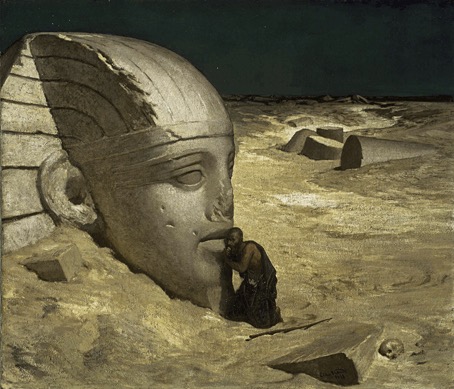
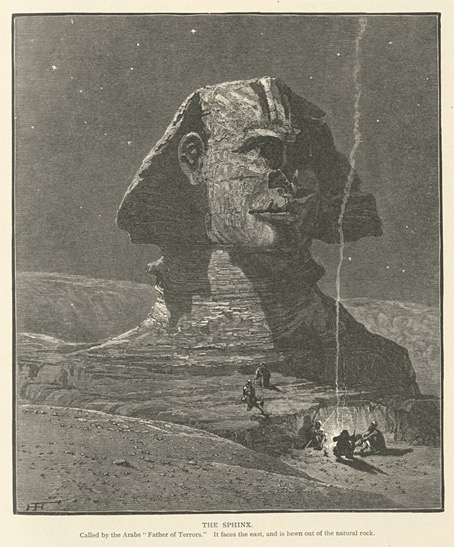
As for the Great Sphinx, I enjoy seeing artistic representations of the monument, especially those which place the creature in a dramatic setting. Older depictions tend to look bizarre or even comical, especially the ones made during the centuries when the figure was little more than a head protruding from the drifting sands. The photographs I prefer are those that show the Sphinx in the 19th century before all the restorations began, when the creature was another half-buried fragment of antiquity, not something that seems to have just been removed from a box in a museum.
sphinx08.jpg

The Sphinx and Great Pyramid, Geezeh (1858–1859).
sphinx10.jpg

The Questioner of the Sphinx (1863) by Elihu Vedder.
sphinx07.jpg

The Sphinx by Harry Fenn (1881–1884). “Called by the Arabs “Father of terrors.” It faces the east, and is hewn out of the natural rock.”
Continue reading “Sphinxes”

Library of Congress bookplates

bookplate03.jpg

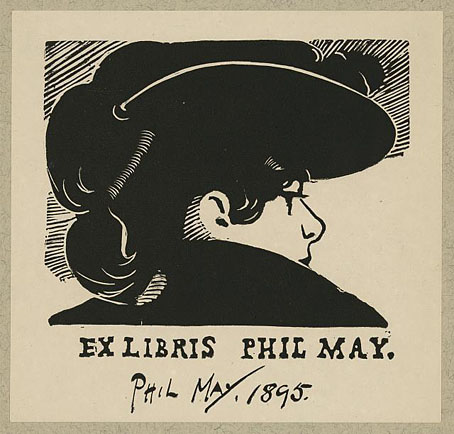
Artist: Phil May (1895).

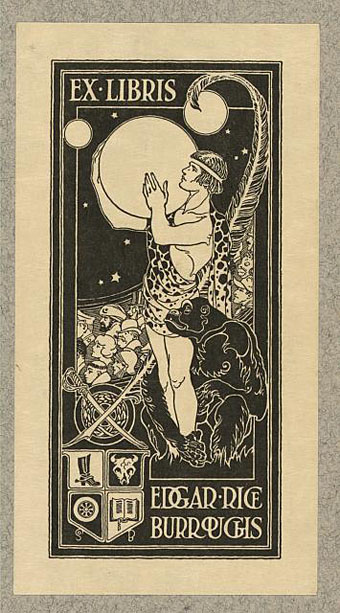
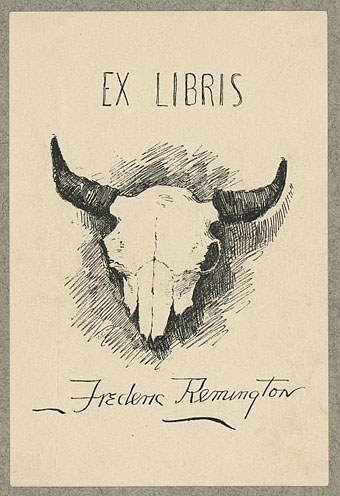
The bookplates housed at the Library of Congress aren’t all available for online viewing which is a shame when their collection includes notable examples such as these. Three of the plates here were designed by the artists whose books they identified; two of the others are for writers—Edgar Rice Burroughs and Jack London—while the sixth one is for Charlie Chaplin. The artists’ plates look like continuations of the work of their creators which makes them less interesting than those of the writers and actor, all three of which say something about the way these men saw themselves reflected in their work: the pantheon of characters from Burroughs’ fiction; Chaplin’s poor boy conquering London; and Jack London’s lone wolf daring you to try to steal his book.

bookplate06.jpg

Artist: Frederic Remington (between 1880? and 1909).

bookplate02.jpg

Artist: Studley Burroughs (between 1914 and 1922).

Continue reading “Library of Congress bookplates”

Elihu Vedder’s Rubáiyát

vedder01.jpg

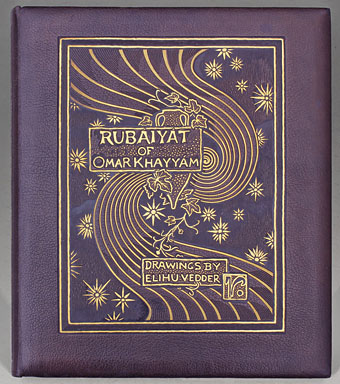
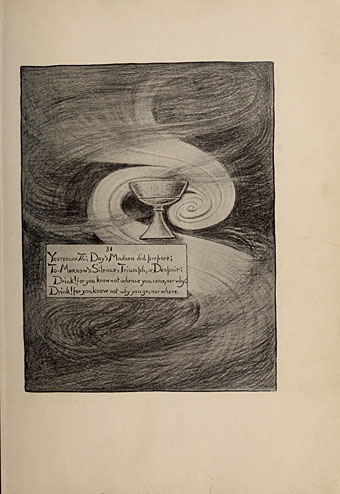
A slight return to Omar Khayyam. The Edmund J. Sullivan post prompted comments about other editions so I thought I’d see what else was at the Internet Archive. The problem there is that the Rubáiyát was a very popular book in the latter part of the 19th century which means there are not only multiple editions of the Edward Fitzgerald translation but many translations by other hands, as well as numerous parodies. Anne S mentioned the Edmund Dulac edition which I suppose I ought to at least acknowledge since Dulac’s passion for Persian and Arabian art made him an ideal illustrator. But I do enjoy finding illustrated books that are less familiar, hence Elihu Vedder’s edition of 1894.

vedder02.jpg

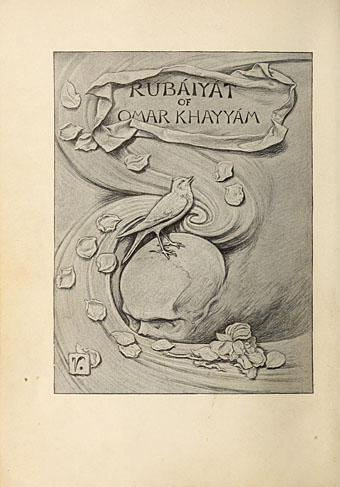
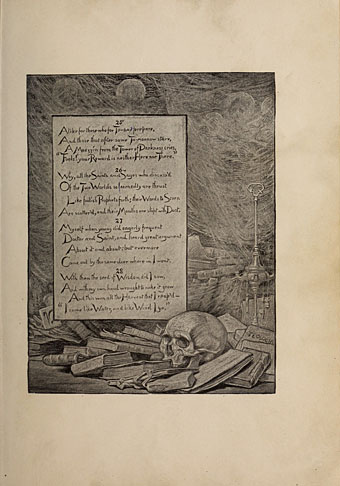
Elihu Vedder (1836–1923) was an American Symbolist painter, and also something of a poet himself, producing a few volumes of his own illustrated verse. Many illustrators favour an Orientalist interpretation of the Rubáiyát despite the popularity of the quatrains being more a result of their universality than their exotic qualities. Vedder produced over 50 drawings that concentrate on the mystical aspects of the poem, setting hand-lettered texts against illustrations that are either very similar to his paintings or direct copies of some of his canvases. It’s unfortunate that the reproductions in this edition—a reprinting of Vedder’s 1884 original—aren’t better. The book is still one of the more remarkable editions, however. Browse the rest of it here or download it here.

vedder03.jpg

vedder04.jpg

Continue reading “Elihu Vedder’s Rubáiyát”

The art of Elihu Vedder, 1836–1923

vedder1.jpg

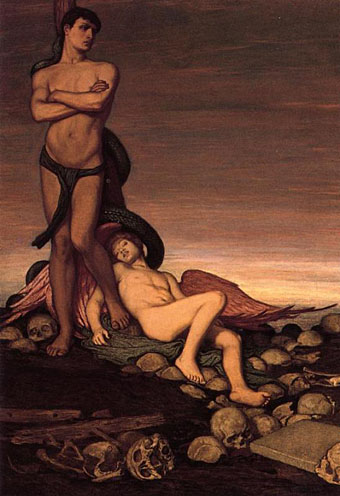
The Last Man (1886–1891).

Vedder was one of the principal American Symbolists, possibly the leading one although there wasn’t the same degree of competition in the United States as there was in Europe. Last time I was casting around the web for his work he wasn’t so visible but that’s changed recently with a dedicated website. Vedder’s 1884 edition of the The Rubáiyát of Omar Khayyám is highly-regarded and at least one of those drawings—The Cup of Death—was reworked as a painting. Compared to his Continental contemporaries he’s a particularly gloomy artist, with sombre subjects rendered in a sombre palette. The Last Man is typical as well as being curiously inexplicable; is the serpent there a Satanic presence? And why is there a dead (?) angel boy at the feet of the Last Man?

The Smithsonian American Art Museum has a set of the Rubáiyát illustrations.

vedder2.jpg

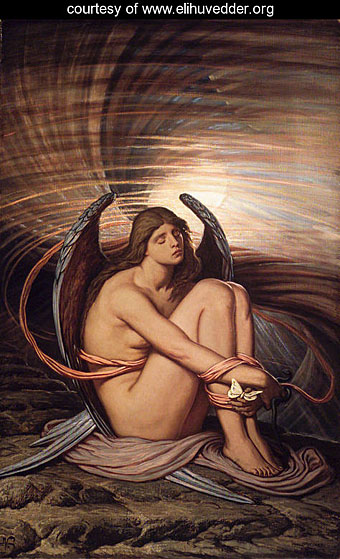
Soul in Bondage (1891–1892).

Previously on { feuilleton }
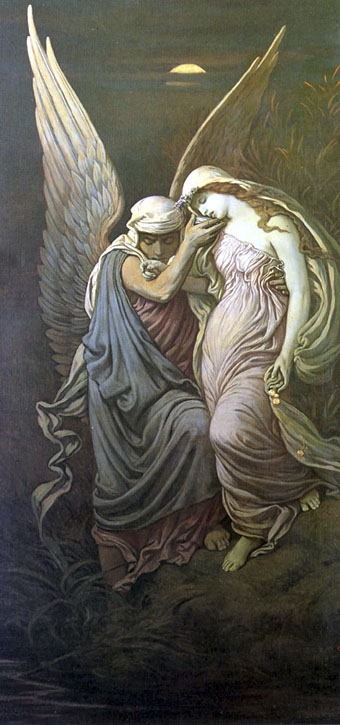
Angels 5: Angels of Death