Kenneth Anger’s Hollywood Babylon

anger1.jpg

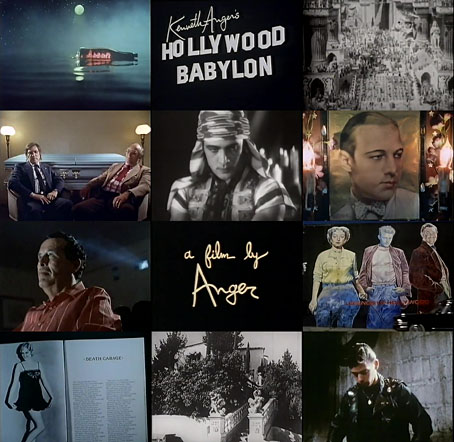
Nigel Finch was a key member of the team of producers and directors working on the BBC’s Arena arts documentaries throughout their golden run during the 1980s and 1990s. The films he directed himself—among them studies of Robert Mapplethorpe’s photography, and a history of the Chelsea Hotel in New York—gave him an opportunity to push some gay content into the TV schedules at a time when Britain’s gay population were seen as enough of a public threat to be legislated against. Some of that proselytising impulse can be found in Kenneth Anger’s Hollywood Babylon (1991), an hour-long documentary which alternates the life and work of the filmmaker with readings and enactments of the lurid episodes recounted in Anger’s scandal anthologies, Hollywood Babylon and Hollywood Babylon II. Finch at one point asks whether Fireworks, the first film in Anger’s Magick Lantern Cycle, should be regarded as a pioneering piece of gay cinema; Anger’s says he’s happy if people take it that way but says little else about its evident homoerotic atmosphere. He remains as resistant to identity politics as he’s always been. (See the unauthorised biography by Bill Landis for details.)
anger2.jpg

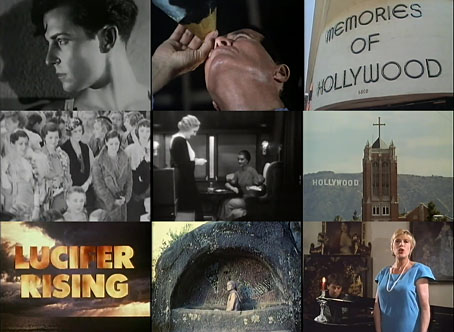
Between the readings and interview sections Finch shows Anger being chauffeured around Beverly Hills in a hearse which stops occasionally at some locus of bygone scandal. Most of the Anger anecdotes are familiar ones from subsequent interviews but there is a bonus for Angerphiles with the appearance at the end of Marianne Faithfull who talks a little about their relationship before singing Boulevard Of Broken Dreams. The picture quality of this YouTube copy could be better but it’s watchable enough.

Update: That YouTube link went private so I’ve updated the links to a better copy at the Internet Archive.

Previously on { feuilleton }
Lucifer Rising posters
Externsteine panoramas
Missoni by Kenneth Anger
Anger in London
Arabesque for Kenneth Anger by Marie Menken
Edmund Teske
Kenneth Anger on DVD again
Mouse Heaven by Kenneth Anger
The Man We Want to Hang by Kenneth Anger
Relighting the Magick Lantern
Kenneth Anger on DVD…finally

Max Reinhardt’s Dream

mnd1.jpg

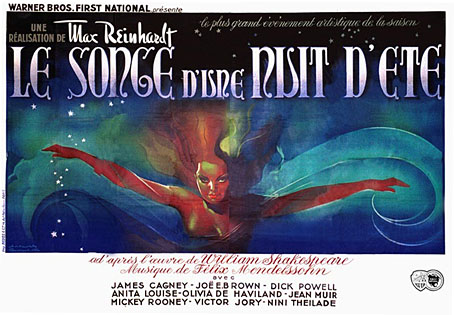
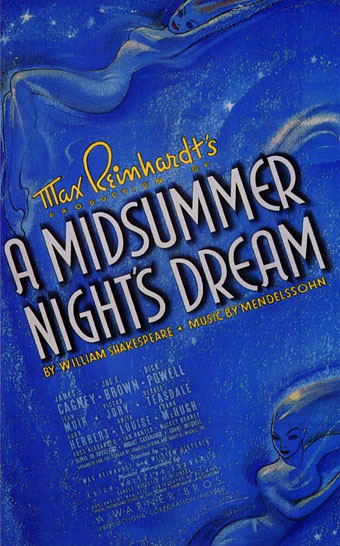
In which the great German theatre director goes to Hollywood to show America how to stage Shakespeare. Nearly everyone who was anyone in pre-war German cinema passed through Max Reinhardt’s Deutsches Theater in Berlin so it seemed natural that he’d gravitate eventually to film himself. The 1935 production of A Midsummer Night’s Dream was directed by William Dieterle but it’s very much a Reinhardt production, especially in the fantastic opening of Act II where the fairies dance into the moonlit sky on paths of mist accompanied by Mendelssohn’s music. With its blend of music, dance and lavish production design Dieterle’s film gives us some idea of the harmonising artistry at work in Reinhardt’s stage productions.

mnd2.jpg

There are other reasons to recommend this version over later adaptations, not least James Cagney’s performance as Bottom. A fifteen-year-old Mickey Rooney played Puck although he’s frequently more annoying than mischevious. Then there’s the mystery of whether that’s the young Kenneth Anger uncredited in the role of The Changeling Prince. Anger has always claimed it was him (he was a child actor for a while), Anger biographer Bill Landis agrees but plenty of other people have disputed the claim in recent years. The best viewing I had of the sequence in which the Changeling appears was on a big screen in a season of Kenneth Anger’s films in 1990. Whether Anger played the part or not, the charm of Dieterle’s film subtly invests The Magick Lantern Cycle, from the glittering surfaces in Eaux D’Artifice and the artificial forest in Rabbit’s Moon, to the appearance of Mickey Rooney’s Puck on a TV screen in Scorpio Rising. Anger’s later works were productions of Puck Films, their motto “Lord, what fools these mortals be!”

Ideally the magical opening of Act II would be on YouTube but it seems not. This scene, however, gives an idea of the atmosphere, while Doctor Macro has stills and more information.

Previously on { feuilleton }
The Midsummer Chronophage
Another Midsummer Night
A Midsummer Night’s Dadd
William Heath Robinson’s Midsummer Night’s Dream