Macho men

macho.jpg

An ad campaign which can’t possibly be ignored given the present train of obsessions. Andrés Ramírez photographs a collection of tight packages for underwear manufacturer, Macho. I’m not sure what a group of Roman gladiators would be doing sparring in what appears to be a Bollywood boudoir like the one in Moulin Rouge! but, ya know…underwear and swords… Consistency is the hobgoblin of fevered imaginations.

Via Queerty.

Elsewhere on { feuilleton }
The men with swords archive

The art of Maxwell Armfield, 1881–1972

armfield1.jpg

De Profundis.

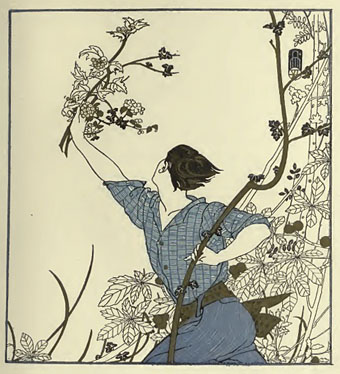
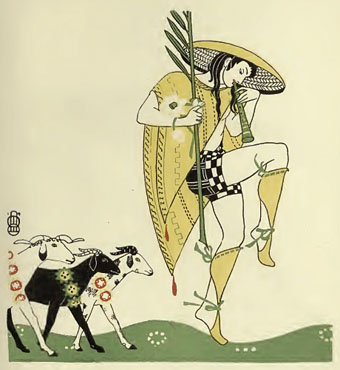
I’ve known Maxwell Armfield’s work in the past mainly for the appearance of his paintings in books of late Victorian or even Pre-Raphaelite art. His depiction of Faustine (1904), which illustrates a Swinburne poem, is probably the most popular of these, with a subject resembling Rossetti’s portraits of Jane Morris. So it’s a surprise to find his illustration work using a very different, more open style based on Ancient Greek art and (possibly) Classical enthusiasts such as John Flaxman. Among the online examples, the redoubtable Internet Archive has a few book downloads available including a volume of Armfield’s rather tepid poetry, The Hanging Garden, and other verse (1914), which nonetheless includes the fine illustrations shown here. In addition there’s a curious fable by Vernon Lee, The Ballet of the Nations; a Present-day Morality (1915) in which Death stages a ballet (aka another war) to decimate humanity, and a short book Rhythmic Shape; A Text-book of Design (1920), Armfield’s guide to art and design theory.

armfield2,jpg

“Out of the East he came.”

Elsewhere on { feuilleton }
The illustrators archive

Battle of the Naked Men

pollaiuolo.jpg

An engraving from circa 1470 by Antonio Pollaiuolo (1433–1498), presented in part for all those who arrive here searching for “naked men” although this also fits the men with swords category. One-handed Googlers will no doubt be disappointed by a mere drawing but that’s their problem. The British Museum site looks at the possible interpretations of this work and speculates about its creation.

Elsewhere on { feuilleton }
The men with swords archive
The etching and engraving archive

Previously on { feuilleton }
Behold the (naked) man

Buddha Machine Wall

buddha.jpg

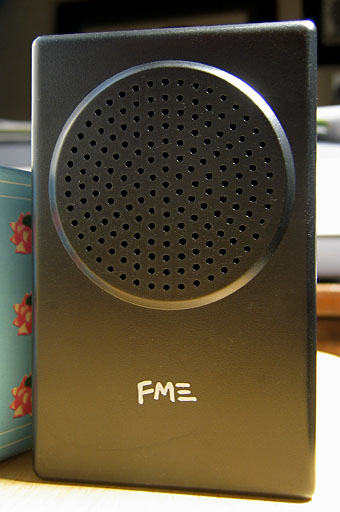
I love my Buddha Machine, the music release by Fm3 which comes as a set of sampled loops in a plastic case looking like a cheap pocket radio. This is one music work which can’t be downloaded since the physicality of the thing is as much a part of its attraction and purpose as the loops themselves. It’s probably the most playfully inventive “album” since Chöre & Soli (1983) by Die Tödliche Doris, 8 miniphone records packaged in a box with a battery-driven player like those found in old talking dolls.

I only own one Buddha Machine so I haven’t had the opportunity to try creating a choir of the things with each playing a different loop. Robert Henke’s marvellous Layering Buddha album does this with considerable sophistication, processing the sounds through his bespoke digital filters. For those without their own Buddha Machine or Henke’s technology there’s now the Buddha Machine Wall which allows you to not only play with one machine but to also play several simultaneously. This is actually a lot more fascinating than I expected, it’s essentially an ambient music machine for the web, following the Brian Eno model of creating ambient patterns by layering loops. It’s great; give it a try.

Layering Buddha Live | Two free downloads from Robert Henke

Previously on { feuilleton }
God in the machines
Layering Buddha by Robert Henke
Generative culture