The Mascot, a film by Wladyslaw Starewicz

mascot1.jpg

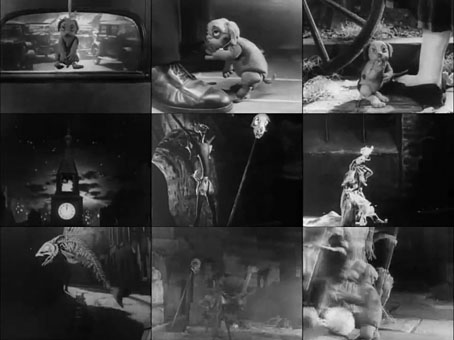
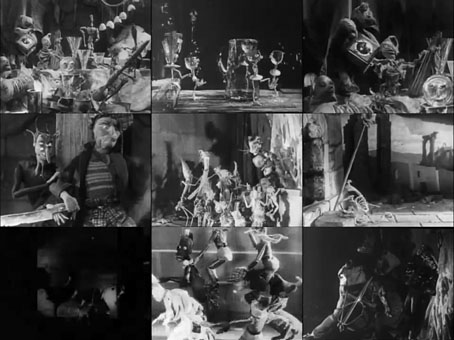
A recent interview with the Brothers Quay mentioned The Mascot (1933), a Starewicz animation I’d not seen, so here it is. IMDB has a summary:

A toy stuffed dog has just been sewn together when it hears a young child ask for an orange. The child’s mother explains that they have no money, and so she cannot buy any oranges. The dog is then packed up along with a box full of other toys to be sold, but it soon winds up in the street. The dog picks up an orange from a curbside stand, and hopes to take it home to the child. But that night, before the dog can get back to the child’s home, it must face a series of strange and frightening adventures.

A toy’s separation from its owner followed by a fraught journey home is essentially the plot of all the Toy Story films, but Starewicz’s short is rather more grotesque than anything you’ll get from Pixar, especially in the carnivalesque second half. There’s a choice of viewing (and quality) at YouTube, Ubuweb or the Internet Archive.
mascot2.jpg

Christopher Dresser’s Art of Decorative Design

dresser10.jpg

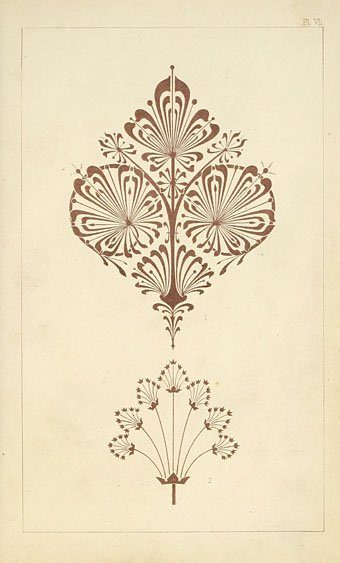
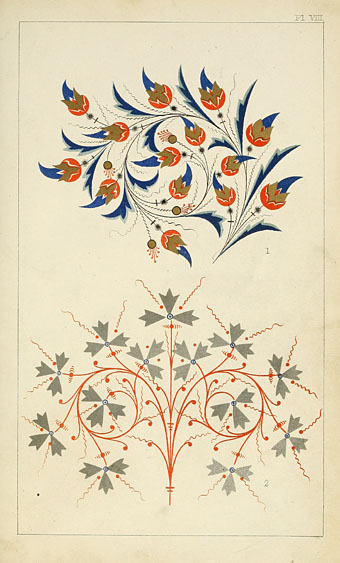
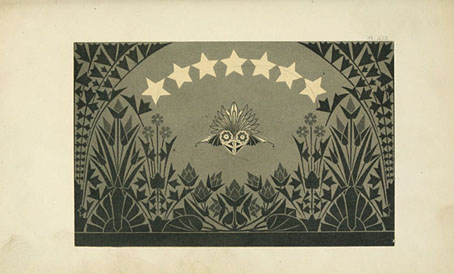
Studies of decorative design are numerous but this one stands out for the quality of its colour plates, all of which show a variety of designs derived from plants and flowers. The Art of Decorative Design (1862) is one of a number of design books published in the wake of the Great Exhibition of 1851, the most celebrated being Owen Jones’ lavish Grammar of Ornament. Christopher Dresser was a professor of ornamental art and botany who here continues where The Grammar of Ornament ends, exploring the floral design that’s a recurrent feature of Victorian decoration. What’s most remarkable for me about some of these designs is the way they prefigure the forms of Art Nouveau, a style that wouldn’t emerge for another thirty years.

dresser02.jpg

dresser03.jpg

Continue reading “Christopher Dresser’s Art of Decorative Design”

Excuse My Beauty

jjj1.jpg

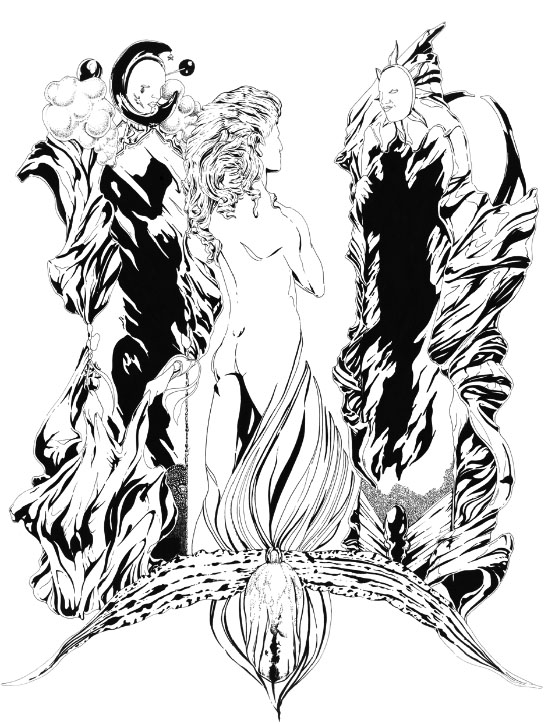
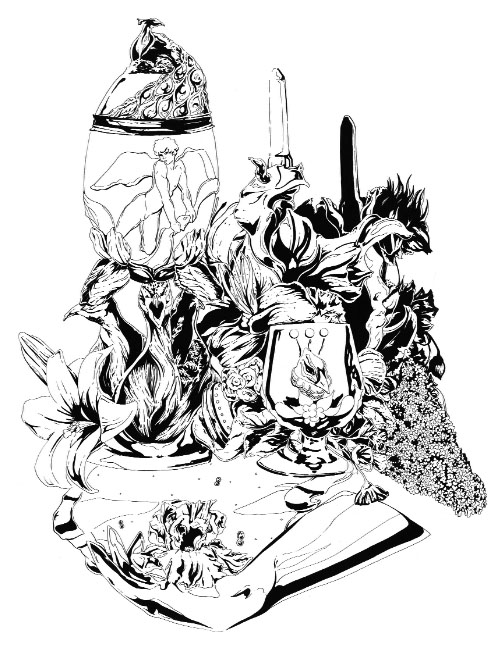
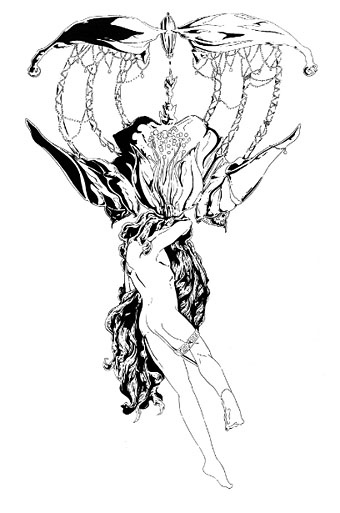
With perfect timing, considering the illustrational direction of the week, David Siferd was in touch to pass on these drawings by Jesse James Johnson for Goddess, David’s unisex streetwear label. The drawings provide the decorative elements of a new collection, Excuse My Beauty, which will be launched later this week. David referred to Harry Clarke and Aubrey Beardsley as inspiration but the combination of figures, flowers and elegant line work reminds me of the enigmatic Didier Moreau. There’s more of Jesse James Johnson’s vibrant ink drawings at this Tumblr page.

jjj2.jpg

jjj5.jpg

Continue reading “Excuse My Beauty”

The art of Alan Odle, 1888–1948

odle1.jpg

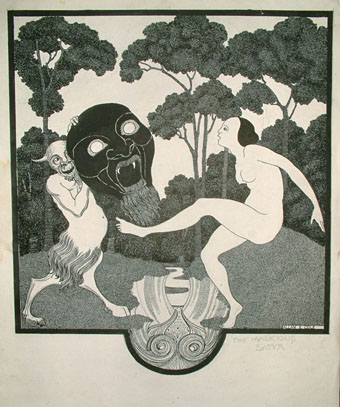
The Malicious Satyr.

Following yesterday’s post, a little more about British illustrator Alan Odle. A cursory search between work sessions today yielded a variety of Odle drawings but not the illustrated edition of Candide I was hoping for. The examples here are all taken from Pinterest, and I believe the ones towards the end are from Candide but that’s only a guess. In a reversal of the usual state of affairs, Odle’s career has been overshadowed by that of his wife, Dorothy M. Richardson, a Modernist novelist of some note. But the neglect has been addressed recently with the publication in 2012 of a monograph, The Life and Work of Alan Odle by Martin Steenson. Mark Valentine reviewed the book at Wormwoodiana. Some of Odle’s drawings are for sale at the Victor Arwas and Chris Beetles galleries.

odle2.jpg

odle3.jpg

Continue reading “The art of Alan Odle, 1888–1948”

Harry Clarke and others in The Studio

odle.jpg

The Swing by Alan Odle.

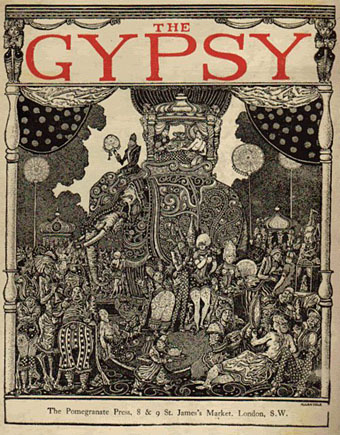
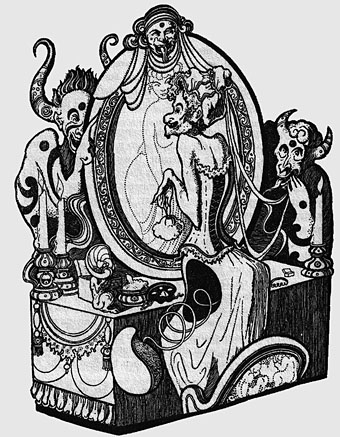
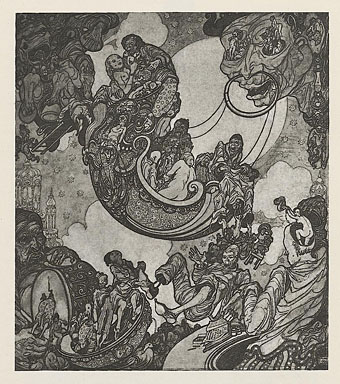
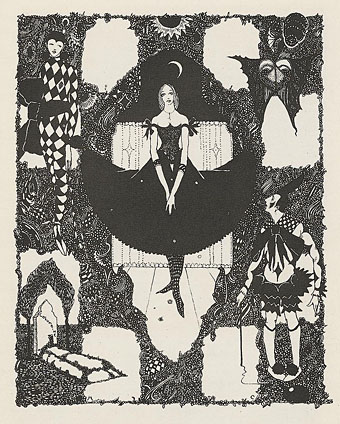
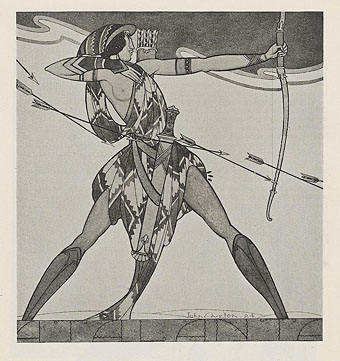
The University of Heidelberg has for some time now had several years of British art magazine The Studio in its archive but I’ve yet to delve fully into the later issues. These illustrations are from two articles from the volumes covering the year 1925, both of which feature the exceptional Irish artist Harry Clarke. In the first piece Clarke is present along with two contemporaries, John Austen and Alan Odle; the second is a review by novelist Dorothy M. Richardson (Alan Odle’s wife) of Clarke’s illustrations for Goethe’s Faust. All three artists owed an artistic debt to Aubrey Beardsley, and an earlier number of The Studio features a drawing by John Austen of Scheherazade in his Beardsley-derived style. (Thanks to Nick for the tip!)

clarke2.jpg

Columbine by Harry Clarke.

austen2.jpg

Atalanta in Calydon by John Austen.

Continue reading “Harry Clarke and others in The Studio”