The art of Andrey Avinoff, 1884–1949

avinoff1.jpg

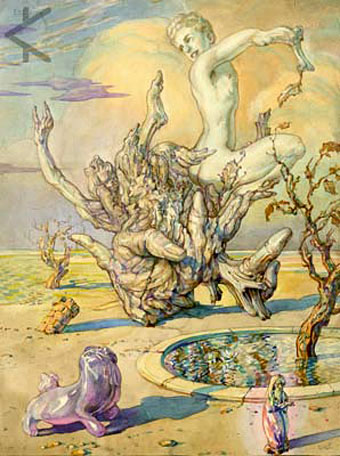
Man Emerging from a Tree Stump (no date).

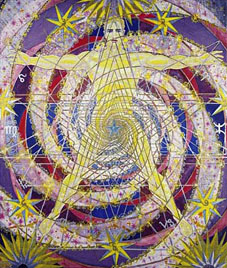
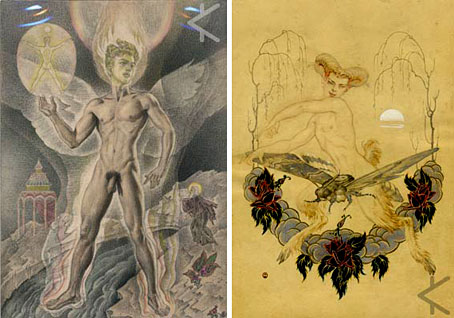
Yet another artist I’d be unlikely to have come across had it not been for the web. Andrey Avinoff’s art manages to be both mystical and homoerotic in equal measure and there’s a good selection of his paintings and drawings to be found in a collection at the Kinsey Institute. Avinoff was an entomologist and worked as director of the Carnegie Museum along with that other famous butterfly enthusiast, Vladimir Nabokov. He was also a friend of Alfred Kinsey’s for many years and the art which Kinsey collected seems (perhaps inevitably) more sexual than the artist’s mystical work or his butterfly pictures. As with other artists discussed here, we learn that “he may have been homosexual”, an equivocation which seems particularly silly when looking at his study of a (naked) young man entitled My Special Longing. He was also a Nijinsky enthusiast and one of his portraits has the dancer as a naked faun bestride an overgrown butterfly.
avinoff2.jpg

left: Standing Nude Man with Figure of Saint (no date); right: Nijinsky (1918).
Continue reading “The art of Andrey Avinoff, 1884–1949”

Images of Nijinsky

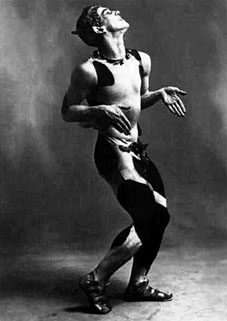
nijinsky_faun.jpgI have an abiding fascination with the Ballets Russes, Sergei Diaghilev‘s company which electrified the art world from 1909 up to the impressario’s death in 1929. One of the reasons for this—aside from the obvious gay dimension and the extraordinary roster of talent involved—is probably Diaghilev’s success in carrying the Symbolist impulses of the fin de siècle into the age of Modernism without losing any richness or exoticism along the way. Diaghilev’s arts magazine, Mir Iskusstva (1899–1900), was as much a product of fashionable Decadence as The Savoy, and its principles were easily transported into the world of ballet.
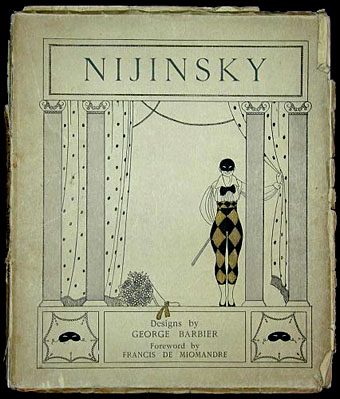
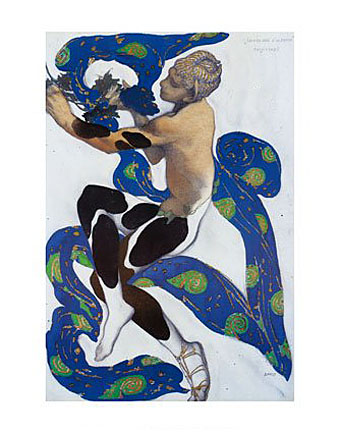
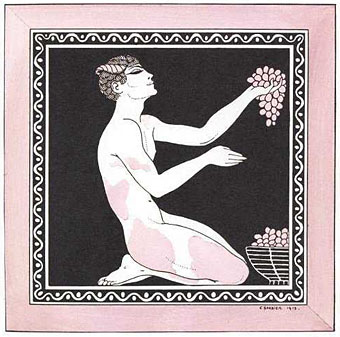
A big subject, then, that’ll no doubt be returned to in later postings. Looking around for images of dancer and choreographer Vaslav Nijinsky in his celebrated (and notorious) role in L’Après-midi d’un Faune turned up not only Leon Bakst’s luscious drawing but some marvelous Beardsley-esque pictures by George Barbier (1882–1932). I’d seen some of Barbier’s work before but didn’t realise he’d created a whole book devoted to the dancer. Artists like Bakst, Erté and Barbier show how Aubrey Beardsley’s art might have developed had he not died prematurely in 1898. You can see the full set of book plates here.

nijinsky_bakst.jpg

Nijinsky as faun by Leon Bakst (1912).

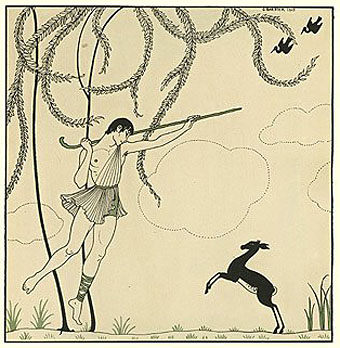
nijinsky_barbier0.jpg

Designs on the Dances of Vaslav Nijinsky (and below) by George Barbier (1913).

nijinsky_barbier1.jpg

L’ Apres-midi d’un Faune.

nijinsky_barbier2.jpg

Narcisse.

Elsewhere on { feuilleton }
The gay artists archive
The illustrators archive

Previously on { feuilleton }
The art of Nicholas Kalmakoff, 1873–1955

The art of Hubert Stowitts, 1892–1953

stowitts1.jpg

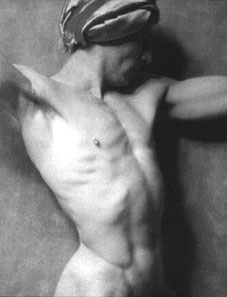
Left: Stowitts photgraphed by Nickolas Muray, 1922.

Hubert Julian Stowitts had a number of careers, including dancer, film actor, painter, designer and metaphysician. As a dancer he worked with Anna Pavlova, who discovered him in California in 1915 and took him on tour around the world. His statuesque figure was used by Rex Ingram for the infernal scenes in The Magician (1926), an adaptation of Somerset Maugham’s rather limp roman-à-clef based on the exploits of Aleister Crowley. The scene with Stowitts as a satyr owed nothing to the book, however, being more inspired by the director’s fondness for the tales of Arthur Machen. Most photos that turn up from this film show Stowitts rather than Paul Wegener who played the sinister alchemist of the title.

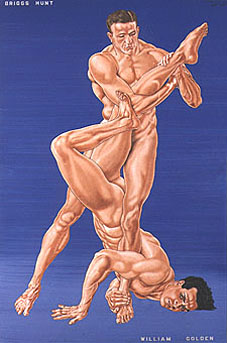
Stowitt’s painting developed in the 1930s and included a series of 55 paintings of nude (male) athletes for the 1936 Olympics (see Ewoud Broeksma’s contemporary equivalents at originalolympics.com). Other paintings depicted dance scenes, costume designs, people encountered during travels in the Far East and, in the 1950s, a series of ten Theosophist pictures entitled The Atomic Age Suite.

stowitts3.jpg

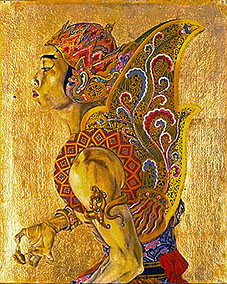
Prince Suwarno in Mahabarata role (1928).

stowitts2.jpg

Briggs Hunt and William Golden (1936).

stowitts4.jpg

The Crucifixion in Space (1950).

The Stowitts Museum and Library
Stowitts at the Queer Arts Resource

Elsewhere on { feuilleton }
The gay artists archive

Previously on { feuilleton }
The art of Nicholas Kalmakoff, 1873–1955