The art of Nicola Verlato

verlato.jpg

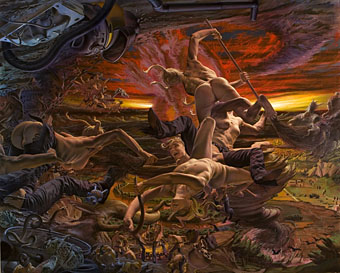
There’s no place like home (2006).

Now here’s an artist—Italian, works in NYC—who makes most painters look like they’re slacking. No need to post more tiny jpegs when you can go to his site and see his extraordinary tempest-tossed cowgirls at a larger size. And there’s more oil-on-canvas mayhem at the Stux Gallery, New York.

Elsewhere on { feuilleton }
The fantastic art archive

Thomas Allen’s paperback art

thomas_allen2.jpg

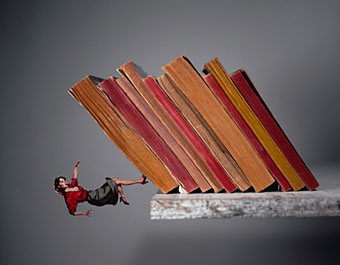
Topple (2006).

thomas_allen1.jpg

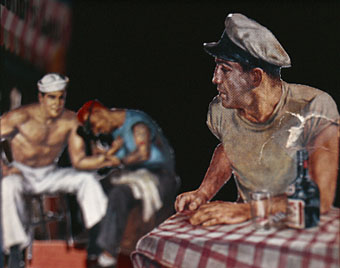
Mate (2006).

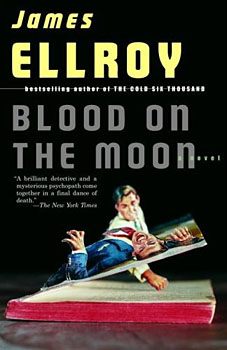
ellroy.jpg

American artist Thomas Allen constructs witty and clever dioramas using figures cut from the covers of old pulp paperbacks. Probably not the future James Avati and co. anticipated for their paintings but it certainly gives their art a new lease of life. Things have come full circle since Allen’s constructions have been used to decorate a series of James Ellroy reissues. Allen’s prints are currently on display at the Foley Gallery, New York, until March 3rd.

Elsewhere on { feuilleton }
The book covers archive

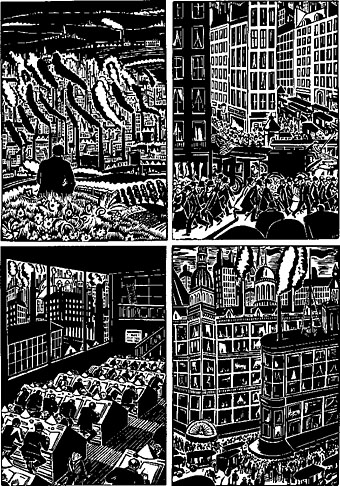
Frans Masereel’s city

masereel_stadt.jpg

Pages from Die Stadt (1925), a “novel in woodcuts” by anarchist artist Frans Masereel (1889–1972). See the other ninety-six pages here. And by the same artist, Die Idee.

A pacifist in World War I, he tried to make his art accessible to the ordinary man. His works were banned by the Nazis and widely distributed in Communist countries. But he rejected “political” art and party affiliation, condemning all enslavements, oppression, war and violence, injustice, and the power of money.

Elsewhere on { feuilleton }
The etching and engraving archive

Perfume: the art of scent

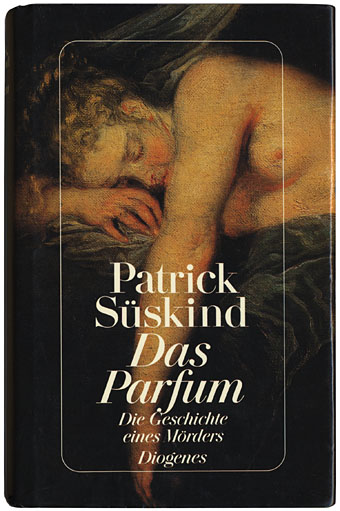
perfume1.jpg

I’ve yet to see Tom Tykwer’s film of Patrick Süskind’s novel, Perfume—The Story of a Murderer, and remain reluctant to do so; it’s a rule in cinema that good books make bad films and vice versa. Perfume is a good book and a favourite of mine which makes the prospect of film adaptation even more worrying. (As an aside, Tykwer dispels the persistent rumour that Stanley Kubrick dismissed Perfume as an unfilmable novel.)

Reservations apart, I’ve been listening to the tremendous soundtrack all week after a recommendation from a friend (hi Philip!). The music is credited to Reinhold Heil, Johnny Klimek and the director, and features the near unprecedented involvement of conductor Simon Rattle and the Berlin Philharmonic, an orchestra that rarely stoops to the level of the film soundtrack. This prompted speculation about the distinct challenge Süskind’s book presents to a designer: how best to represent the entwined strands of Grenouille’s career as a perfumier and a murderer of young women?

Continue reading “Perfume: the art of scent”