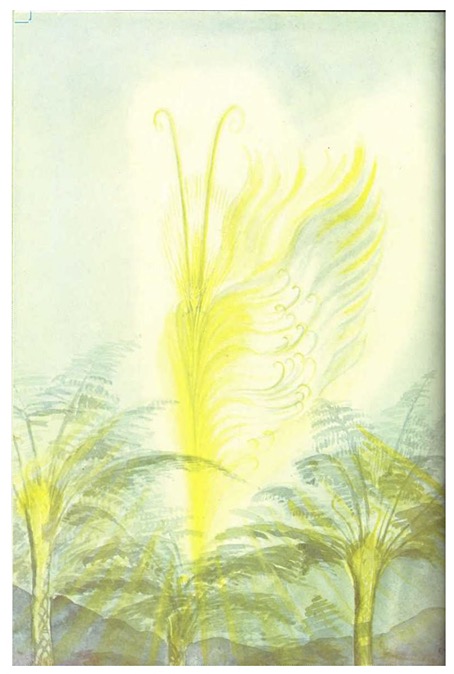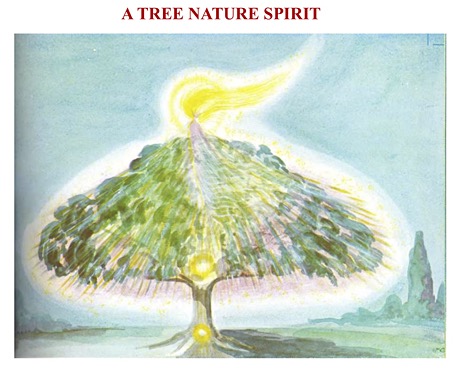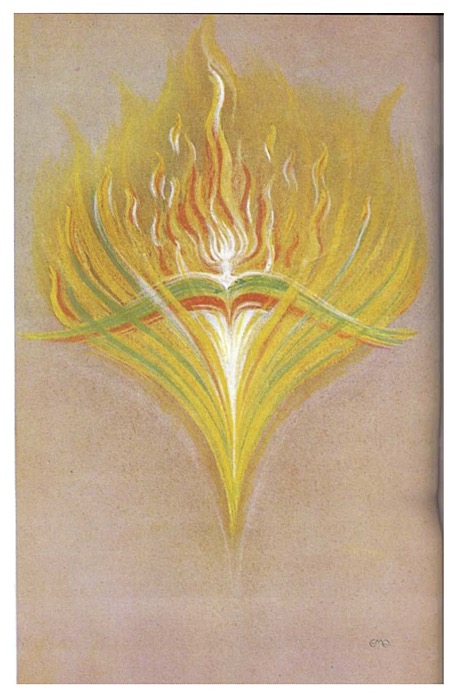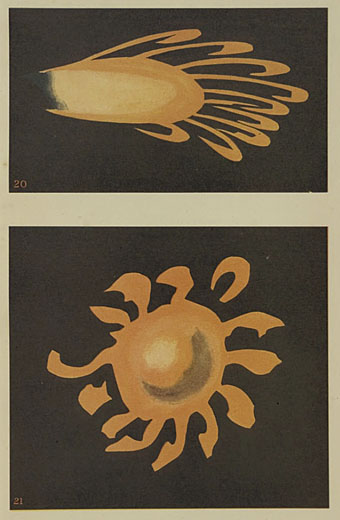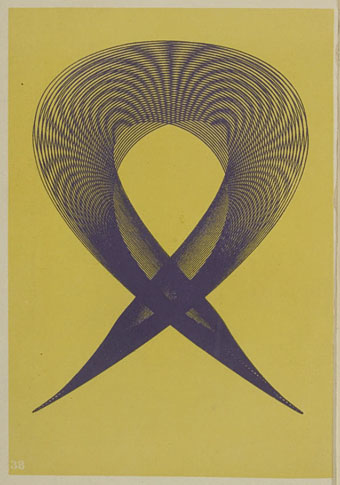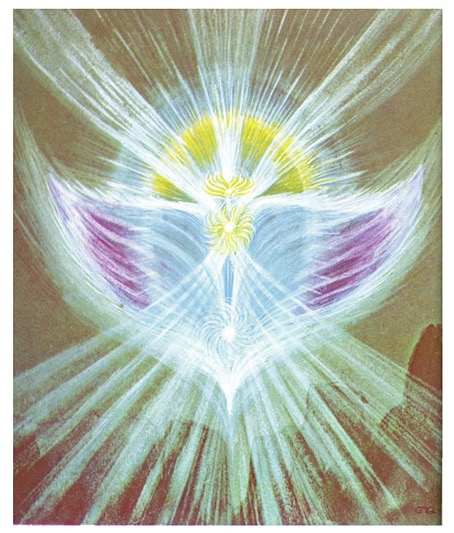
Looking for more Theosophist art turned up The Kingdom of the Gods (1952), a book by Geoffrey Hodson with illustrations by Ethelwynne M. Quail. Hodson was a Theosophist scholar with a predilection for the clairvoyant visualising of transcendent beings. Several of his books are descriptions of encounters made on his travels, commencing at a modest level in 1925 with Fairies at Work and Play. Fairies are a somewhat trivial subject for Theosophical students, which may explain why Hodson’s later books move on to accounts of angels in their various forms, before arriving at descriptions of fully-fledged gods, a type of divine life which in Hodson’s telling is more populous than we realise. A note at the beginning of The Kingdom of the Gods states that Ethelwynne Quail’s paintings were made originally for slide projections which Hodson used in his lectures.
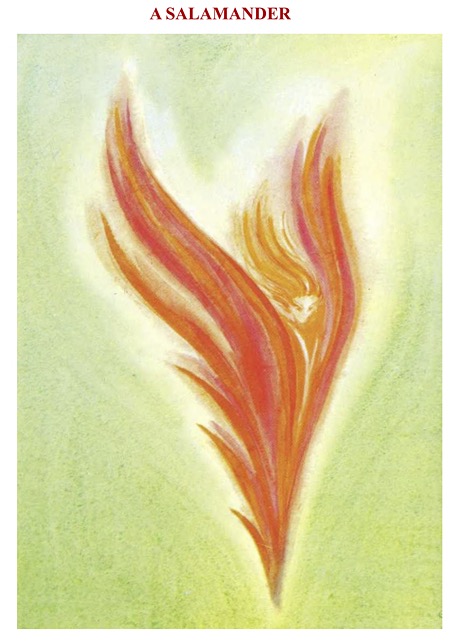
Most of Hodson’s gods are lower-order beings of a kind that the Romans termed genius loci, the spirit of a place, while their depictions are nebulous, bird-like renderings like some of the “thought-forms” depicted in the 1905 book of that name by Charles Webster Leadbeater and Annie Besant. The determination of the Theosophists to make the invisible manifest on paper or canvas may explain the attraction of the religion for so many artists. One of the illustrations in Thought-Forms shows Gounod’s music forming over a cathedral tower like a polychrome mushroom cloud; a decade later, the Theosophy-inspired Luigi Russolo was doing something similar with his Futurist painting, La Musica. Geoffrey Hodson would have been delighted by the mystical artists of the 1970s, especially Gilbert Williams and Robert Venosa. Some of Ethelwynne Quail’s spirits might be sketches for Venosa paintings, his early works in particular, which have the same sweeping lines but rendered in a meticulous, crystalline manner.