Ubu

ubu.jpg

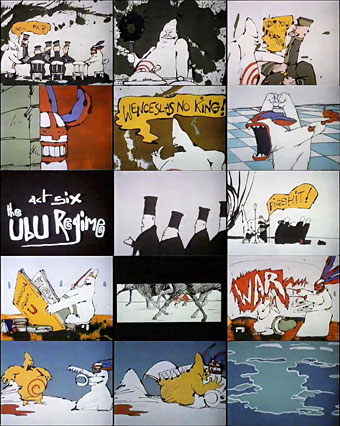
One last film post for a very busy week. Ubu is a highly-stylised animated adaptation of Alfred Jarry’s Ubu Roi. This was a British production directed in 1978 by Geoff Dunbar who employs an ink-spattered style reminiscent of Ralph Steadman’s drawings; in place of vocal dramatisation Pa and Ma Ubu shriek horribly and occasionally spit out speech balloons. As a condensation of the play, and a taste of Jarry’s grotesquery, this feels a lot closer to its source than Jean-Christophe Averty’s 1965 film which seems polite by comparison. Ubu took a long time to arrive on YouTube so watch it while you can, it may well vanish again.

Ubu pt. 1 | Ubu pt. 2

Previously on { feuilleton }
Bring Me the Head of Ubu Roi

Anémic Cinéma

anemic.jpg

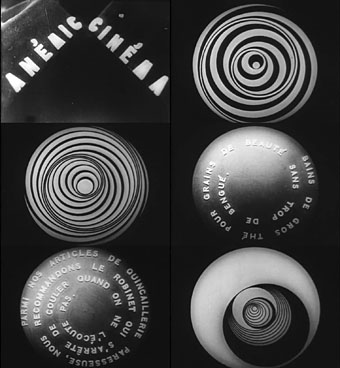
It’s no doubt up to the viewer to decide what constitutes anaemia in Marcel Duchamp’s 7-minute film. Anémic Cinéma was made the same year as Emak-Bakia with the assistance of Man Ray and Marc Allégret. Duchamp’s Rotoreliefs spin hypnotically alternating with punning epithets in French. The spinning artworks later appeared as Duchamp’s contribution to Hans Richter’s Dreams That Money Can Buy (1947).

Previously on { feuilleton }
Emak-Bakia
Un Chien Andalou
Ballet Mécanique
Dreams That Money Can Buy
La femme 100 têtes by Eric Duvivier
Entr’acte by René Clair

Emak-Bakia

emakbakia.jpg

Posts this week will tend towards the brief since I’m spending all my time finishing Reverbstorm.

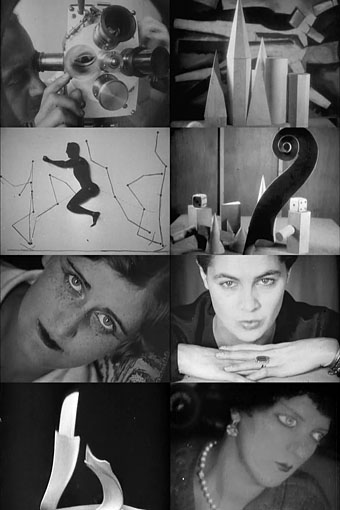
I thought I’d already posted something about Emak-Bakia, a 16-minute “cinépoème” by Man Ray from 1926, but it seems not. This is another of those short experimental films that proliferated between the wars, and a particularly inventive one with Man Ray throwing together every camera trick he could manage; he even throws the camera in the air at one point, having earlier driven over it. There’s also bits of animation, many shots of revolving sculptures and the artist’s customary emphasis on attractive women. Watch it at Vimeo or download it from Ubuweb.

Previously on { feuilleton }
Un Chien Andalou
Ballet Mécanique
Dreams That Money Can Buy
La femme 100 têtes by Eric Duvivier
Entr’acte by René Clair

Un Chien Andalou

andalou.jpg

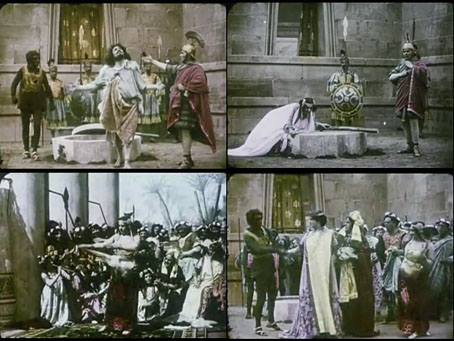
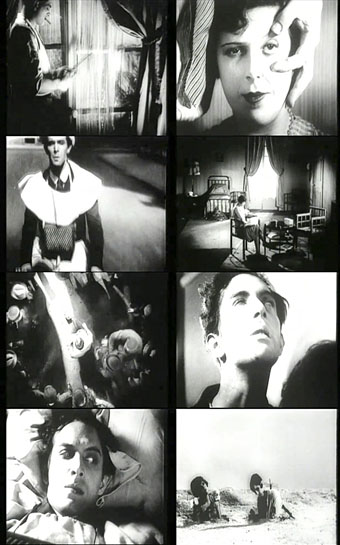
What is there to say about Buñuel and Dalí’s timeless film that hasn’t already been said? It’s one of the primary Surrealist documents and something that everyone should see at least once. Cyril Connolly attended the Paris premiere in 1929:

The picture was received with shouts and boos and when a pale young man tried to make a speech, hats and sticks were flung at the screen. In one corner a woman was chanting, “Salopes, salopes, salopes!” and soon the audience began to join in. With the impression of having witnessed some infinitely ancient horror, Saturn swallowing his sons, we made our way out into the cold of February, 1929, that unique and dazzling cold…

Why does this strong impression still persist? Because Un Chien Andalou brought out the grandeur of the conflict inherent in romantic love, the truth that the heart is made to be broken, and after it has mended, to be broken again. For romantic love, the supreme intoxication of which we are capable, is more than an intensifying of life; it is a defiance of it and belongs to those evasions of reality through excessive stimulus which Spinoza called “titivations.” By the law of diminishing returns our desperate century forfeits the chance of being happy and, because it finds happiness insipid, our world is regressing to chaos.

The film comes and goes on YouTube so serious viewers are directed to the BFI DVD/Blu-ray release which comes twinned with Buñuel’s L’Age D’Or.

Previously on { feuilleton }
Dreams That Money Can Buy
La femme 100 têtes by Eric Duvivier
Entr’acte by René Clair