Prologue.
Last week a Kay Nielsen illustration passed through my RSS feed, a picture I thought for a moment I hadn’t seen before. A quick search revealed that the illustration is in fact present in a book on my shelves, The Unknown Paintings of Kay Nielsen (1977), one of the series of art books co-published by Pan and Ballantine in the 1970s. A selection of Nielsen’s illustrations had appeared in the series two years earlier in a book simply titled Kay Nielsen; the arrival of a follow-up made the Dane the only featured artist aside from Frank Frazetta to be the subject of multiple volumes.
Prologue.
Nielsen’s illustrations in the second book were labelled “unknown” because they hadn’t been printed before, despite being commissioned for a new Danish translation of The Thousand and One Nights by Arthur Christensen. Hildegarde Flanner, a friend of the Nielsens when they were living in Los Angeles in the 1940s, writes in an introductory “elegy” that Nielsen worked on the illustrations from 1918 to 1922, but publication of the book was abandoned as a result of the economic climate in post-war Denmark. There were further difficulties later on. When Nielsen died in 1957 the illustrations still hadn’t been published. Nielsen’s widow, Ulla, passed them on to Hildegarde Flanner and Frederick Monhoff who subsequently tried to place them with museums in the USA and Denmark. None of the institutions they contacted were interested, an unthinkable situation today.
Prologue.
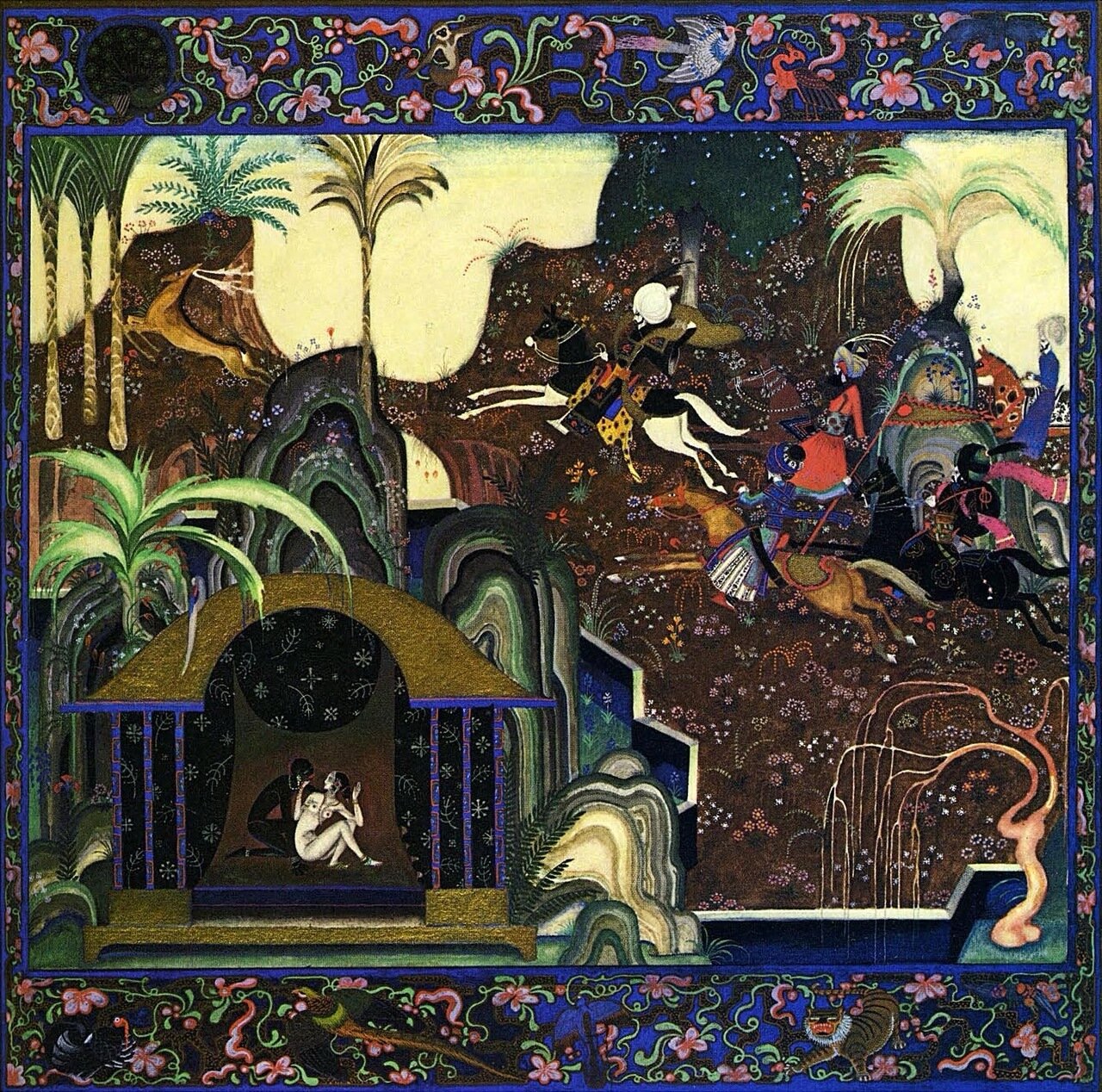
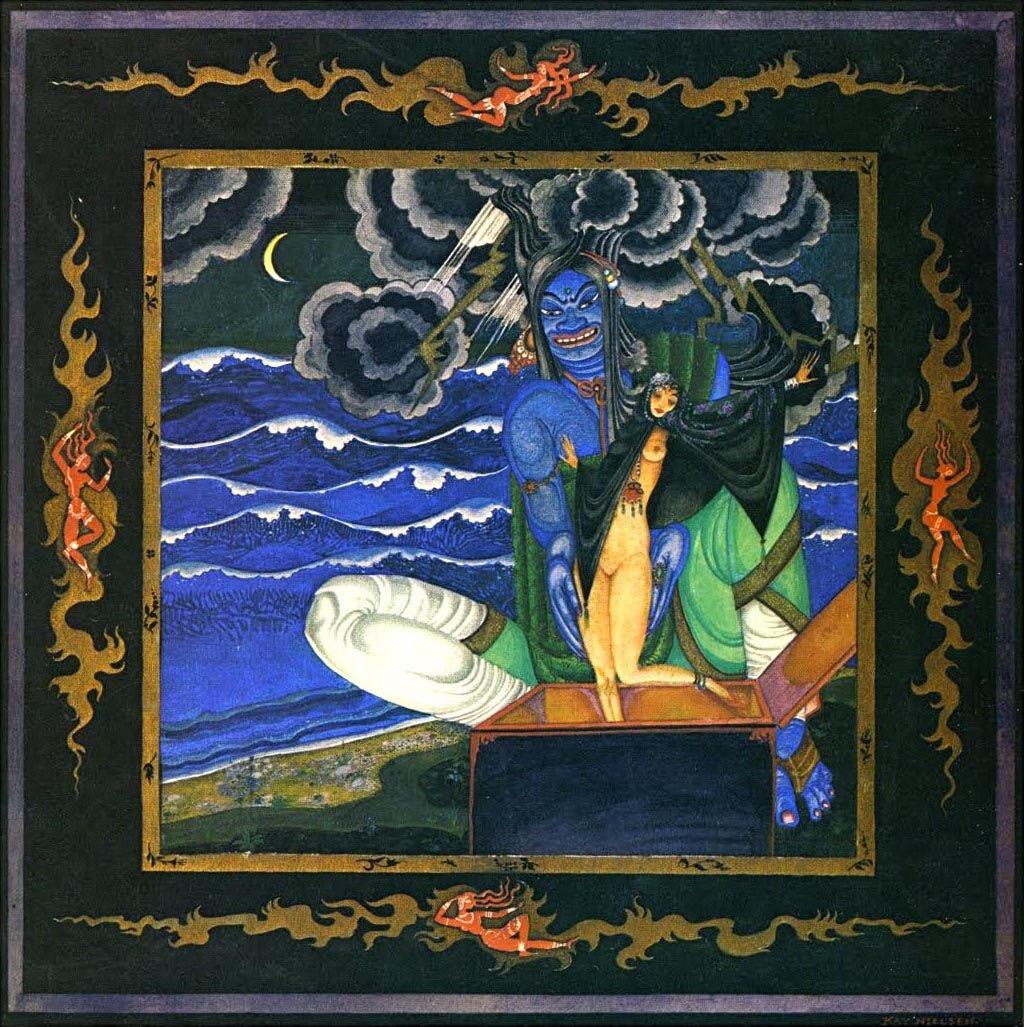
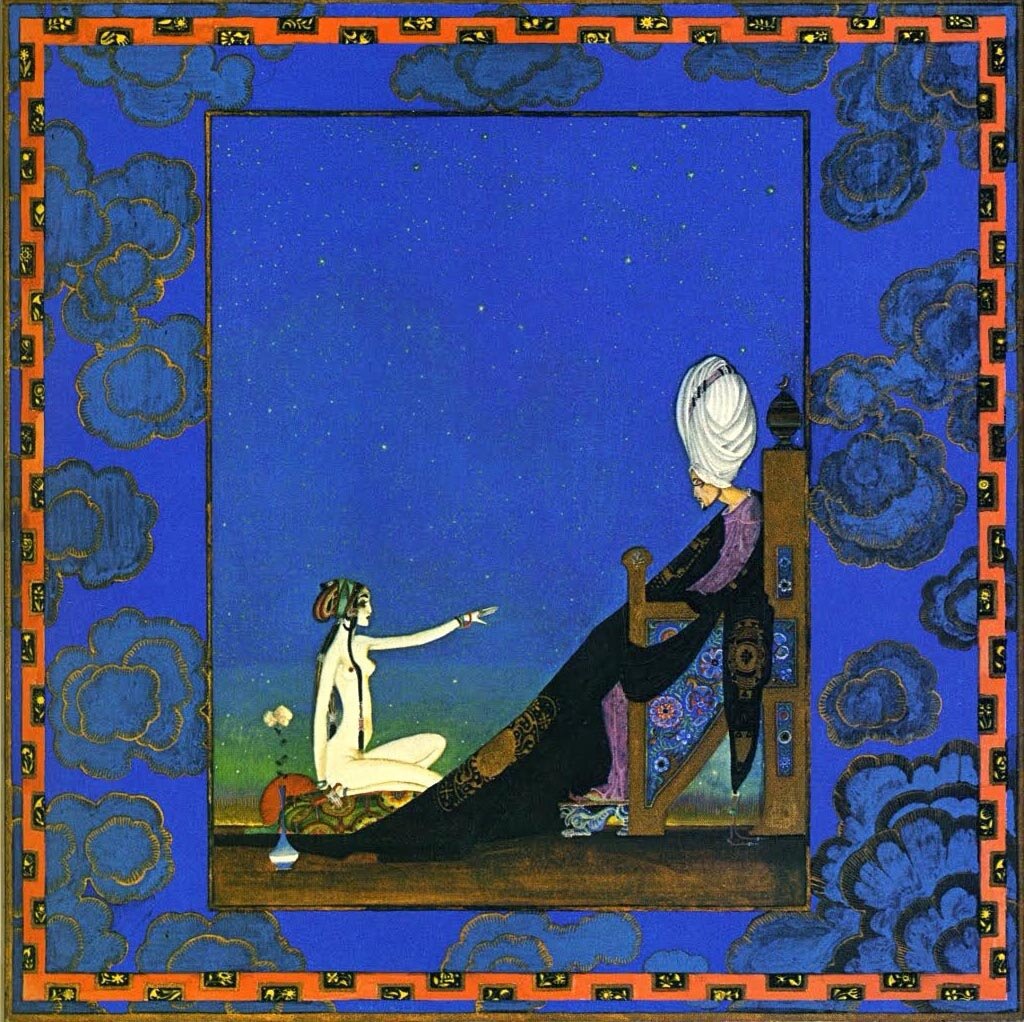
There’s more of an adult tone to Nielsen’s Arabian Nights than there is in his earlier works, a quality which suits the material but which may explain why they had to wait until the 1970s to see print. Simplified versions of the tales of Aladdin and Sin(d)bad have seen The Thousand and One Nights continually miscast as children’s fiction when the original stories were intended for adults; Scheherazade invents a new story each night to save herself from execution in the morning. Nielsen’s illustrations bring the stories closer to their origin while also maintaining the influence of Persian art on the style of his drawings.
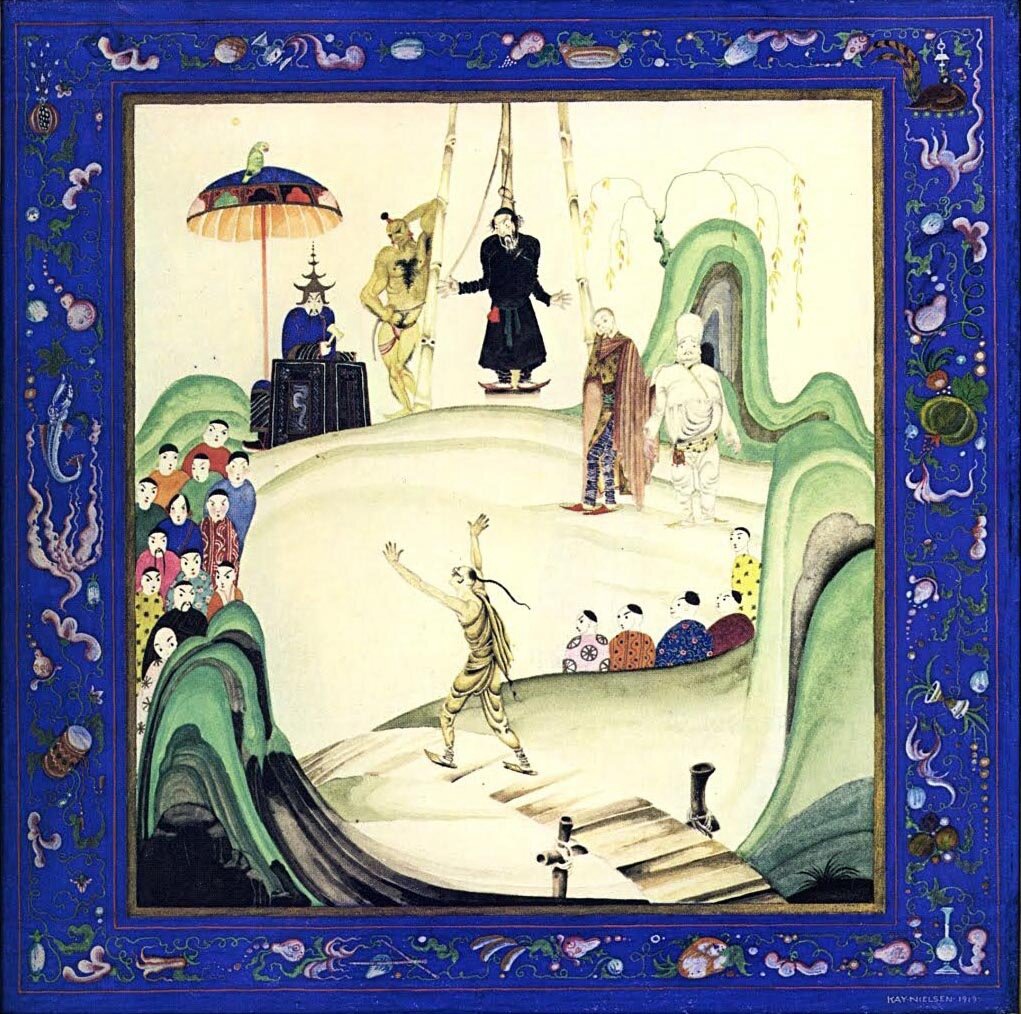
The Tale of the Little Hunchback.
The copies you see here show the colour plates alone but Nielsen also created a number of monochrome vignettes and other pieces to be used as decoration elsewhere in the book. The Unknown Paintings of Kay Nielsen doesn’t reprint the stories so has to pad out its pages by combining details from the colour plates with the ink borders. More recently the illustrations were reprinted in one of Taschen’s expensive editions which is closer to Nielsen’s original plan for the book.
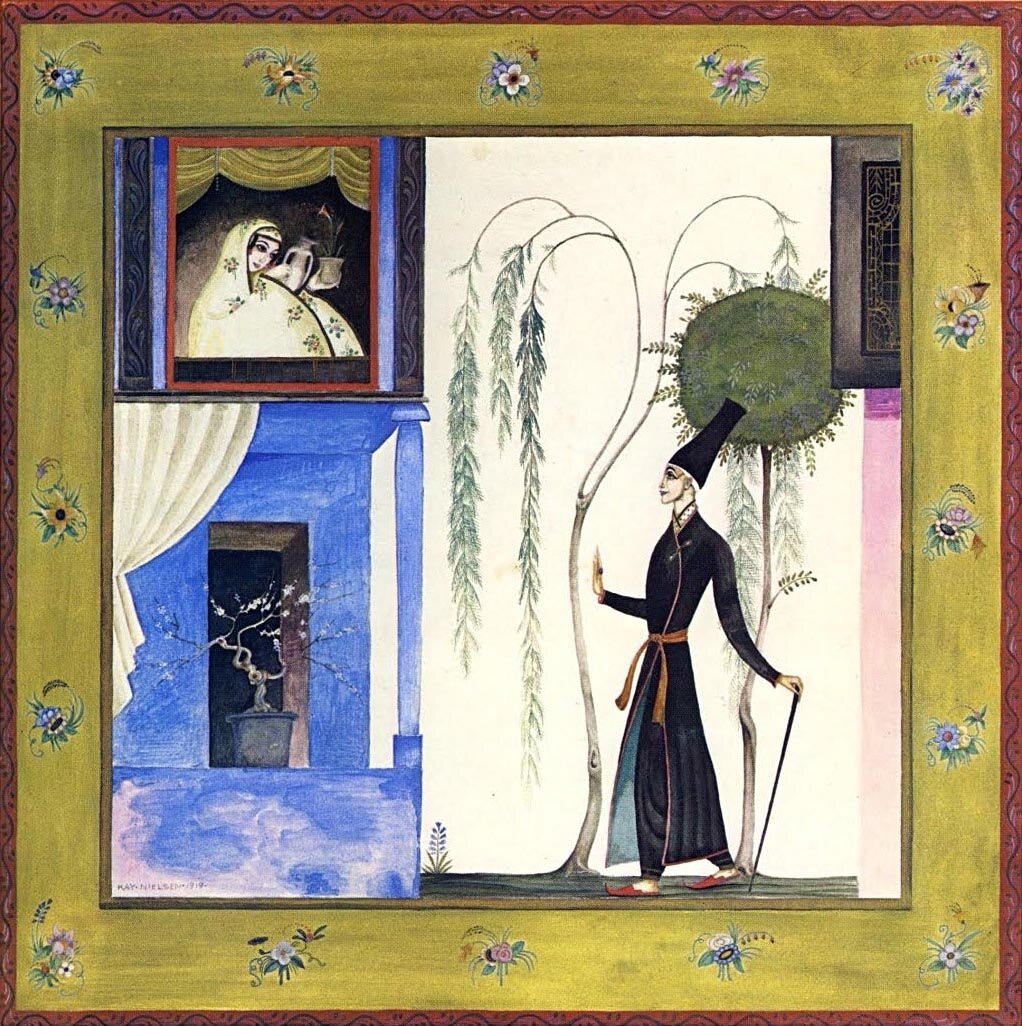
The Tailor’s Tale of the Lame Young Man.
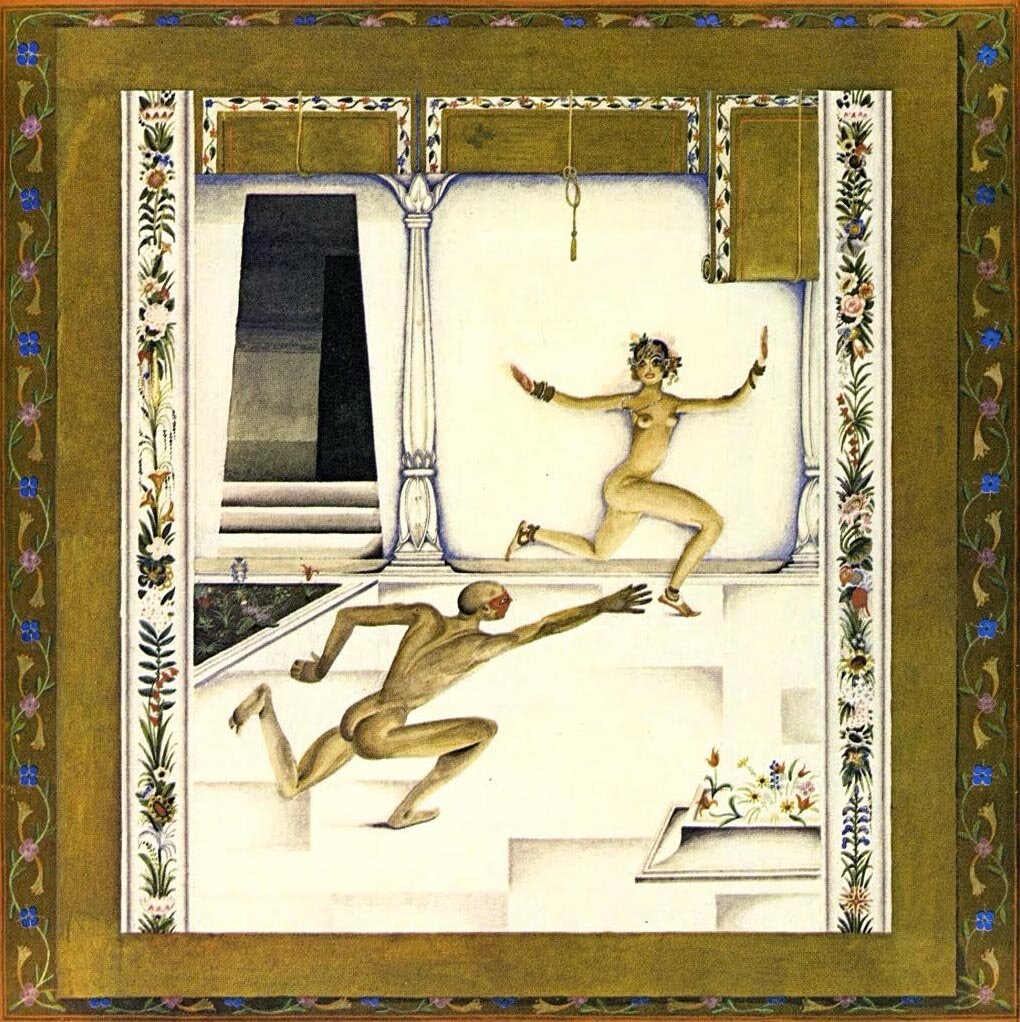
The Barber’s Tale of His Second Brother.
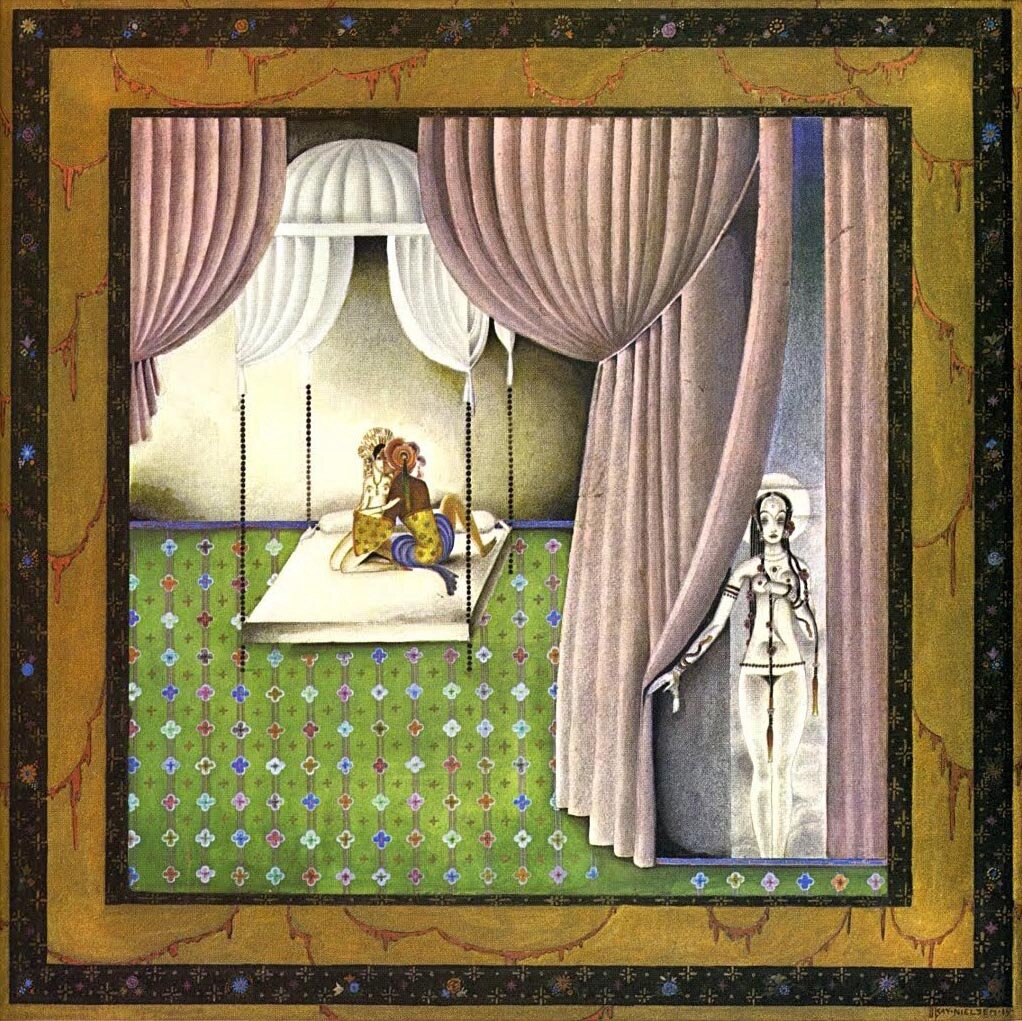
The Physician’s Tale of a Young Man Loved by Two Sisters.
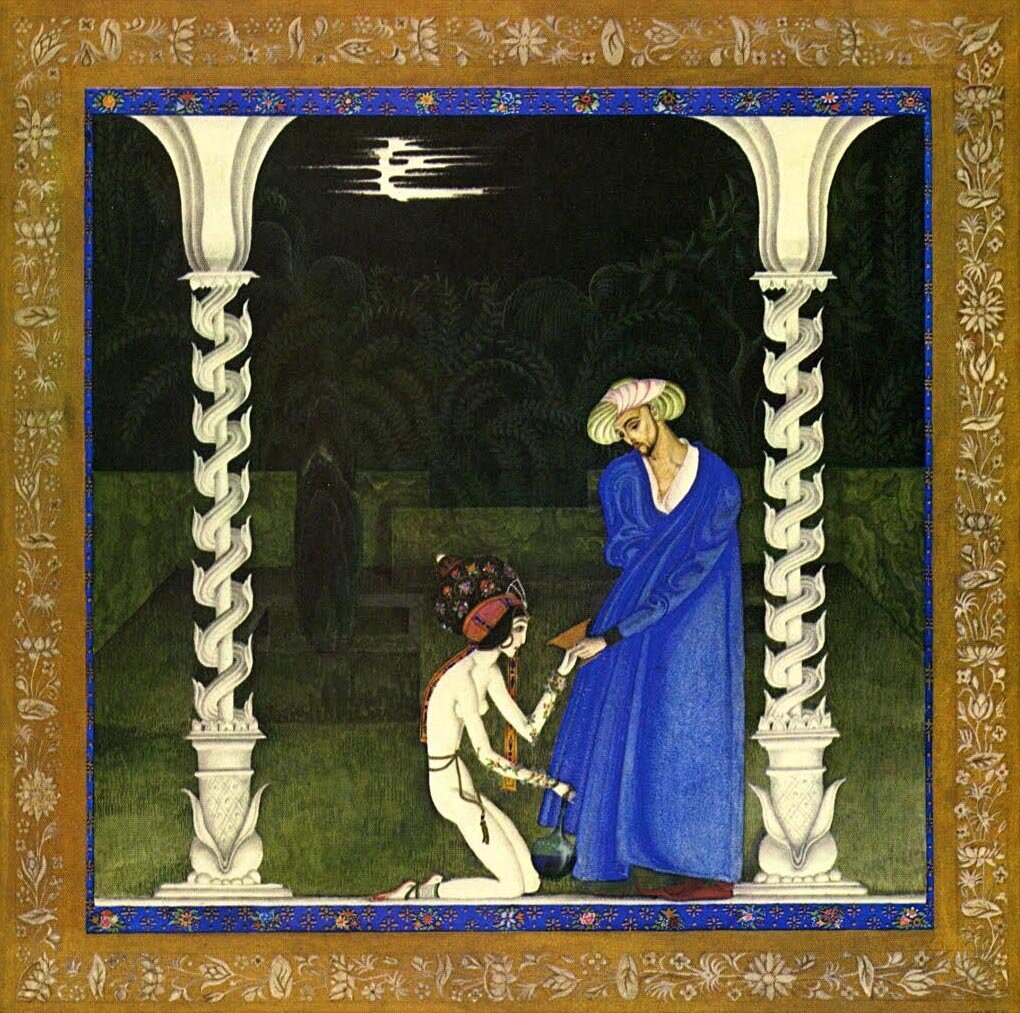
The Merchant’s Tale of the Young Thief.
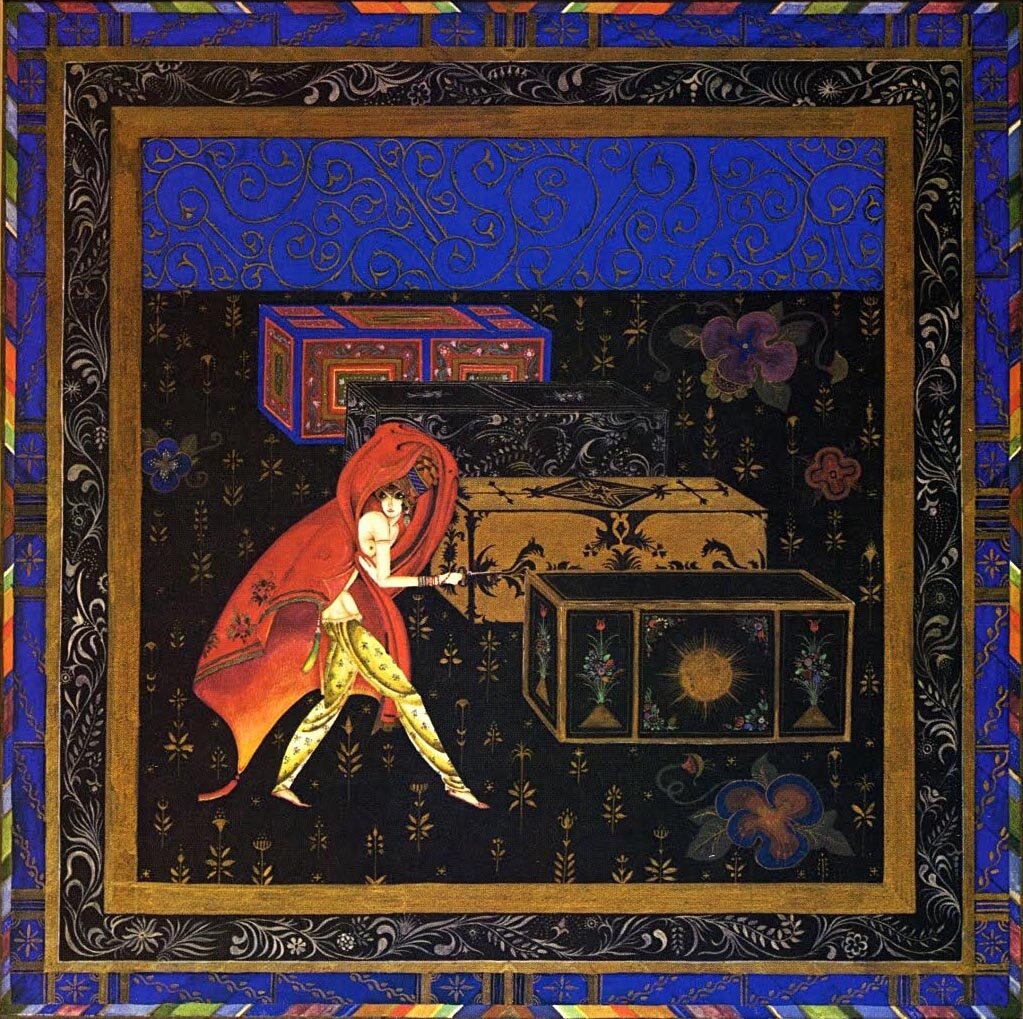
The Steward’s Tale of the Sultan’s Wife.
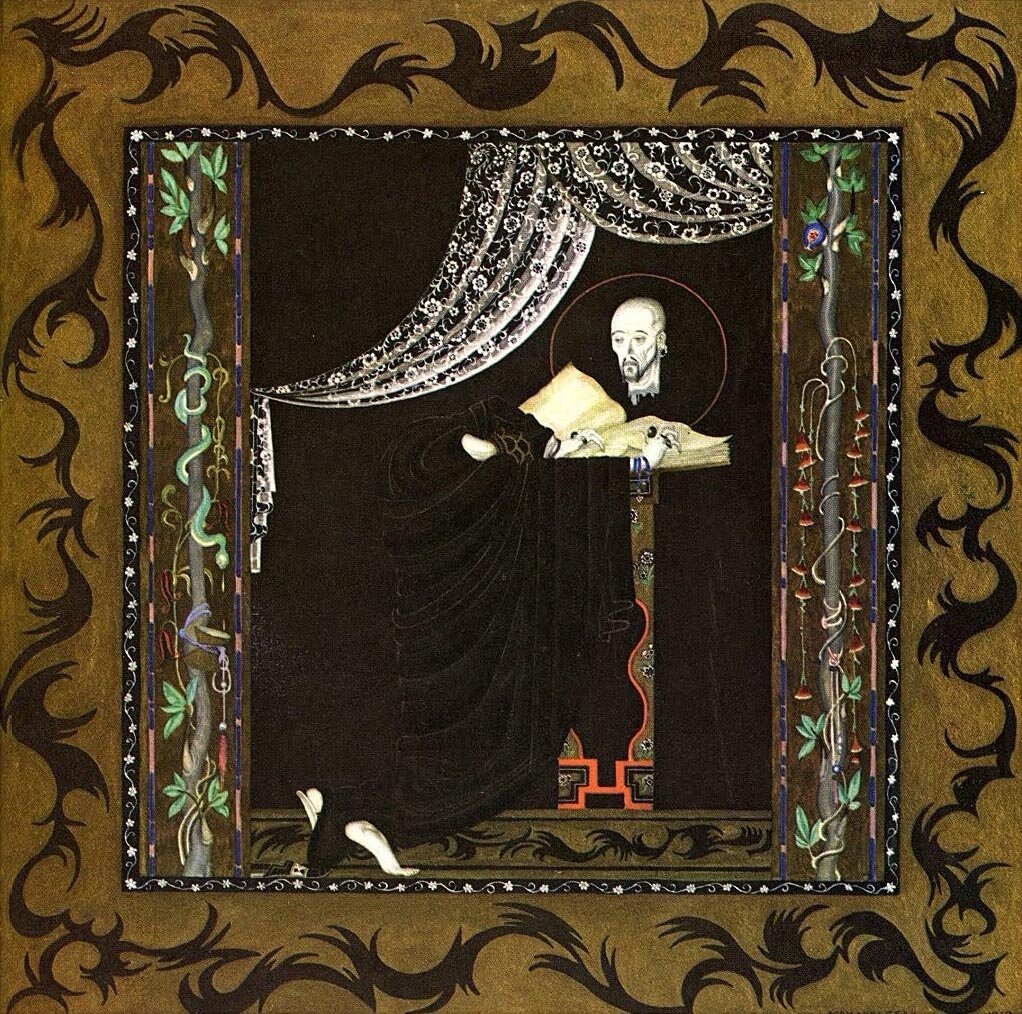
The Tale of King Yunan and Duban the Doctor.
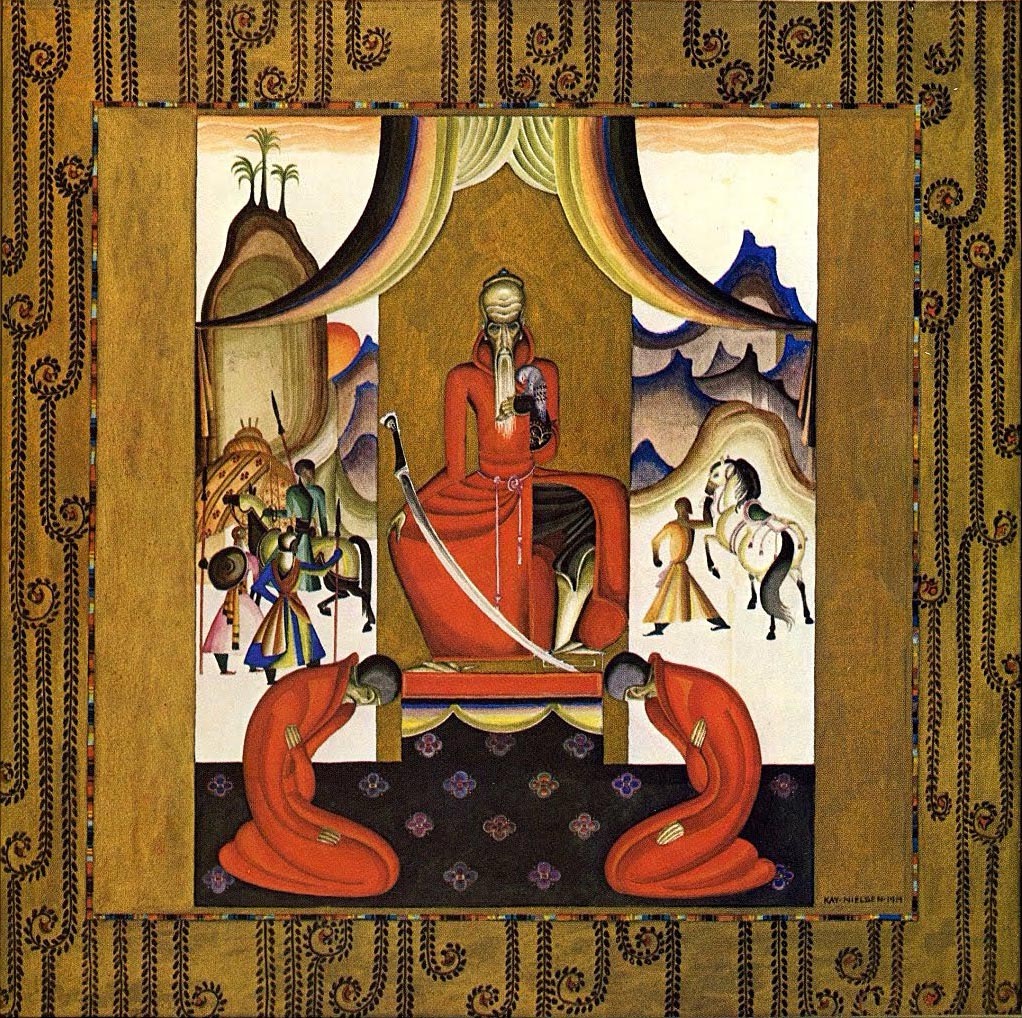
The Tale of King Sindbad and the Falcon.
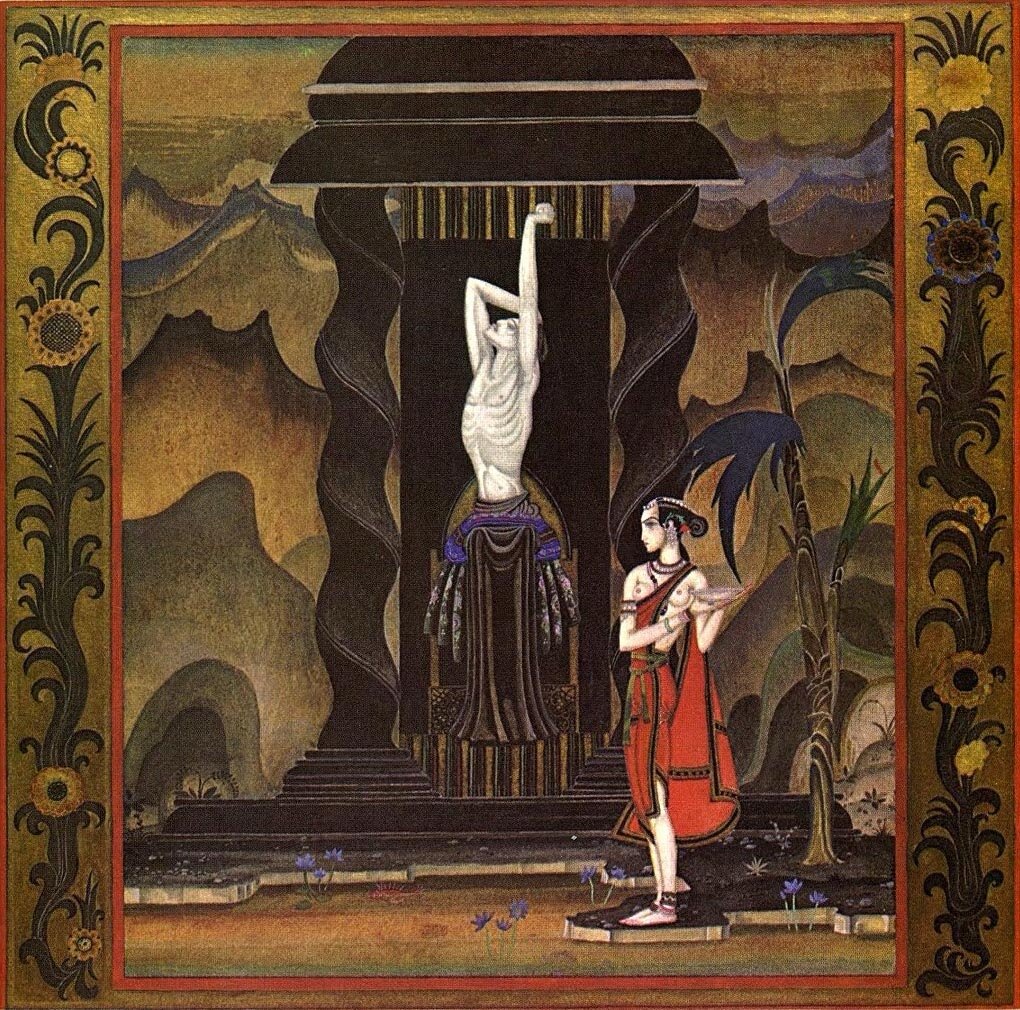
The Tale of the Enchanted King of the Black Islands.
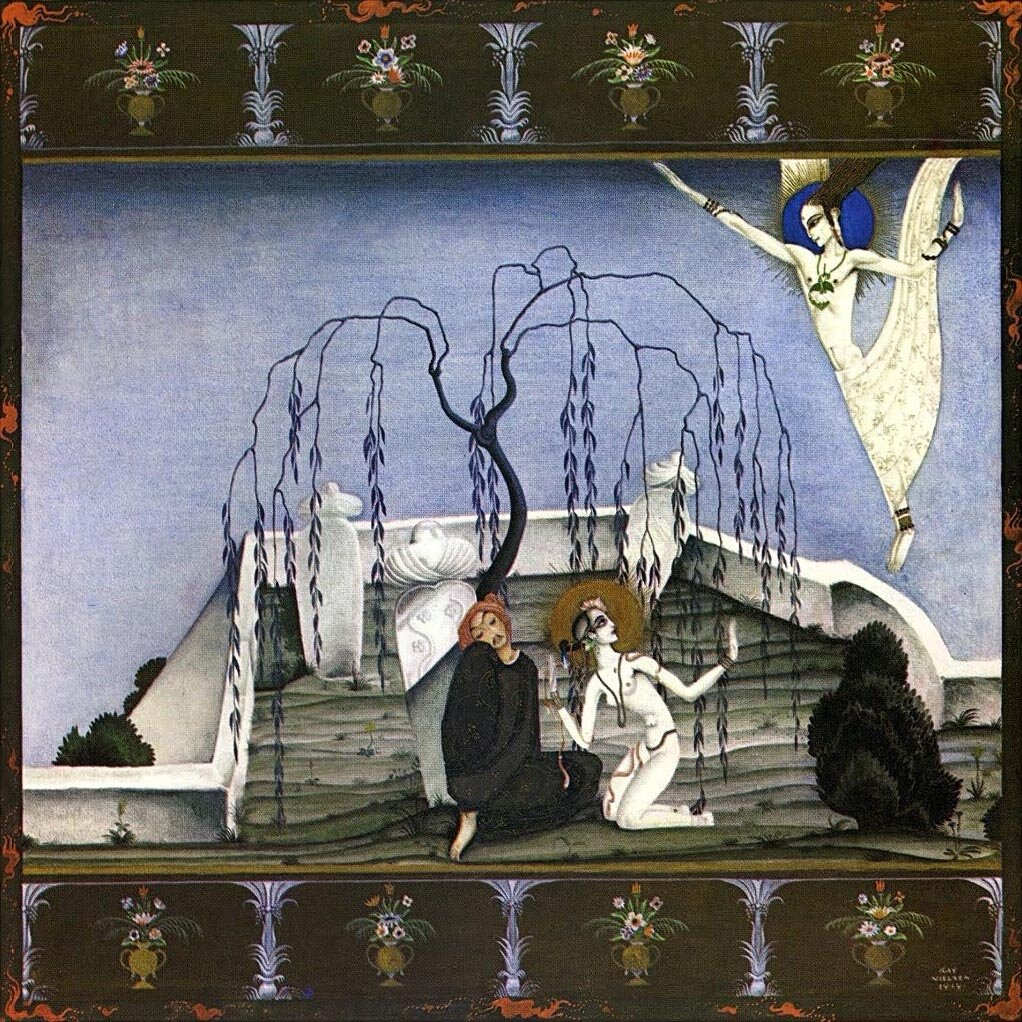
The Tale of the First Dervish.
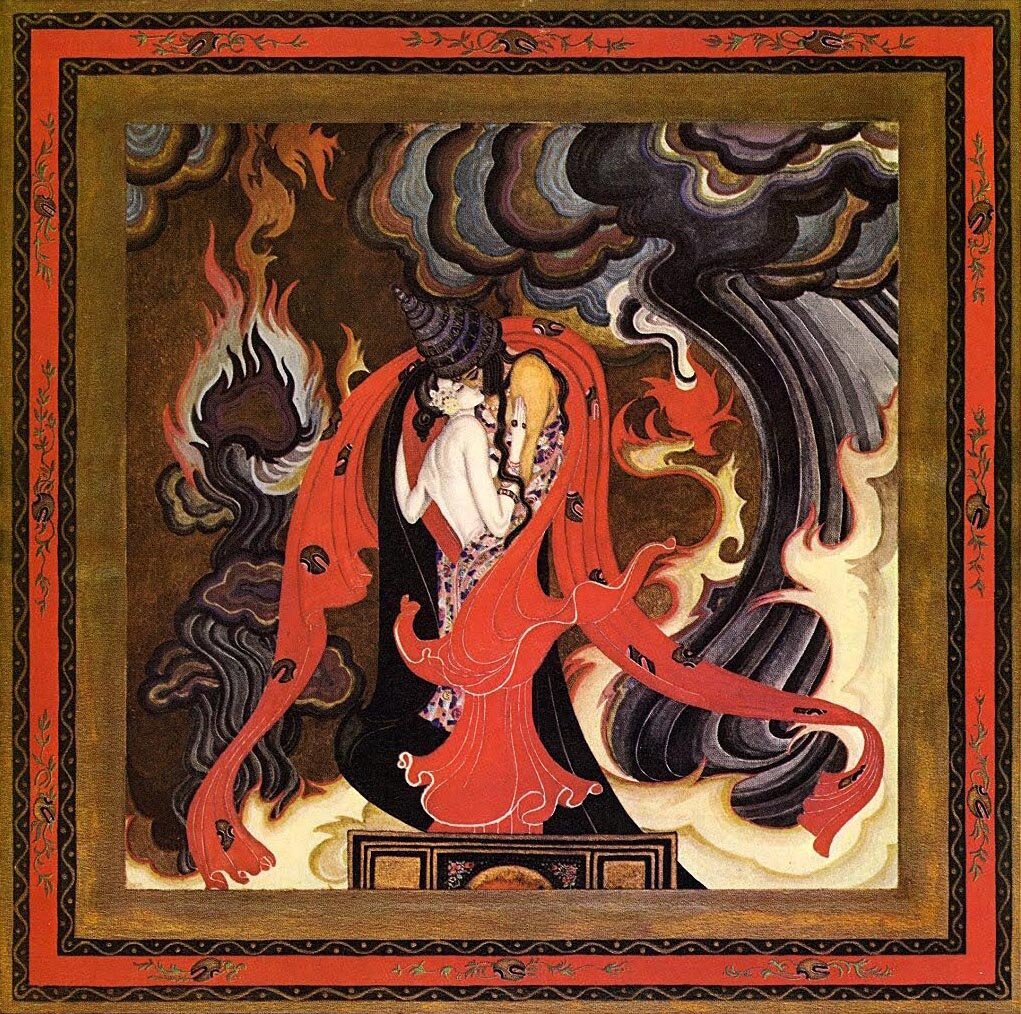
The Tale of the First Dervish.
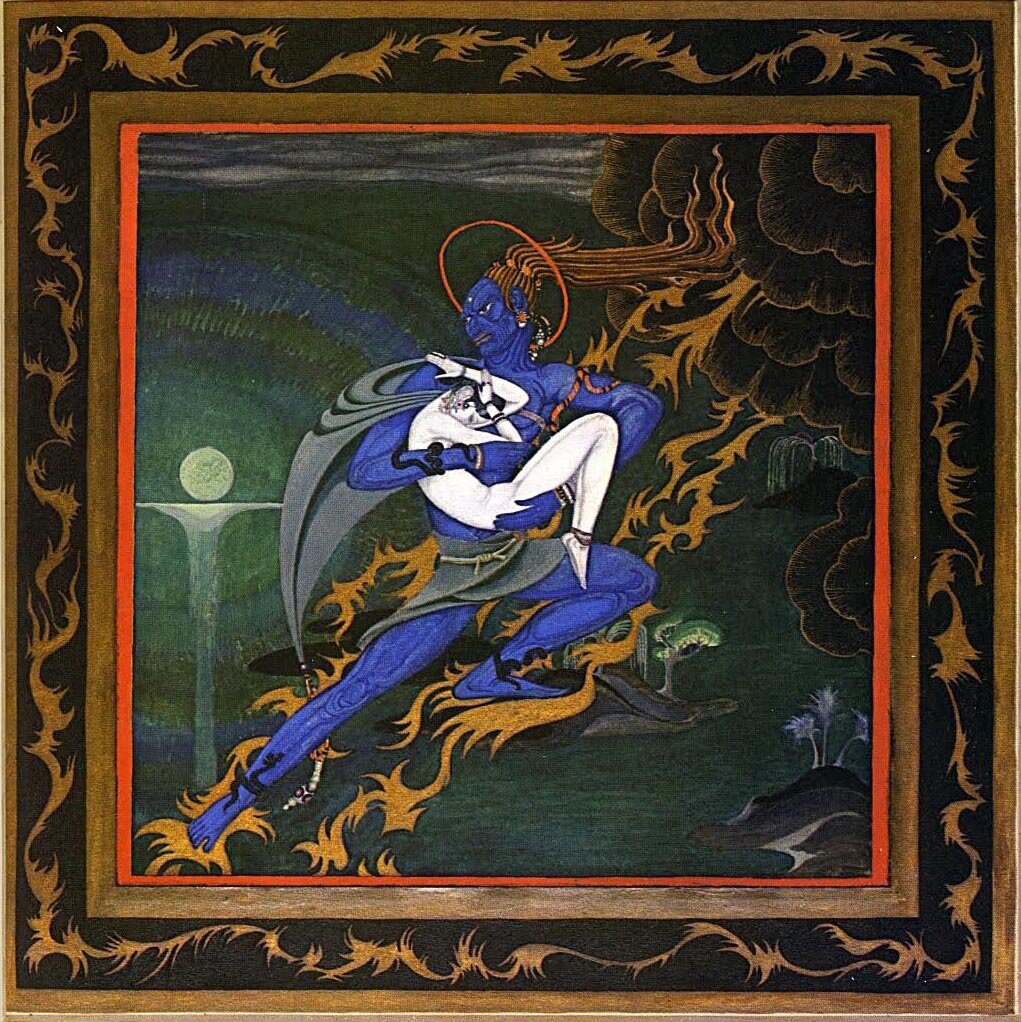
The Tale of the Second Dervish.
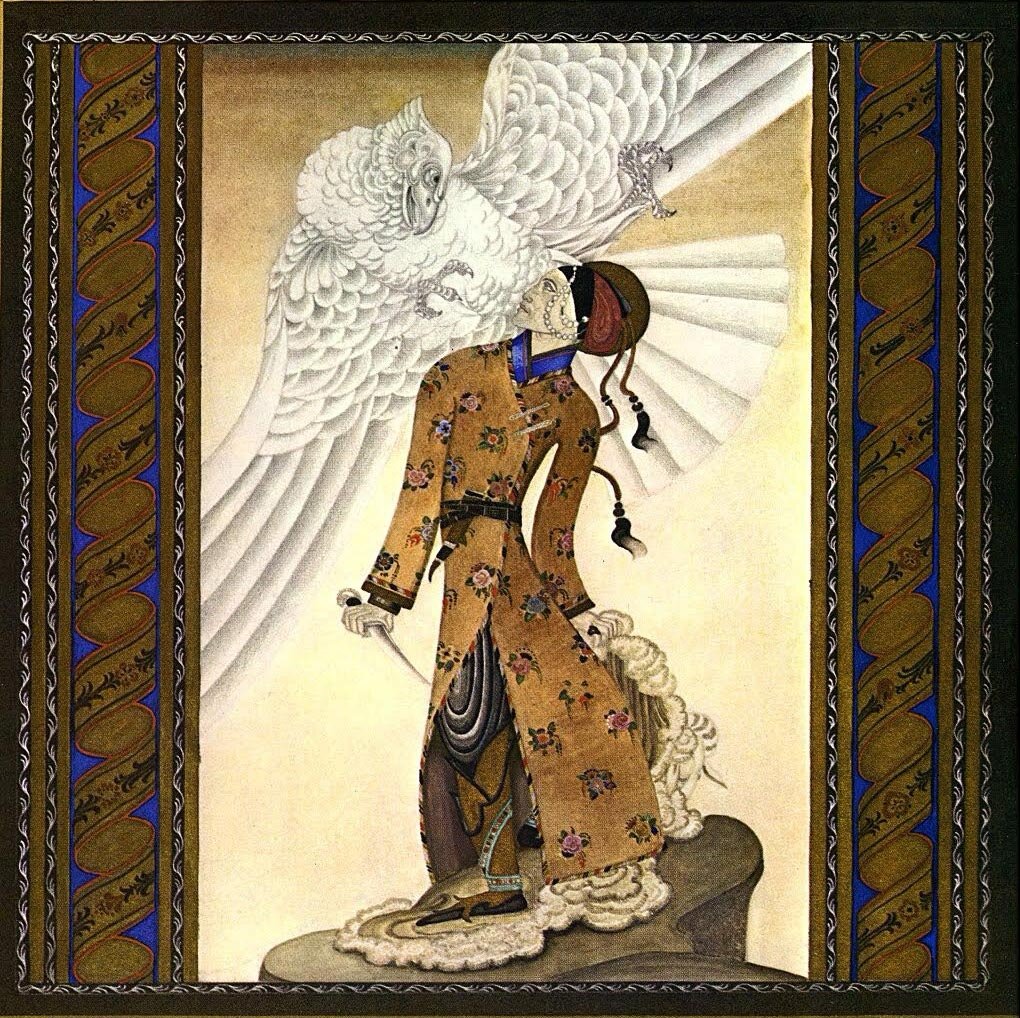
The Tale of the Third Dervish.
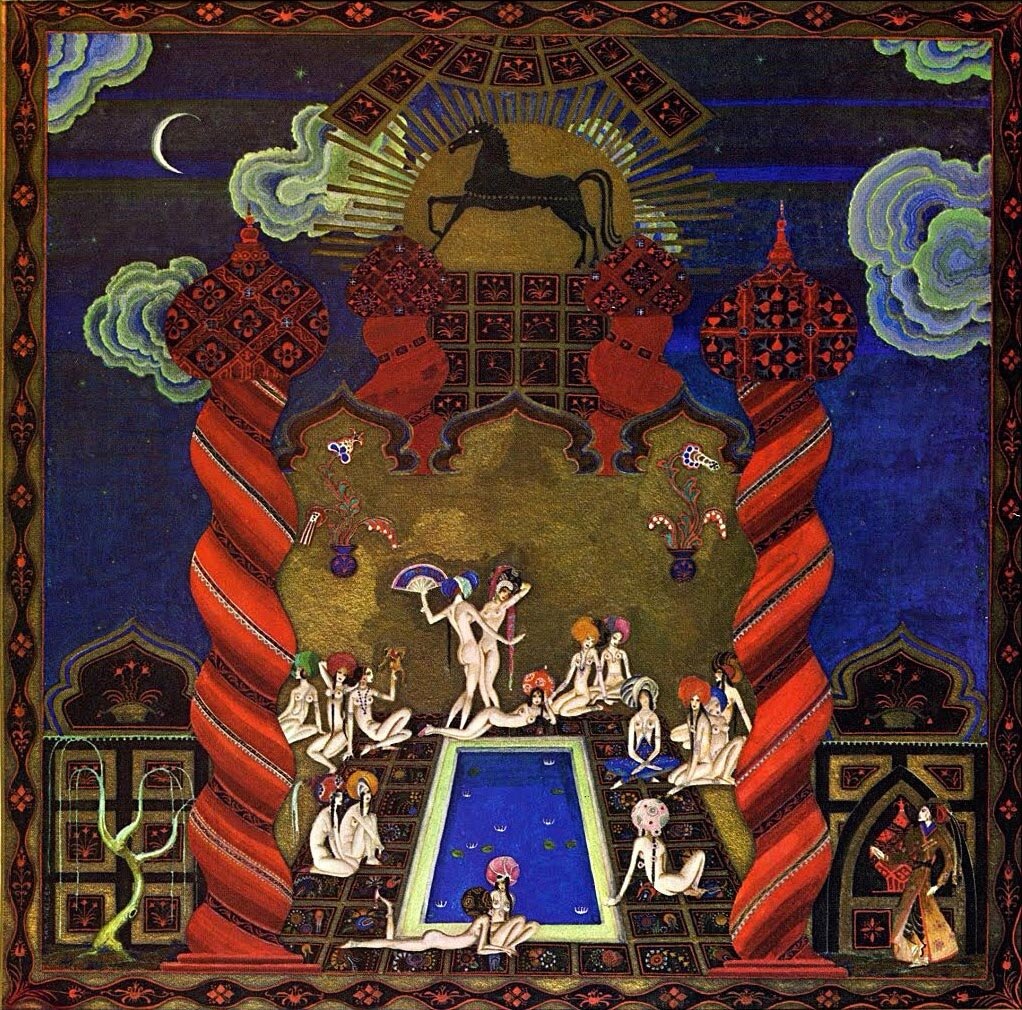
The Tale of the Third Dervish.
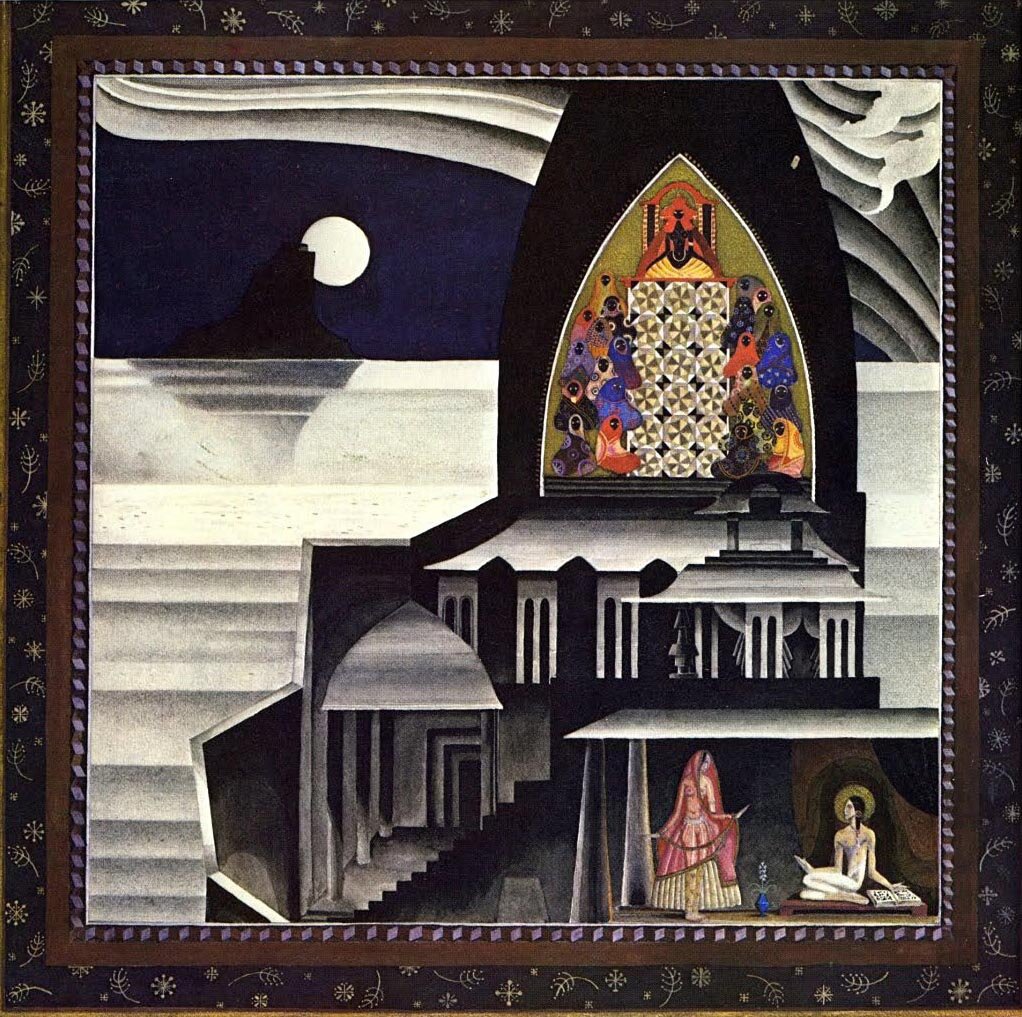
The Tale of the First Girl.
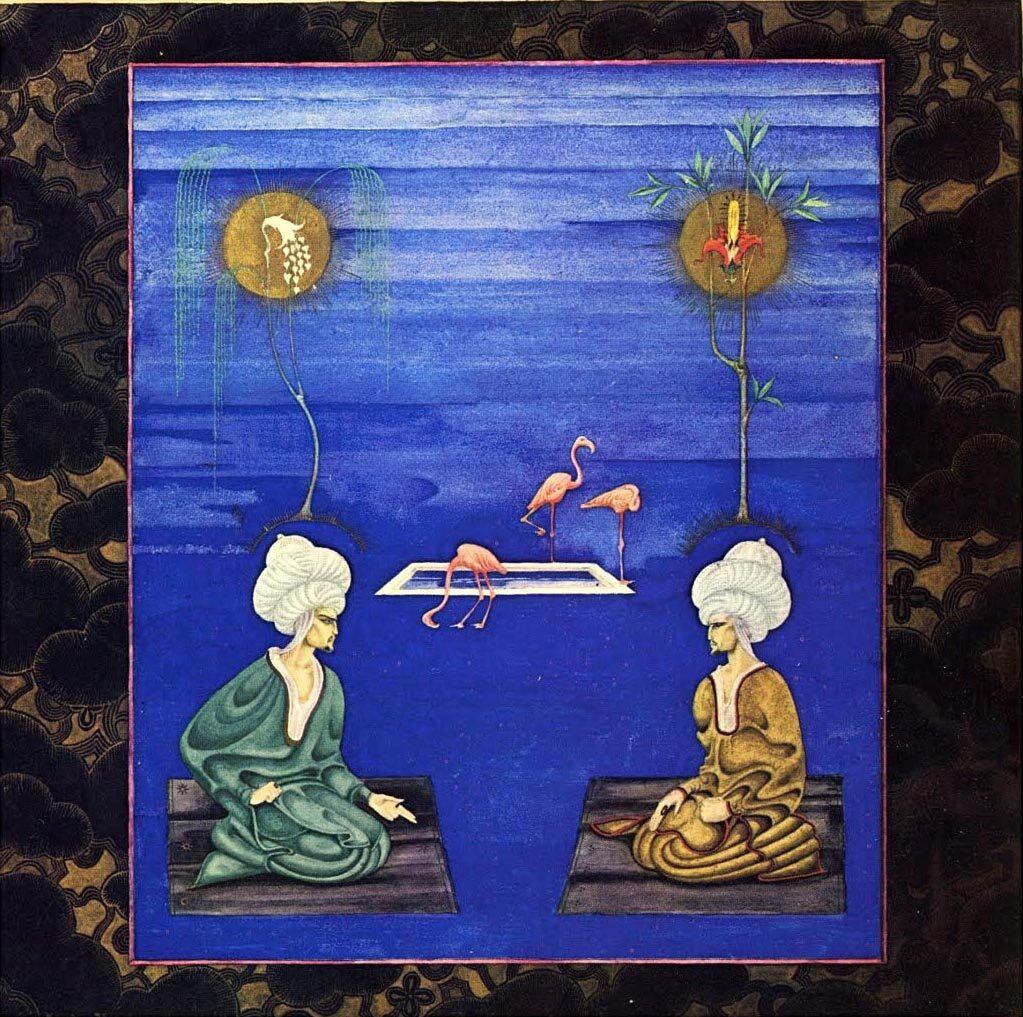
The History of Noureddin Ali and Bedreddin Hassan.
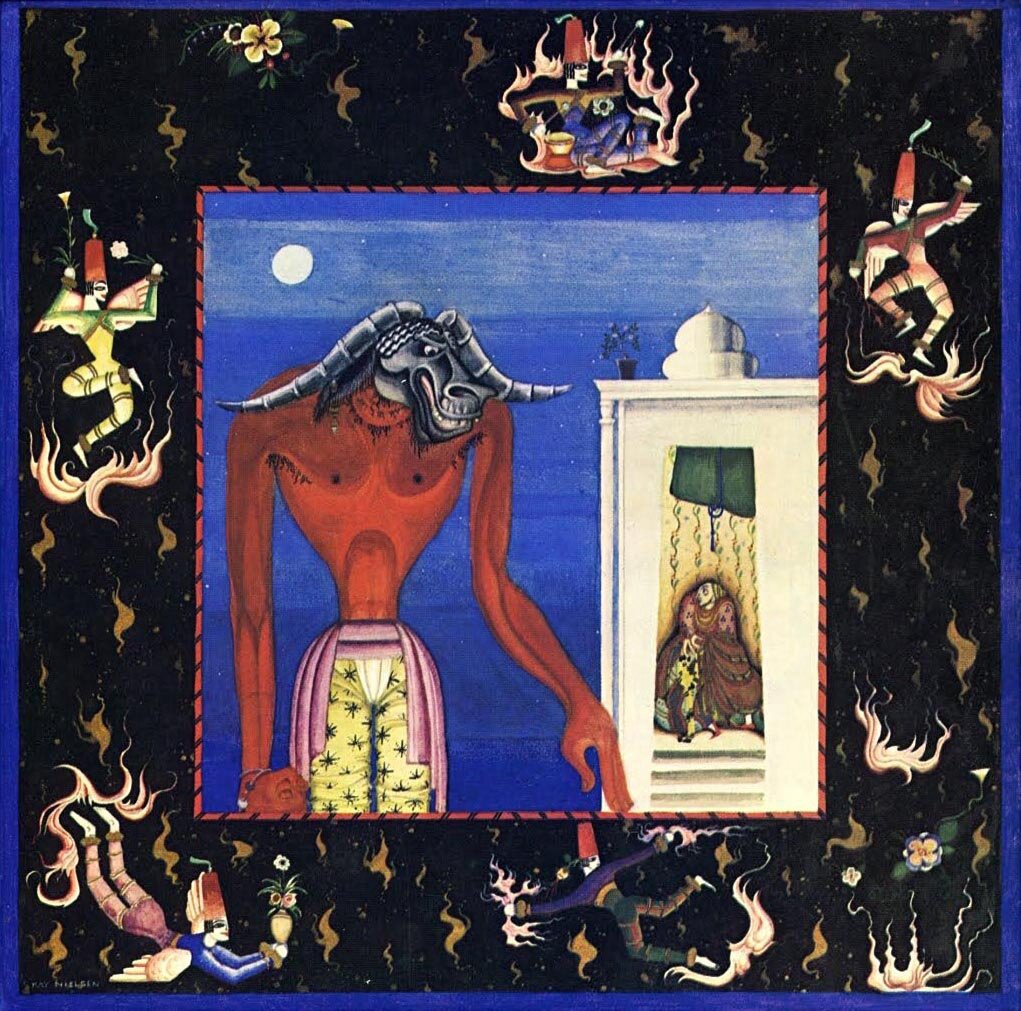
The History of Noureddin Ali and Bedreddin Hassan.
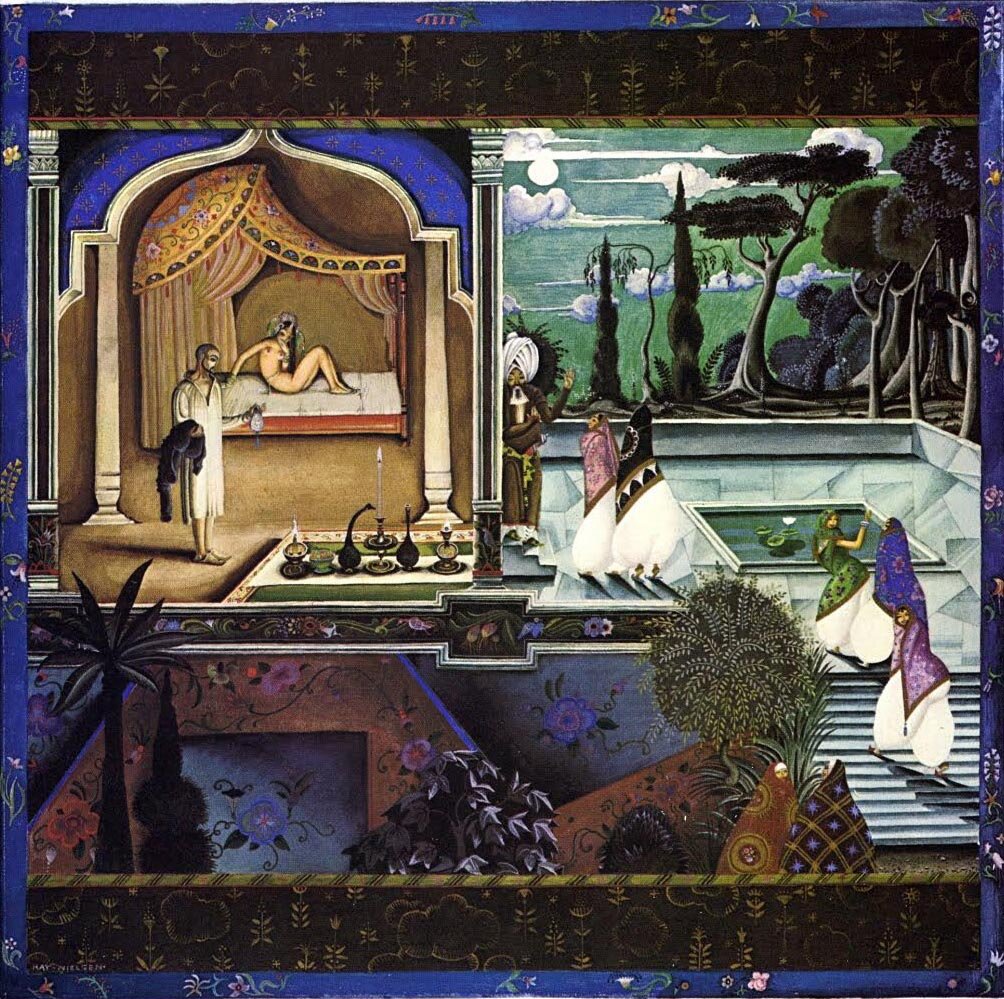
The History of Noureddin Ali and Bedreddin Hassan.
Elsewhere on { feuilleton }
• The illustrators archive
Previously on { feuilleton }
• Kay Nielsen’s Grimm Fairy Tales
• Kay Nielsen’s East of the Sun and West of the Moon
• Fantastic art from Pan Books