
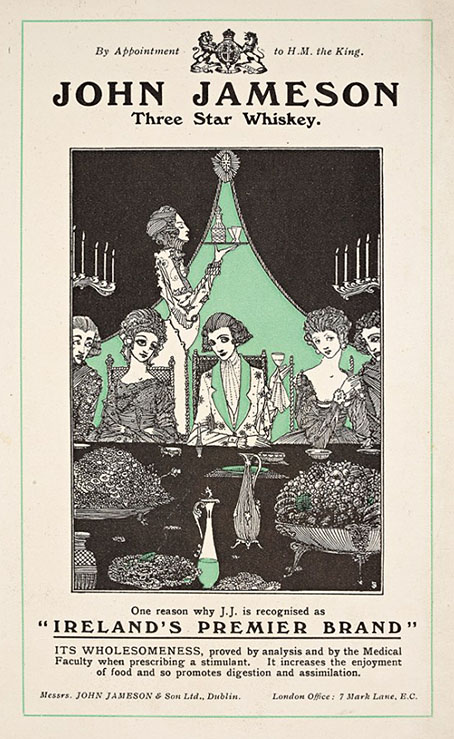
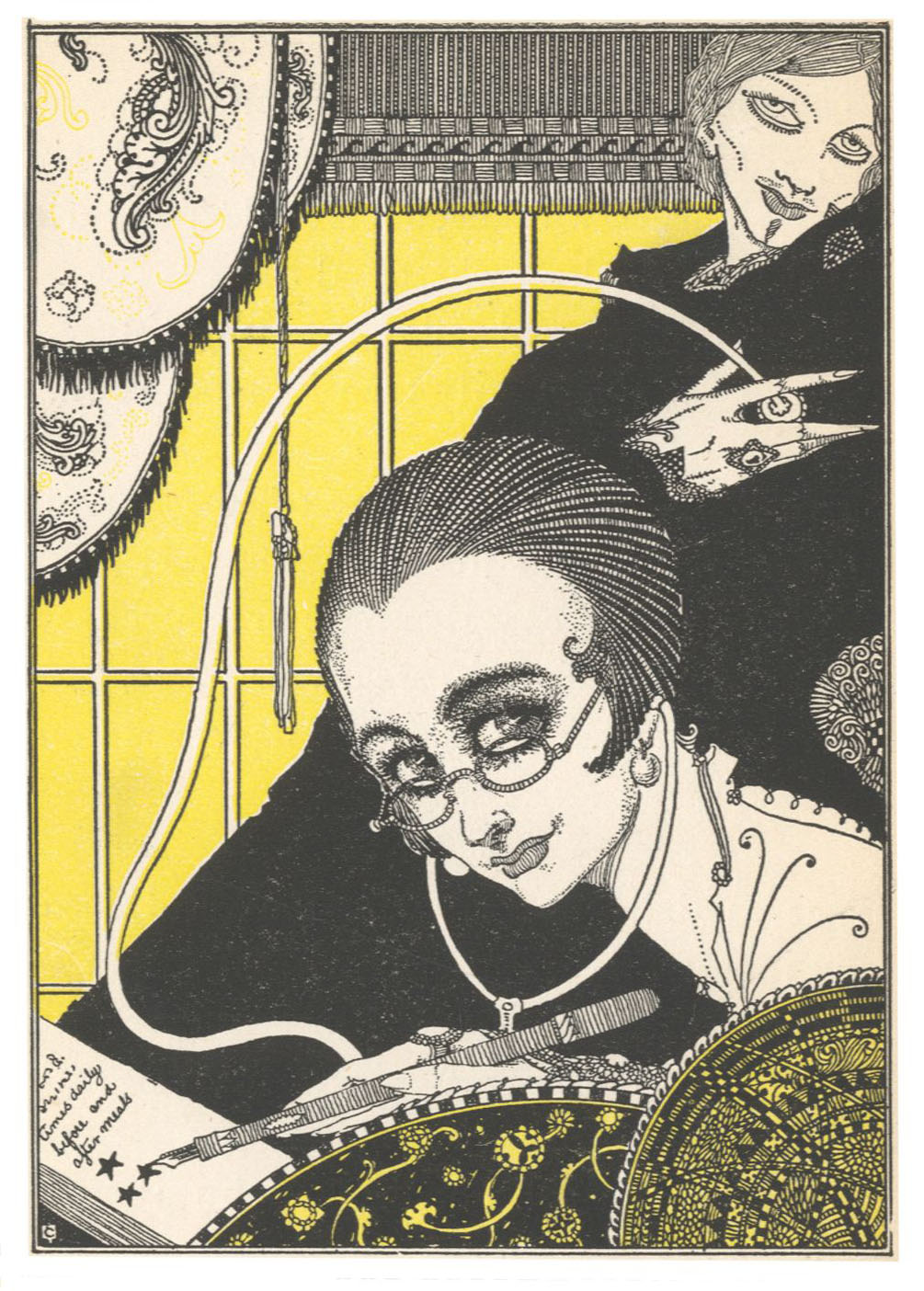
A magazine ad.
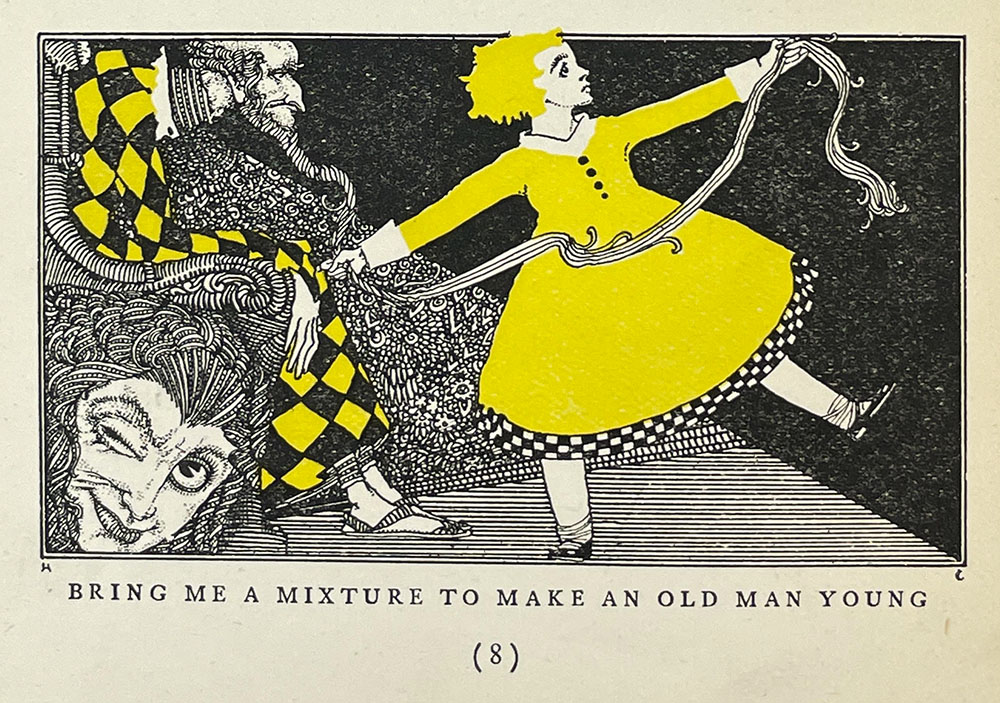
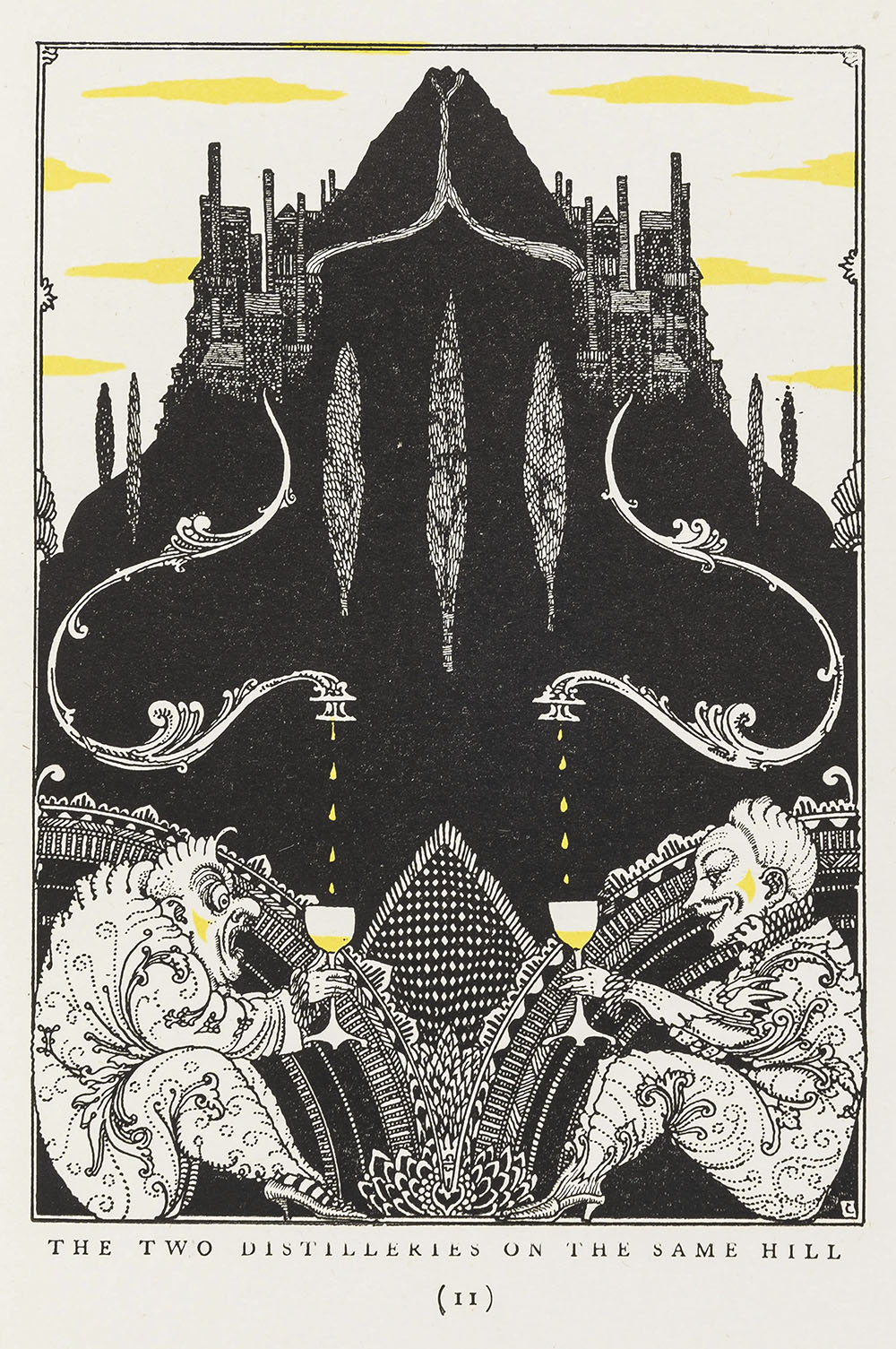
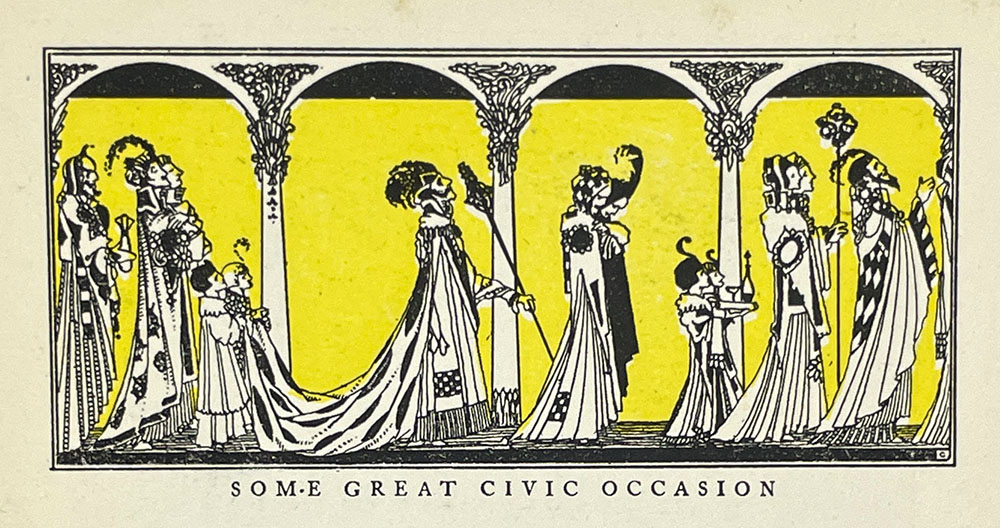
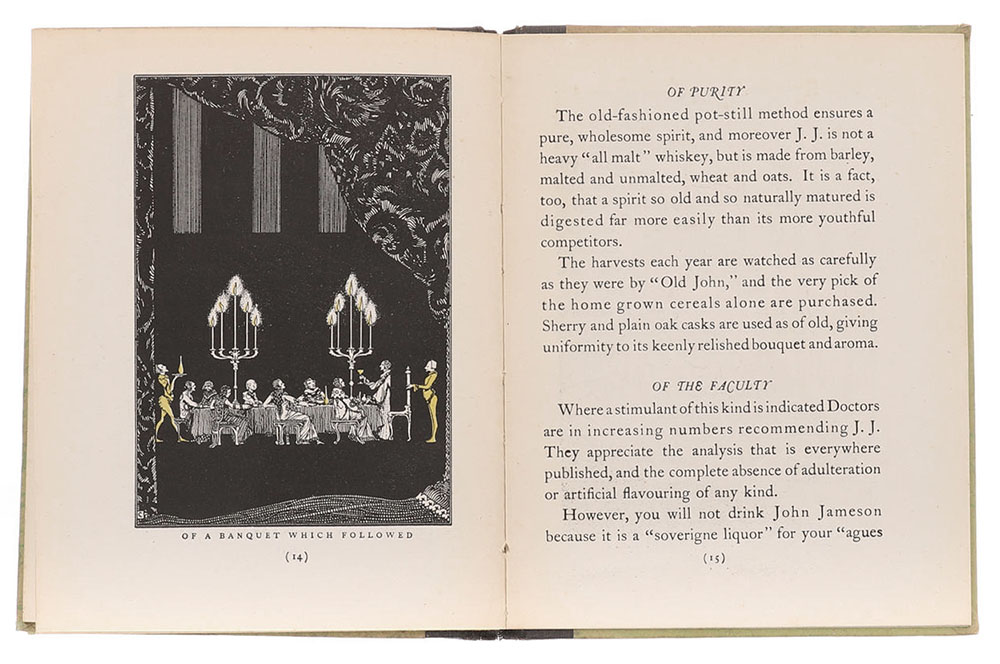
Of all the books illustrated by Harry Clarke the most scarce are a pair of slim volumes published 100 years ago by the Jameson distillery to promote their brand of Irish whiskey. The books were never widely distributed, being given away to distillery visitors. Copies of the illustrations were still hard to find in 2011 when I wrote a brief post about them. Collections of Clarke’s work seldom pay the books much attention beyond reproducing one or two drawings but by trawling the auction houses it’s now possible to accumulate most of the illustrations. With the ongoing interest in Clarke’s work I keep expecting Jameson to publish facsimile reprints but so far this doesn’t seem to have happened. The information below is taken from Harry Clarke: His Graphic Art (1983) by Nicola Gordon Bowe. A couple more illustrations from The History of a Great House may be found in Hiroshi Unno’s exceptional study, Harry Clarke – An Imaginative Genius in Illustrations and Stained-glass Arts.
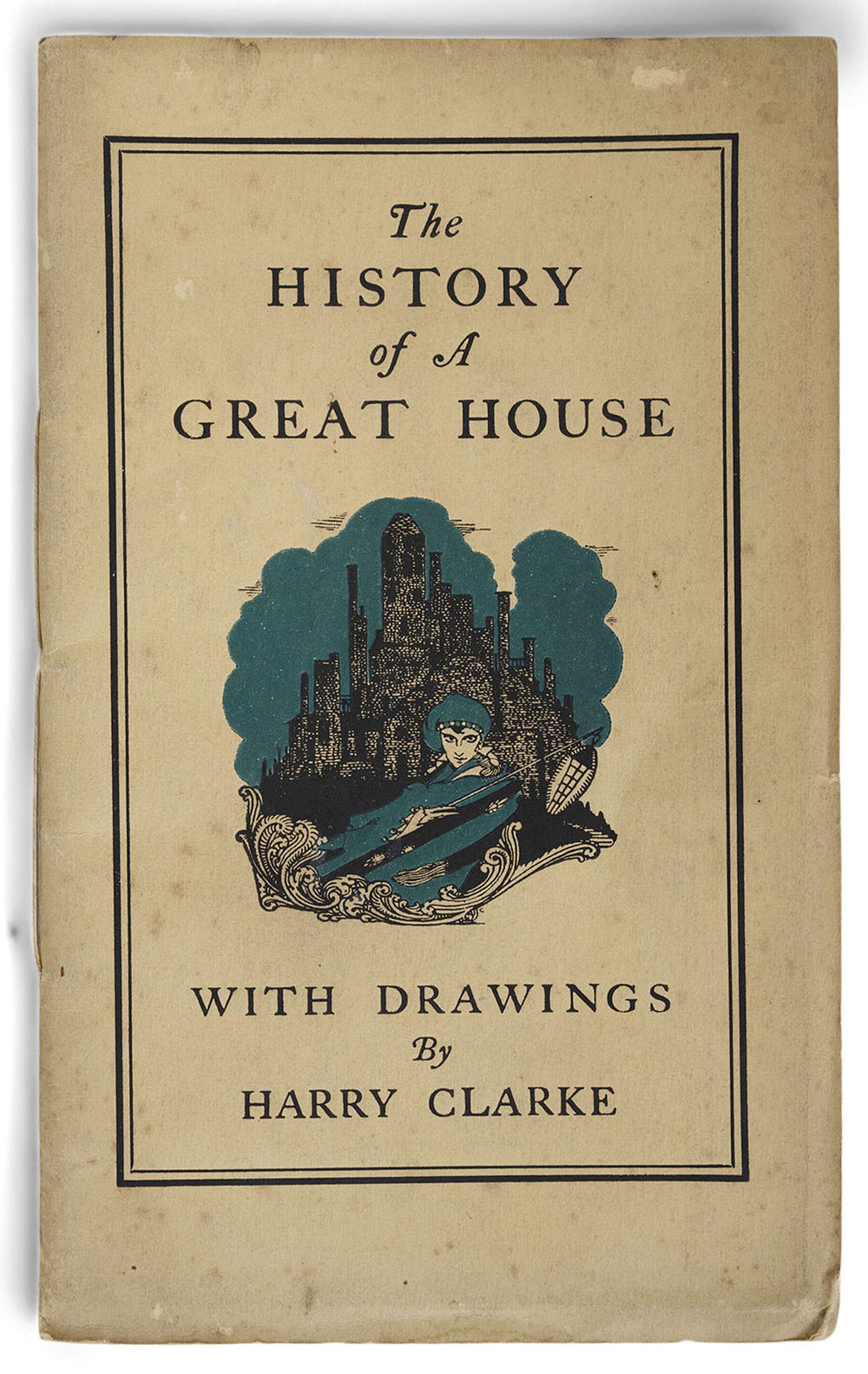
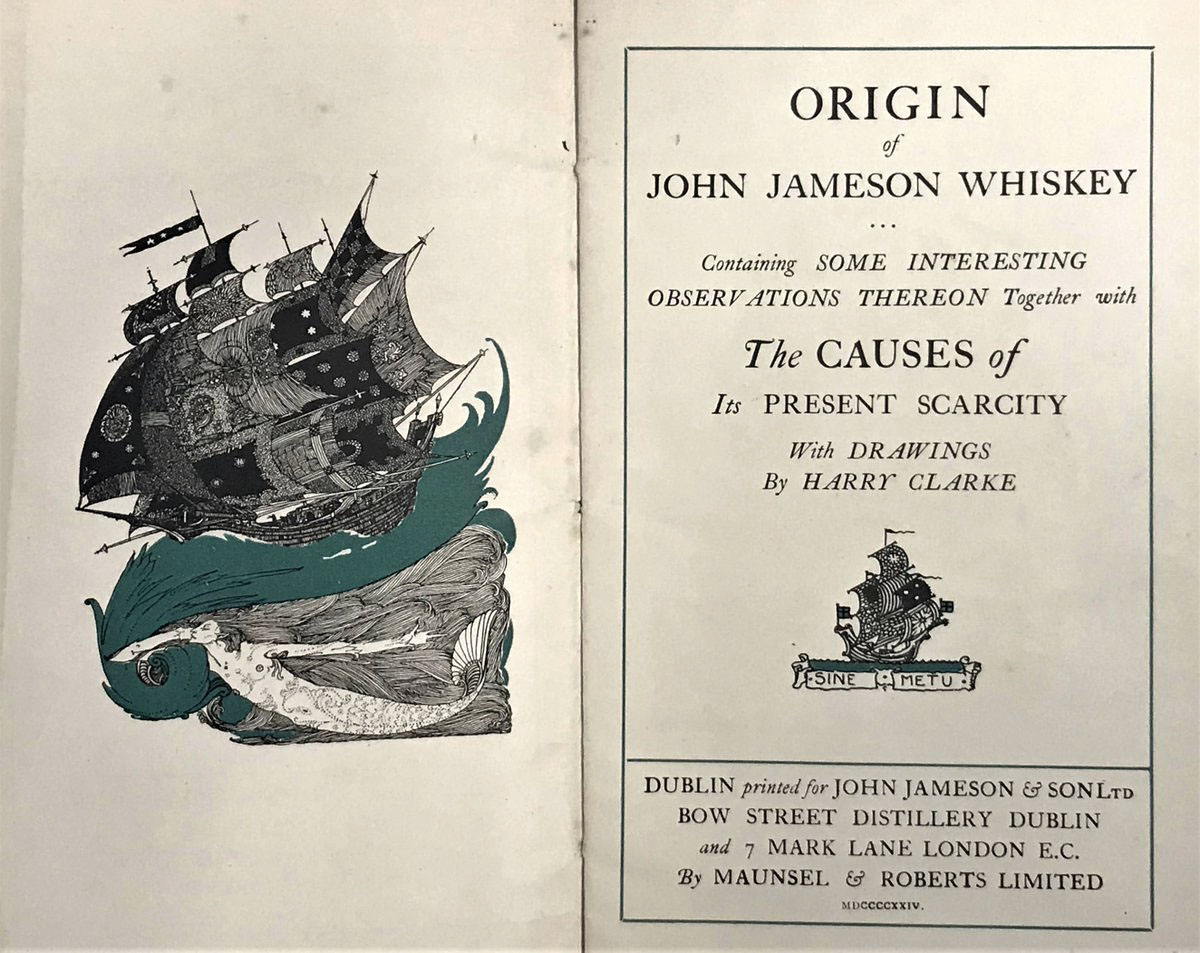
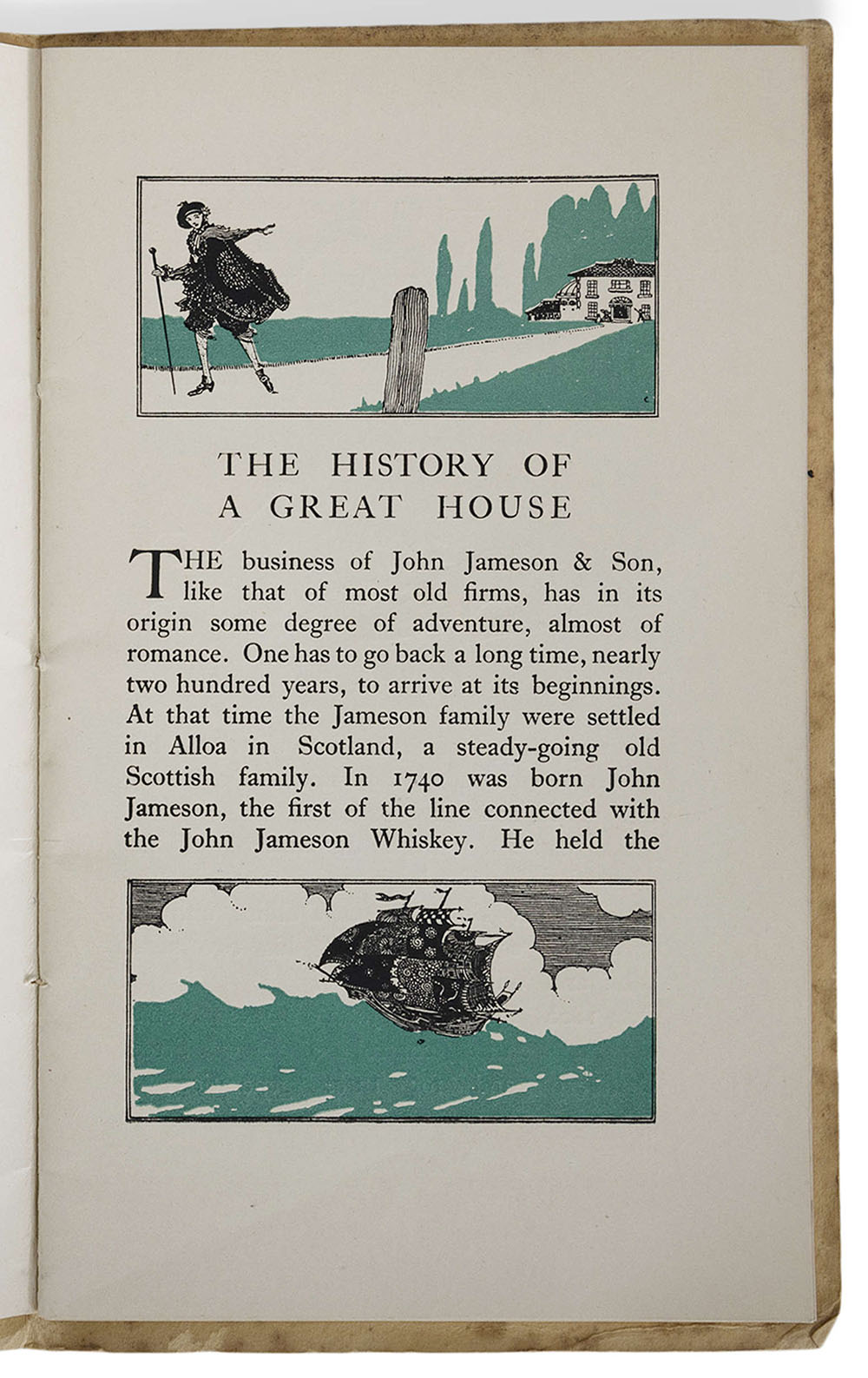
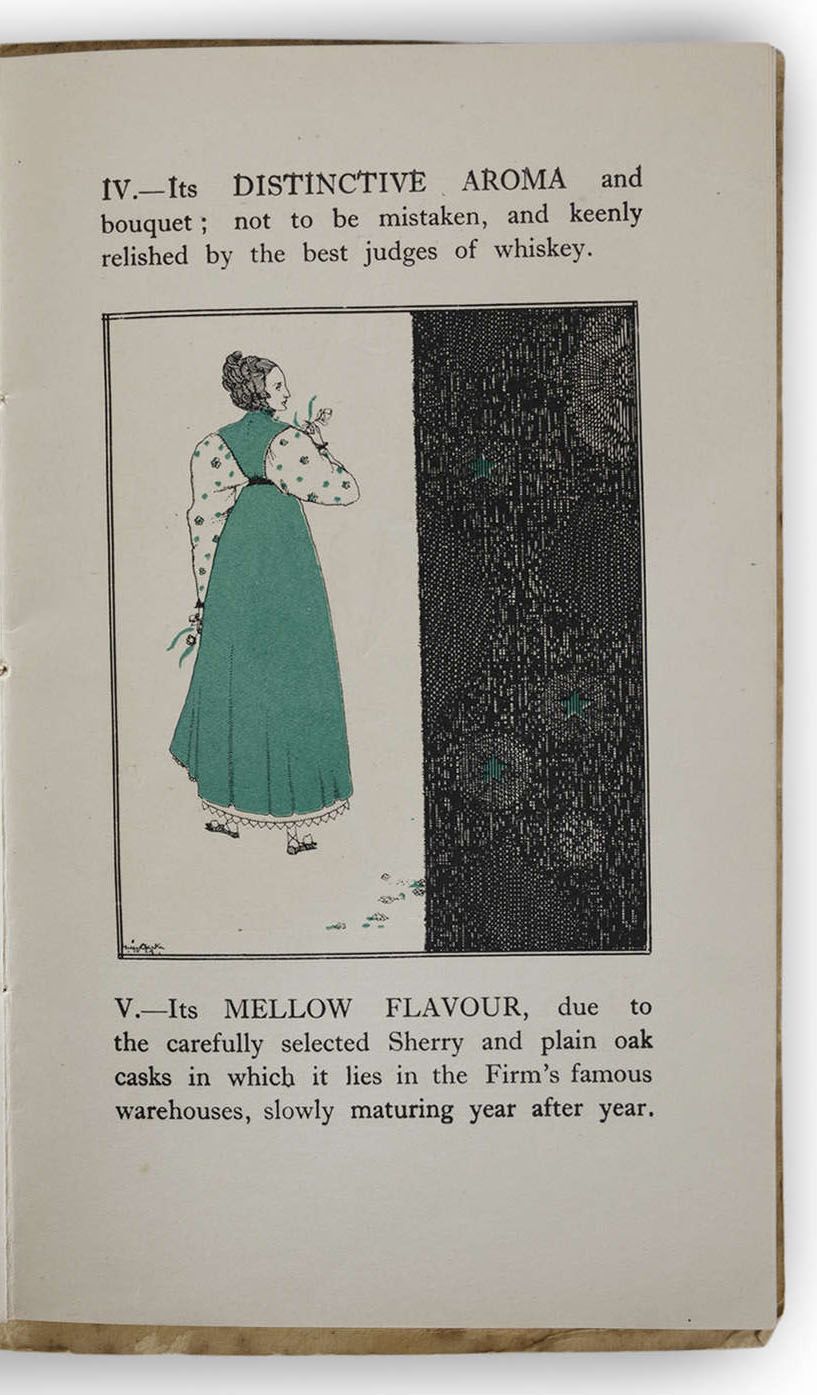
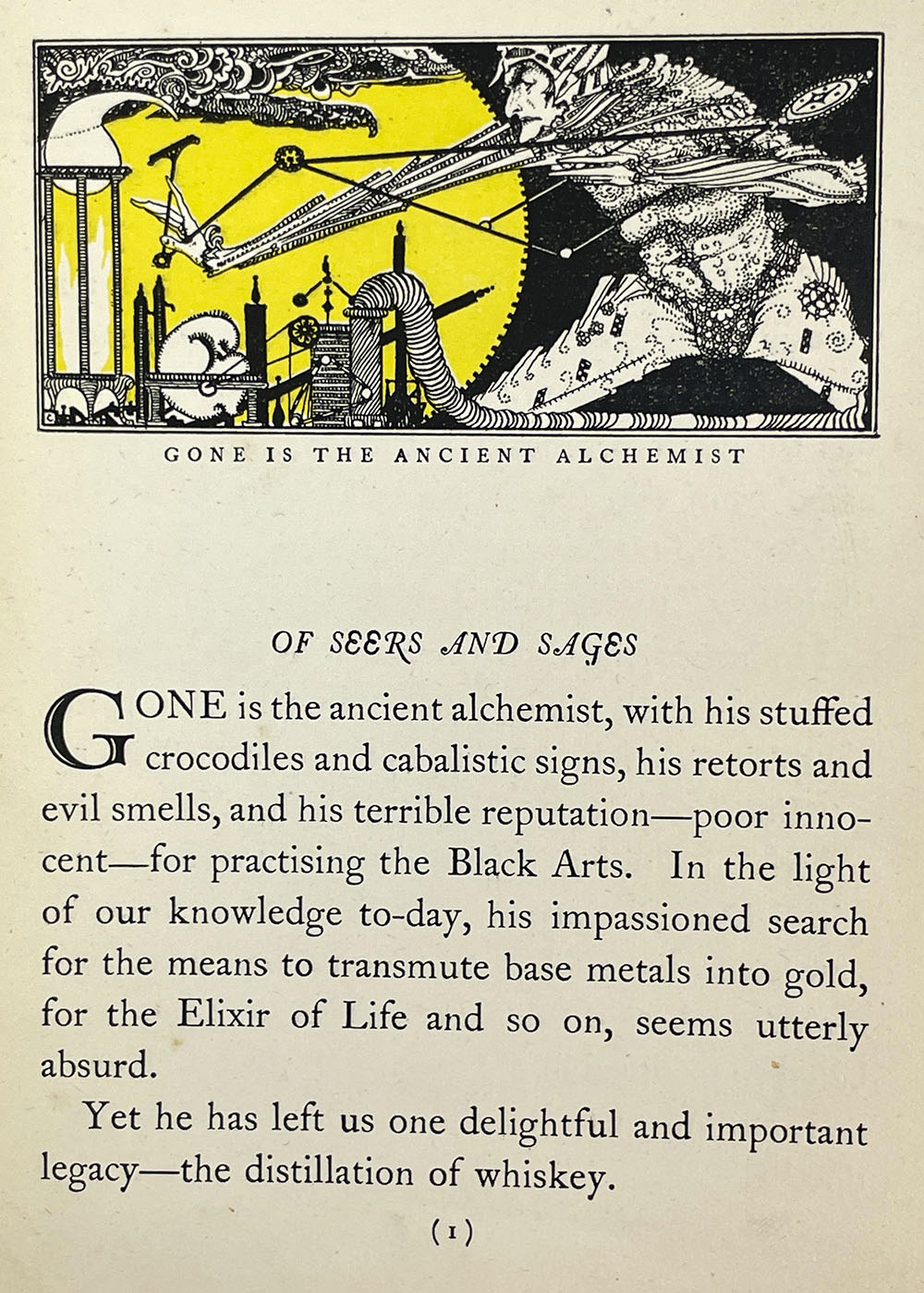
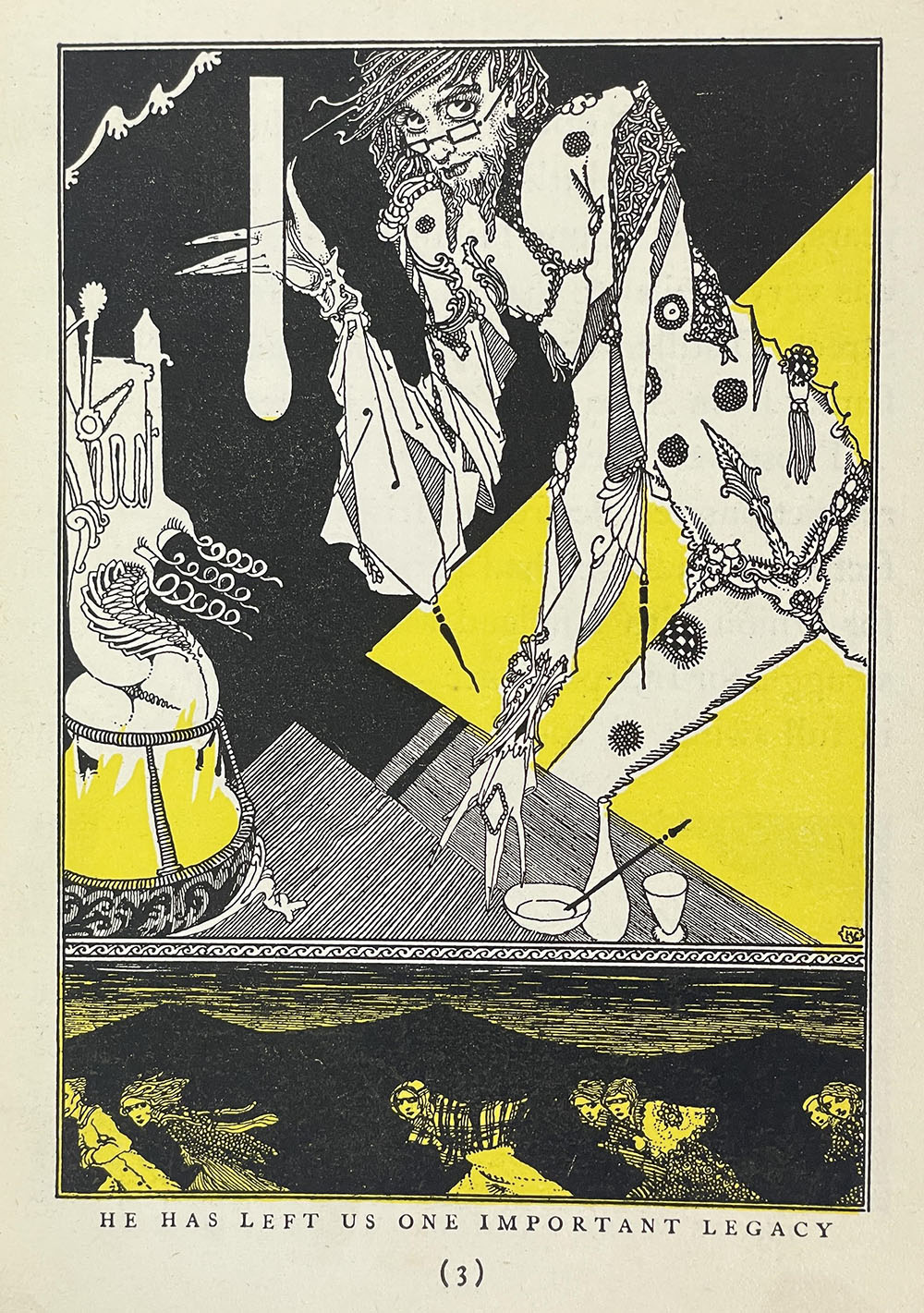
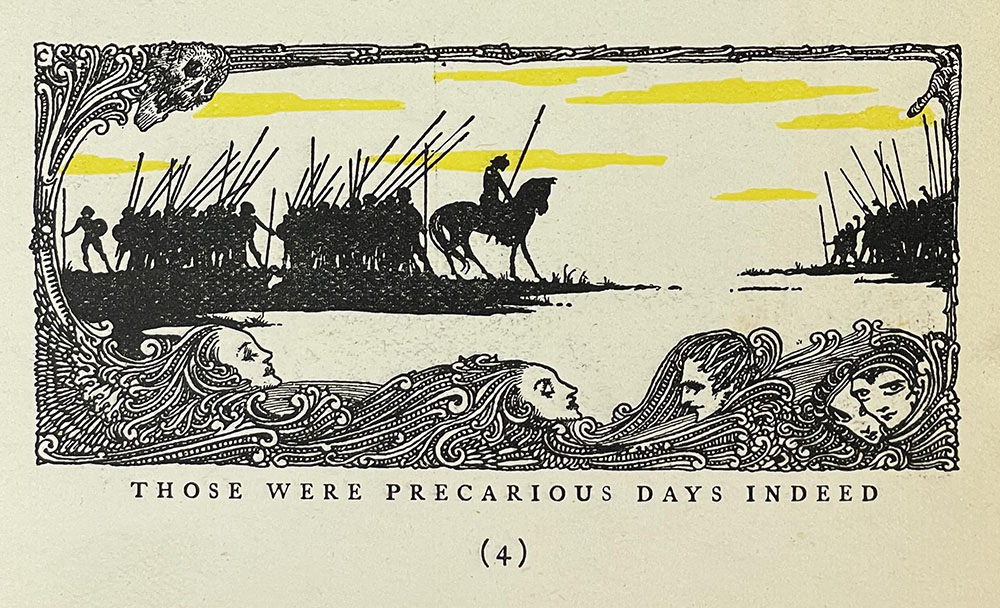
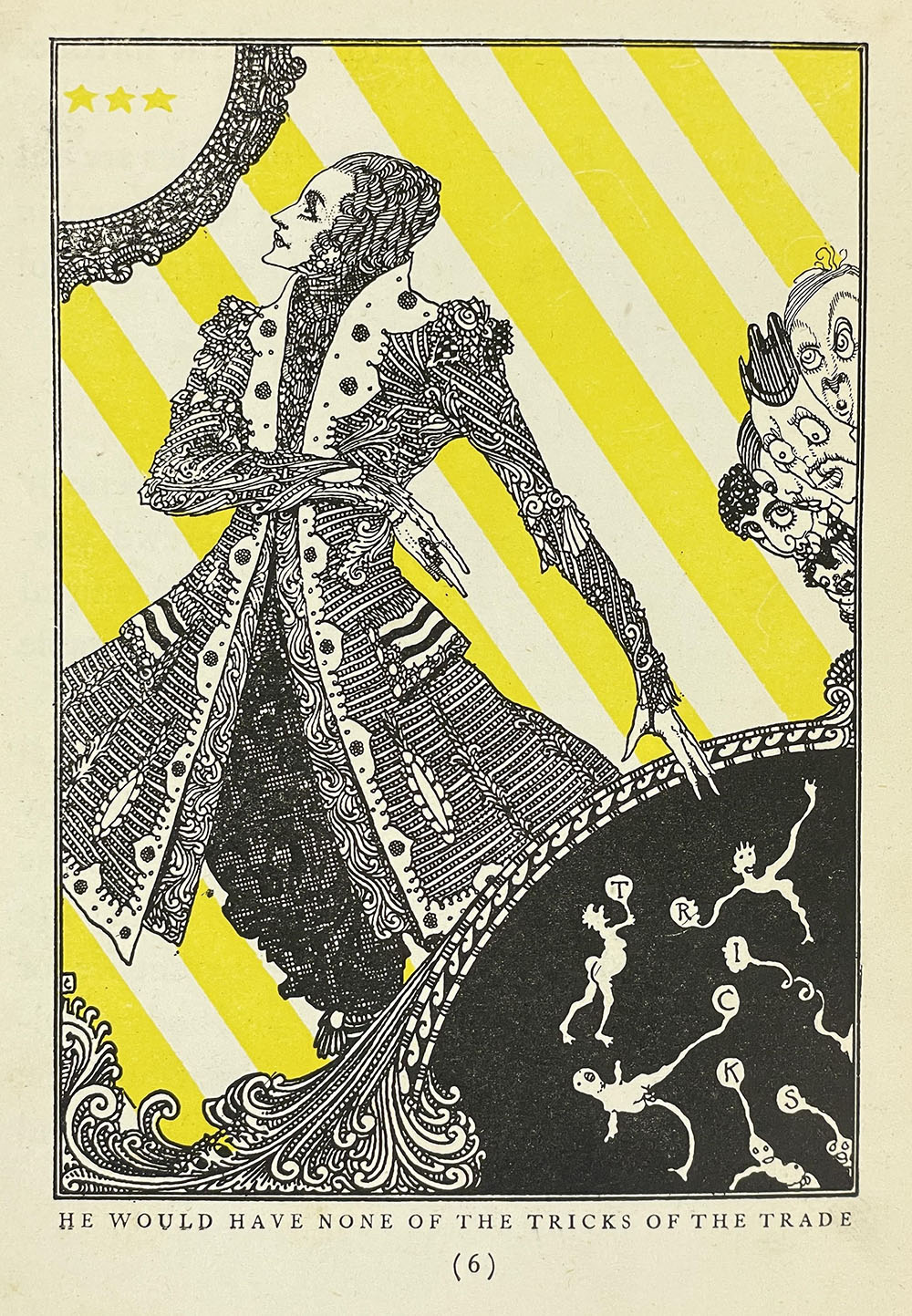
The History of a Great House — Origin of John Jameson Whiskey, containing some Interesting Observations thereon together with the Causes of Its Present Scarcity. Printed by Maunsel and Roberts Ltd, Dublin 1924 for the distillers; 24 pp, 8 x 4.75 inches, 21 black line drawings blocked in with viridian, one repeated as an endpiece, custard paper cover (8 x 5 inches), printed with additional black and viridian drawing.
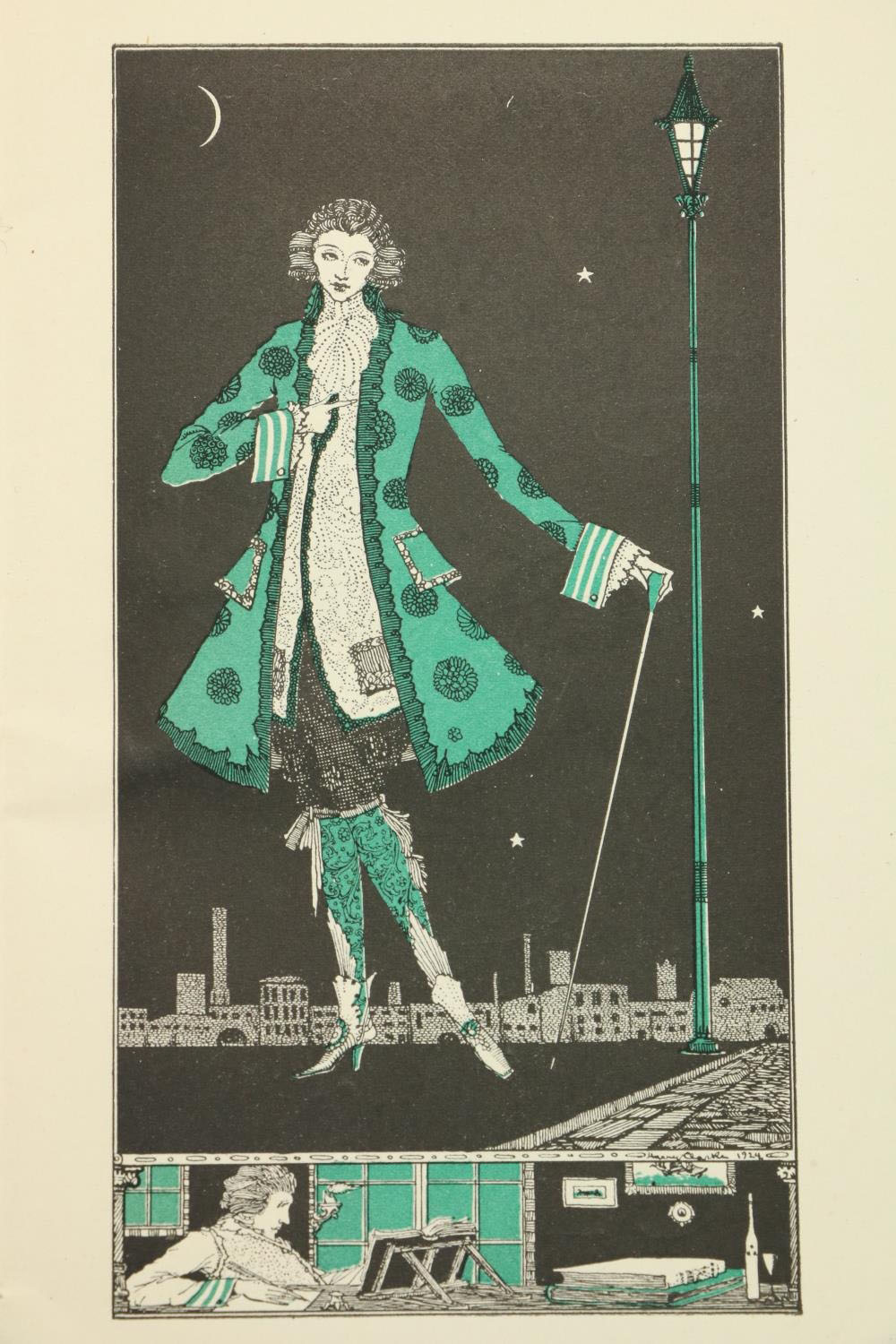
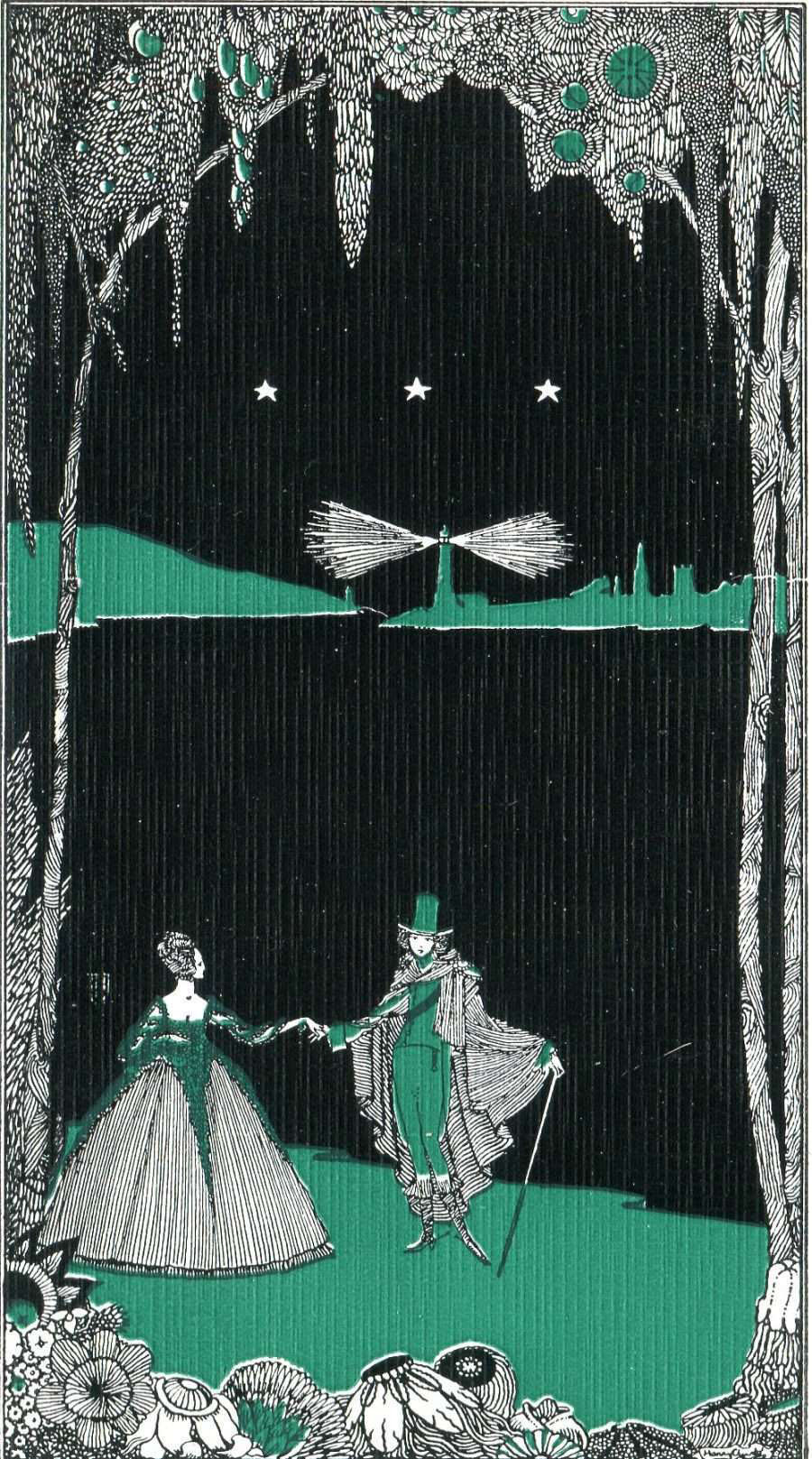
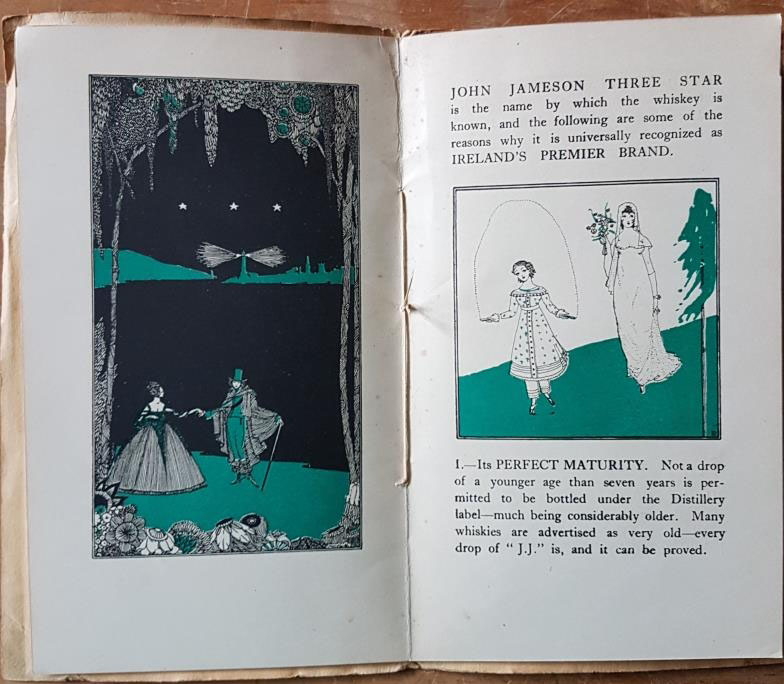
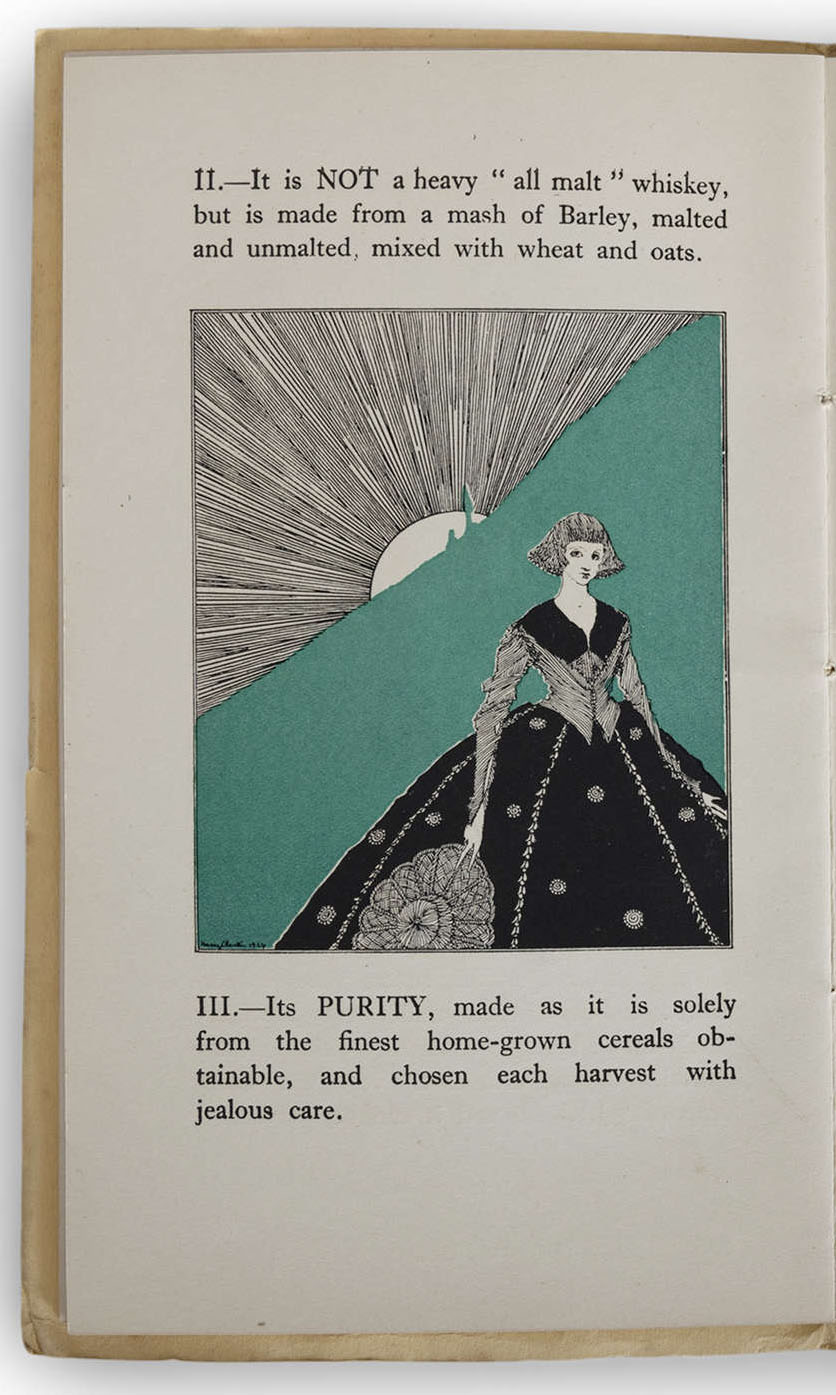
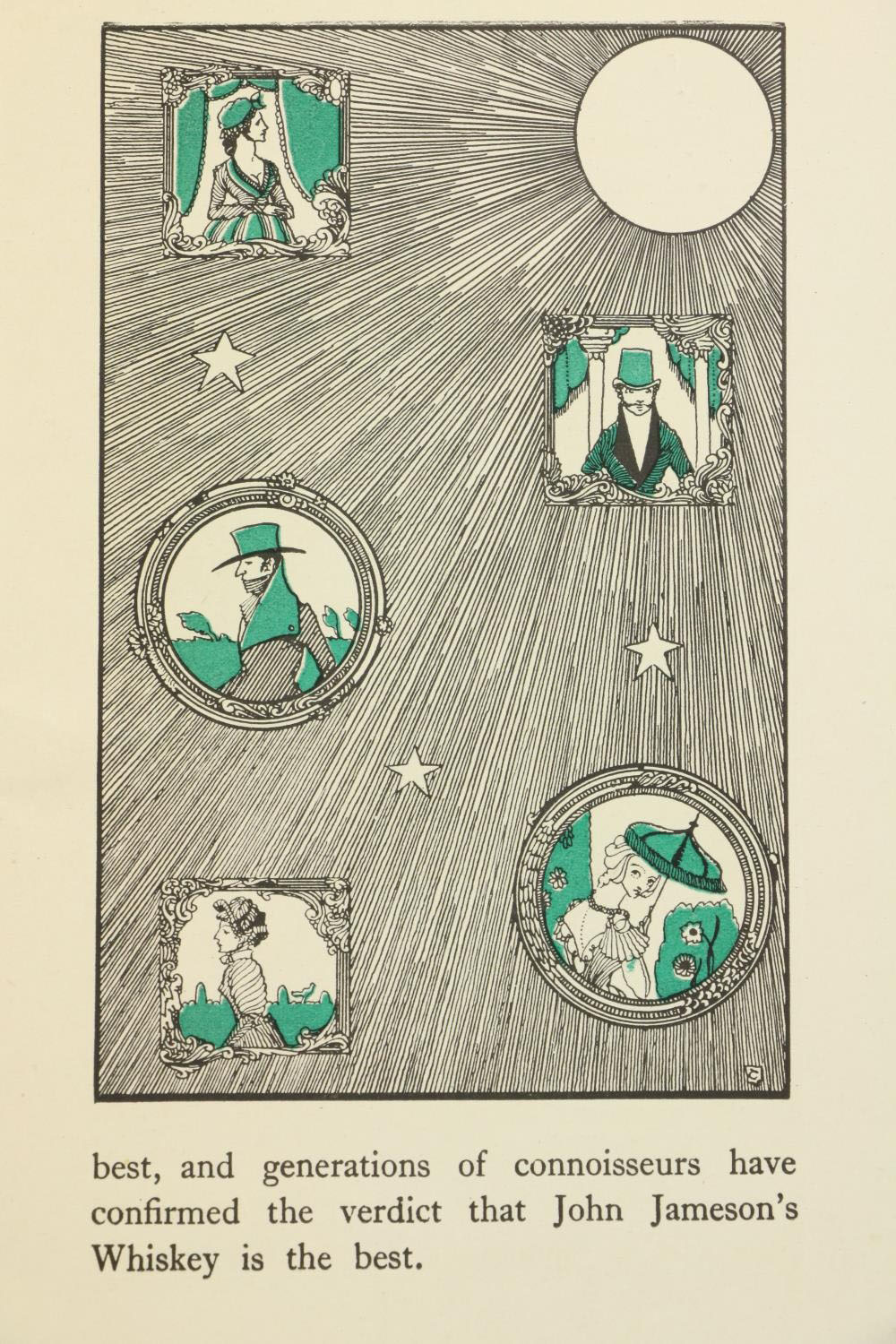
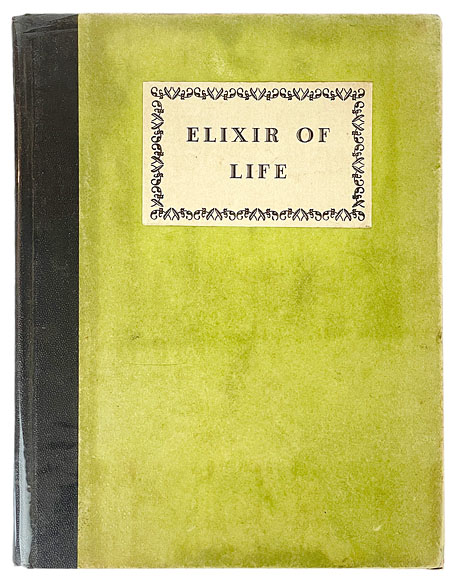
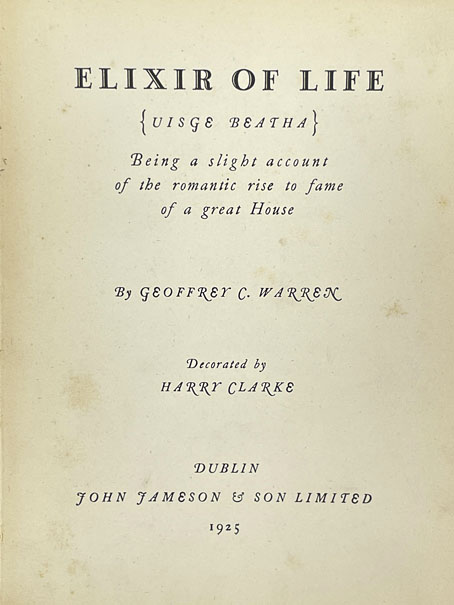
Elixir of Life (Uisge Beatha) — Being a Slight Account of the Romantic Rise to Fame of a Great House, by Geoffrey C. Warren. Printed for the distillers by Goodridge Ltd., Dublin 1925; designed by Ashley Havindon; 28 pp, 6 x 4.5 inches, bound in black cloth, bound in green paper-covered boards, title device by Ashley Havindon mounted on front cover, 9 black pen and ink drawings by Harry Clarke, blocked in with yellow.
Elsewhere on { feuilleton }
• The illustrators archive
Previously on { feuilleton }
• Fire in the Blood: Harry Clarke
• Harry Clarke’s illustrated Swinburne
• More Harry Clarke online
• Harry Clarke online
• Harry Clarke record covers
• Thomas Bodkin on Harry Clarke
• Harry Clarke: His Graphic Art
• Harry Clarke and others in The Studio
• Harry Clarke’s Fairy Tales of Charles Perrault
• Harry Clarke in colour
• The Tinderbox
• Harry Clarke and the Elixir of Life
• Cardwell Higgins versus Harry Clarke
• Modern book illustrators, 1914
• Illustrating Poe #3: Harry Clarke
• Strangest Genius: The Stained Glass of Harry Clarke
• Harry Clarke’s stained glass
• Harry Clarke’s The Year’s at the Spring
• The art of Harry Clarke, 1889–1931
These are utterly charming. I suppose the company felt no compunctions about associating itself with a “decadent” style; were Oscar and Aubrey but quaint memories by 1925?
I don’t think people were much concerned with the 1890s by 1924, writers like James Joyce were more of a problem in Ireland where his novels were banned. And Harry Clarke was a popular Irish artist by this time, with his illustrations being published in Britain and America. People stopped complaining about Beardsley after his untimely death. It took a few more years for Oscar Wilde’s reputation to be fully restored but it was on its way by the 1920s.