

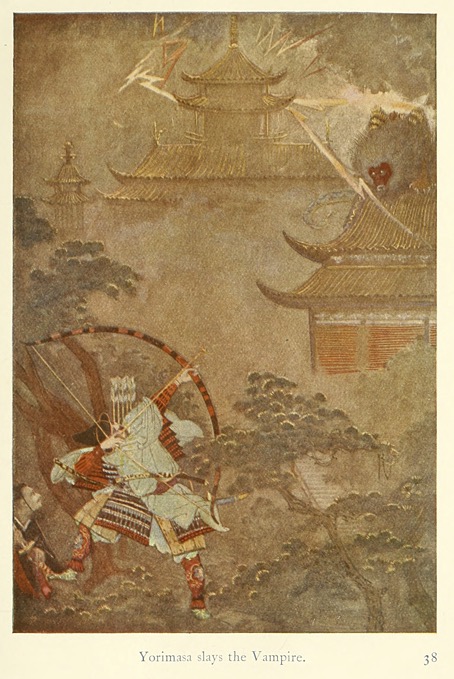
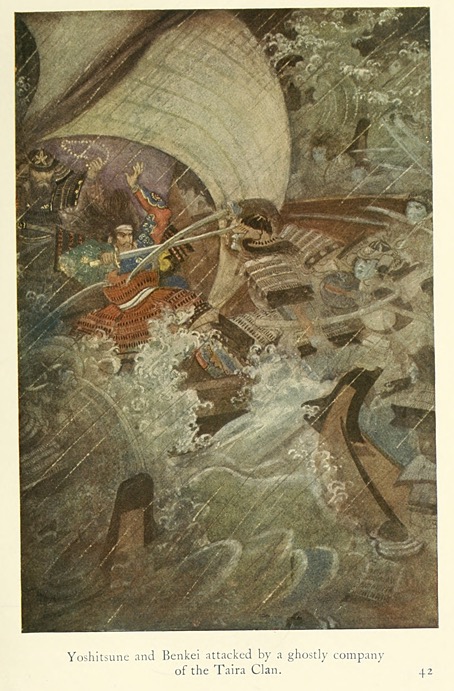
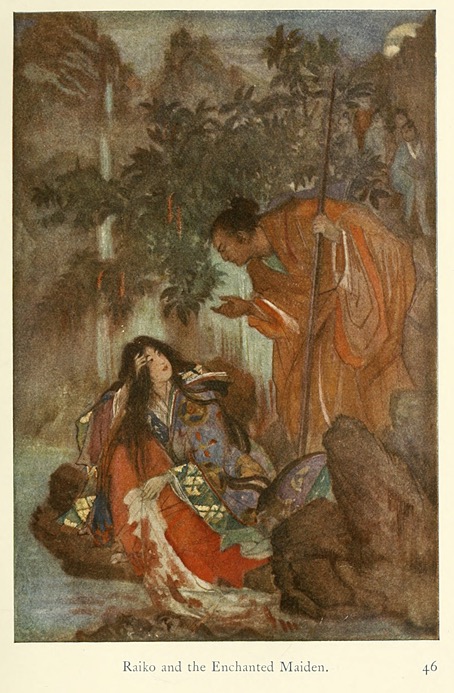
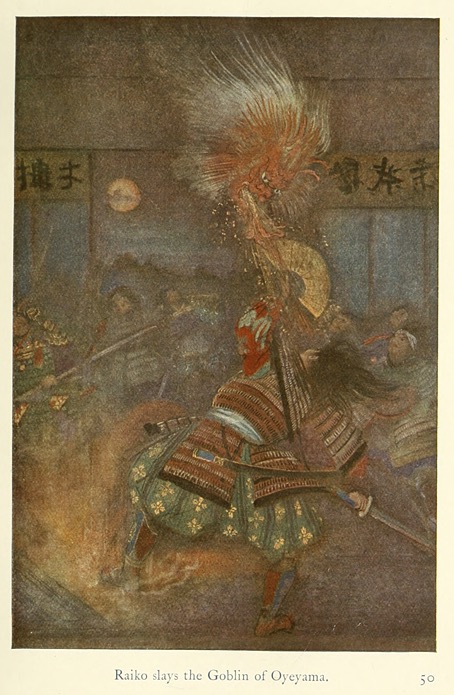
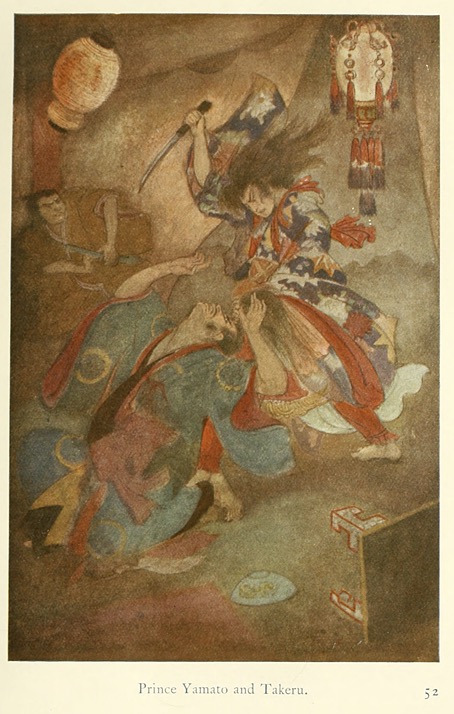
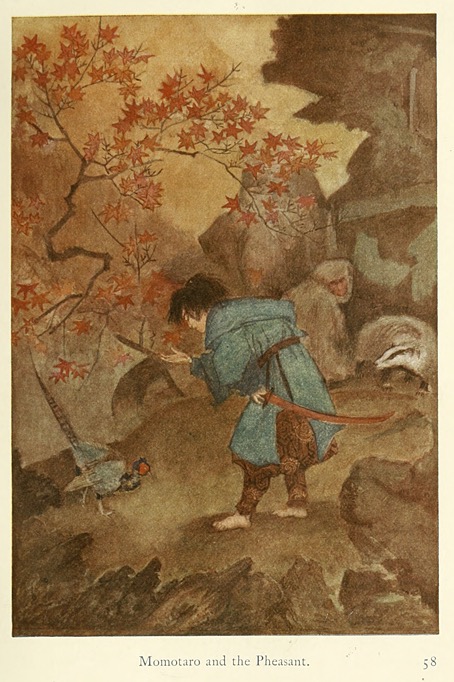
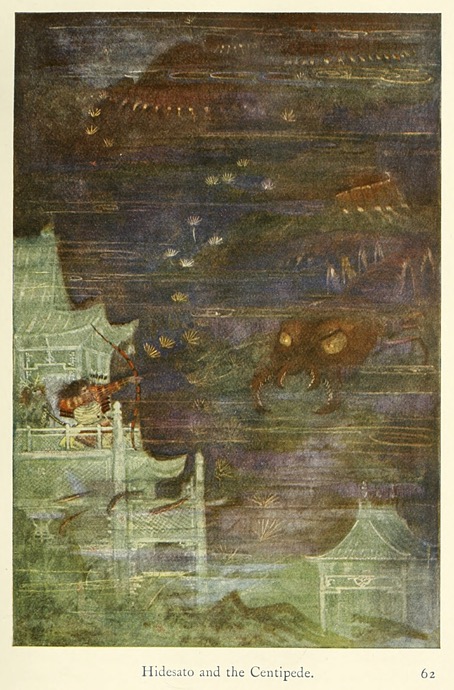
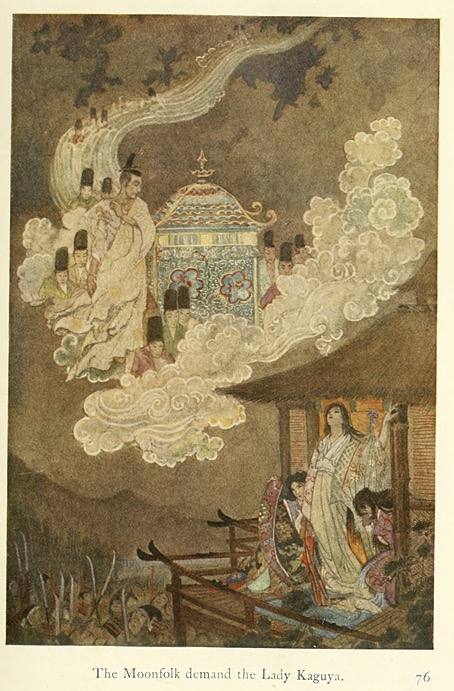
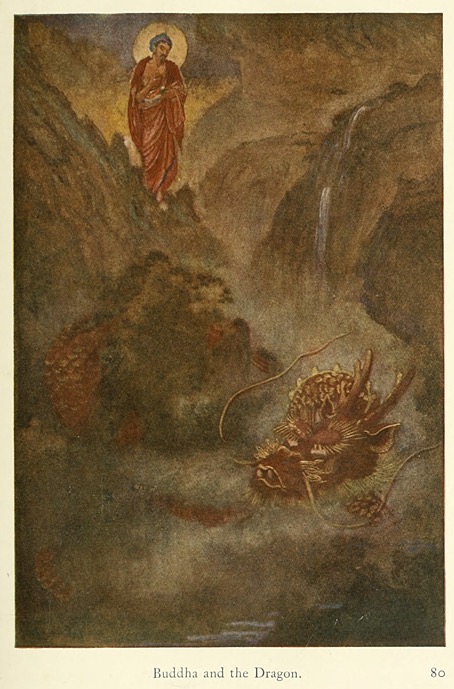
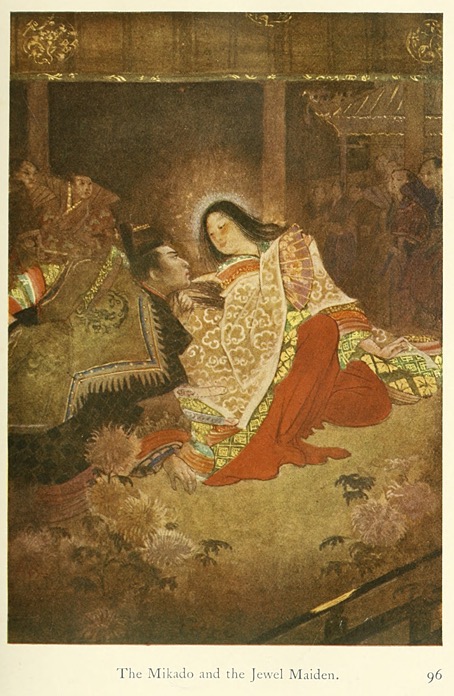
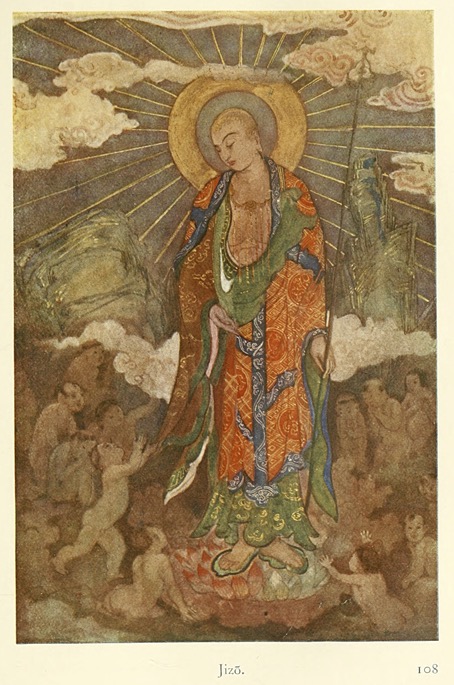
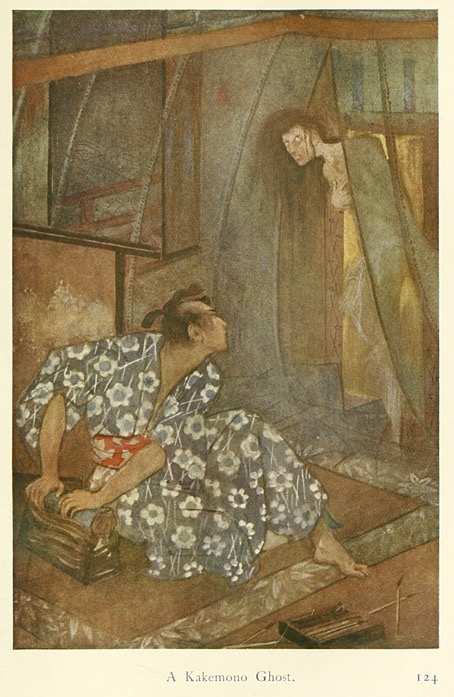
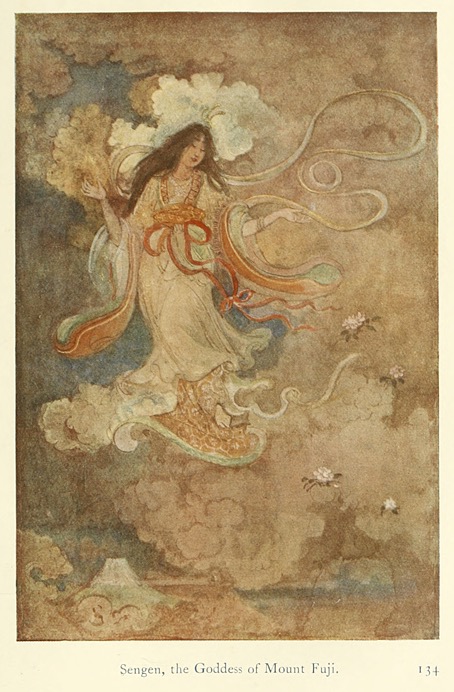
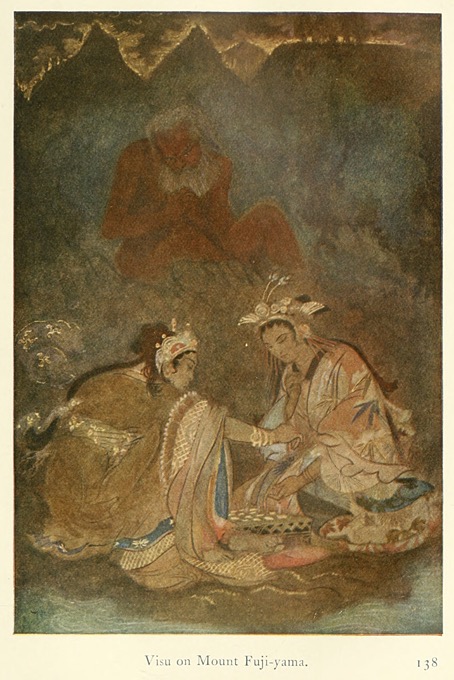
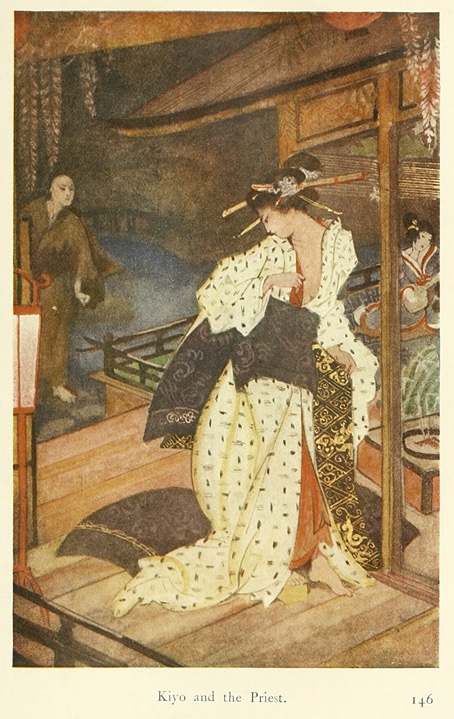
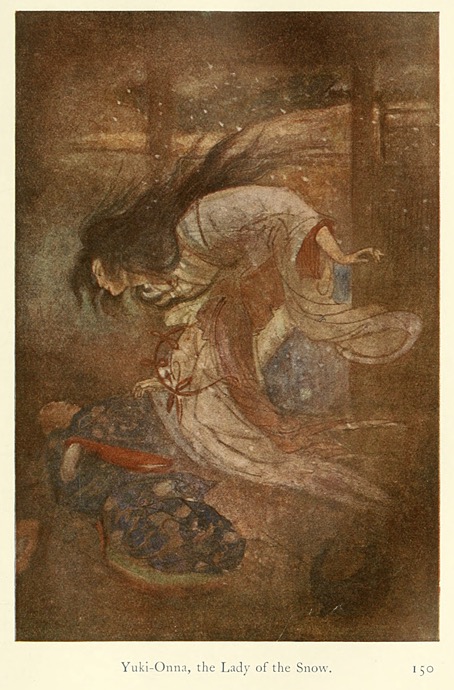
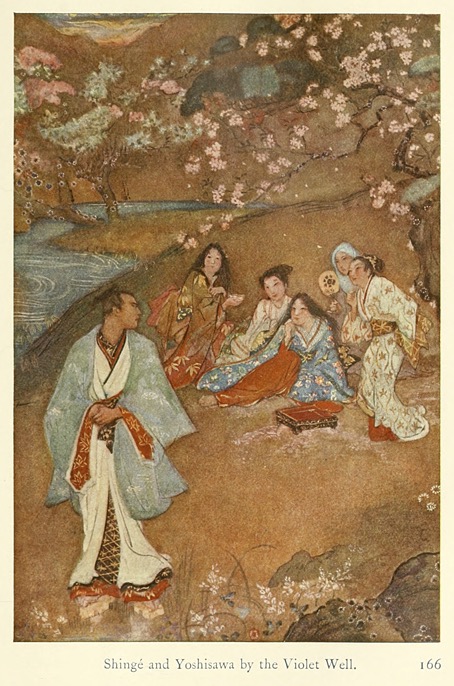
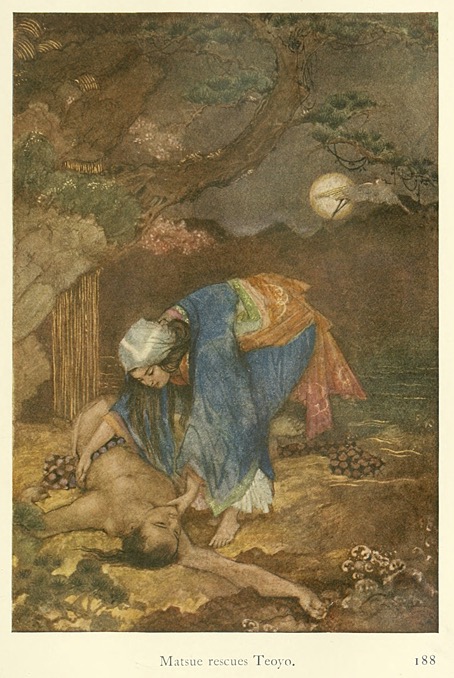
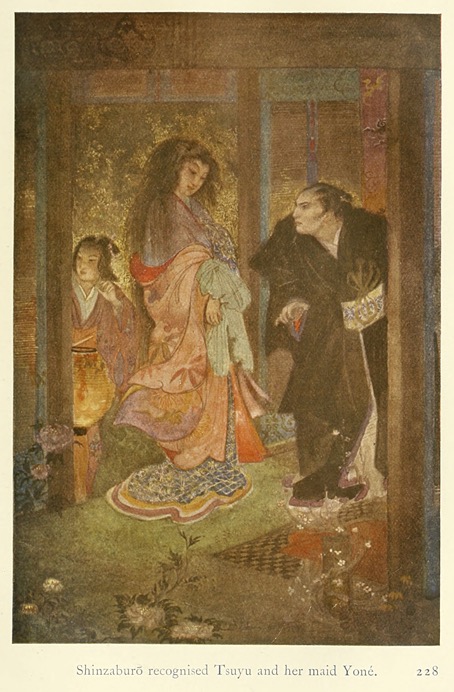
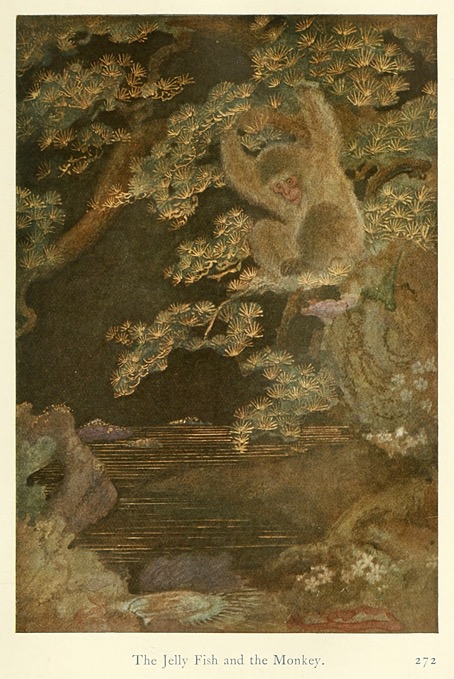
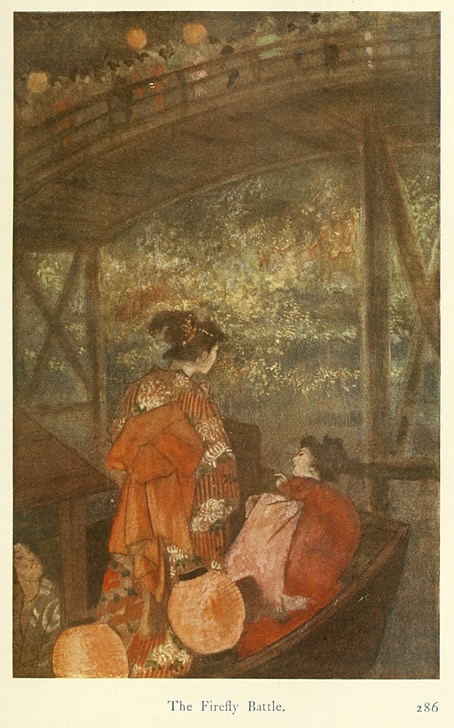
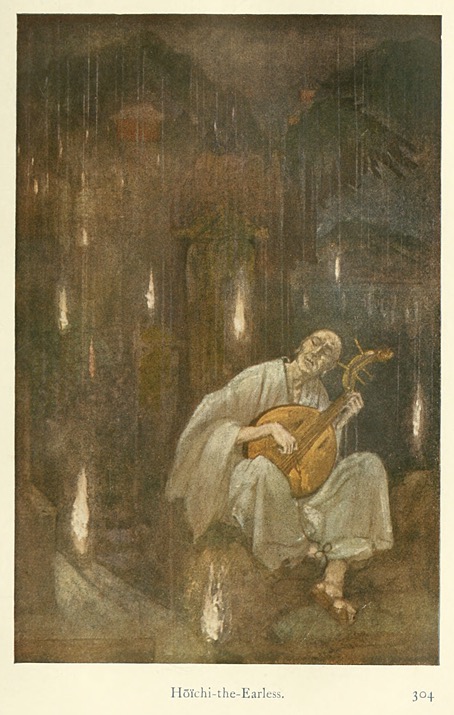
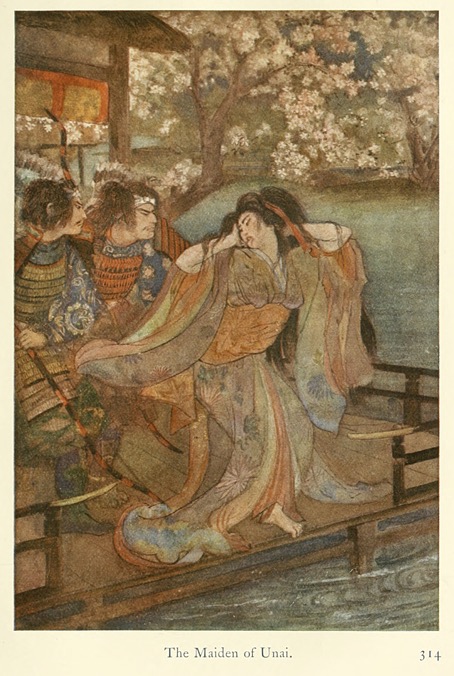
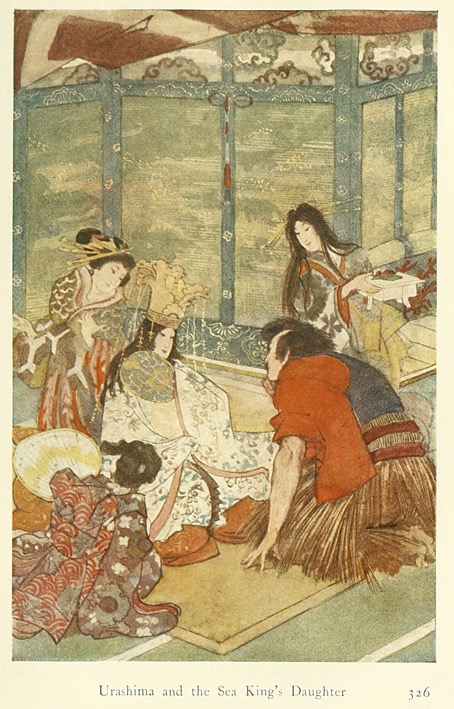
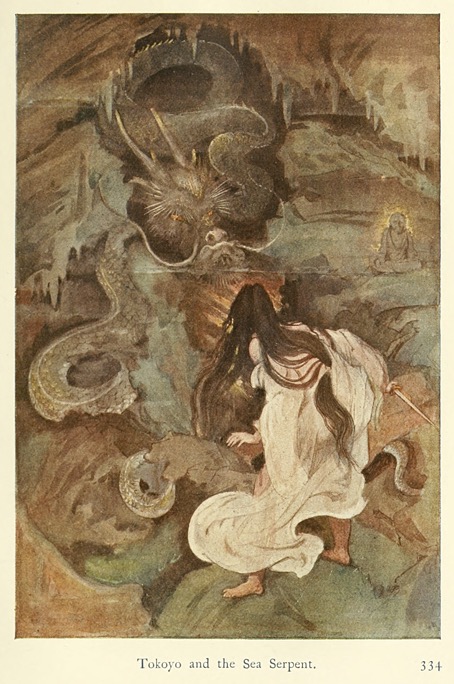
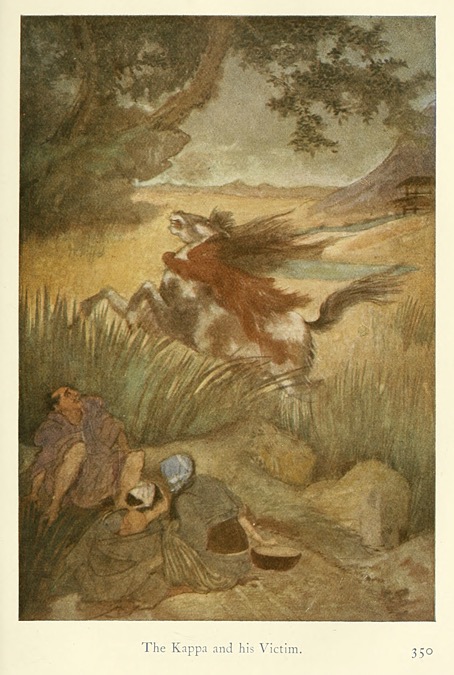
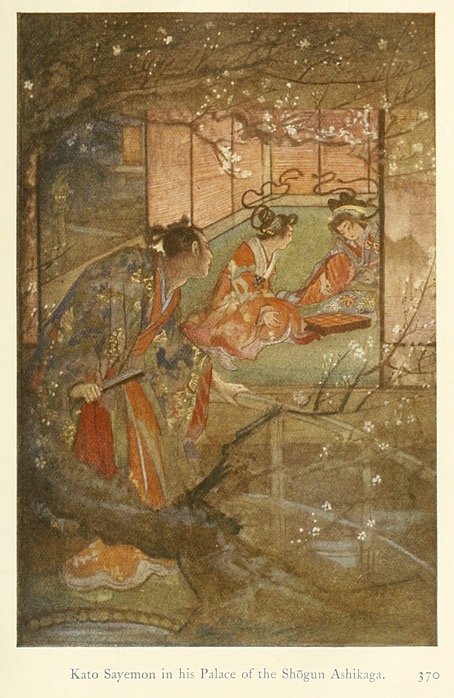
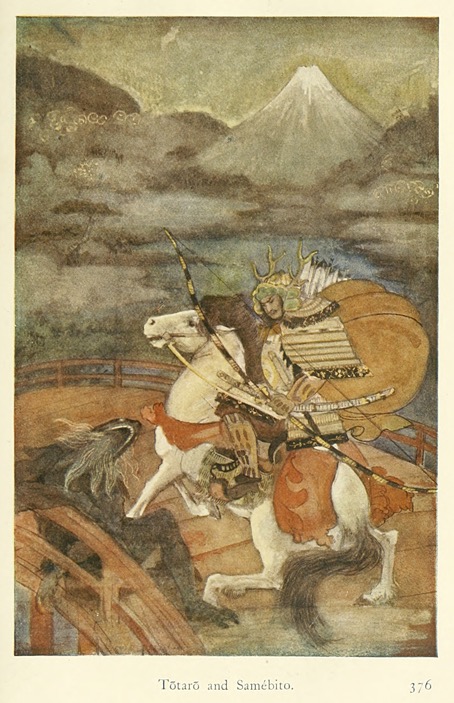
I don’t think I’ve encountered anything by British artist Evelyn Paul (1883–1963) before, but she illustrated a number of books before and after Myths & Legends of Japan, a guide to Japanese folklore which was published in 1912. The book by F. Hadland Davis differs from similar volumes which tend to be simple recountings of folk tales with accompanying illustrations. Davis recounts specific stories but his volume is a more thorough guide to all forms of Japanese folk culture, with chapters on religious tradition and superstition, as well as separate chapters devoted to trees, thunderstorms, bells, mirrors, tea, Mount Fuji, foxes and supernatural beings. The book as a whole runs to over 500 pages, ending with a number of contextual appendices. Davis also lists his sources (Lafcadio Hearn, for one) which you don’t usually find in books of this type. Two of the illustrations show characters from Kwaidan, Hearn’s ghost-story collection: the sinister Lady of the Snow, and the hapless musician Hoichi the Earless.

Evelyn Paul’s illustrations strive to balance the traditional elements of ukiyo-e print-making with the watercolour style that was a common feature of illustrated books at this time. The combination doesn’t always work as well as it might—the nebulosity of watercolour painting runs counter to the definition and flatness of woodcut prints—but her illustrations still look more Japanese than European. To be fair to the artist, colour printing using photo separations was still in its infancy in 1912, and Paul’s paintings seem muddier in reproduction than they might have been in their original state. Davis’s book was published by Harrap, Harry Clarke’s London publisher, and you find similar deficiences in the reproduction of Clarke’s paintings.


Elsewhere on { feuilleton }
• The illustrator’s archive
Previously on { feuilleton }
• Fifteen ghosts and a demon
• Hyakumonogatari Kaidankai
• Yoshitoshi’s ghosts
• Miwa Yanagi’s fairy tales
• Kwaidan
• The art of Bertha Lum, 1869–1954
Such stunning illustrations deserve more attention, and I thank you for the introduction to this artist and the 1912 book. If the colors were brighter, these could definitely be even more exquisite.
Dulac’s work, as well, suffered from poor reproduction (Rackham’s forceful lines which subordinate his washes overcame this). There are some giclées of his originals which really show up the early reproductions.
A lot of artists of the time, though, seem to have tailored their work to what they knew or thought could be transmitted through the colour printing of the time, not always in a way that benefitted the work.
These, though, are really nice. Cheers