Metzengerstein

satty.jpg

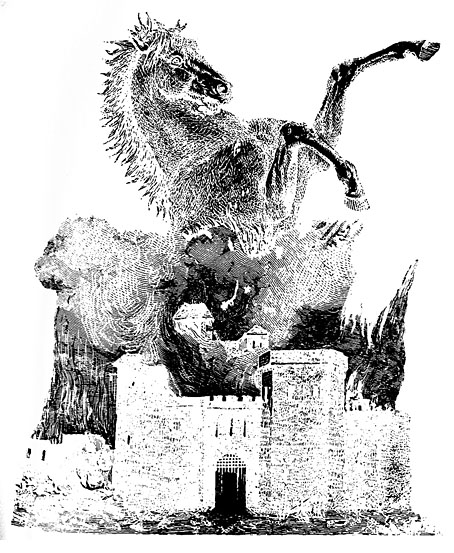
Metzengerstein by Wilfried Sätty.

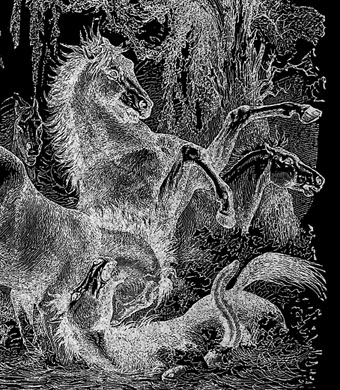
One of the horses in yesterday’s post seemed familiar until I realised it had been used by Wilfried Sätty for his final Metzengerstein illustration in The Illustrated Edgar Allan Poe (1976). This has been happening a lot since I started delving into the book scans at the Internet Archive, Sätty’s collage sources leaping abruptly from old engravings. The horse is a good example of Sätty’s evolved approach to collage which often reversed the printing of assembled artwork, or used a printing press (or PMT process) to duplicate and mirror his collage elements.

Not all Poe illustrators bother with this Gothic pastiche, and those that do don’t always provide an effective rendering of the climax when the clouds of smoke above a smouldering castle assume the form of a colossal horse. Byam Shaw’s illustration is typical, with the horse standing inertly above the flames. Sätty’s picture only occupies half a page but is much more successful, as are many of the other illustrations in a volume that remains one of the very best Poe collections, and the finest of Sätty’s books.
horses3.jpg

Previously on { feuilleton }
The original Gandharva
The Occult Explosion
Wilfried Sätty album covers
Nature Boy: Jesper Ryom and Wilfried Sätty
Wilfried Sätty: Artist of the occult
Illustrating Poe #4: Wilfried Sätty
Gandharva by Beaver & Krause

Eels and horses

horses2.jpg

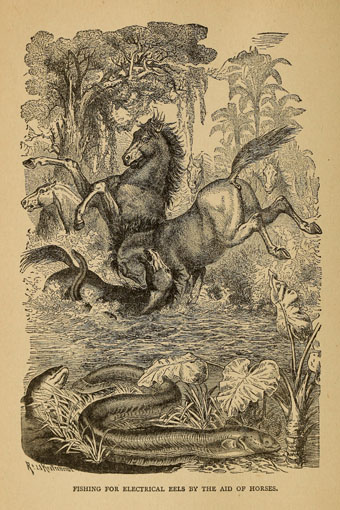
My internet connection has been down all evening so this interim post arrives via the miracle of mobile-phone dialup. The picture is from JW Buel’s catalogue of animal mayhem, Sea and Land (1887), and shows the alleged practice of fishing for electric eels with horses. If this seems unlikely it’s one of the more plausible scenarios in Buel’s illustrated history of “the wonderful and curious things of nature existing before and since the Deluge”.

Previously on { feuilleton }
Sea and Land: An Illustrated History

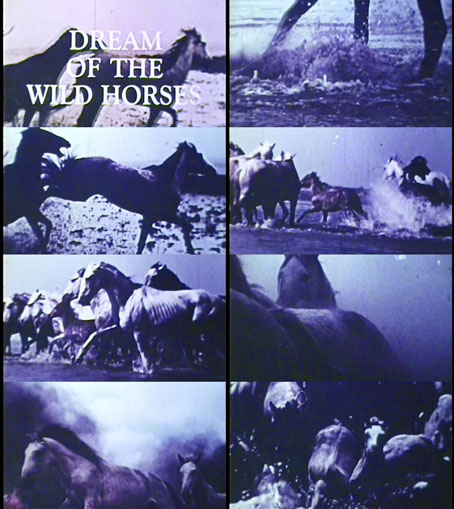
Dream of the Wild Horses, a film by Denys Colomb de Daunant

horses.jpg

Denys Colomb de Daunant wrote and acted in Albert Lamorisse’s boy-meets-horse film, White Mane, in 1953. Lamorisse’s feature concerns the wild horses that roam the Camargue in France, and the same horses are the subject of Dream of the Wild Horses (1960), a kind of oneiric sequel to White Mane. There’s no narrative, only a succession of slow-motion shots of horses fighting, running, and—in a sequence you hope wasn’t set up for the cameras—stampeding through a wall of flames. Of note for me is the score by Jacques Lasry which is performed on the Cristal Baschet, a unique instrument of glass and metal developed by François and Bernard Baschet in the 1950s. (See this post.) Films such as this depend more than most on their musical accompaniment, and the eerie, rumbling timbres of Lasry’s music help sustain the dreamlike qualities of the piece.

Elaine Hanelock’s Hollywood stars

hanelock04.jpg

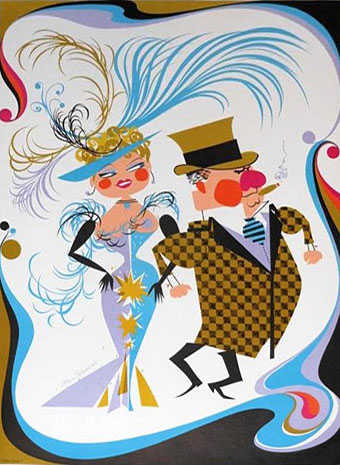
The essay I wrote about psychedelic art for Communication Arts earlier this year had a word limit so there was little mention of the way the psychedelic style was swiftly co-opted by advertising and commercial art as a means of reaching a youthful audience. This is a really a subject in itself, the way in which an aesthetic that was countercultural in 1965 was becoming mainstream by 1968, and was still rippling through the world of graphic design in the early 1970s.

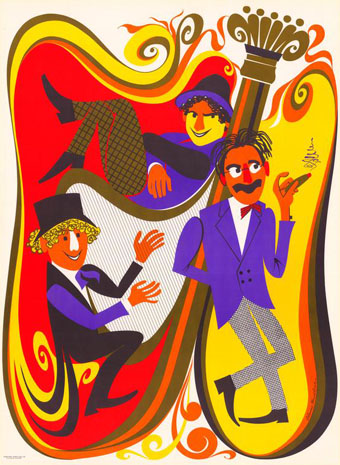
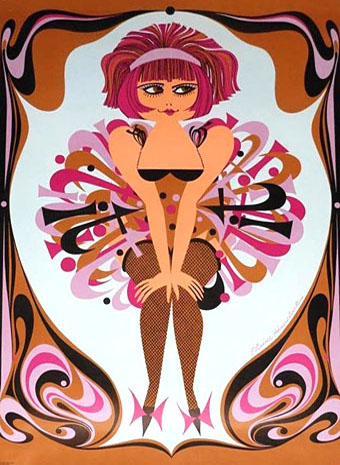
Elaine Hanelock’s posters of Hollywood stars of the 1920s and 30s were published by Royal Screen Craft Inc, Los Angeles, in 1968, and combine two trends: psychedelic art and the nostalgia for old Hollywood that emerged in the mid-60s. There are ten posters in the set: The Marx Brothers, Clara Bow (the “It Girl”), Mae West & WC Fields, Laurel & Hardy, John Barrymore, Charlie Chaplin, Clark Gable, Jean Harlow, Will Rogers, and Wallace Beery & Marie Dressler. Nobody seems to know anything about Elaine Hanelock’s career elsewhere but her posters continue to find an audience among collectors.

hanelock07.jpg

hanelock01.jpg

Continue reading “Elaine Hanelock’s Hollywood stars”

The nocturnes of William Degouve de Nuncques

nuncques04.jpg

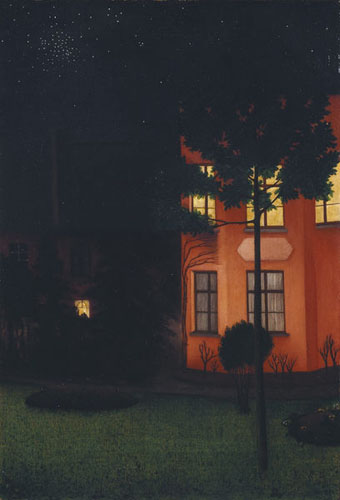
The Blind House (1892).

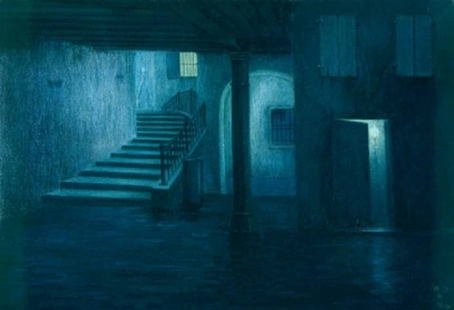
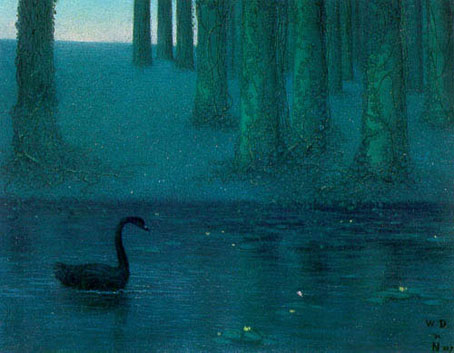
William Degouve de Nuncques (1867–1935) is one of the less well-known Belgian Symbolists but one with a place in art history for the picture above. The mysterious atmosphere of The Blind House (often labelled as The Shuttered House, The Pink House or even The House of Mysteries) was admired by René Magritte who inverted the apparent conjunction of night and day in his own Empire of Lights series. Degouve de Nuncques’ other pictures from this period possess a similar quality of nocturnal mystery, a predilection he shared with other Belgian artists such as Léon Spilliaert and Paul Delvaux. Many of these pictures are pastels, a popular medium among the Symbolists for its nebulous effects.

nuncques09.jpg

In Venice (1895).

nuncques03.jpg

The Black Swan (1896).

Continue reading “The nocturnes of William Degouve de Nuncques”