Winter Days: a renku

winter-days.jpg

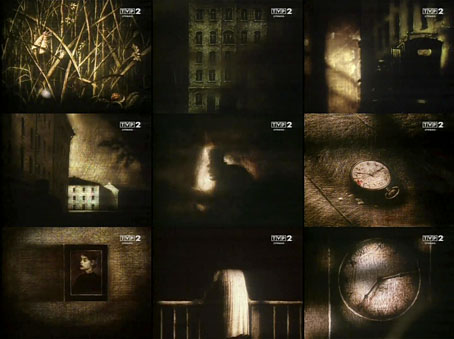
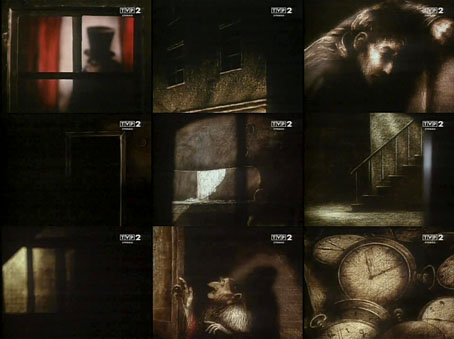
Winter Days is two things: a renku, or collaborative poem whose creation was initiated by Matsuo Bashō in Japan in 1684; and a 40-minute collaborative film from 2003 based on the same renku, with contributions by 35 animators from Japan and elsewhere, all under the direction of Kihachiro Kawamoto. The title of the poem provides the theme which the poets follow, with each poet repeating the last line of the previous stanza before adding a new of line of their own. The animators follow the same procedure, albeit much more loosely.

winter-days2.jpg

The results of this when transformed to animated sequences lacks the cohesion you’d get from a page or two of verse, especially when each sequence is self-contained. The moods of the individual sections also vary widely, from horror to broad comedy, but the film as a whole is a marvellous assembly of animation techniques, from simple drawings to clay animation, painting, puppetry, and computer graphics. The biggest attraction for animation aficionados will be the opening sequence which features a rare two minutes of film by the great Yuri Norstein. Among the other non-Japanese animators are Raoul Servais (whose piece appears to refer to Japanese ghost stories), Jacques Drouin with his pinscreen, and Britain’s Mark Baker. Wikipedia has a convenient chart that lists all the animators and the techniques they use. The Wikipedia page also notes the absence of any DVD release with English subtitles, but since all the sequences are wordless translation is only required for the intertitles and the readings that separate them. If you’re used to pairing video files with subtitles, however, you can download English subs here.

winter-days3.jpg

Given the allusions in some of the poem’s stanzas it no doubt helps when watching this to be familiar with Matsuo Bashō’s other writings, as well as the subtleties of Japanese poetry. But there’s more than enough artistry in Winter Days to warrant repeated viewing.

Previously on { feuilleton }
Tokyo Loop
Raoul Servais: Courts-Métrages
Yuri Norstein animations

Crime and Punishment, a film by Piotr Dumala

dumala2.jpg

More from the Polish animator, and a stunning, wordless adaptation of Dostoevsky’s novel. Crime and Punishment dates from 2000, and utilises the same technique as Dumala’s earlier films—images scratched into a plaster ground—only this time there’s a muted colour palette and considerable depth achieved through cast shadows and blurred objects layered over the drawings. Yuri Norstein achieved a similar sense of depth in Hedgehog in the Fog (1975) and Tale of Tales (1979), and Dumala’s film also shares the latter’s umber tones and sombre lighting. The story is pared to its bones, as it would be with a running time of 30 minutes, but it’s still a marvellous adaptation. There’s even a nod to Walls when an omnipresent fly disappears for a moment into a hole in the wallpaper.

dumala3.jpg

Previously on { feuilleton }
Walls, a film by Piotr Dumala
Academy Leader Variations
Yuri Norstein animations
Screening Kafka

Yuri Norstein animations

norstein1.jpg

Hedgehog in the Fog (1975).

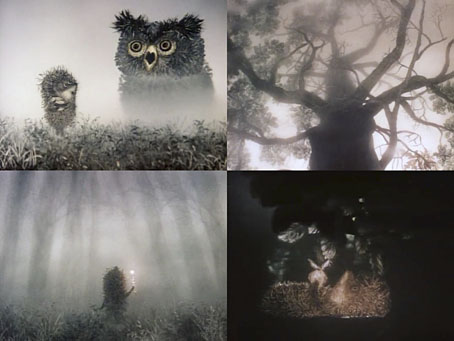
One more animation post before I move onto other things. Since the 1970s Russian animator Yuri Norstein has been regarded as one of the greatest living practitioners of the medium despite having only made a handful of films. Hedgehog in the Fog is a 10-minute piece with a self-explanatory title: a hedgehog sets out one evening to visit his friend, the bear, but before he can reach the bear’s house he has to cross a fog-filled field. Norstein’s animation style involves the skillful manipulation of hand-drawn paper shapes which in this film and the later Tale of Tales achieve a remarkable sense of depth and solidity. The fog effects in Hedgehog are especially striking, created using layers of translucent paper.

norstein2.jpg

Tale of Tales (1979).

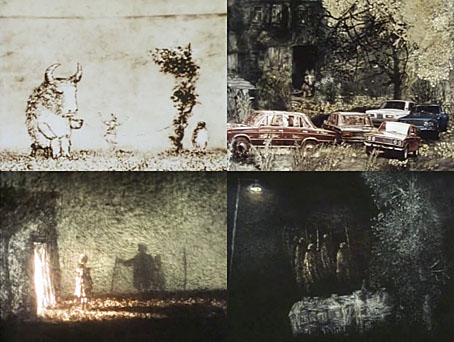
The 29-minute Tale of Tales takes the same technique but lifts the animation into a different league, an elusive and (for want of a better term) poetic meditation on life and memory whose central figure is a small grey wolf borrowed from the Russian lullaby sung in the opening scene. The film’s Wikipedia note compares Tale of Tales to Andrei Tarkovsky’s Mirror (1975), and for once the hyperbole feels justified. There’s the same concentration on natural elements such as fire, wind and water, while the recurrent wordless tableaux of a family whose members comprise a poet, a bull with a skipping-rope, and a talking cat might be compared with Tarkovsky’s dream sequences. If meaning here seems reluctant to disclose itself (and why does everything have to mean something anyway?) then that’s all the more reason to watch it again.

Since 1979 Norstein has been working sporadically on a feature-length adaptation of Gogol’s The Overcoat, work on which has been endlessly delayed due to lack of resources and the animator’s painstaking production methods. A few clips can be found on YouTube if you hunt around. Here’s hoping we get to see the finished film soon.

Previously on { feuilleton }
Barta’s Golem