Edward Judd, 1932–2009

dtecf.jpg

Like the creations of the late Oliver Postgate, Edward Judd haunts my childhood imagination via the handful of very British science fiction and sf/horror movies he starred in during the 1960s. He did a great deal of acting before and after this—in the Seventies he was a very ubiquitous TV character actor—but it’s his run of genre films which remains notable. In these roles he was always the stalwart Everyman, usually with another older actor as co-star who supplies the requisite scientific explanations.

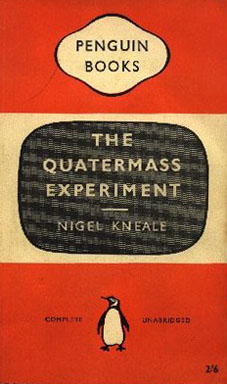
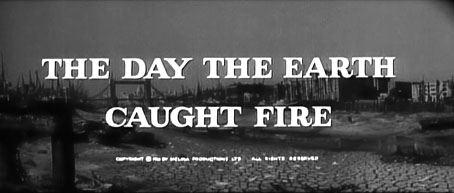
The first of these, The Day the Earth Caught Fire (1961), was a Val Guest production which followed the success of Guest’s Quatermass films in visiting another space-born calamity upon the world, this time an unprecedented heatwave caused by nuclear tests which throw the earth off its orbit. The film opens with a Ballardesque view of the River Thames parched to a thin stream, and features some great shots later of Judd stumbling through an abandoned, dust-strewn capital. The location work in the Daily Express building on Fleet Street adds to the realism, as does a strong script and decent performances.
Continue reading “Edward Judd, 1932–2009”

The Séance at Hobs Lane

seance.jpg

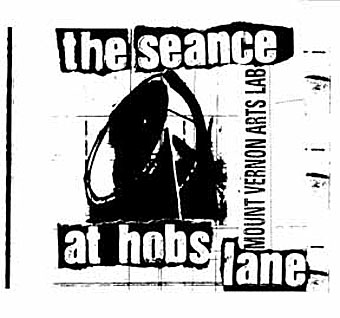
Séance, 2001 version.

Drew Mulholland, aka Mount Vernon Arts Lab (also Mount Vernon Astral Temple and Black Noise…), has joined forces recently with the masterful Ghost Box collective, purveyors of finely-crafted and frequently creepy electronica. MVAL’s 2001 release, The Séance at Hobs Lane, is now Ghost Box release no. 9 and comes repackaged in their Pelican Books-derived livery. Inspired by (among other things) Quatermass and the Pit, Séance makes a good companion to the creepiest of the Ghost Box releases to date, Ouroborindra by Eric Zann. Further points us to Mark Pilkington’s 2001 interview with MVAL for Fortean Times.

Previously on { feuilleton }
Exuma: Obeah men and the voodoo groove
New Delia Derbyshire
The man who saw tomorrow
A playlist for Halloween
Ghost Box

The man who saw tomorrow

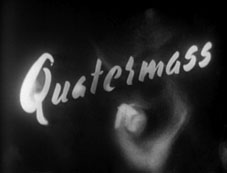
quatermass_2.jpgNigel Kneale created reality TV without realising it. Comedian Mark Gatiss recalls his turbulent relationship with the ‘TV colossus’ who died this week.

When Big Brother began on Channel 4 in 2000, I took a principled stand against it. “Don’t they know what they’re doing?” I screamed at the TV. “It’s The Year of the Sex Olympics! Nigel Kneale was right!”

In 1968’s The Year of the Sex Olympics, Kneale, a pioneering writer of TV drama who died this week, ingeniously predicted the future of lowest-common-denominator TV. The programme kept a slavering audience pacified with such blackly funny concepts as The Hungry/Angry Show (in which senile old men throw food at one another), the titular Olympics, and the ultimate programme, in which a family are marooned on an island and then watched on camera, 24 hours a day. Yesterday’s satire is today’s reality. Or today’s reality TV.

A few years ago I tried to persuade The South Bank Show to devote an edition to Kneale, only to be told he wasn’t a “big enough figure”. This was doubly dispiriting, not only because, to anyone interested in TV drama, Kneale is a colossus, but because it seemed to confirm all the writer’s gloomy predictions regarding the future of broadcasting. Couldn’t the medium celebrate one of its giants?

Continued here.