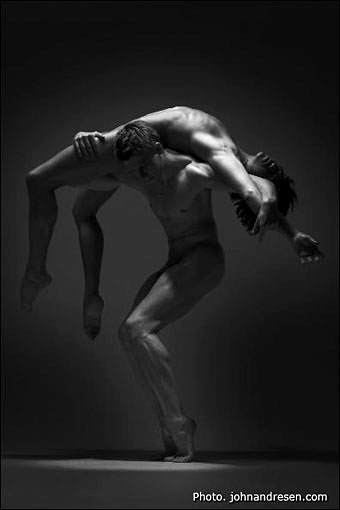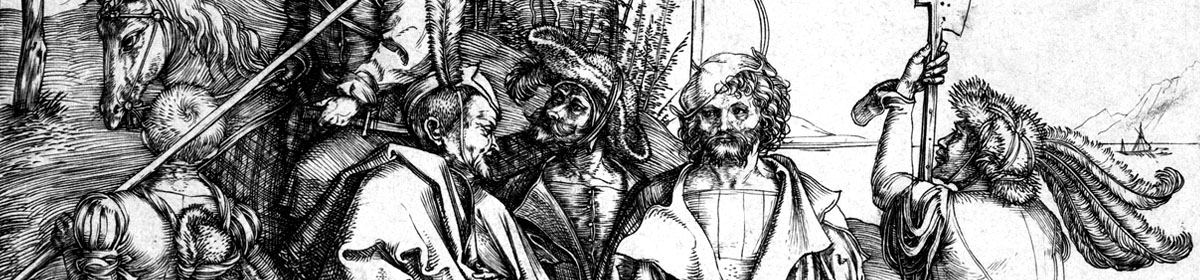
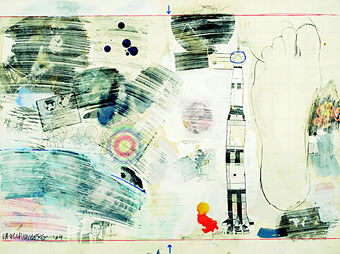
Tom Dura by Tom Dura. From The Little Black Book (2006).
Gonzo photography
HST Self Portrait, In White Whale, Las Vegas.
GONZO—Hunter S Thompson, an exhibition of the writer’s photographs, is at the Michael Hoppen Gallery, London, from 3rd February–10th March 2007. There’s also a limited book collection available from Ammo.
Michael Hoppen Gallery
3 Jubilee Place,
London SW3 3TD
Previously on { feuilleton }
• Further back and faster
Radical architects and their magazines

Such Cheek! Those Were the Days, Architects
by Nicolai Ouroussoff
New York Times, February 8th, 2007
IF YOU ARE revolted by today’s slick and fashion-obsessed architecture scene, hurry over to ‘Clip/Stamp/Fold: The Radical Architecture of Little Magazines‘ at the Storefront for Art and Architecture. You’ll feel even worse.
Organized by the architectural historian Beatriz Colomina, the show examines the world of those small magazines from the early 1960s to the end of the 1970s, when the field of architecture was still marked by a playful intellectual and political independence. It’s packed with gorgeous cover images, from copulating robots to an elephant attacking the Solomon R. Guggenheim Museum in Manhattan to a skyscraper made of Swiss cheese. Often thrown together on a shoestring budget, the magazines have an intoxicating freshness that should send a shudder down the spine of those who’ve spent the last decade bathed in the glow of the computer screen.
But this is not an exercise in nostalgia. It’s a piercing critique, intended or not, of the smoothness of our contemporary design culture. These magazine covers map out an era when architecture was simmering with new ideas. You’re bound to leave the show with a nagging sense of what was lost as well as gained during the electronic juggernaut of the last three decades.
Part of the magic of this show, which was recently extended for three more weeks, is in the works’ crude immediacy. One side of the gallery is wallpapered in hundreds of colorful magazine covers. On the opposite wall a more detailed timeline maps out the evolution of the culture of architectural magazines, from an obsession with politics and pop culture to a descent into increasingly abstruse and self-involved theoretical debates. The rarest magazines are encased in clear plastic bubbles (made of cheap plastic skylights that the show’s curators bought on Canal Street), evoking time capsules descended from outer space.
How to disappear completely
Talking to a friend recently about Photoshop reminded me of this picture experiment I made a couple of years ago. The photo above was a Prague street scene (no other details known) that I cut from a newspaper. I liked the atmosphere of the narrow street but couldn’t help wondering how it would look without all those people standing there. After some diligent copying and pasting I ended up with the version you see below. You can view it at a larger size here.
Previously on { feuilleton }
• Karel Plicka’s views of Prague
• Atget’s Paris
The art of Arik Roper

Semyaza (2007).

Witch Banner (2006): Witch South x Southwest banner.

Eyehategod NYC (2005): NYC show poster.
Arik Roper produces much band artwork and design (including for Boris who I’ve been listening to a lot this week). He’s also part of the splendid Arthur posse. Go thou to his work and marvel.
Previously on { feuilleton }
• Underground history
• Barney Bubbles: artist and designer