Salomé cigarettes

salome1.jpg

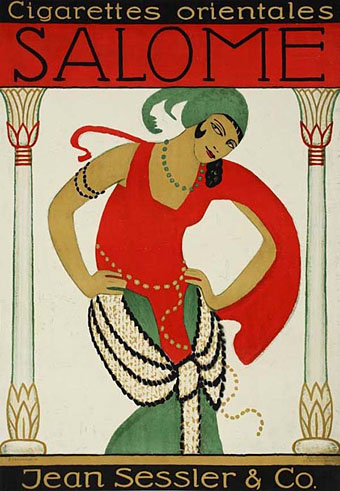
Many food and drink brands are still marketed today as exotic pleasures; some long-running products—Fry’s Turkish Delight, for example—even continue to sell themselves via an Orientalist mystique that now seems quite outmoded. This will never happen again with cigarettes, of course, although I wouldn’t be surprised to see it tried with cannabis if it’s ever legalised.

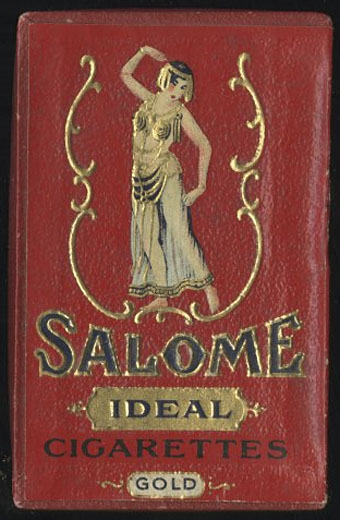
Salome Ideal was a brand of gold-tipped scented cigarette sold to American women from 1915 to the late 1940s. I’ve not been able to find out how they were scented but the figure on the pack is a flagrant borrowing from photos of Maud Allan’s scandalous Dance of the Seven Veils. This page has a couple of ad designs.
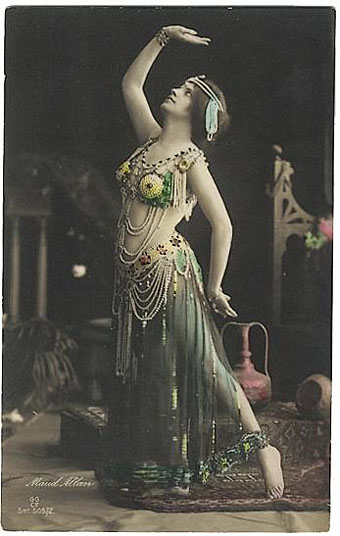
salome2.jpg

Maud Allan c. 1908.

salome3.jpg

Emil Cardinaux poster from 1914 may have been for the same brand of cigarette or for a different one of the same name. Cardinaux was a Swiss advertising artist so it’s possible there was a Salomé cigarette for European smokers. More of Cardinaux’s poster art can be seen in this Pinterest collection.

Elsewhere on { feuilleton }
The Salomé archive

Psyché Rock

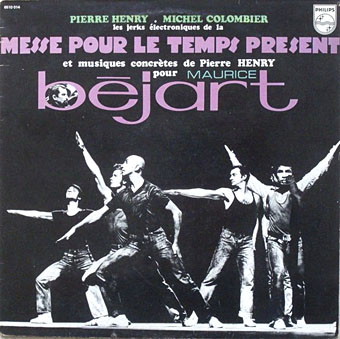
henry1.jpg

Messe Pour Le Temps Present (1967).

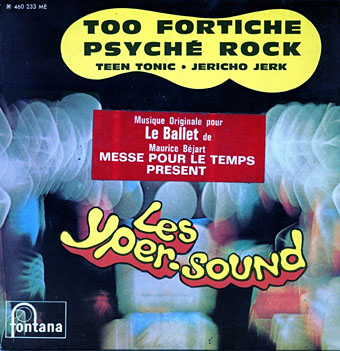
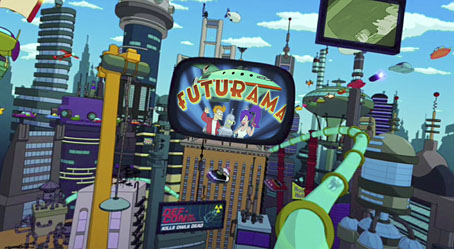
Electro-acoustic composer Pierre Henry probably wouldn’t thank you for calling Psyché Rock his finest moment but it’s a favourite of mine. It’s also his most well-known composition although most people know it as a putative inspiration for Christopher Tyng’s theme to Futurama. The YouTube version here is the original mix. Many other uploads are later remixes which disgracefully downplay the wonderful out-of-time synth shrieks.

henry2.jpg

Too Fortiche / Psyché Rock / Teen Tonic / Jericho Jerk (1967). Credited to “Les Yper-Sound”.

Psyché Rock was the second track on Messe Pour Le Temps Present, an album of music composed in part with Michel Colombier. (It was also released on an EP with three other Henry/Colombier tracks, and later as a single in its own right.) The Messe section of the album was the score for a Maurice Béjart dance piece, a small example of which can be seen here. There’s also this silly dance sequence from French TV featuring stripping meter maids.

perrey.jpg

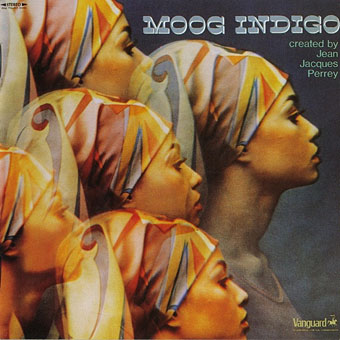
Moog Indigo (1970).

Another French composer, Jean-Jacques Perrey,  looked from inner to outer space in 1970 with E.V.A., a track on his Moog Indigo album. This sounds very similar to Psyché Rock, albeit less wild and much more groovy, and may also be an inspiration for the Futurama theme. This train of associations has given E.V.A. a life beyond its album release.

futurama.jpg

As to Futurama, there’s a mass of clips and themes of differing lengths out there. I’ll mention Fatboy Slim’s remixes only to say that I’ve never been very enamoured of Quentin’s compositions so the less said about him (and them), the better. Les Jerks Électroniques De La Messe Pour Le Temps Présent Et Musiques Concrètes De Pierre Henry Pour Maurice Béjart was available on CD as recently as 2009 in a package which shows some of the equipment used to produce its sounds.

Previously on { feuilleton }
The music of Igor Wakhévitch

LightSpin

lightspin.jpg

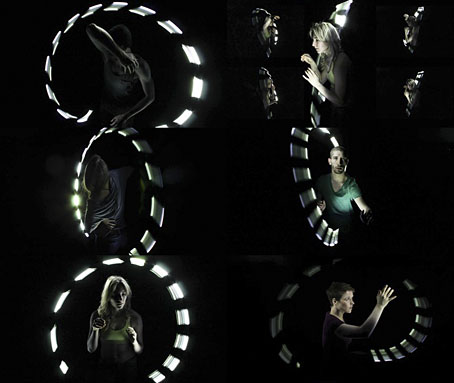
After a week or so of posts looking back over a century of dance, this brings everything into the present. Eric Paré’s LightSpin used stop-motion photography and twenty-four cameras to capture half a million photos which were then edited into a short video. All of the lighting, which floats around the dancers, is done by hand. Core77 goes into the technical detail, and also has some astonishing jpeg loops from the same sessions.

Tamara Karsavina’s Salomé

barbier.jpg

Salomé: portrait of Tamara Karsavina (1914) by George Barbier.

A slight return to the Russian ballet, and another Barbier portrait. Tamara Karsavina danced lead roles for the Ballets Russes, most notably with Nijinsky in the original performances of The Firebird. The pictures here are from La Tragedie de Salome, a ballet with music by Florent Schmitt, and costumes based on Beardsley’s illustrations by Sergei Sudeikin, another member of the Diaghilev circle.

karsavina.jpg

Tamara Karsavina as Salomé in the Beecham Russian ballet season, 1913.

Elsewhere on { feuilleton }
The Salomé archive

Previously on { feuilleton }
George Barbier’s Nijinsky

George Barbier’s Nijinsky

barbier05.jpg

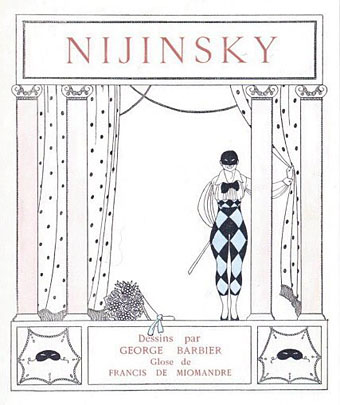
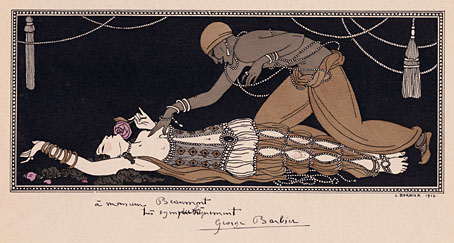
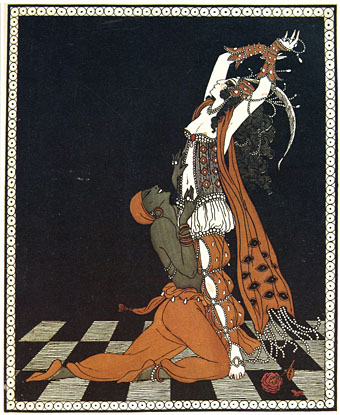
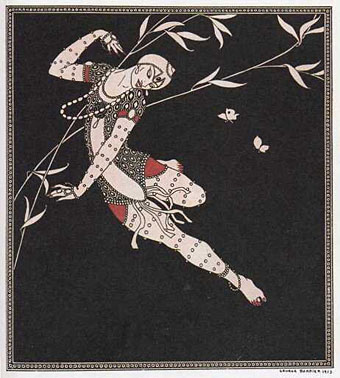
An inevitable one this, given the amount of times that George Barbier’s work has been featured here. Designs on the Dances of Vaslav Nijinsky was a series of prints published in 1913 when the dancer was at the height of his celebrity. All of Nijinsky’s major roles are represented although this isn’t quite the complete set. There did used to be a Japanese site with several galleries of Barbier’s early prints but this has now disappeared.

barbier04.jpg

Schéhérazade.

barbier02.jpg

Prélude à l’après-midi d’un faune.

barbier01.jpg

Schéhérazade.

barbier10.jpg

L’oiseau de feu.

Continue reading “George Barbier’s Nijinsky”