
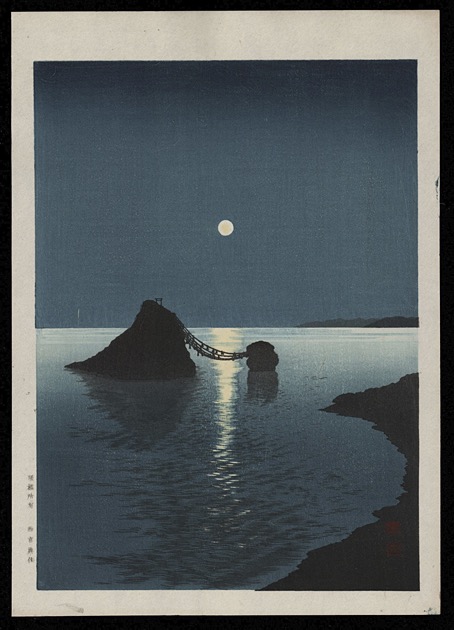
Futamigaura.
The biographical dates (1871–1946) are apparently uncertain for this Japanese artist about whom little documentation exists. What we do have is the prints he created, a couple of which have appeared here before. Nocturnes were Shoda’s speciality, together with other atmospheric scenes created with carefully graded colouring. As always with prints such as these, I’m in awe of the artist’s ability to create a sense of verisimilitude in the difficult medium of woodblock printing.
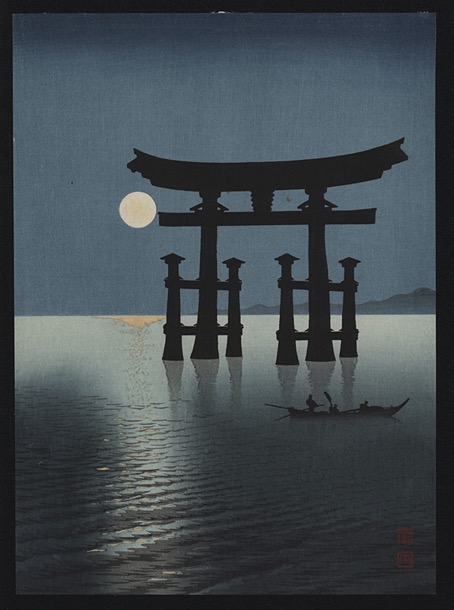
Shrine Gate of Miyajima.
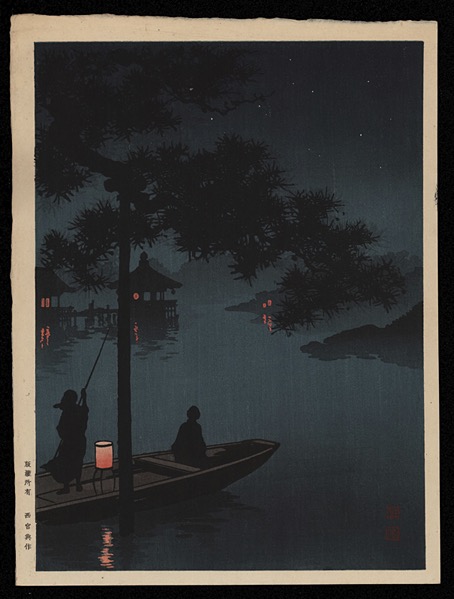
Lake Biwa.
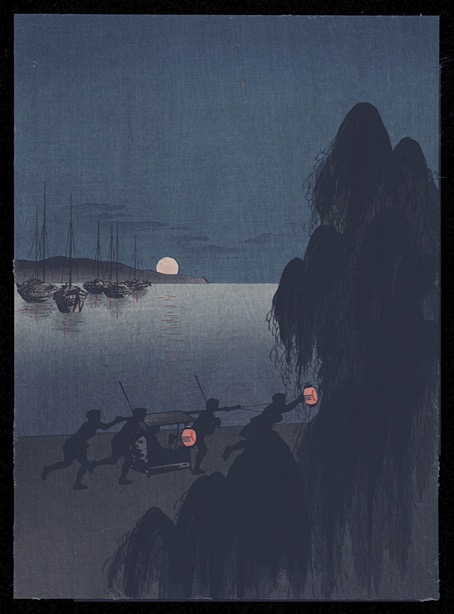
Shinagawa Shore.
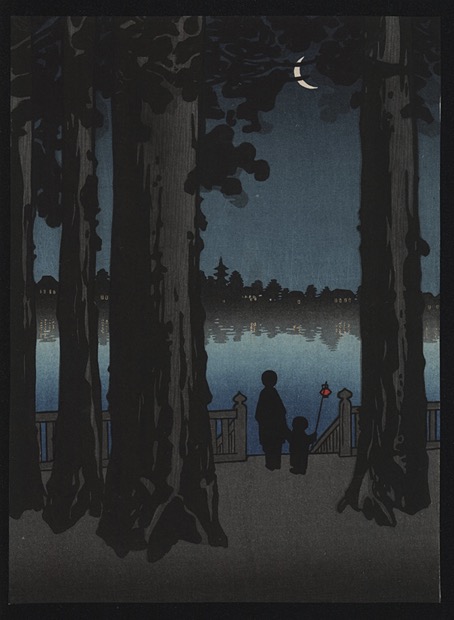
Uyeno Park.
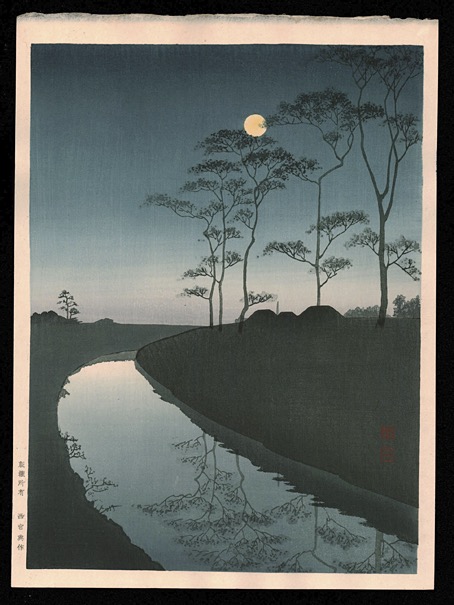
A Country Scene (with Moon).
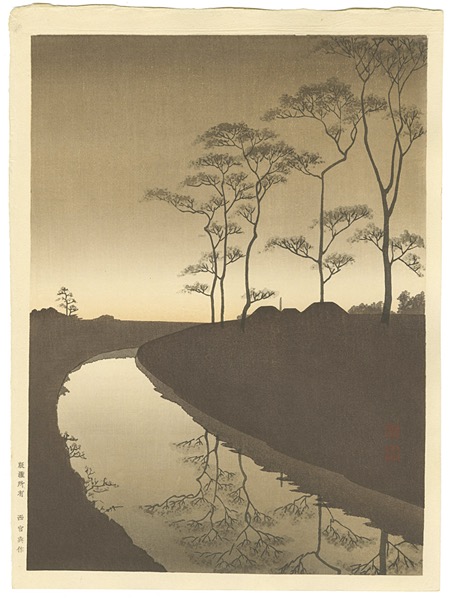
A Country Scene (sepia).
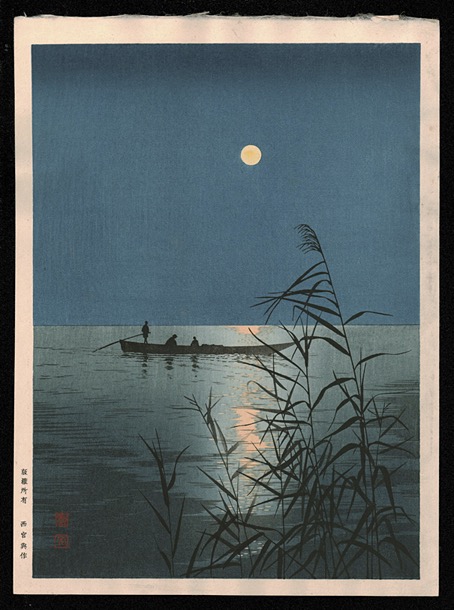
Moonlit Sea (mid edition).
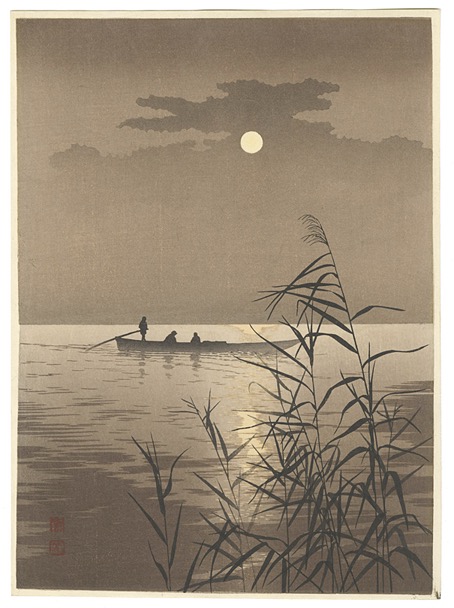
Moonlit Sea (sepia, early edition with clouds).
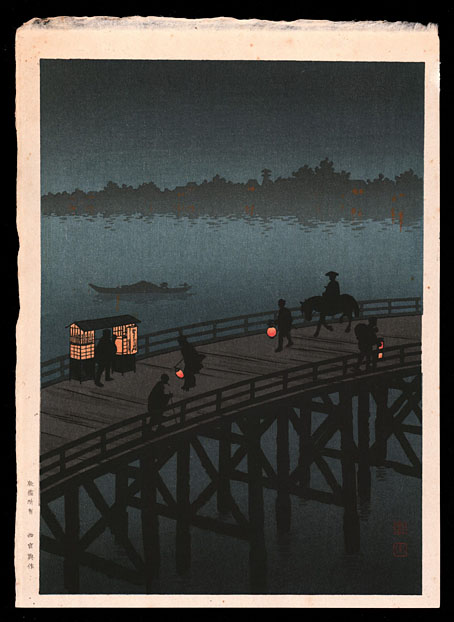
Ohashi Bridge at Atako.
Previously on { feuilleton }
• Cats and butterflies
• Twenty-four octopuses and a squid
• Seventeen views of Edo
• The art of Yuhan Ito, 1882–1951
• Eight Views of Cherry Blossom
• Fourteen views of Himeji Castle
• One Hundred Views of Mount Fuji
• The art of Kato Teruhide, 1936–2015
• Fifteen ghosts and a demon
• Hiroshi Yoshida’s India
• The art of Hasui Kawase, 1883–1957
• The art of Paul Binnie
• Nineteen views of Zen gardens
• Ten views of the Itsukushima Shrine
• Charles Bartlett’s prints
• Sixteen views of Meoto Iwa
• Waves and clouds
• Yoshitoshi’s ghosts
• Japanese moons
• The Hell Courtesan
• Nocturnes
Beautiful. I remember having one of these on my wall at uni 20 or so years ago – from one of those union poster sales. Didn’t spend time to look into the artist though.
Increadible that these are woodblock.
Thank you
These are beautiful pieces; the artist has captured quite well the atmosphere and colour that goes with night-scenes. I have always had a predilection for moonlit vistas, especially in watery settings, and these woodblocks scratch a very particular itch. Thank you for bringing them to my attention.
The Japanese are very keen on moonlit scenes. There’s a tradition of moon-viewing festivals (“Tsukimi”) that take place during one of the full moons in autumn, something you see a lot in older prints. The tradition has no doubt been compromised by light pollution but special events may still take place away from the cities.