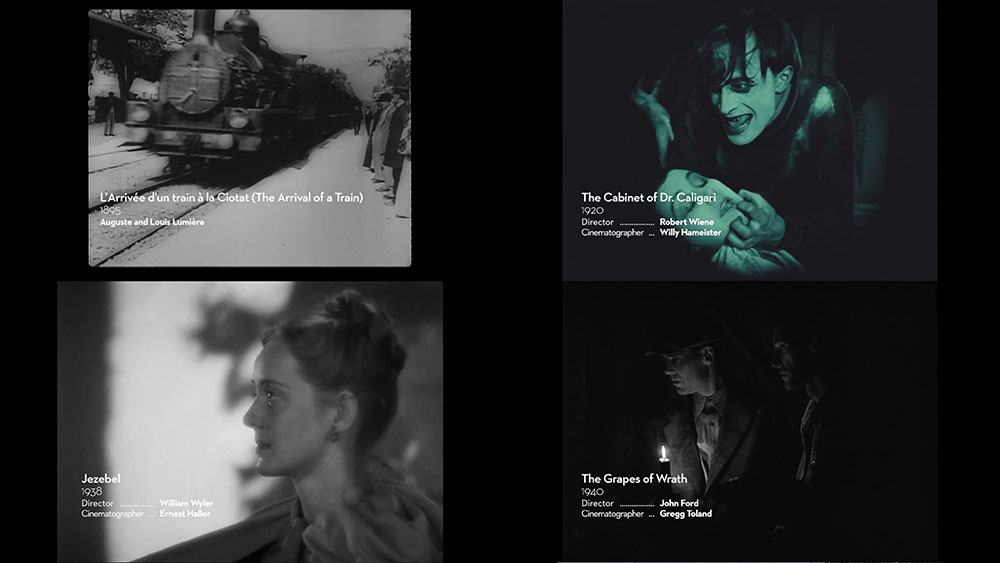
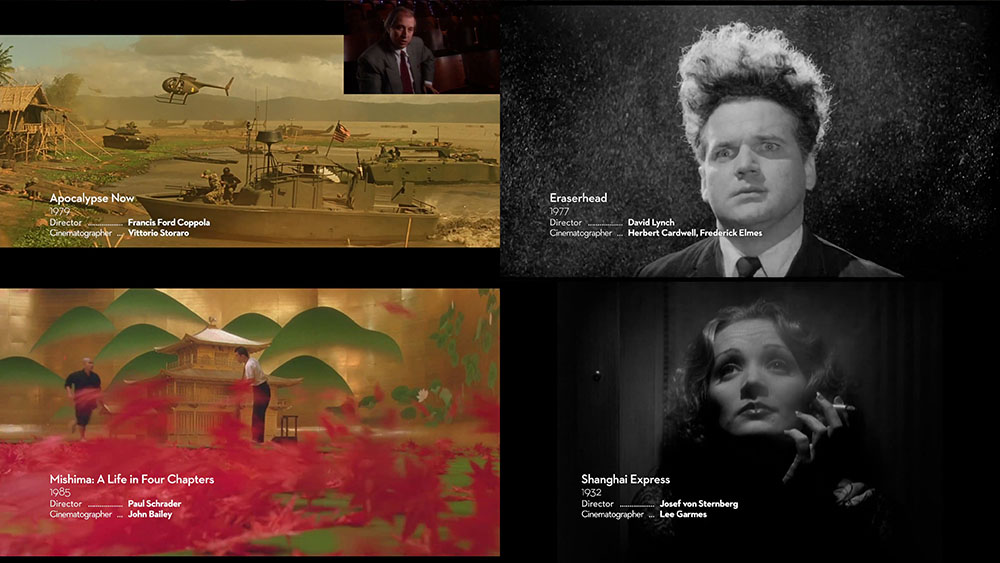
Good to see this again even if it is an unofficial “remastering” of the original. Visions of Light is a feature-length documentary about the art of cinematography as practiced in (mostly) American cinema. The film was made by Arnold Glassman, Todd McCarthy and Stuart Samuels for the American Film Institute in 1992, and is unique in being related solely through the words of cinematographers; there are no actor-narrators, actors, directors, academics or celebrities blathering about “iconic” moments. The format is very simple and direct: short clips from feature films showing the evolution of photographic styles and techniques from the silent era to the present, with each clip being commented on and contextualised by the cinematographers. Each clip includes an on-screen caption listing the title of the film, the director and the cinematographer. Most of the interviewees are Americans but there are a few notable Europeans such as Néstor Almendros, Sven Nykvist and Vittorio Storario.
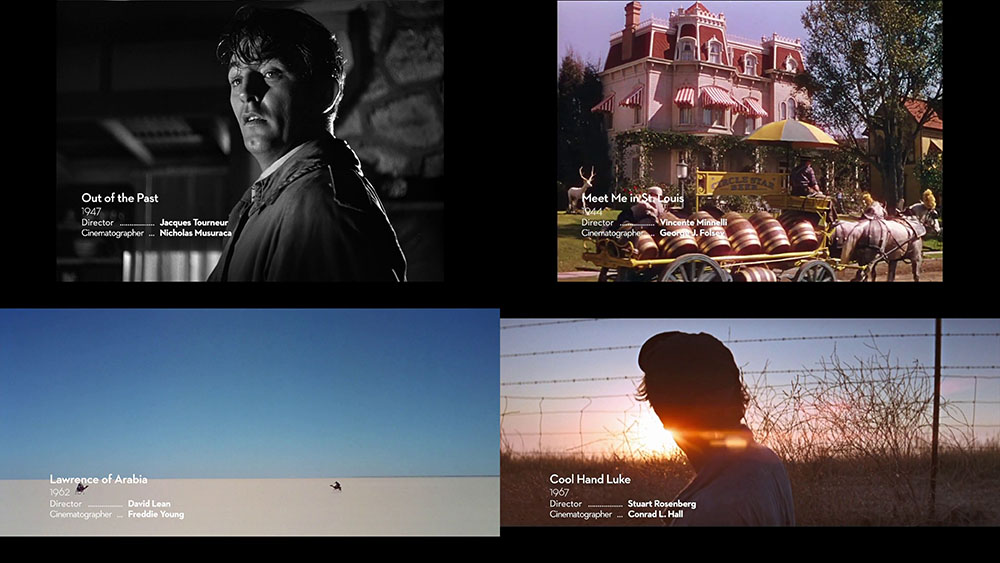
The version of the film archived here is an unofficial “remastering” which has upgraded the original to high definition. I haven’t seen Visions of Light since it was broadcast on TV in the 1990s so my memory may be faulty but I think the incorporation of some of the interviews as picture-in-picture overlays may be a new addition. While it’s good to see high-quality extracts the real attraction for me is the interviews. The people who photograph feature films are essential to the film-making process yet they’re seldom given the opportunity to talk about their work outside extras on hard-format releases. And now that the masses have stopped buying films on disc the opportunities for this kind of discussion are limited once again. The interview with Conrad Hall was one I found especially revelatory for his discussion of breaking the studio rules when filming Cool Hand Luke in 1967. This was the first major Hollywood film to show sunlight flaring into the camera lens, an effect that would have had the shot rejected in the days when studios policed each production with great rigour. Once Hall had got away with this everyone started doing it, with the result that American film and TV after 1967 is filled with lens flares. Cinematography, in other words, creates and follows trends as much as other film-making techniques.
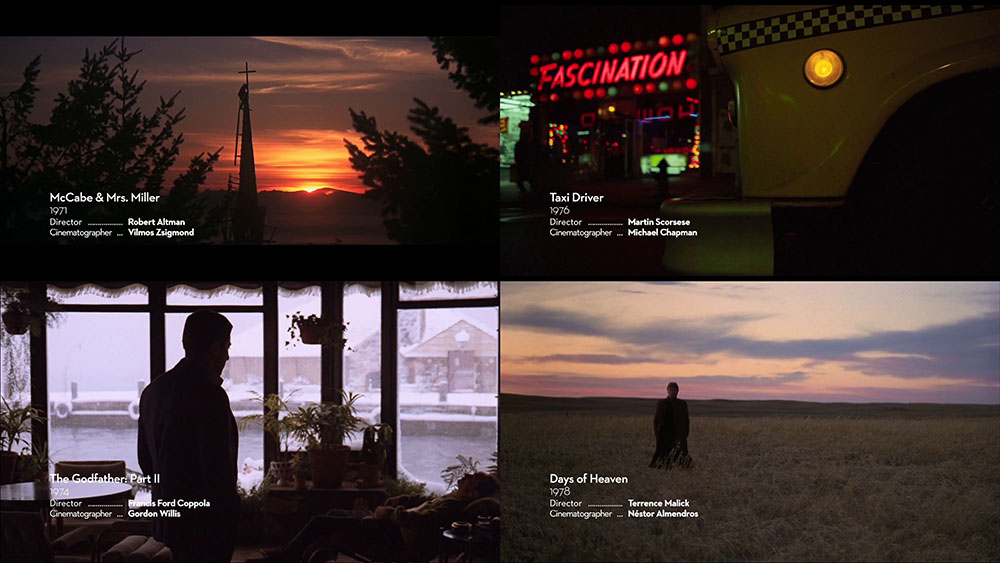
Ninety minutes is too short a time to cover a hundred years of cinematic history in any depth. It would have been better for the AFI to produce a multi-part TV series but I doubt there would have been the audience for such a thing. Aside from actors and the occasional high-profile director most film-viewers are happy to remain ignorant about the identities of the people who make the films they watch. Visions of Light was obviously edited down from a great deal of interview footage which makes me wonder now what happened to the material that didn’t make the final cut. Will we ever get to see it?
Previously on { feuilleton }
• Vilmos Zsigmond, 1930–2016
I had completely forgotten about this. Like you, I saw it on tv all those years ago and loved it as well. Much thanks for bringing it back to our attention here.