Decoder, a film by Jürgen Muschalek

decoder1.jpg

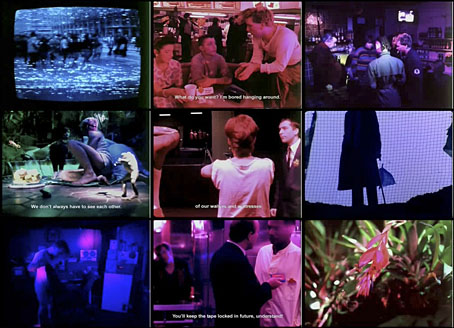
The Burroughs Centenary approaches, and this month sees the 30th anniversary of this Burroughs-related item. Decoder is a low-budget feature film from 1984 written by Klaus Maeck, and directed by Jürgen Muschalek (aka Muscha). Despite the constraints of budget and casting—many of the actors are amateurs—Decoder is truer to the techno-anarchist strand of Burroughs’ fiction than anything attempted before or since, and it’s arguably truer to the spirit of his works as a whole than David Cronenberg’s Naked Lunch.
decoder2.jpg

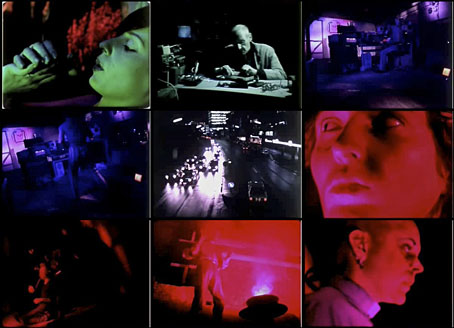
Decoder was shot in Hamburg in the early 1980s although the city is never properly identified in order to maximise the film’s near-future qualities. The narrative concerns attempts by FM (played by FM Einheit from Einstürzende Neubauten) to combat the insidious effects of muzak in burger restaurants using tapes created with his home-made electronics. William Burroughs makes a couple of brief appearances as the “Old Man” with a shop full of electronic components. Among the rest of the cast there’s Christiane Felscherinow, dividing her time between peep-show sex-work and languishing in a room filled with her pet frogs; and Genesis P-Orridge in his Psychic TV gear as the head of an underground pirate cult who encourage FM to launch an offensive against the muzak signals. Original music is provided by Dave Ball (from Soft Cell) and FM Einheit. The complete score is very good, featuring additional tracks by Soft Cell, Einstürzende Neubauten and Matt Johnson. Watched today, the narrative seems very much a product of its time, and somewhat outmoded. In 1984 home computing was increasingly prevalent, and cheap sound-sampling was just around the corner; Decoder is the last hurrah of an analogue struggle against the agents of the Control Virus.
decoder3.jpg

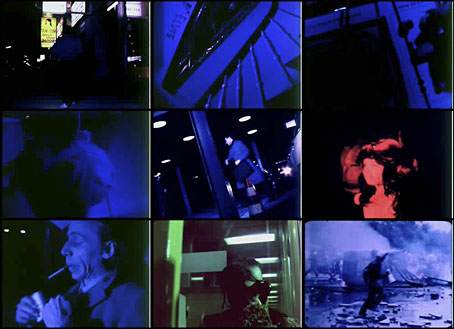
It’s a shame Jürgen Muschalek didn’t get to make anything else when he was obviously trying for some kind of cross between Burroughs’s The Electronic Revolution (1970) and Godard’s Alphaville (1965). Low-budget films often suffer visually but this one makes impressive use of vivid lighting and plenty of shadow which helps alleviate some of the weaknesses elsewhere. David Cronenberg has often acknowledged the influence of avant-garde types such as Burroughs and Warhol but his own films tend to be very conservative in their presentation. Muschalek at least tries to parallel some of Burroughs’ fragmented narrative techniques with an abrupt and disjunctive editing style. The film as a whole is much more in tune with the early Industrial Culture ethos than Peter Care’s noir pastiche, Johnny YesNo, but suffered from being more read about than seen in the 1980s. A few copies can be found online. In 2010 it finally appeared on DVD with extra material and a soundtrack disc.

Elsewhere on { feuilleton }
The William Burroughs archive

Weekend links 197

field.jpg

Posters by Jay Shaw for Ben Wheatley’s A Field in England which receives a US release this month.

Alvin Baltrop’s Gay New York: “the clandestine activities taking place under New York piers between 1975 and 1986”. AnOther samples some of the work on display at the Open Eye Gallery, Liverpool. Meanwhile, BUTT has some shots from Texas Porno Road Trip, a photo series by Mike McLeod. Related: HBO will show you anything but a male erection, says Justin Moyer.

• “[Robert] Desnos quickly proved himself to be one of the most gifted in these experiments – eventually known as ‘the period of sleeping fits’. He was capable of writing, speaking, drawing and composing entire fantastical narratives.” Eugene Thacker on the Surrealist séances of the 1920s.

• “It’s history, not a viral feed,” says Sarah Werner. A complaint about the way the ongoing decontextualisation of images is both pernicious and potentially lucrative.

His prose is a palimpsest of echoes, ranging from Eliot’s Preludes and Rhapsody on a Windy Night (lines like “Midnight shakes the memory / As a madman shakes a dead geranium” are Burroughsian before the fact) to Raymond Chandler’s marmoreal wisecracks and Herbert Huncke’s jive. I suspect that few readers have made it all the way through the cut-up novels, but anyone dipping into them may come away humming phrases. His palpable influence on JG Ballard, William Gibson, and Kathy Acker is only the most obvious effect of the kind of inspiration that makes a young writer drop a book and grab a pen, wishing to emulate so sensational a sound. It’s a cold thrill.

Peter Schjeldahl reviews Call Me Burroughs by Barry Miles.

• “Dance music was born in LGBT communities, but has this been forgotten?” Luis-Manuel Garcia on an alternate history of sexuality in club culture.

• Avant-Grade Hallucinogens: the Poetics of Psychedelic Perception in Moving Image Art by Stuart Heaney.

No Condition Is Permanent: weekly radio shows from Count Reeshard at LuxuriaMusic and iTunes.

The Golem: where fact and fiction collide. David Barnett on 100 years of Gustav Meyrink’s novel.

• Don’t Let Harlan Ellison Hear This: Nick Mamatas on a great writer.

• Mix of the week: the Ela Orleans Mix at A Sound Awareness.

Amon Düül II playing live on French TV, 1971 & 1973.

• A soundmap of London canals and minor rivers.

The Peculiar Underworld of Rare-Book Thieves.

• At Pinterest: William Burroughs and Phalluses.

Architecture of Doom

Hallucinations (1967) by Tim Buckley | Phallus Dei (1969) by Amon Düül II | Hallucinations (In Memory of Reinaldo Arenas) (1994) by Paul Schütze

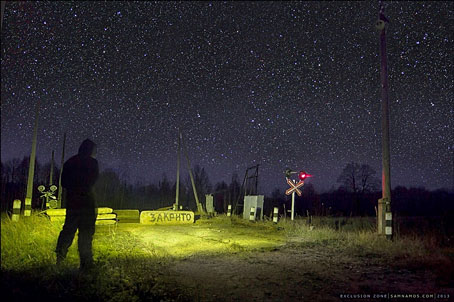
Hiking in the CEZ

zone1.jpg

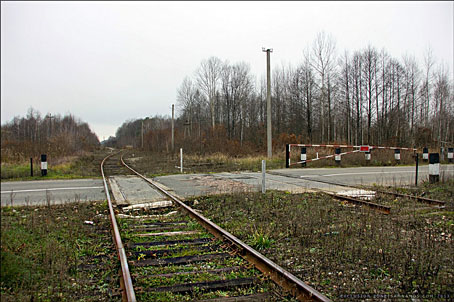
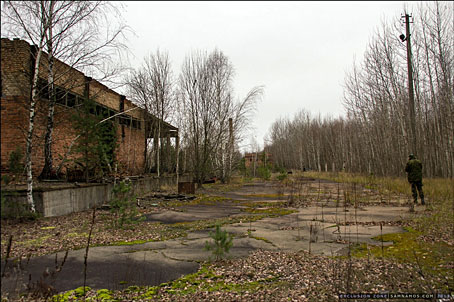
Two items of cult fixation collide in these photos of illicit exploration (1) into the irradiated exclusion zone around Pripyat (2) in northern Ukraine. According to English Russia the crew are a group of urban explorers from St Petersburg. The English Russia pages have two sets of photos with English annotations while the explorers themselves document their adventures to Pripyat (and elsewhere) in Russian at LiveJournal, here and here. (Google Translate works pretty well for the captions there.) Great photos in all of their posts. The shot above would be ideal as a wraparound cover for an edition of Roadside Picnic.

Official visits to the area now seem more common, and no doubt avoid the hazard of having to take drinking water from potentially toxic rivers. The Pripyat website advises on the pros and cons of the different seasons. Don’t forget your dosimeter.

zone2.jpg

zone3.jpg

Continue reading “Hiking in the CEZ”

Spanish Salomés

salome1.jpg

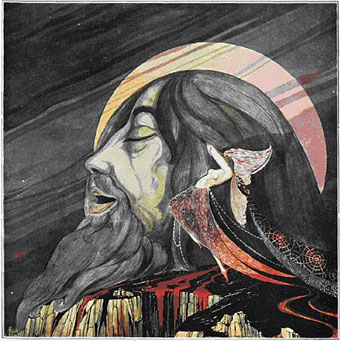
Uncredited painting based on Modern Salomé (1927), a poem by Emilio Carrere.

Yet more on this indefatigable theme, the examples this time being by Spanish artists and illustrators. All the pieces are from this page, and the artists involved aren’t well-known at all so checking details isn’t easy. Take the references with a pinch of salt. Thanks to Thom for the tip!

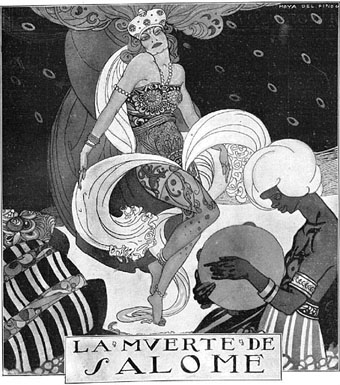
salome2.jpg

Illustration by José Moya del Pino for The Death of Salomé (1915), a poem by Emilio Carrere.

Continue reading “Spanish Salomés”

The Trials of Oz

oztrial.jpg

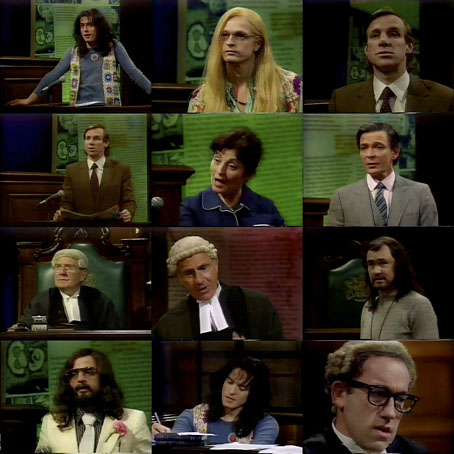
If it’s a surprise to see Cockney geezer Phil Daniels masquerading as the erudite (and non-Cockney) Thomas De Quincey in The Art of Tripping, it’s even more of a surprise to see Hugh Grant in wig and hippy gear as Richard Neville in this 1991 dramatisation of the obscenity trial against Neville’s Oz magazine. Grant wasn’t exactly unknown when this was made but it was prior to Four Weddings and a Funeral so the casting didn’t seem very notable at the time.

The play was written by Geoffrey Robertson QC from the trial transcripts to coincide with the 20th anniversary of a long and very public trial. Robertson in 1971 was an assistant to John Mortimer, the magazine’s lawyer, so the reconstruction may be taken to be an accurate one. In addition to Grant as Neville, Simon Callow plays Mortimer, Nigel Hawthorne is prosecutor Brian Leary, and Leslie Phillips is Judge Michael Argyle. Among the witnesses there’s Alfred Molina as George Melly (yet again; see yesterday’s post), and Nigel Planer as DJ John Peel, both of whom were called to testify that the notorious “School Kids” issue of Oz wasn’t an obscene publication. The trial, like the earlier drug busts against the Rolling Stones, was as much about the State trying to clobber a bunch of anarchist upstarts as anything that involved the pros and cons of antiquated laws. The three defendants—Neville, Felix Dennis and Jim Anderson—were also accused of “conspiring to corrupt public morals”; the obscenity issue was merely a pretext for getting the longhairs into the dock.

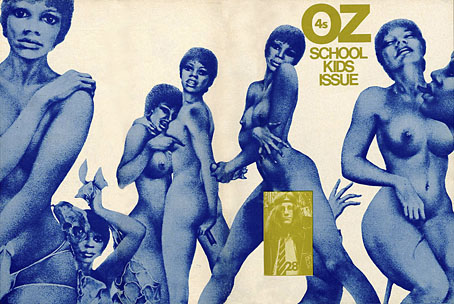
oz28.jpg

Oz 28 (1970). Art by Raymond Bertrand.

This isn’t a lavish production—it’s stylised to the extent that the public gallery is made up of cardboard figures—but it’s good to know that there’s a (rough) copy out there after my tape of the original broadcast developed a fault. (Update: It’s now on YouTube.) Not available, unfortunately, is the live studio discussion that followed in which Jonathan Dimbleby spoke to Geoffrey Robertson, Germaine Greer and others about the trial. The discussion featured a delicious moment when Dimbleby referred to Greer’s feminist issue (no. 29) as “C-Power Oz“. “Come on, Jonathan,” said Greer, “it was Cunt Power Oz!” Dimbleby then spluttered “Anyone can say ‘Cunt Power Oz‘…” and hastily moved on the discussion. (Update: The studio discussion is also on YouTube!)

A year after his TV appearance Geoffrey Robertson was in Manchester Crown Court appealing an earlier ruling of obscenity against David Britton’s Lord Horror (1990) novel. I was in the public gallery on that occasion, and it was an education seeing how little had changed since the Oz trial, with a similarly Philistine and deeply ignorant judge presiding. Robertson overturned the ruling against the novel but a ruling against one of Savoy’s Meng & Ecker comics was upheld. In 1995 we were back in court attempting to argue for a jury trial against further rulings of obscenity, this time against one of my own comics, Hard Core Horror 5. (That issue is now the opening section of the Reverbstorm book.) We failed that time thanks to a magistrate who was even less inclined to listen to any argument.

The Oz trial may seem quaint and farcical today but the issues remain pertinent: some forms of art will always be in conflict with laws that are out-of-date, badly written or maliciously applied. And once you’re standing in a courtroom your opinion about the situation is of no consequence; you’re at the mercy of the people who make the rules.

Previously on { feuilleton }
Martin Sharp, 1942–2013
Raymond Bertrand paintings
Raymond Bertrand’s science fiction covers
The art of Bertrand
Oz magazine, 1967–73